Concrete Demolition Economics and Tool Selection
Tool selection directly dictates your concrete removal budget and schedule. As a senior consultant with Concrete Cutting Miami, I’ve analyzed how equipment choices impact project economics across South Florida’s diverse urban landscape. Whether you’re bidding on a patio demolition or high-rise foundation work, understanding the cost structures behind hydraulic breakers versus diamond wire systems separates profitable bids from money-losing commitments. We’ll examine labor multipliers, disposal logistics, and equipment efficiency factors that determine final project costs.
Hydraulic Breakers vs. Diamond Saws: Cost Per Square Foot Analysis
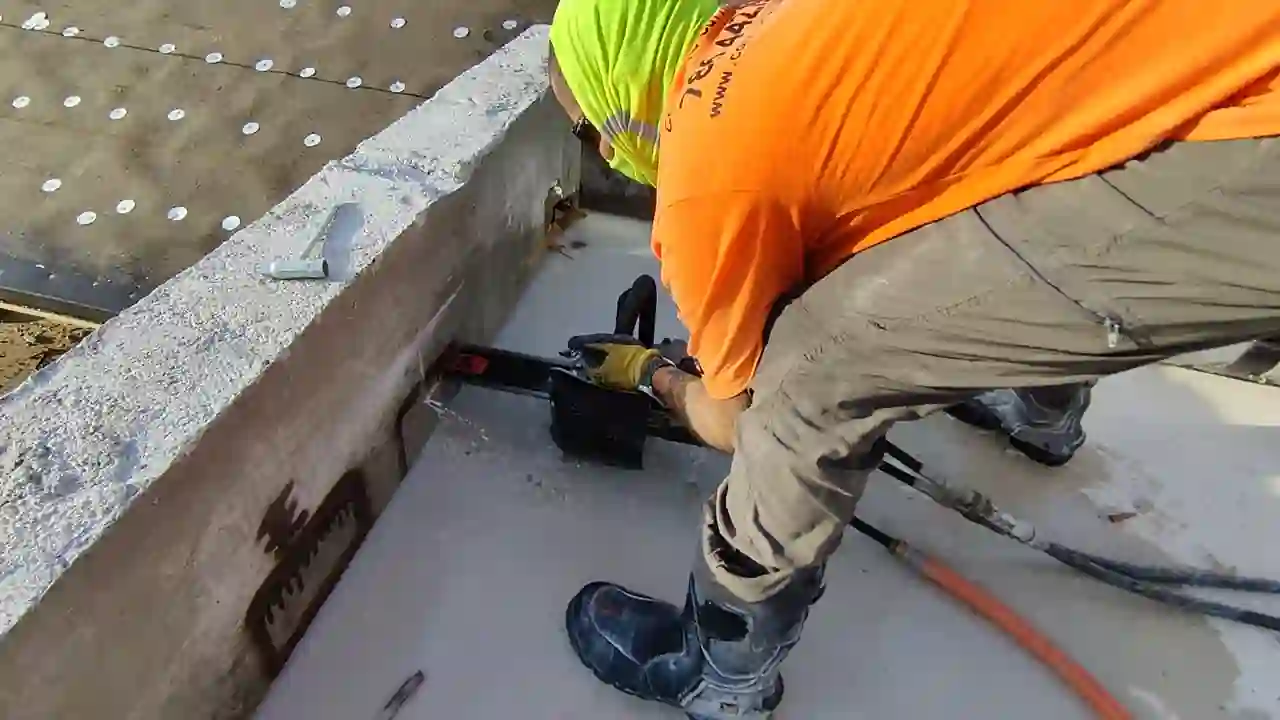
Breaker attachments on excavators average $85-$125/hour in equipment costs but require minimal setup. For a 1,000 sq ft slab, expect 6-8 hours of work at $650-$950 total machine expense. Compare this to diamond blade saws at $40-$75/hour cutting time plus $25-$40/blade wear costs. A 6″ thick slab demands 15-20 linear feet of cuts per blade – meaning a 1,000 sq ft grid pattern could consume 3-5 blades adding $100-$200. While saws appear cheaper hourly, their slower progress often results in 12-16 labor hours versus 8-10 for breakers.
- Labor multipliers: Each tool requires specific operator skills – breaker work demands $45-$65/hr certified operators versus $35-$50/hr for saw technicians
- Disposal impact: Breakers create irregular debris requiring $250-$400/load hauling versus saw-cut segments that stack efficiently, reducing dump fees by 30%
- Hidden costs: Vibration damage risks from breakers add 5-10% contingency to urban projects near existing structures
Timeline Calculations for Common Demolition Scenarios
Project scheduling hinges on three variables: access constraints, reinforcement density, and disposal logistics. A standard 20’x20′ residential driveway removal takes 6-8 hours with a mid-sized breaker but extends to 10-12 hours when using handheld jackhammers. Commercial projects like cityscape renovations often require nighttime work windows, compressing productive hours and increasing costs by 25-40%. Always factor in these timeline extenders:
- Asbestos-containing material inspection delays (8-72 hours)
- Concrete cure age (pre-1990 slabs often contain harder aggregates adding 20% cutting time)
- Rebar density (each #5 bar crossing adds 3-5 minutes per cut)
For accurate scheduling, use this formula: (Square footage ÷ Tool coverage rate) + (Disposal load count × 1.5 hours) × Site difficulty factor (1.2-2.0)
Bidding Factors for Miami Concrete Demolition Projects
Winning bids in Miami’s competitive market requires granular cost breakdowns. Our Miami Concrete Care team builds proposals around these key variables:
- Equipment mobilization: Transporting 15,000 lb excavators costs $250-$400 locally versus $75-$150 for walk-behind saws
- Reinforcement encounters:
- Material disposal: Dade County landfill fees average $45/ton plus $120/hour truck time
- Dust/slurry management: Wet cutting requires water containment systems adding $150-$300/day
- Traffic control: Road work mandates certified flaggers at $55/hour minimum 4-hour increments
Always include 15-20% contingency for undocumented utilities or aggregate hardness variations. Historical districts like Coral Gables often contain quartzite aggregates increasing tool wear by 40%.
Specialized Tool Applications in Urban Environments
High-density areas demand precision equipment with minimal vibration. Diamond wire saws excel for urban renovation projects near sensitive structures, though their $300-$500/hour operating costs require careful bidding. For balcony removals in condos, electric-powered handheld breakers avoid generator noise complaints but operate at 60% of hydraulic efficiency. Consider these niche tools for specific scenarios:
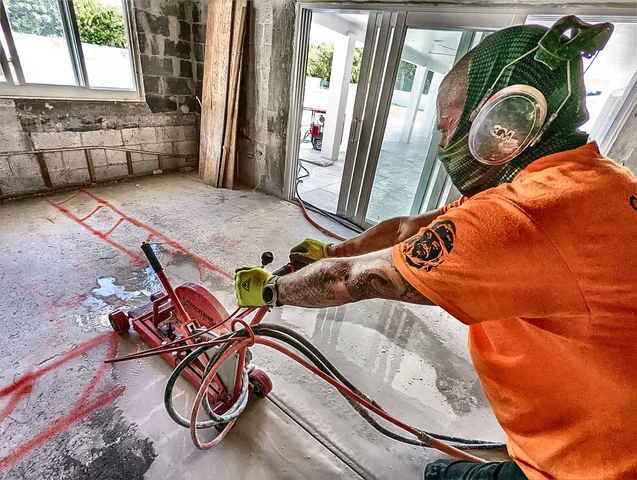
- Flat saws with vacuum attachments for interior work ($85/hour premium)
- Robotic demotion units for hazardous material sites ($220/hour but reduce insurance costs)
- Chemical expansive agents for heritage structures ($25/sq ft but require 24-48 hour curing)
Drilling Services as Demolition Facilitators
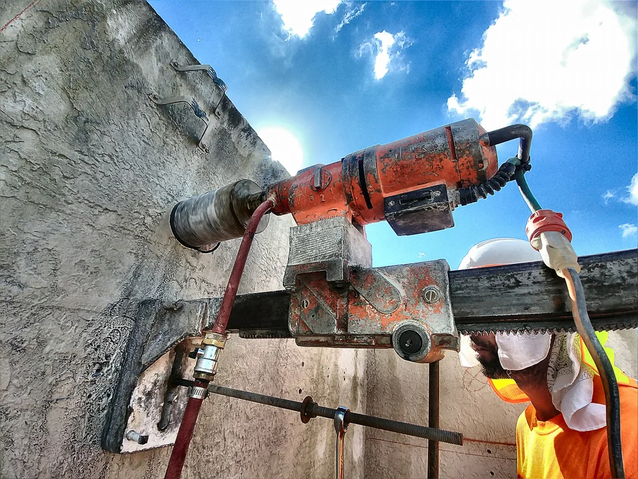
Strategic core drilling often enables controlled breaks. Creating relief holes at 18-24″ spacing allows breakers to fracture slabs with 30% less energy. For thick foundations, drill patterns guide crack propagation – a technique reducing disposal costs by creating manageable segments. Budget $35-$55 per 4″ diameter hole drilled to 12″ depth. On a 2,000 sq ft demolition, 40-50 relief holes typically add $1,600-$2,500 but save $800-$1,200 in breaker time and $600 in disposal fees.
Equipment Downtime and Maintenance Cost Projections
Underbidding often stems from underestimating tool maintenance. Hydraulic breakers require $25/hour reserve for seal kits and moil points. Diamond blades lose efficiency after 15,000 sq ft of cutting – pushing a blade beyond 80% wear increases labor hours by 15%. Track these operational costs:
- Daily equipment inspection: 0.5 labor hours × crew size
- Fluid/filter changes: $120/week for breakers under heavy use
- Cutting segment replacement: $0.15-$0.25 per linear foot of cut
- Unexpected breakdowns: Minimum 4-hour labor charge + $95/hour service call
For accurate bids, build in 8-12% of equipment rental costs for maintenance reserves on projects exceeding 80 hours.
Case Study: Bayfront Patio Demolition Cost Breakdown
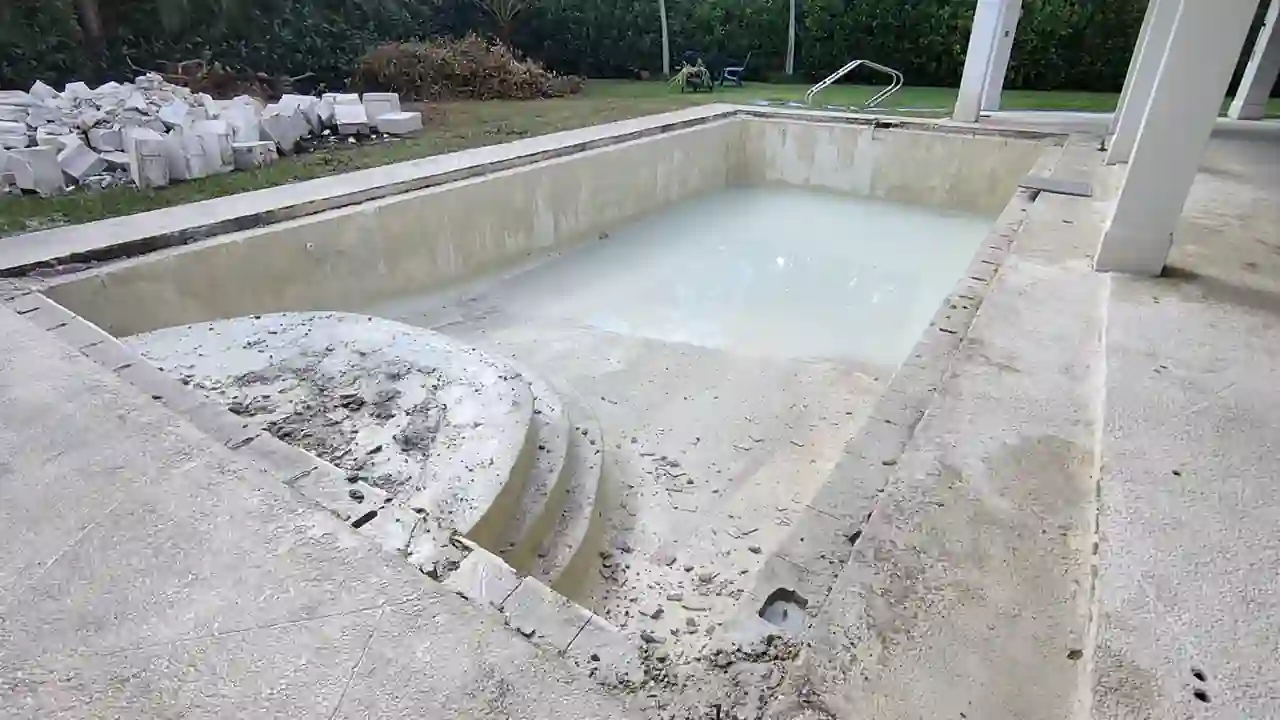
A recent 1,800 sq ft waterfront patio removal illustrates these principles. Saltwater exposure had corroded rebar, complicating standard demolition. We proposed a hybrid approach:
- Phase 1: Diamond saw segmentation along control joints ($1,250)
- Phase 2: Excavator with hydraulic breaker for slab lifting ($980)
- Phase 3: demolition services for fragment removal ($1,100)
Total equipment costs: $3,330 (18% below regional average). The precision cutting prevented seawall damage that would have incurred $15,000+ repairs. Project duration: 14 hours versus 22 hours for conventional breaker-only demolition.
Optimizing Demolition Economics Through Strategic Tool Deployment
Profitable concrete removal hinges on matching tool capabilities to project constraints. Miami’s variable soil conditions and dense urban infrastructure demand customized approaches – a 30% breaker efficiency drop occurs in limestone-rich areas like Kendall versus coastal sands. Document tool performance metrics across projects to refine future bids. Track blade consumption rates, breaker output per fuel hour, and segment loading times. These datasets transform estimations from guesses into precise calculations. When bidding high-rise podium demolitions or historic district work, remember: The right tool isn’t always the fastest – it’s the one that delivers predictable margins.