Why Swimming Pool Demo Fill In Service Carries More Hidden Risk Than Most Homeowners Realize
A swimming pool sitting unused in a Miami backyard looks like a simple problem with a simple solution — break it up, haul it out, fill it in. That perception is exactly what gets property owners and inexperienced contractors into serious trouble. Swimming pool demo fill in service is a multi-phase demolition and earthwork operation governed by OSHA 29 CFR 1926, local Miami-Dade permitting codes, and engineering standards that exist because the consequences of cutting corners are severe. Structural subsidence, utility strikes, worker engulfment, and improper compaction that causes future foundation failure are not hypothetical risks. They happen on real job sites, often within the first 48 hours of work beginning. Understanding the full scope of hazard identification and control measures isn’t optional — it’s the professional baseline.
Pre-Demolition Site Assessment and Utility Locating Protocols
Before a single jackhammer touches pool shell concrete, a compliant swimming pool demo fill in service operation demands a documented pre-demolition survey. In Miami-Dade County, this means coordinating a Sunshine 811 utility locate request no fewer than three business days before breaking ground. But experienced crews know that 811 locates cover public utility mains — not private laterals. Gas lines, electrical conduit, irrigation piping, and pool equipment plumbing that runs from the equipment pad to the shell are entirely the contractor’s responsibility to identify and mark.
Ground-penetrating radar (GPR) scanning is the industry-standard method for identifying subsurface anomalies in the demolition footprint. A 400 MHz antenna configuration is typically appropriate for scanning down to 18 inches, which covers most residential pool plumbing depths in South Florida’s shallow water table environment. Every utility and pipe location gets physically marked with spray paint and documented in the site safety plan before excavation equipment moves into position. This documentation isn’t bureaucratic overhead — it’s your legal protection and your crew’s physical protection.
For more on how utility awareness factors into working within existing structures, the team at Concrete Cutting Miami has published detailed guidance on concrete cutting for renovation projects in existing structures that applies directly to pool removal scenarios adjacent to home foundations.
Confined Space Awareness During Pool Shell Demolition
OSHA 29 CFR 1926.1201 defines permit-required confined spaces, and an in-ground swimming pool — particularly during the partial demolition phase — can meet that definition under specific atmospheric hazard conditions. Decomposing organic material at the pool floor, residual chlorine off-gassing, and methane accumulation from disturbed soil in Miami’s high-organic-content fill areas create real atmospheric risks that supervisors must evaluate before allowing workers to enter the pool basin during demolition.
A competent person, as defined by OSHA, must conduct atmospheric testing using a calibrated multi-gas detector before entry. The four-gas monitor should test for oxygen levels (acceptable range 19.5%–23.5%), combustible gas concentrations (below 10% LEL), hydrogen sulfide, and carbon monoxide. If readings fall outside safe parameters, forced-air ventilation must be established and re-testing conducted before entry is permitted. This is non-negotiable protocol, not a suggestion.
Additionally, the perimeter of the pool excavation must be barricaded to prevent unauthorized access during all phases of demolition. OSHA 1926.502 fall protection standards apply when workers are operating near excavation edges exceeding four feet in depth. Physical barriers, not just caution tape, are the compliant standard.
Concrete Demolition Methods and Dust Suppression Requirements
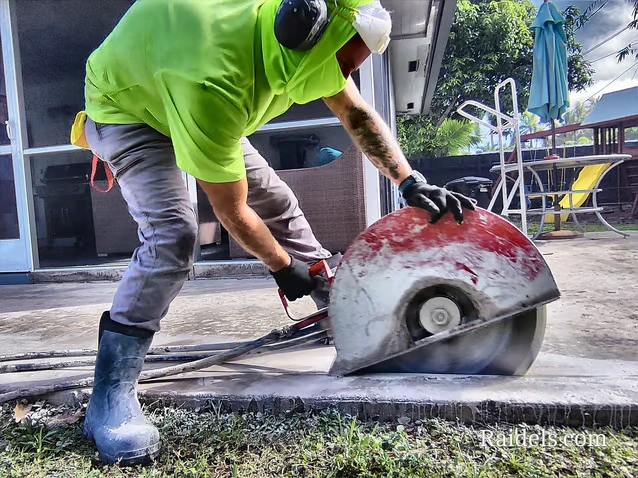
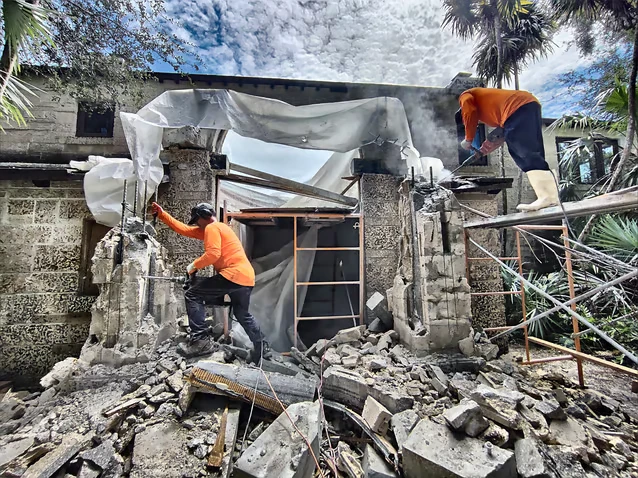
Swimming pool shells in Miami are typically constructed from gunite or shotcrete — pneumatically applied concrete with compressive strengths ranging from 3,500 to 5,000 PSI. Demolition of this material using hydraulic breakers, electric jackhammers, or excavator-mounted hydraulic hammers generates significant respirable crystalline silica dust, which OSHA’s Silica Standard (29 CFR 1926.1153) regulates with an action level of 25 µg/m³ and a permissible exposure limit of 50 µg/m³ as an 8-hour TWA.
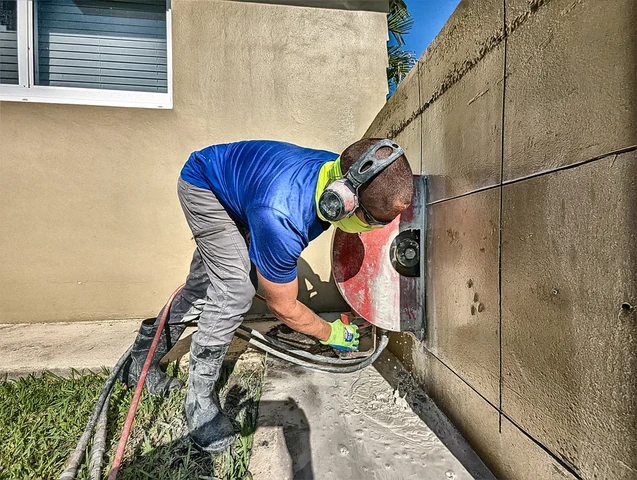
Compliant swimming pool demo fill in service operations use continuous wet suppression — water applied directly at the point of impact — to reduce airborne silica by 85–95% compared to dry breaking. Operators working within the immediate dust zone must wear NIOSH-approved N95 respirators at minimum, with P100 half-face respirators required when wet suppression cannot be continuously maintained due to equipment or site constraints. A written Exposure Control Plan must be maintained on-site and available for OSHA inspection at any time.
Proper debris management during this phase is also a regulatory concern. Broken concrete must be staged in designated areas away from active work zones and loaded into licensed haul vehicles without creating secondary dust events. For guidance on handling construction debris responsibly, review resources tagged under waste management practices from the Concrete Cutting Miami resource library.
Excavation Safety and Soil Classification in Miami-Dade’s Fill Environment
South Florida’s subsurface geology presents unique challenges for swimming pool fill-in operations. Miami-Dade County sits on Miami Limestone and Anastasia Formation bedrock overlaid with varying depths of sandy fill, organic muck, and hydraulic fill placed during residential development in the 20th century. This means soil classification under OSHA 29 CFR 1926.652 cannot be assumed — it must be actively evaluated by a competent person using the manual and visual tests specified in Appendix B of Subpart P.
Type C soil classification is the default conservative assumption for most Miami residential sites until testing proves otherwise. Type C excavations require 1.5H:1V slope ratios or engineered shoring systems for any excavation exceeding five feet in depth. For pool removals where the shell depth reaches eight to ten feet — common in pools with deep ends — this means significant slope setback requirements that directly affect how much of the adjacent yard must be disturbed. Contractors who skip this evaluation and undercut slopes create engulfment hazards that OSHA classifies among the most dangerous construction fatality risks.
Proper site preparation before any excavation begins is addressed in detail under home preparation resources that cover grading, drainage, and access planning for residential demolition projects.
Fill Material Specification and Compaction Testing Standards
The fill phase of a swimming pool demo fill in service project is where long-term property damage most commonly originates — not from the demolition itself, but from improper backfill selection and compaction methodology. Miami-Dade Building Code and most municipal jurisdictions require that fill material meet minimum specifications: clean granular fill with less than 12% fines by weight, free of organic material, debris, or expansive clay content.
Compaction must be achieved in lifts not exceeding 12 inches of loose material, with each lift compacted to a minimum of 95% of maximum dry density as determined by ASTM D1557 (Modified Proctor) testing. A nuclear densometer gauge or sand cone test must be used to verify compaction at each lift before the next layer is placed. Skipping compaction testing is one of the most common failures in residential pool fill operations, and it results in differential settlement that can crack driveways, shift patio slabs, and in severe cases, undermine adjacent foundation footings.
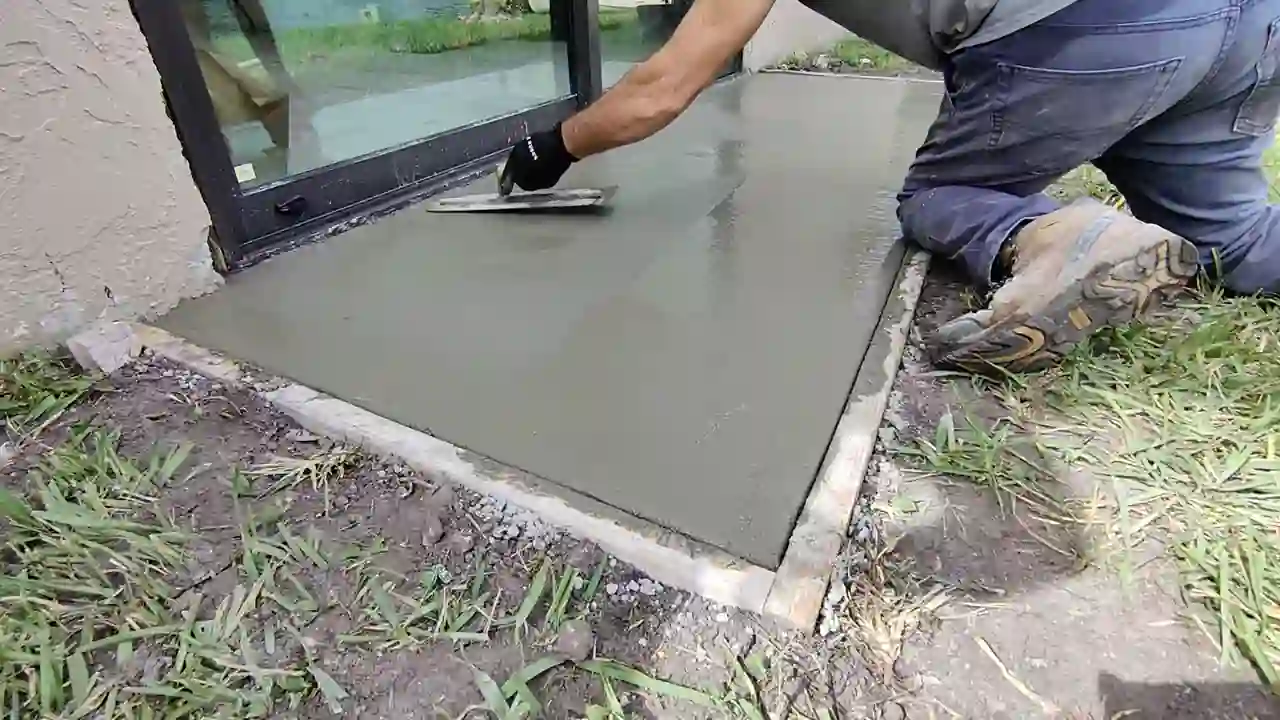
The final two feet of fill below finish grade should transition to a structural fill or compacted base rock to support future surface improvements. If a concrete slab, paver system, or turf area is planned over the former pool footprint, a geotechnical engineer’s approval of the fill report is strongly recommended and in some jurisdictions required for permit closeout.
Permit Closeout, Final Inspections, and Homeowner Documentation
A professional swimming pool demo fill in service operation doesn’t end when the last load of fill is compacted. Permit closeout requires a final inspection from the local building department confirming that the work was completed per the approved demolition plan. In Miami-Dade, this typically involves a field inspector verifying grade elevation, reviewing compaction test reports, and confirming that pool plumbing has been properly capped and abandoned per plumbing code.
Homeowners should receive a complete documentation package including the original permit, all compaction test reports, utility abandonment confirmations, and photographs documenting each phase of the work. This documentation is essential for property disclosure during future real estate transactions and for resolving any warranty claims related to settlement. Contractors who operate without this paper trail expose both themselves and their clients to significant liability.
For a broader look at how safety-forward concrete work integrates into full renovation projects, explore the home renovation solutions content from Concrete Cutting Miami, or browse the full Concrete Cutting Miami blog for technical guidance across demolition, cutting, and structural concrete services. Business owners managing contractor relationships on these projects may also find value in the construction services entrepreneurship resources covering project management and compliance frameworks.
The Standard That Separates Professional Pool Removal from a Liability Event
Swimming pool demo fill in service executed at a professional level is a disciplined, multi-trade operation requiring hazard identification, OSHA-compliant demolition practices, engineered fill specification, and documented inspections at every phase. The margin for error in a densely developed Miami neighborhood — where adjacent structures, underground utilities, and high water tables are constant variables — is narrow. The contractors who consistently deliver safe, code-compliant results are the ones who treat every phase of the process as a technical discipline, not a manual labor task. That standard is what Concrete Cutting Miami, LLC brings to every pool removal project in South Florida.