Why the “Best Way to Chip Concrete” Is Inseparable from Environmental Responsibility
Ask most people what the best way to chip concrete is, and they’ll talk about hammer drills, electric chisels, or pneumatic breakers. Those answers aren’t wrong — but they’re dangerously incomplete, especially on commercial and municipal job sites in South Florida. In Miami-Dade County, concrete chipping operations that generate slurry, particulate runoff, or uncontrolled wastewater can trigger violations from the Department of Environmental Resources Management (DERM), halt your project, and expose your firm to significant fines. The real answer to “best way to chip concrete” has to account for slurry management, water containment strategy, and regulatory compliance from the first swing to the last cleanup sweep.
Understanding What Concrete Chipping Actually Generates on a Job Site
Concrete is not an inert material once you start breaking it. The moment a pneumatic chisel or rotary hammer engages a slab, you’re releasing a combination of portland cement dust, calcium hydroxide particles, silica fines, and — when water is used as a dust suppressant or coolant — highly alkaline slurry with a pH that can range from 11 to 13. That slurry is caustic enough to damage aquatic ecosystems if it enters storm drains, which in Miami flow directly to Biscayne Bay or the Miami River.
On dry chipping operations, the dust itself presents a dual hazard: silica exposure risk for workers (governed by OSHA’s 29 CFR 1926.1153) and particulate transport to surrounding areas. This is especially critical near native plant ecosystems in Miami, where alkaline particulate fallout can alter soil chemistry and damage sensitive vegetation that’s protected under local environmental ordinances.
The Alkalinity Problem in Wet Chipping Operations
When contractors use water during chipping — either as a dust suppressant or to cool diamond tooling — the resulting slurry is not something you can simply hose into a catch basin. High-pH concrete slurry is classified as a pollutant under the Clean Water Act’s NPDES (National Pollutant Discharge Elimination System) permit framework. In practical terms, this means any uncontrolled discharge of concrete slurry to stormwater infrastructure is a federal violation, not just a local one. Miami’s MS4 (Municipal Separate Storm Sewer System) permit requirements make this enforcement very real on active job sites.
Containment-First Methodology for Chipping Operations
The correct approach to concrete chipping begins with containment design before a single tool touches the substrate. This isn’t bureaucratic box-checking — it’s operationally sound practice that protects your crew, your client, and your license.
- Perimeter berms and containment dikes: Use flexible rubber or polyethylene berms rated for pH 13 environments around the entire work zone. For slab-on-grade chipping, these should extend at least 18 inches beyond the active chipping perimeter.
- Slurry vacuum systems: Wet-vac units designed for high-pH slurry should run continuously during wet chipping. Units should have a capacity matched to your water flow rate — typically 20 to 55 gallons for small operations, with larger tank systems for extended commercial work.
- Inlet protection: Any storm drain within 50 feet of the work zone must be blocked with filter fabric inlet guards rated for alkaline slurry. This is non-negotiable on Miami-Dade permitted sites.
- pH monitoring: Keep calibrated pH test strips or a portable pH meter on site. Before any slurry is transported or disposed of, pH must be brought to between 6.5 and 8.5 — the acceptable range for legal discharge or disposal.
Choosing the Right Chipping Tool Based on Slurry Output and Site Conditions
Tool selection directly affects your environmental management burden. This is a point that rarely gets discussed in trade publications, but it’s central to running a compliant operation.
Electric Rotary Hammers and SDS-Max Chisels
For precision chipping in confined areas — around rebar layouts, post-tension cables, or utility embedments — electric rotary hammers with SDS-Max chisels generate significantly less slurry than pneumatic breakers. They’re also quieter and produce less vibration, which matters in occupied buildings. The tradeoff is lower impact energy, making them unsuitable for high-PSI structural concrete above 5,000 PSI without extended cycle times.
Pneumatic Breakers and Hydraulic Demolition Hammers
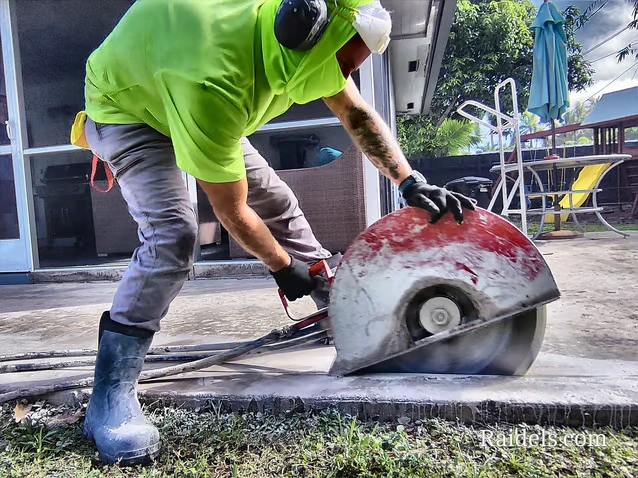
For bulk concrete removal, pneumatic or hydraulic breakers remain the industry standard. A 60-pound pneumatic breaker delivering 1,100 blows per minute will move material faster than any electric alternative. However, the volume of dust and debris generated is substantially higher, which means your containment and slurry management systems need to be scaled accordingly. Always pair pneumatic breakers with continuous water suppression and a dedicated slurry vacuum operator — not an afterthought, but a dedicated crew role.
Angle Grinder Chipping for Surface Prep and Delamination
When the goal is removing delaminated or spalled surface concrete — common in Miami’s chloride-laden coastal environment — angle grinders with cup wheels or turbo blades are often the most controlled option. They generate fine slurry at low volume, making containment easier. This is the preferred method for bridge deck surface prep, parking garage deck restoration, and any application where preserving the underlying structural layer is critical.
Slurry Disposal Protocols That Keep You on the Right Side of DERM
Once you’ve contained your slurry, you’re only halfway through the compliance process. Disposal is where many otherwise careful contractors stumble. Miami-Dade DERM and the Florida DEP both have specific requirements for concrete slurry disposal that go beyond simply “neutralize and dispose.”
- pH neutralization on site: Use carbon dioxide injection systems or citric acid solutions to bring slurry pH into the 6.5–8.5 range before any transport. CO₂ injection is preferred because it doesn’t introduce additional chemical contaminants.
- Solid separation: Allow slurry to settle in a containment tank or lined pit. The settled solids (filter cake) must be disposed of at an approved C&D (Construction and Demolition) debris facility — not in standard dumpsters.
- Liquid discharge after treatment: Neutralized, clarified water can typically be discharged to the sanitary sewer with prior approval from Miami-Dade Water and Sewer, or transported off-site via licensed liquid waste hauler.
- Documentation: Maintain disposal manifests and pH test records for every chipping operation. DERM inspectors can request these records during or after a project.
If you’re working on a larger demolition project, these protocols integrate directly with the broader concrete removal process in Miami, where full-scope environmental planning is standard practice for permitted work.
Site-Specific Considerations for Miami’s Urban and Coastal Environments
Miami presents environmental compliance challenges that contractors in other markets simply don’t face at the same intensity. The shallow water table, proximity to tidal waterways, and the density of protected ecosystems mean that slurry migration — even minor — can have outsized ecological consequences.
On coastal sites, concrete chipping operations must account for tidal influence on groundwater levels. A containment berm that works perfectly on an inland slab may fail on a waterfront site where groundwater rises during high tide, undermining berm integrity and creating uncontrolled pathways for slurry migration. Use impermeable membrane liners beneath work zones on any site within 500 feet of tidal water.
For projects adjacent to landscaped or restored areas, coordinate with your environmental team to assess whether alkaline dust fallout could affect protected species. This is particularly relevant on projects near restored habitat corridors — the same ecosystems supported by responsible construction services that prioritize environmental stewardship alongside production efficiency.
Crew Training and On-Site Compliance Culture
The best containment system in the world fails if the crew operating it doesn’t understand why it matters. Every worker involved in concrete chipping operations should receive documented training on slurry hazard recognition, containment system setup and maintenance, and emergency spill response. This training should be refreshed annually and documented in your safety management system.
Assign a designated environmental compliance monitor for any chipping operation lasting more than four hours or generating more than 50 gallons of slurry. This person’s sole responsibility during active operations is monitoring containment integrity, pH levels, and proper slurry handling — not swinging a hammer or running equipment.
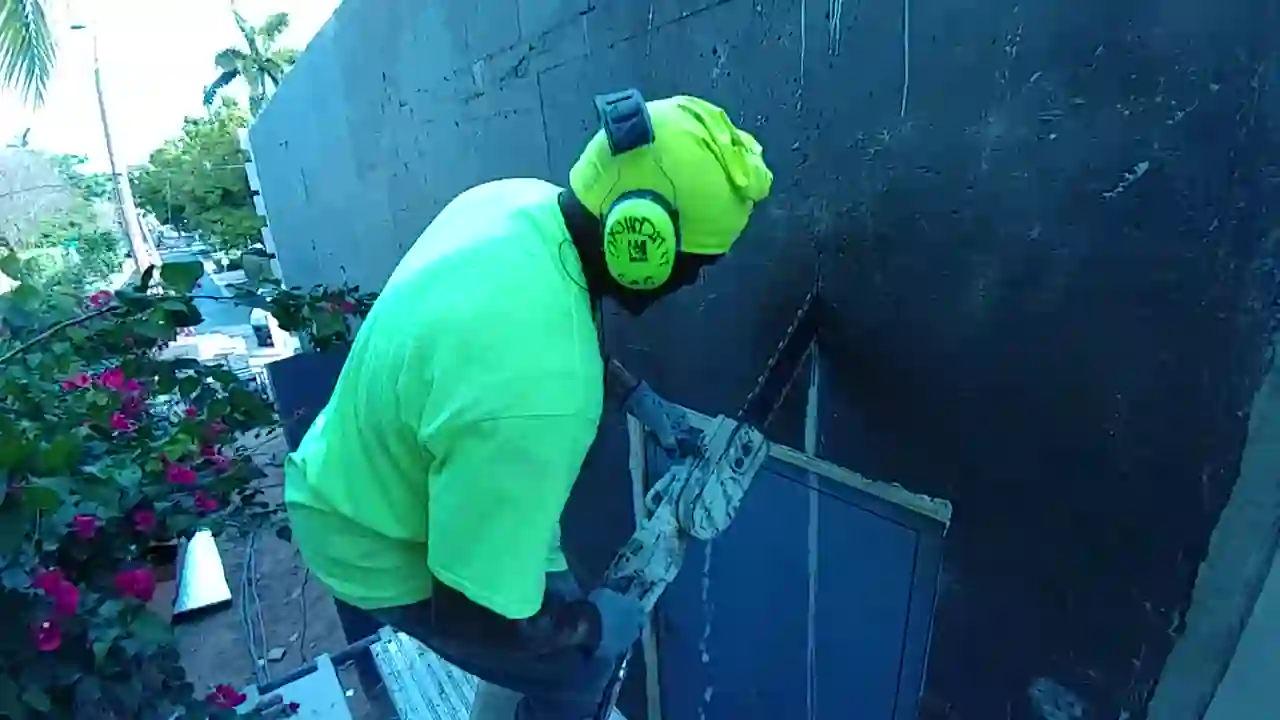
Putting It All Together on a Compliant Miami Chipping Operation
The best way to chip concrete in Miami is a system, not a single tool choice. It starts with containment design, integrates the right equipment for the material and site conditions, runs continuous slurry management throughout the operation, and closes with documented, compliant disposal. Shortcuts in any of these phases create liability that can outlast the project by years.
Concrete Cutting Miami, LLC operates every chipping and removal project under this full-system approach — because in South Florida’s regulatory environment, there’s no other way to do it right. If your project involves concrete chipping at any scale, reach out to our team to discuss site-specific environmental compliance planning before mobilization day.