Why Miami Springs Demolition Sites Carry Higher Risk Than Most Contractors Admit
Miami Springs sits at an interesting intersection of aging mid-century residential construction, active commercial redevelopment, and tight lot lines that leave almost no margin for error during demolition. The combination of older concrete slabs — many poured without modern rebar spacing standards — and proximity to neighboring structures creates a hazard profile that demands more than a basic safety plan. I’ve walked dozens of these sites, and the pattern is consistent: crews underestimate the cumulative risk of concrete cutting and demolition work until an OSHA inspector shows up or, worse, someone gets hurt. This post breaks down the specific protocols that compliant, professional operations follow on Miami Springs construction and demolition jobs, and why cutting corners on any one of them creates compounding liability.
Crystalline Silica Exposure Control on Active Demolition Sites
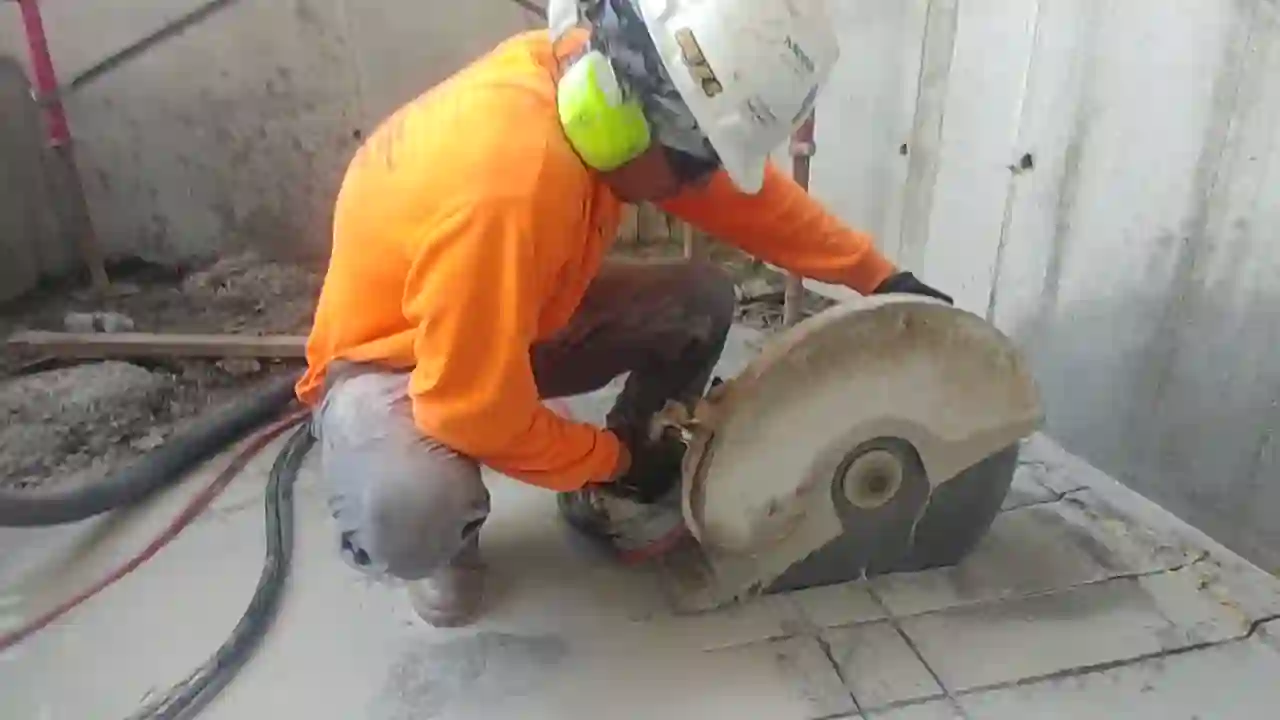
OSHA’s Respirable Crystalline Silica Standard (29 CFR 1926.1153) is the single most frequently cited regulation on concrete demolition job sites in South Florida. The permissible exposure limit (PEL) is 50 micrograms per cubic meter of air as an 8-hour time-weighted average. On a Miami Springs demolition site where you’re cutting through 40-year-old concrete with a flat saw or a wall saw, ambient silica concentrations without engineering controls can exceed that PEL by a factor of ten or more within minutes of beginning a cut.
Compliant operations use one of three engineering control methods: wet suppression, local exhaust ventilation (LEV), or a combination of both. Wet suppression — running a continuous water feed directly to the blade contact point — is the most common approach for slab sawing and core drilling. The water flow rate must be sufficient to visibly suppress dust at the cut line, which typically means a minimum of 0.5 gallons per minute for a 14-inch blade and scaling up proportionally for larger diameter equipment. LEV systems using HEPA-filtered vacuum shrouds are required for any dry-cutting scenario, and in Miami Springs’ humid environment, you also need to account for the fact that wet slurry from water-suppressed cuts creates a secondary slip hazard and a stormwater discharge concern under local ordinances.
Every worker within the silica exposure zone must be enrolled in a medical surveillance program if they’re exposed at or above the action level (25 µg/m³) for 30 or more days per year. That threshold is reached faster than most supervisors realize on a busy demolition schedule. Understanding how slab sawing costs are structured in Miami helps project managers allocate proper budget for silica control equipment rather than treating it as an afterthought.
Rebar Detection and Structural Hazard Assessment Before Any Blade Hits Concrete
One of the most dangerous assumptions on Miami Springs demolition sites is that the existing slab or wall layout matches whatever drawings are on hand — if drawings exist at all. Structures built in the 1950s through 1970s in this area were often constructed with inconsistent rebar placement, field modifications that never made it onto as-built drawings, and post-tensioned elements in locations that look identical to conventionally reinforced sections from the surface.
Hitting an unexpected rebar element with a diamond blade at full depth is not just an equipment issue — it’s a safety event. The blade can bind, kick back, or shatter a segment, sending carbide-tipped fragments across a job site at velocities that exceed 100 mph. Post-tensioned tendons present an even more severe risk: cutting through a live tendon releases stored energy instantaneously, and the whip effect of a severed tendon has caused fatalities in the industry.
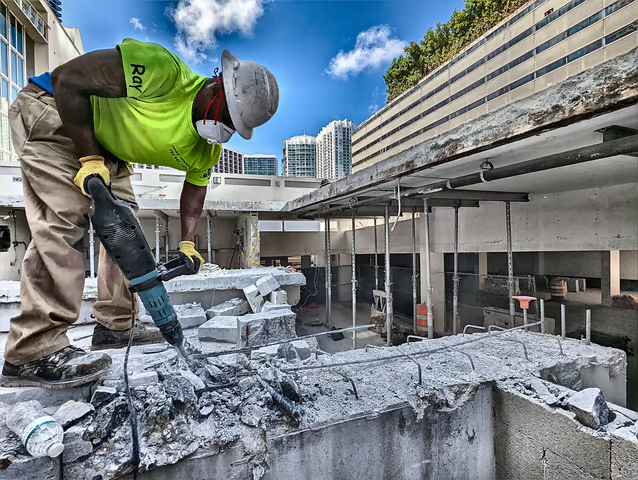
The protocol before any concrete cutting or demolition begins must include ground-penetrating radar (GPR) scanning of the work area. GPR provides a real-time subsurface image of rebar depth, spacing, conduit runs, post-tension tendons, and voids. The scan data should be marked directly on the slab surface with paint or chalk before any equipment is positioned. On older Miami Springs structures, I also recommend supplementing GPR with a cover meter (pachometer) scan to verify rebar depth at critical cut lines, since GPR signal interpretation in heavily reinforced slabs can occasionally produce ambiguous readings.
Expansion Joint Identification and Saw-Cut Sequencing to Prevent Uncontrolled Cracking
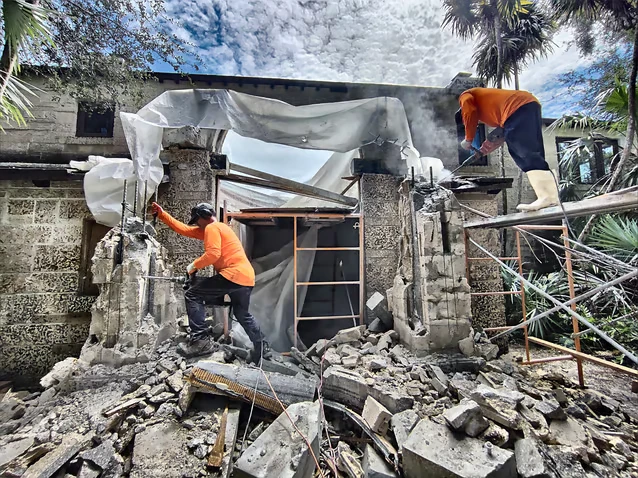
Demolition sequencing on concrete structures is not arbitrary. Cutting in the wrong order — or failing to identify existing expansion joints before beginning removal — can cause uncontrolled cracking that propagates into sections of the structure you intend to keep. On Miami Springs commercial renovation projects where a partial slab removal is required, this is one of the most common and costly mistakes I see.
The correct approach is to map all existing control joints, construction joints, and expansion joints before establishing the cut sequence. Saw cuts for demolition should always terminate at or before an existing joint, never run through them without accounting for the differential movement potential on either side. In partial demolition scenarios, the perimeter saw cut that defines the removal boundary must be made before any interior breaking or hydraulic demolition begins. This isolates the removal section structurally and prevents tensile cracking from migrating into the retained slab.
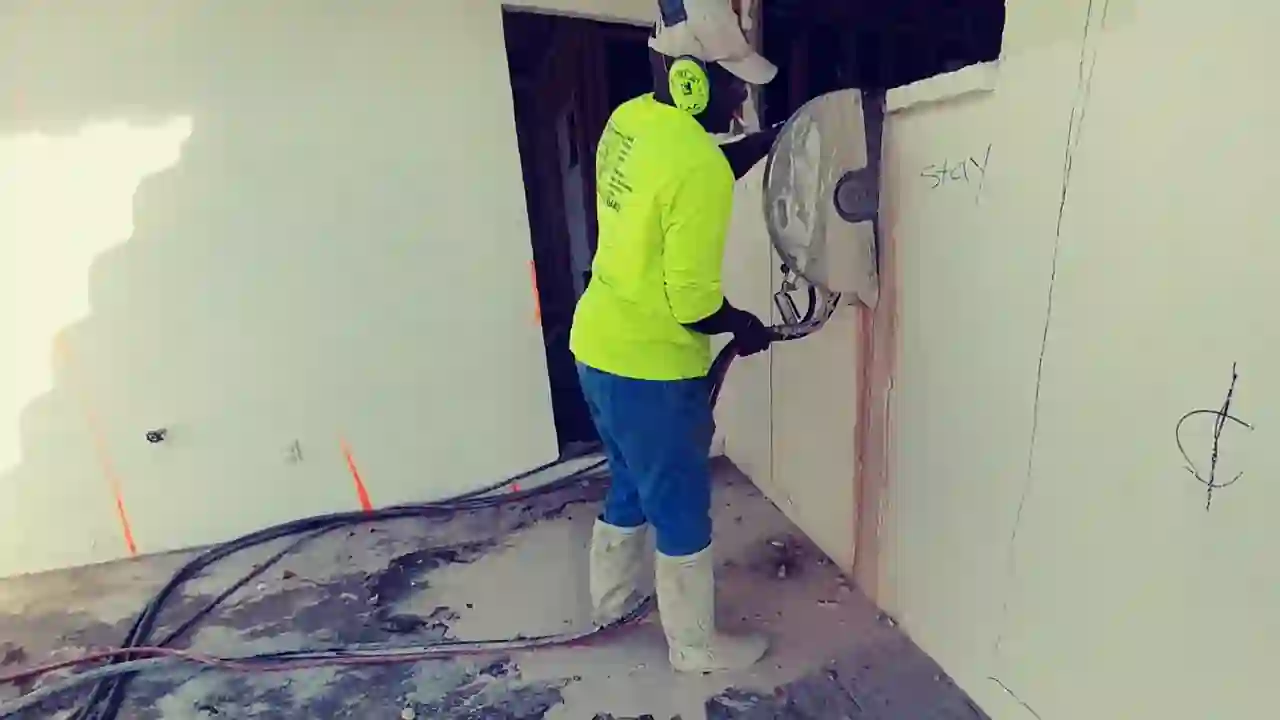
Wall sawing on Miami Springs structures requires the same sequencing discipline. Wall sawing operations on load-bearing elements must be preceded by a structural engineer’s review of the temporary shoring plan. The saw operator needs to know the load path before the first cut is made — not after the wall starts to move.
Personal Protective Equipment Standards Specific to Concrete Demolition Operations
PPE requirements for concrete cutting and demolition go well beyond a hard hat and safety glasses. The following represents the minimum standard for a compliant Miami Springs demolition operation:
- Respiratory protection: A minimum of a NIOSH-approved N95 filtering facepiece respirator for incidental dust exposure; a half-face respirator with P100 cartridges for sustained cutting operations where engineering controls alone cannot maintain exposure below the PEL.
- Eye and face protection: Safety glasses with side shields are baseline; a full face shield is required during any operation involving hydraulic breakers, wall saws, or wire saws where fragment projection is a credible risk.
- Hearing protection: Flat saws, core drills, and hydraulic breakers routinely produce noise levels between 95 and 110 dB at the operator position. Dual protection (earplugs plus earmuffs) is required above 105 dB. OSHA 29 CFR 1910.95 requires a hearing conservation program for workers exposed above 85 dB as an 8-hour TWA.
- Hand protection: Anti-vibration gloves rated for the specific tool being used. Hand-arm vibration syndrome (HAVS) is a recognized occupational illness for workers using jackhammers and breakers regularly.
- Foot protection: Steel-toed boots with metatarsal guards are required on all active demolition sites, not just steel-toed boots alone.
- Cut-resistant chaps or leg protection: Required for any operator handling a hand-held cut-off saw or angle grinder at leg height.
Utility Strike Prevention and Subsurface Clearance Protocols
Miami Springs has a utility infrastructure that reflects decades of incremental development — gas lines, buried electrical conduit, water mains, and telecommunications runs that don’t always appear on Sunshine State One-Call (811) mark-outs with full accuracy. The 811 system is a legal requirement, not a comprehensive safety guarantee. Positive response from all utility operators must be confirmed before excavation or concrete cutting begins, and the marked clearances must be respected with hand-digging within 18 inches of any marked utility.
For concrete cutting operations specifically, the GPR scan discussed earlier in the context of rebar detection also serves as the primary tool for identifying shallow utility conduit embedded in or immediately below the slab. Any anomaly flagged by the GPR operator that cannot be definitively identified as structural reinforcement should be treated as a potential utility until proven otherwise. This is a conservative protocol, but on a Miami Springs job site where the cost of a gas line strike or an electrical fault vastly exceeds the cost of a few extra minutes of investigation, it’s the only defensible standard.
If you’re managing a renovation project and need a broader perspective on contractor selection and equipment capability for these types of operations, the guidance compiled for property owners evaluating concrete cutting contractors translates directly to Miami Springs project management decisions as well.
Site-Specific Safety Plans and Daily Pre-Task Briefings That Actually Work
A site-specific safety plan for a Miami Springs construction and demolition project is not a generic template with the project address filled in. It must address the specific hazards of that site — the soil conditions, the proximity to adjacent occupied structures, the type of concrete being removed, the equipment being deployed, and the sequence of operations. OSHA’s Construction Standards (29 CFR Part 1926) require that workers be trained on the hazards specific to their assigned tasks, which means a pre-task briefing must reference the actual work being done that day, not a generalized overview of demolition safety.
Effective pre-task briefings on demolition sites cover five elements: the specific hazards present for today’s scope, the engineering and administrative controls in place, the PPE required for each task, the emergency response procedure if something goes wrong, and the stop-work authority that every worker on site holds. That last element — stop-work authority — is the one most frequently omitted on smaller Miami Springs jobs, and it’s the one that matters most when a crew member notices something wrong before the supervisor does.
Waste Management and Environmental Compliance for Demolition Debris in Miami Springs
Concrete demolition debris in Miami Springs is subject to Miami-Dade County’s construction and demolition (C&D) debris regulations, which require that material be transported to a licensed C&D recycling or disposal facility. Open dumping of concrete rubble — even on private property — is a violation that carries significant fines. Beyond the regulatory requirement, the practical safety issue is that unsecured demolition debris on an active job site creates trip hazards, potential projectile material during subsequent operations, and access obstructions for emergency response.
Slurry from wet-suppressed concrete cutting operations requires separate handling. The slurry contains elevated pH levels and fine silica particles that make it a regulated discharge under local stormwater ordinances. It cannot be allowed to flow into storm drains, swales, or adjacent properties. Containment berms, vacuum recovery of slurry, and pH neutralization before any controlled discharge are the compliant approaches. This is an area where many otherwise competent crews fall short, and it’s increasingly a focus of enforcement activity in Miami-Dade.
Running a tight, compliant demolition operation in Miami Springs isn’t just about avoiding citations — it’s about protecting workers, protecting adjacent properties, and delivering a project that doesn’t carry hidden liability into the next phase of construction. The protocols described here represent current industry best practice and OSHA compliance minimums. Any operation falling short of these standards is taking on risk that, in a market as active and scrutinized as Miami Springs, will eventually catch up with them.