How Slab Sawing Bids Are Structured and Why Two Quotes Can Differ by Thousands
Walk into any commercial job site in Miami-Dade County and ask two different concrete cutting contractors to bid the same slab sawing job. You’ll get two completely different numbers — and both contractors will tell you theirs is fair. That’s not a coincidence, and it’s not dishonesty. Slab sawing pricing is legitimately complex, shaped by a matrix of variables that most project managers and GCs don’t fully understand until they’ve been burned by a low-ball bid that ballooned mid-project. This post breaks down the technical and financial anatomy of a slab sawing estimate so you can evaluate bids intelligently, build realistic project timelines, and avoid the cost overruns that derail South Florida construction schedules.
The Technical Foundation — What Slab Sawing Actually Is
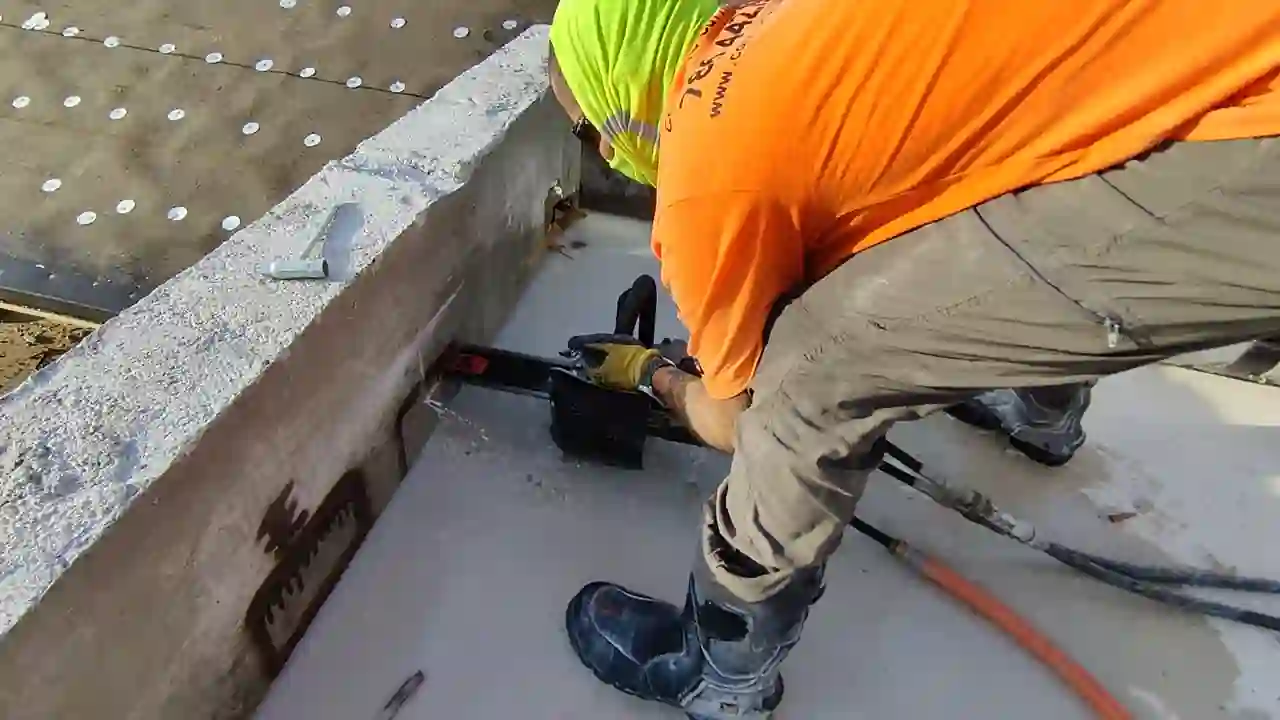
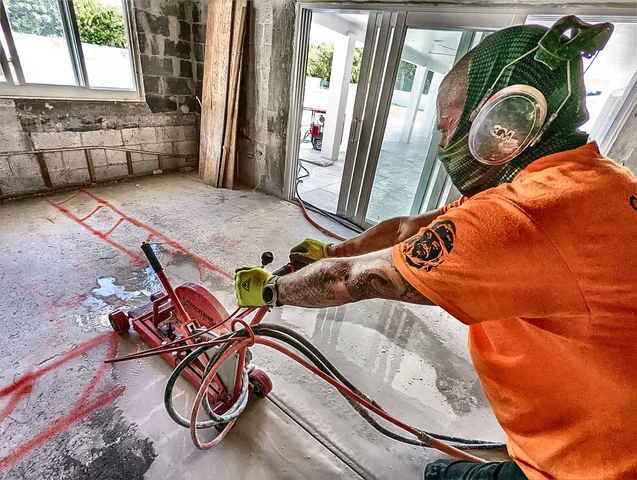
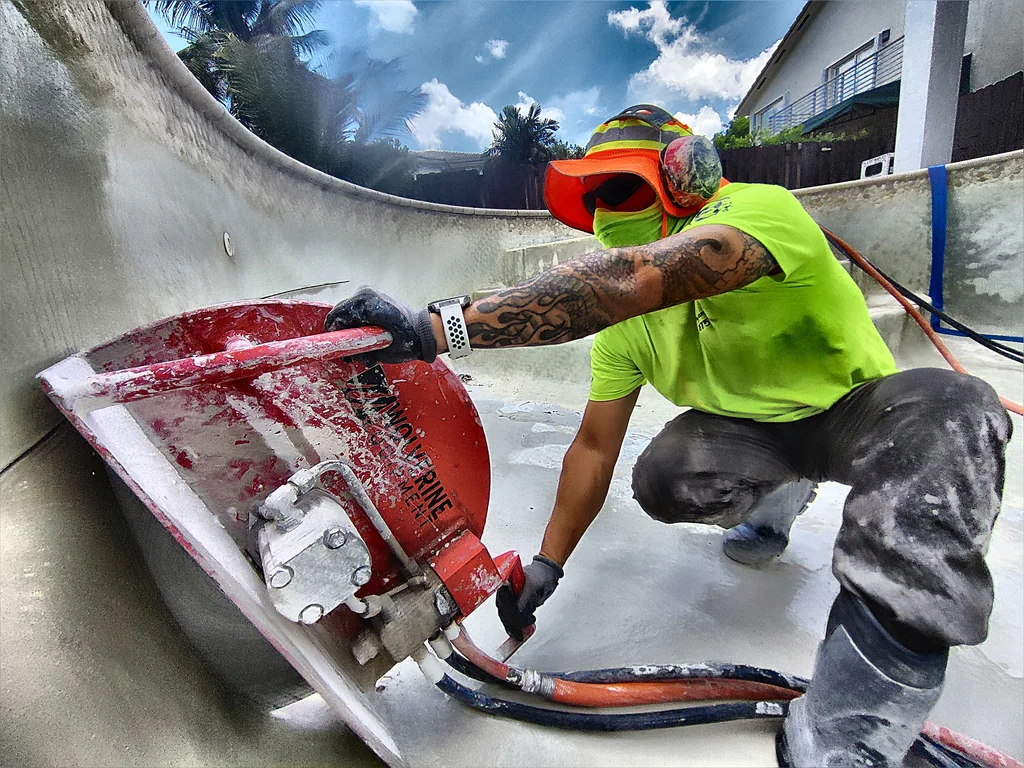
Slab sawing, also called flat sawing, uses a walk-behind or ride-on diamond blade saw mounted on a wheeled chassis to cut horizontally through concrete slabs, asphalt, and masonry at grade level or on elevated deck surfaces. The blade penetrates from the top surface downward, making it the go-to method for cutting expansion joints, utility trenches, pavement patches, and structural openings in horizontal concrete elements. Unlike wall sawing or wire sawing, slab sawing is constrained by blade diameter — the maximum cut depth is roughly 40–50% of the blade’s diameter. A 36-inch blade, which is large-format equipment, achieves a maximum cut depth of approximately 16–18 inches. For Miami’s typical 4- to 8-inch residential and light commercial slabs, a 14- to 20-inch blade is standard. Heavily reinforced industrial slabs — think warehouse floors or parking structures — often require multiple passes and larger blade assemblies.
The cutting medium is a diamond-impregnated segmented blade. Blade bond hardness must be matched to aggregate hardness. Miami’s local limestone aggregate is moderately abrasive, which means a medium-bond blade performs well in most applications. Harder silica-rich aggregate from imported fill or specialty mixes will wear a soft-bond blade aggressively, increasing consumable costs significantly. This is a detail that separates experienced concrete demolition specialists from generalist contractors.
Per-Linear-Foot Pricing Benchmarks for South Florida Markets
Slab sawing is almost universally priced by the linear foot, with depth tiers that create pricing breakpoints. Here are realistic market rates for the Miami metro area as of current conditions:
- 0–6 inches depth: $4.50–$7.00 per linear foot for standard unreinforced or lightly reinforced residential slabs
- 6–12 inches depth: $7.00–$12.00 per linear foot, depending on rebar density and aggregate hardness
- 12–18 inches depth: $12.00–$20.00 per linear foot — this tier often requires large-format equipment and multiple blade changes
- Asphalt overlay on concrete: Add $1.50–$3.00 per linear foot; the asphalt clogs blade segments and accelerates wear
- Post-tensioned slabs: Flat-rate premium of 30–60% above standard pricing due to strand mapping, specialized cutting protocol, and liability exposure
These numbers assume wet cutting with slurry vacuum recovery — the standard for enclosed or occupied spaces. Dry cutting in open outdoor environments can reduce base pricing by 8–12%, but generates significant silica dust and is increasingly restricted under OSHA’s 1926.1153 silica standard. Any contractor bidding dry cutting without documented respiratory controls should raise an immediate red flag.
The Five Biggest Bid Drivers That Contractors Use to Justify Higher Numbers
When a slab sawing bid comes in high, it’s usually attributable to one or more of the following technical factors. Understanding these helps you push back intelligently or recognize when the premium is genuinely warranted.
Rebar Density and Layout Mapping
Cutting through #4 rebar at 12-inch centers is a fundamentally different job than cutting through #8 rebar at 6-inch centers in two directions. Heavy rebar dramatically increases blade wear, slows cutting speed, and can require mid-cut blade changes. Contractors who GPR scan before bidding — which all serious operators should — will price rebar density accurately. Those who don’t scan are either guessing or planning to issue a change order. For Miami’s commercial construction industry, post-tensioned and heavily reinforced slabs are common in high-rise podium decks and parking structures, making pre-bid GPR scanning non-negotiable.
Slurry Management and Environmental Containment
Wet slab sawing generates significant volumes of concrete slurry — a mixture of water, fine concrete particles, and silica. On a 200-linear-foot trench cut at 6-inch depth, you can generate 50–80 gallons of slurry. That material cannot be discharged into storm drains under Miami-Dade stormwater ordinances. Vacuum recovery, containment, and legal disposal add real cost. Budget $150–$400 for slurry disposal on mid-size jobs, more on large commercial cuts.
Access and Equipment Mobilization
A ride-on slab saw weighs 1,200–3,500 pounds depending on configuration. Getting that machine to a second-floor elevated deck, a tight interior corridor, or a job site with restricted access routes adds mobilization cost. Elevator access, crane picks, or equipment disassembly for tight access all appear as line items on professional bids. For small business owners managing tenant improvement projects in occupied buildings, this factor alone can add $500–$2,000 to a standard estimate.
Utility Conflicts and Subsurface Risk
Slab sawing without confirmed utility clearance is a liability minefield. Embedded conduit, radiant heating loops, plumbing sleeves, and post-tension cables all represent strike risks. Professional contractors build in scanning costs and slow-cut protocols near identified conflicts. If a bid doesn’t address subsurface risk management, ask specifically how they handle it — the answer tells you a great deal about their operational maturity.
Night and Weekend Shift Premiums
Occupied commercial properties, retail centers, and hospitality venues frequently require off-hours cutting to avoid business disruption. Night shift and weekend premiums typically run 25–40% above standard day-rate pricing. This is non-negotiable for equipment operators and is a legitimate cost — factor it into your project budget from day one rather than treating it as a surprise.
Realistic Timeline Estimations for Common Slab Sawing Scopes
Production rates for slab sawing vary considerably, but here are field-realistic benchmarks for planning purposes:
- 4-inch residential slab, straight cuts: 80–120 linear feet per hour with a mid-size saw
- 6-inch commercial slab, moderate rebar: 40–70 linear feet per hour
- 8–12 inch industrial slab, heavy rebar: 15–35 linear feet per hour
- Post-tensioned slab with strand mapping protocol: 10–20 linear feet per hour
Add setup, slurry management, and blade change time, and a realistic full workday produces 250–400 linear feet on standard residential work, 150–250 linear feet on commercial, and 80–150 linear feet on heavy industrial or post-tensioned applications. A 500-linear-foot commercial trench cut at 8-inch depth is realistically a 2–3 day project, not a one-day sprint — regardless of what a low-bid contractor promises.
For homeowners considering related concrete removal work, our detailed guide on how to approach patio demolition in Miami provides useful context on scope management and realistic timelines for smaller-scale projects.
What a Professionally Structured Slab Sawing Bid Should Include
A complete, defensible slab sawing bid from a qualified contractor should itemize the following elements clearly:
- Linear footage by depth tier — not a single lump-sum line item
- Blade specification — diameter, bond hardness, and expected blade life for the substrate
- Slurry management protocol — vacuum recovery system, containment method, disposal documentation
- GPR scanning scope — whether included or billed separately, and who performs it
- Mobilization and demobilization costs — especially critical for multi-day or phased projects
- Shift premium disclosure — if off-hours work is required, the rate premium should be explicit
- Change order triggers — specific conditions (unexpected rebar density, embedded utilities, depth changes) that will generate a change order, with rate schedules attached
Bids that lack this specificity are not necessarily dishonest, but they create ambiguity that almost always resolves in the contractor’s favor. The architectural and engineering teams on your project deserve accurate cost data to make informed decisions — and that requires a bid document with genuine technical depth.

Why Miami’s Climate and Substrate Conditions Create Unique Pricing Pressures
South Florida’s construction environment introduces variables that contractors in other markets don’t routinely price. High ambient humidity affects blade cooling and slurry viscosity. Salt air accelerates corrosion on equipment components, increasing maintenance overhead for operators running near-coastal job sites. Miami’s geology — primarily oolitic limestone with variable density — creates inconsistent cutting resistance even within a single slab pour, which affects production rates and blade life unpredictably.
Seasonal considerations matter too. Summer wet season in Miami means afternoon thunderstorms that can shut down outdoor cutting operations with no warning. Professional contractors build weather contingency into their project schedules. A bid that promises a fixed completion date for outdoor slab sawing work during June–September without acknowledging weather risk is either naive or deliberately optimistic. Experienced operators in the concrete cutting trade build float into their schedules and communicate it transparently.
Getting the Most Accurate Bid on Your Next Slab Sawing Project
The single most effective thing a project manager can do to get accurate, comparable slab sawing bids is to provide complete substrate information upfront. Concrete mix design records, as-built drawings showing rebar layout and depth, any existing GPR scan data, and confirmed utility locations all reduce the uncertainty that contractors price into their estimates. The more information you provide, the less contingency padding lands in the bid. On a 1,000-linear-foot commercial project, eliminating uncertainty can reduce bid spread by $3,000–$8,000 — a significant return on the time invested in documentation.
Request that all bidders use the same scope document and provide unit pricing by depth tier rather than a single project total. This makes bids genuinely comparable and reveals which contractors actually understand the work they’re pricing. The difference between a technically sound slab sawing bid and a guess dressed up as a quote is usually visible in the line-item detail — or the lack of it.