Why Saw Cuts in Concrete Are Never Just About the Blade
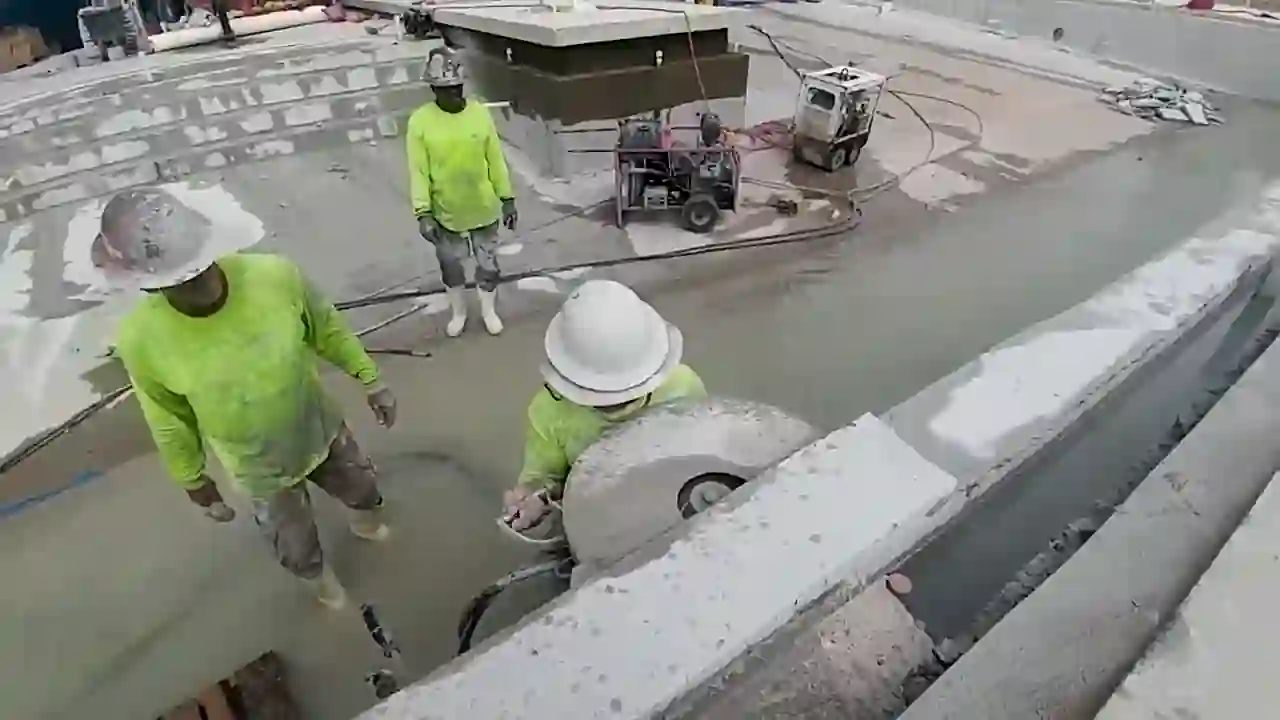
Walk any experienced concrete cutting foreman onto a job site and they’ll tell you the same thing: the cut itself is rarely the hard part. What makes or breaks a saw cutting operation — especially in Miami’s dense urban environment — is everything that surrounds the cut. Equipment staging, water management, slurry containment, worker access, utility conflicts, and structural clearances all converge before a single diamond blade ever touches a slab. When you’re working in a confined space, a basement, a parking garage, or a narrow mechanical room, those logistical variables don’t just multiply — they compound. Understanding how professional crews plan and execute saw cuts in concrete under these conditions is what separates a smooth project from a costly, dangerous failure.
Reading the Site Before You Read the Drawings
Blueprint review is non-negotiable, but experienced crews know that drawings don’t tell the whole story. A site walk — done by someone who actually runs the equipment — is the first real step in planning saw cuts in concrete on any restricted-access project. You’re looking for ceiling height, doorway widths, ramp grades, floor load ratings, and the presence of post-tension tendons or embedded conduit that won’t show up on a 20-year-old as-built. In Miami, many commercial and residential structures were built during periods of rapid growth with inconsistent documentation. That means ground-penetrating radar (GPR) scanning isn’t optional on these jobs — it’s mandatory before the first mark gets drawn on the slab.
Beyond subsurface scanning, the site walk identifies logistical chokepoints. Can a flat saw physically enter the space? What’s the turning radius? Is there a freight elevator with a weight limit that rules out your primary machine? These aren’t abstract questions — they determine which cutting method you deploy and how you sequence the work. Crews that skip this step often find themselves pulling equipment off site mid-job to swap for a smaller unit, burning hours and money.
Equipment Selection Driven by Access Constraints
For open-air flatwork, a large walk-behind flat saw with a 14- to 20-inch blade is the workhorse of choice. But the moment you move into a parking structure with a 7-foot clearance, a mechanical room with a 36-inch doorway, or a residential basement with a 3-foot crawl space, that machine becomes useless. This is where the equipment matrix gets technical fast.
- Compact flat saws with low-profile blade guards and reduced-height operator controls are purpose-built for parking decks and interior slabs where overhead clearance is 6 feet or less.
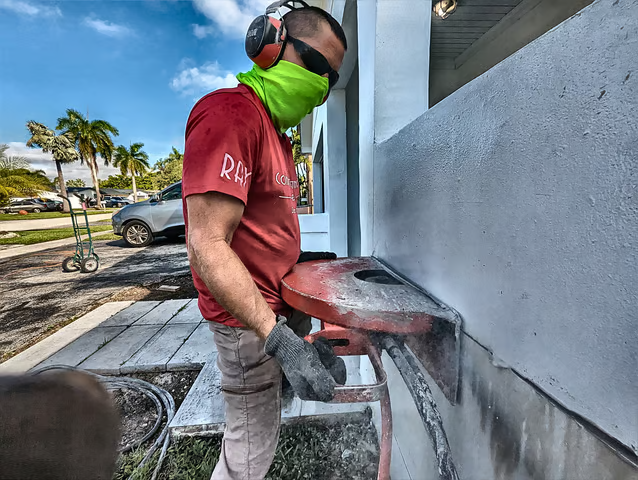
- Hand-held concrete saws — both electric and hydraulic — become the primary tool in spaces where even compact ride-on equipment can’t maneuver. Concrete hand sawing is a specialized skill that demands operator training beyond what most general laborers receive.
- Hydraulic power packs allow the motor unit to be staged outside the confined space while the cutting head operates inside, dramatically reducing heat, exhaust, and vibration in enclosed environments.
- Chain saws and ring saws are used for plunge cuts in walls and tight-radius applications where a standard circular blade can’t complete the geometry.
The decision tree for equipment selection should be formalized before mobilization, not improvised on-site. A well-run pre-job meeting includes the equipment list, the access plan, and a contingency if the primary tool can’t make entry.
Slurry Management in Confined and Below-Grade Spaces
Wet cutting is the industry standard for controlling silica dust during saw cuts in concrete, and OSHA’s silica rule (29 CFR 1926.1153) makes dust suppression a legal requirement, not a preference. The problem in confined spaces is that water-based slurry has nowhere to go. In a basement or enclosed mechanical room, you can’t let slurry run freely — it migrates into floor drains, contaminates adjacent areas, and creates slip hazards that can shut a job down instantly.
Professional crews use a combination of slurry dams, wet vacuums, and portable containment berms to manage effluent in real time. On multi-pass cuts or long linear runs, a dedicated laborer may be assigned solely to slurry management — continuously vacuuming ahead of the saw and routing collected material to an appropriate disposal container. In waterproofed below-grade spaces, this is especially critical. Cutting into a slab that sits above a waterproofed membrane system without slurry control can compromise that membrane and create long-term water intrusion problems that cost far more to remediate than the original cut.
Ventilation and Air Quality Management During Interior Saw Cutting
Even with wet cutting, silica-laden mist becomes airborne in enclosed environments. Ventilation engineering — not just a box fan pointed at a doorway — is required for any interior concrete cutting operation. Negative air pressure systems using HEPA-filtered air scrubbers pull contaminated air out of the work zone and exhaust it safely. The scrubbers are sized based on the cubic footage of the space and the anticipated dust load from the cut depth and aggregate type.
For gas-powered equipment in confined spaces, carbon monoxide is an additional hazard. CO monitors with audible alarms are non-negotiable, and many jurisdictions now require continuous monitoring documentation for any enclosed space cutting operation. Battery-electric and hydraulic cutting equipment eliminates the combustion exhaust issue entirely, which is one reason adoption of electric flat saws has accelerated significantly in Miami’s interior renovation market over the last several years.
Structural Staging and Load Path Considerations
Making saw cuts in concrete on an upper-level slab or parking deck introduces structural staging demands that go well beyond the cut itself. Before a flat saw rolls onto a suspended deck, the structural load capacity of that deck must be verified against the machine weight — including operator, water tank, and blade assembly. A standard commercial flat saw can weigh 1,200 to 2,000 pounds. Add a full water tank and you’re pushing the limits of many older post-tensioned decks.
When load capacity is marginal, crews have several options: drain the water tank and use a separate water supply line to reduce machine weight, use a lighter-duty compact saw with smaller blade diameter and multiple passes, or shore the deck from below if the structure permits. Ignoring this step isn’t just dangerous — it’s a liability exposure that no contractor should accept. For guidance on avoiding these and other costly field errors, review the detailed breakdown at this resource on critical concrete cutting mistakes Miami pros know to avoid.
Sequencing Cuts to Protect Structural Integrity
The order in which saw cuts in concrete are made matters enormously on structural slabs and walls. Cutting in the wrong sequence can relieve pre-stress in post-tensioned systems prematurely, cause unexpected deflection, or compromise adjacent sections before shoring is in place. On any project involving post-tension tendons, a structural engineer’s cut sequence must be followed exactly — no field modifications without written authorization.
For control joint installation in new flatwork, sequencing is driven by concrete strength gain. Joints should be cut within 4 to 12 hours of finishing, depending on mix design, ambient temperature, and humidity. In Miami’s heat and humidity, that window can compress significantly. Crews working large pours often stage multiple saws to hit the entire slab within the acceptable window, rather than running a single machine back and forth and risking random cracking on the far end of the pour.
Coordinating with Other Trades in Tight Site Conditions
In active construction or renovation environments, concrete cutting crews share space with electricians, plumbers, HVAC installers, and general laborers. In confined spaces, this creates real safety and scheduling conflicts. A flat saw running in a mechanical room generates noise levels exceeding 100 dB at the operator position and produces vibration that can interfere with adjacent precision work. Coordinating cut windows — typically early morning before other trades mobilize — reduces conflict and keeps the project schedule intact.
Communication with the general contractor’s site superintendent is essential before every mobilization. Confirm that the work area is clear, utilities are marked or de-energized as required, and adjacent trades are notified of cutting windows. This coordination is especially important in occupied buildings where noise ordinances, HVAC system protection, and occupant safety all require active management. If you’re managing your own project and want to understand how professional logistics are structured, the DIY guides section provides useful context on what professional crews account for that most property owners never consider.
Documentation and Post-Cut Verification on Restricted Access Jobs
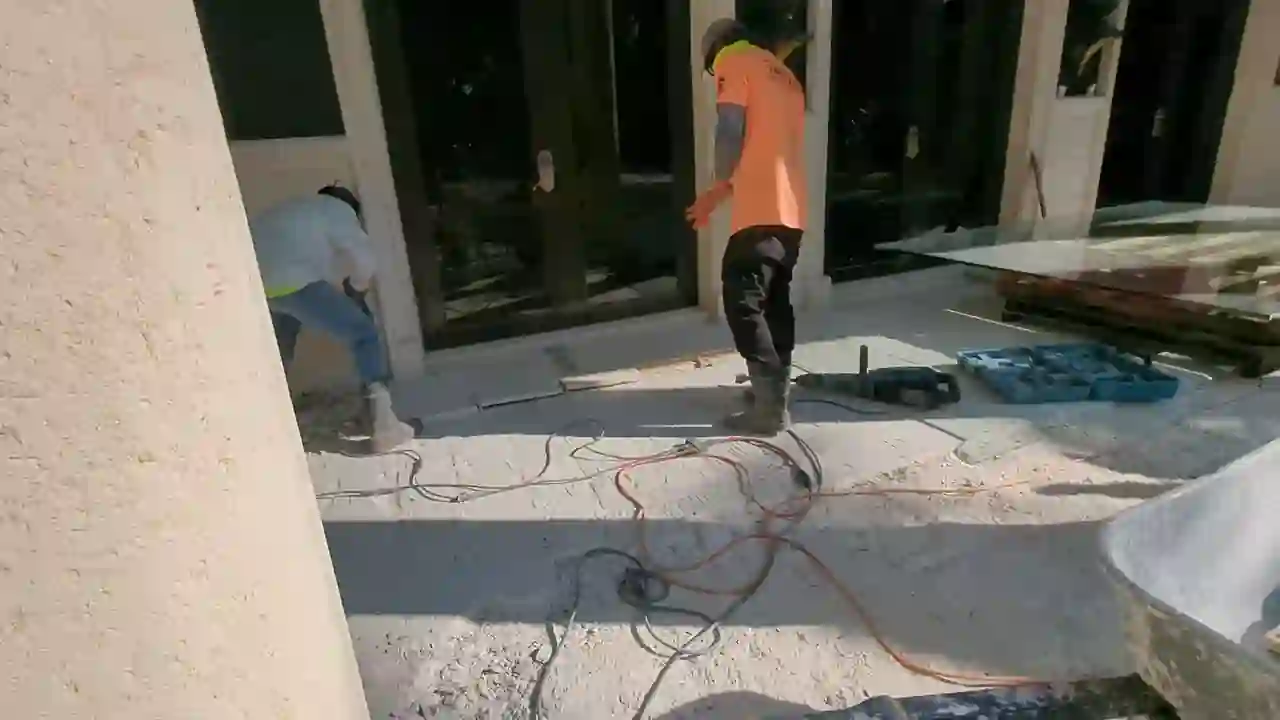
Every saw cut in concrete on a complex site should be documented — not just for liability protection, but for the trades that follow. Photographs taken before cutting show pre-existing conditions. Photos taken after show cut geometry, depth verification, and any anomalies encountered (unexpected rebar, conduit, or voids). On post-tension jobs, documentation of tendon locations relative to cut lines is a project record that the structural engineer may require before authorizing the next phase of work.
Depth verification using a calibrated depth gauge confirms that control joints hit the required one-quarter slab depth and that structural cuts don’t exceed engineer-specified dimensions. In confined spaces where visual verification is difficult, this step is often overlooked — and it’s exactly the kind of field error that creates problems months later when a slab cracks outside the joint or a structural section behaves unexpectedly under load. The crews that consistently deliver clean, problem-free results on difficult sites are the ones who treat documentation as part of the cut, not an afterthought.