Why Blade Selection Is the First Question You Should Ask Any Hollywood Concrete Cutting Contractor
When you’re hiring a concrete cutting contractor in Hollywood, Florida, the conversation almost always starts with price and timeline. That’s understandable. But if you want to predict the actual quality of a cut — whether it’s a wall opening for a new window, a utility trench through a reinforced slab, or a full slab removal — the real conversation should start with equipment. Specifically, it should start with diamond tooling. The blade a contractor loads onto the saw before your job begins will determine cut straightness, edge finish quality, dust generation, slurry volume, and whether the underlying rebar gets nicked or cleanly exposed. In South Florida’s construction environment — where slabs are often high-PSI mixes reinforced with epoxy-coated rebar and poured over post-tension cables — generic blade selection is a liability, not a cost savings.
Diamond Segment Specifications That Actually Matter on a Hollywood Job Site
Diamond blades are not a commodity product, even though big-box retailers sell them like one. The critical specification is the diamond concentration and grit size within the segment matrix. For standard 3,000–4,000 PSI residential slabs common in Hollywood’s older neighborhoods, a medium-bond segment with 30/40 mesh diamond grit is typically the baseline. But once you move into post-tensioned slabs — which are extremely prevalent in Hollywood’s mid-rise and commercial construction — you need a softer bond matrix. Counterintuitively, harder concrete requires a softer bond so that the matrix wears away fast enough to continuously expose fresh diamond crystals. A hard-bond blade on a 6,000 PSI slab will glaze over within minutes, generating heat, burning segments, and producing a ragged, inconsistent kerf.
Segment geometry is equally important. Turbo segments with a continuous wave profile are designed for fast cutting in abrasive, lower-strength concrete. Sandwich segments — alternating layers of high-diamond and low-diamond matrix — are engineered for hard, dense mixes where thermal management is critical. For demolition safety compliance on occupied structures, contractors must also consider the segment gullet depth, which controls slurry evacuation. Insufficient gullet depth on a deep cut causes slurry to pack into the blade, increasing torque load and creating blade deflection that pushes cuts off-line.
Blade Diameter and Arbor Compatibility for Slab and Wall Cutting
Blade diameter directly controls maximum cut depth, and the relationship is not 1:1. On a standard flat saw, a 14-inch blade yields approximately 4.5 inches of cutting depth. A 20-inch blade reaches roughly 7.5 inches. For full-depth cuts through a typical 6-inch Hollywood commercial slab, you’re looking at a minimum 18-inch blade, and that assumes a fresh, properly tensioned blade with no segment wear reducing the effective diameter. Wall saws used for window and door openings — a common application in Hollywood’s residential remodel market — operate on track-mounted systems and can accept blades from 18 inches up to 60 inches in diameter, allowing cut depths exceeding 24 inches for thick structural walls.
Arbor bore compatibility is a frequently overlooked detail that causes real problems on job sites. Most concrete saws use a 1-inch arbor bore, but some European-manufactured track saws use 25.4mm or 20mm bores. Mixing arbor sizes even fractionally creates blade wobble, which translates directly into kerf width variation and edge chipping. Any reputable hand saw operator in Hollywood should be carrying blade adapters and verifying arbor fit before every blade mount.
Flat Saw vs. Wall Saw vs. Core Drill — Matching the Machine to the Hollywood Project Type
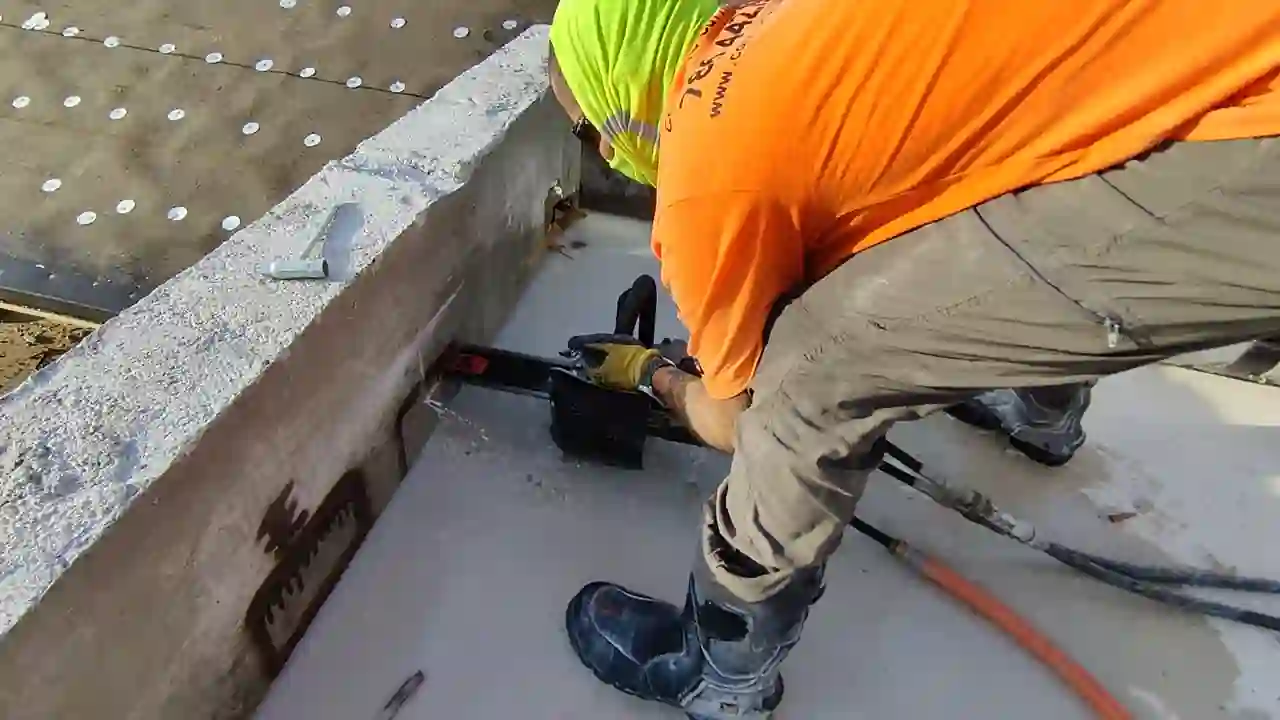
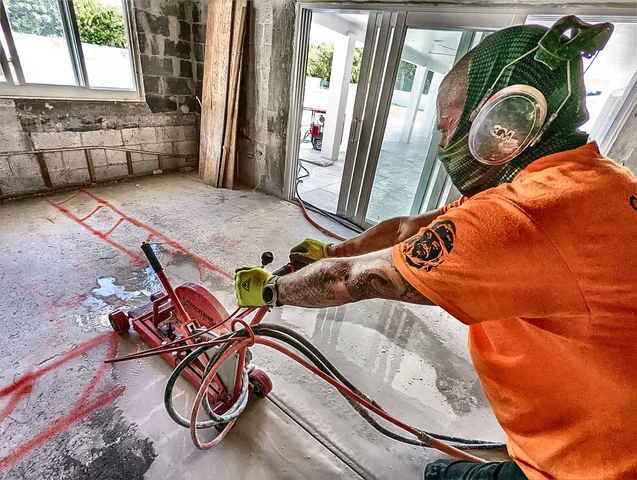
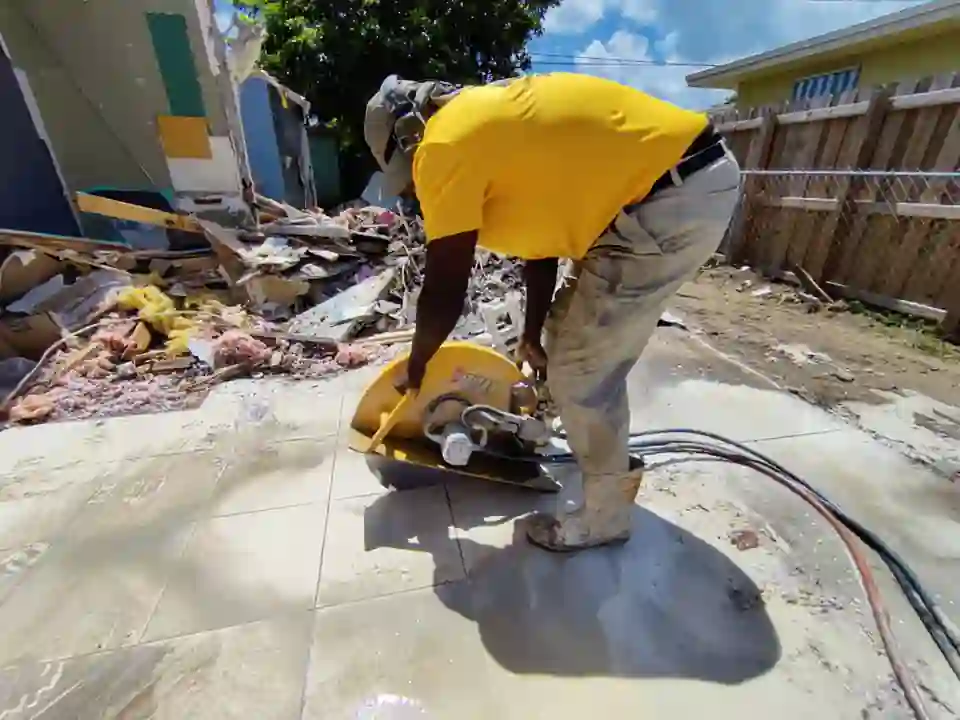
Equipment selection is not just about blade specs — it’s about matching the entire machine platform to the structural geometry and access conditions of the specific job. Flat saws (also called road saws or slab saws) are the workhorses for horizontal cuts: utility trenching, control joint cutting, and slab removal prep. They are self-propelled, water-cooled, and available in electric or hydraulic drive configurations. For indoor Hollywood projects — particularly in occupied commercial spaces — electric flat saws are mandatory because they eliminate combustion exhaust. Hydraulic powerpack systems offer a middle ground, keeping the engine outside while running hydraulic lines to an interior saw head.
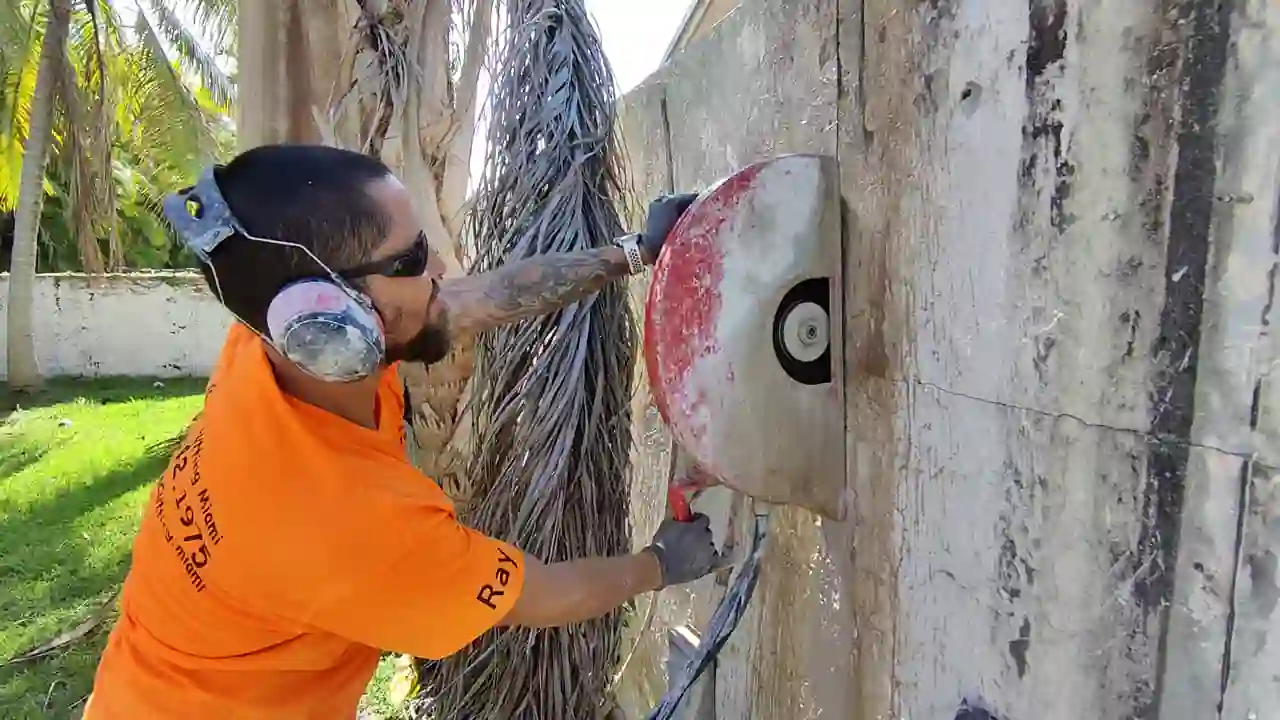
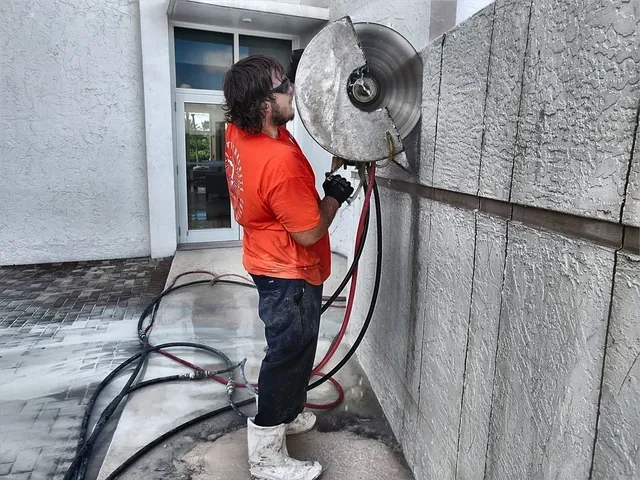
Wall saws are track-mounted and designed for vertical or angled cuts in walls, ceilings, and sloped surfaces. They are the correct tool for creating new window openings, door cutouts, and HVAC penetrations. If you’re researching window installation prep for a Hollywood property, a wall saw with a properly sized blade is the only tool that produces a flat, plumb cut face with controlled kerf width. Angle grinders and demo saws are not substitutes — they produce irregular edges that require significant remediation before any frame can be set.
Core drills are rotary tools using hollow cylindrical diamond bits for creating circular penetrations. Bit diameter ranges from 1 inch for conduit sleeves up to 60 inches for large utility vaults. Core drill bits use a similar bond-matrix logic as flat blades — softer bond for harder concrete — but they also require correct RPM calibration. Running a core bit too fast in hard concrete generates heat that destroys the bit’s laser-welded segment attachment, creating a projectile hazard. A qualified Hollywood contractor will reference the bit manufacturer’s RPM chart and adjust their drill motor accordingly.
Water Flow Rates, Slurry Management, and What They Tell You About a Contractor’s Competence
Water is not optional in concrete cutting — it is a functional component of the cutting system. Water serves two roles: cooling the blade to prevent thermal segment damage, and flushing the kerf to remove concrete fines that would otherwise pack and cause blade binding. The required flow rate is blade-diameter dependent. A 14-inch flat saw blade typically requires 3–5 gallons per minute of continuous flow at the blade guard. A 36-inch wall saw blade may require 8–12 GPM. Inadequate water flow is one of the leading causes of premature blade failure and is also a primary driver of airborne silica dust — a serious occupational health hazard regulated under OSHA’s 29 CFR 1926.1153 silica standard.
Slurry management on a Hollywood job site is both a technical and a regulatory concern. Concrete slurry — the mixture of water and pulverized concrete fines — has a high pH (often 11–12) and cannot be discharged directly into storm drains under Miami-Dade and Broward County stormwater ordinances. A professional contractor will deploy slurry containment berms, wet vacuums, and slurry solidification agents to capture, solidify, and dispose of cutting waste in compliance with local environmental rules. Home owners in Hollywood should ask any prospective contractor specifically how they handle slurry before signing a contract — the answer reveals a great deal about the contractor’s overall professionalism.
Hydraulic vs. Electric Drive Systems and Their Impact on Cut Quality
The drive system powering a concrete saw blade has a direct effect on cut quality, particularly in hard or variable-hardness concrete. Electric direct-drive saws deliver consistent RPM under load because electric motors maintain torque across their speed range. Hydraulic drive systems, by contrast, can experience pressure fluctuations when the hydraulic pump is under thermal stress — a real concern on hot Hollywood job sites where ambient temperatures regularly exceed 90°F. These pressure fluctuations translate into RPM variation at the blade, which causes micro-variations in kerf width and can produce a slightly ribbed cut face rather than a smooth one.
For precision applications — expansion joint cutting, decorative concrete scoring, or any cut where dimensional tolerance is tighter than ±1/8 inch — electric drive systems are the preferred specification. For high-production demolition work where speed matters more than surface finish, hydraulic systems’ raw power output often makes them the practical choice. Understanding this tradeoff is part of what separates a senior concrete cutting professional from a contractor who simply owns a saw.
Rebar Detection and Blade Adjustment Protocols Before Every Hollywood Cut
South Florida slabs are heavily reinforced. It is not unusual to encounter #5 or #6 rebar on 12-inch centers in commercial slabs, and post-tension cables add another layer of complexity. Before any cut begins, a qualified contractor should perform a ground-penetrating radar (GPR) scan or at minimum a magnetic rebar locator sweep to map the reinforcement layout. This information directly informs blade selection — specifically, the diamond concentration and bond hardness needed to cut through a steel-dense matrix without segment loss.
When a blade encounters rebar, the segment matrix must be hard enough to resist deflection but wear fast enough to prevent heat buildup at the steel-diamond interface. Many contractors use a dedicated rebar-rated blade — typically featuring a higher diamond concentration in a medium-hard bond — for slabs where steel content is confirmed to be high. Switching blades mid-job when unexpected rebar is encountered is not a sign of incompetence; it is a sign of a contractor who understands that no single blade is optimized for every condition.
The Equipment Checklist That Defines a Qualified Concrete Cutting Contractor in Hollywood
When evaluating any concrete cutting contractor for a Hollywood project, the equipment audit should include the following minimum specifications: a blade inventory covering at minimum three bond hardness grades (soft, medium, hard) in the required diameter range; water delivery systems with adjustable flow control and pressure gauges; a GPR or rebar locator device on the truck; HEPA-rated wet vacuum for slurry and dust capture; blade tensioning gauges to verify core flatness before mounting; and documentation of blade lot numbers for traceability. This last point matters more than most clients realize — blade manufacturing quality varies between production runs, and a contractor who tracks lot numbers can identify and return defective tooling before it fails on your slab.
The difference between a contractor who checks these boxes and one who doesn’t is not just quality — it’s safety, regulatory compliance, and the structural integrity of the cuts that will live in your building for decades. Whether you’re managing a slab removal in a Hollywood warehouse or prepping a residential wall for a new window, the blade on the saw and the machine driving it are the variables that determine your outcome. Ask about them before you sign anything.