Partial pool removal costs less than full removal — but the savings come with permanent restrictions on your property
Partial pool removal is the most common way Miami homeowners get rid of an unwanted swimming pool. It costs significantly less than full removal, it satisfies Miami-Dade permit requirements, and it transforms the pool area into usable yard space — grass, landscaping, patio, or deck. The catch, and it is a permanent catch, is that you can never build a structure over a partially removed pool. The buried lower walls and floor — broken and punctured but still in the ground — do not provide uniform bearing capacity. Any structure with footings built over the area would settle differentially and crack.
We perform partial pool demolitions throughout Miami-Dade County. The process is straightforward: demolish the upper portion of the pool walls, puncture the floor for drainage, backfill with clean material in compacted lifts, and grade the area to match the surrounding yard. It is a construction project with heavy equipment, permits, and inspections. It is not something you do with a weekend, a rented jackhammer, and a pile of dirt. Done correctly, partial pool removal creates usable yard space that stays flat for decades. Done incorrectly, it creates a permanent soft spot that every Miami rainstorm turns into a puddle.
What partial pool removal actually involves
Step 1: Permitting
Partial pool removal in Miami-Dade County requires a permit. The permit application includes a site plan, a description of the demolition method (how much of the shell is being demolished and to what depth), the fill material specification, and the compaction plan. The permit ensures a building inspector reviews the work — the demolition depth, the fill condition, and the final grade. Your contractor should handle the permit. If they ask you to get it yourself, find a different contractor.
Step 2: Pool deck and coping removal (if needed)
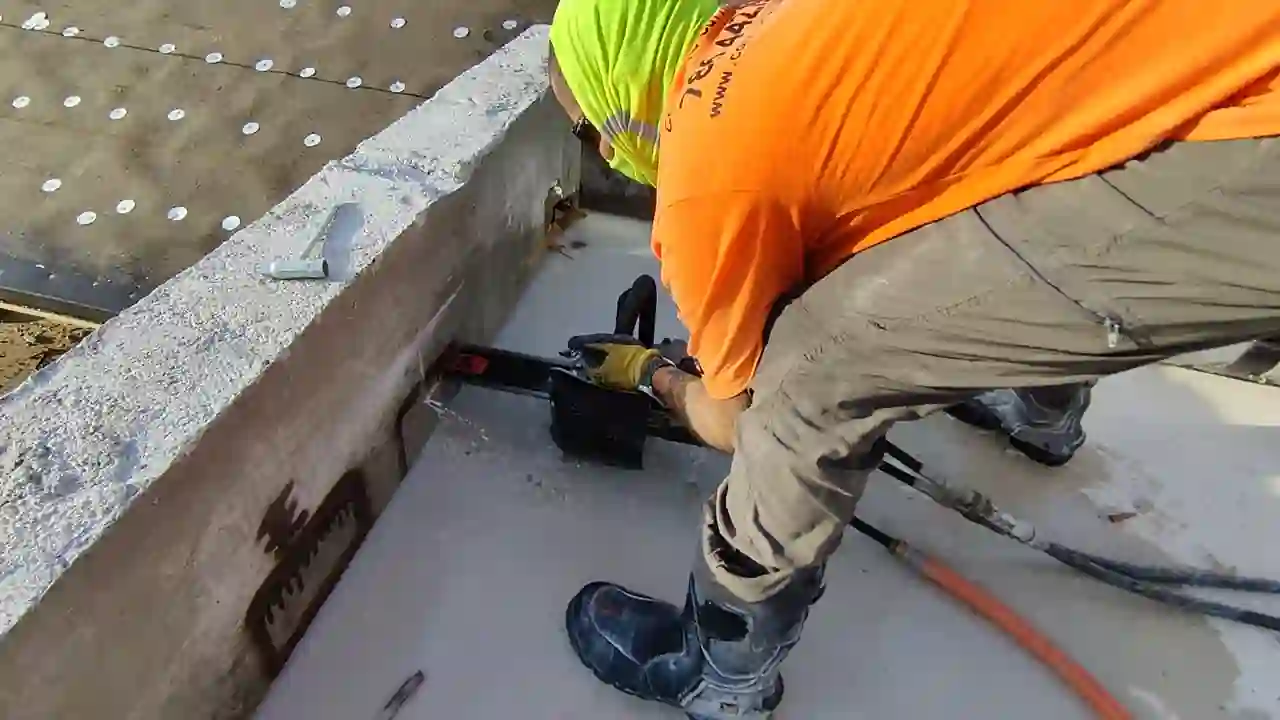
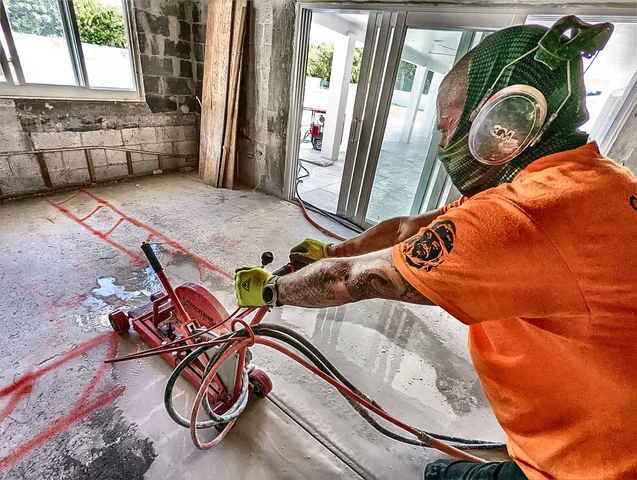
If the pool deck is being removed as well, it is saw-cut along the line where it meets any concrete being preserved. The deck concrete is then broken up and removed. Saw cutting the separation line prevents damage to adjacent concrete during breaking. Concrete sawing services provide the clean separation lines before any breaking force is applied.
Step 3: Wall demolition to code depth
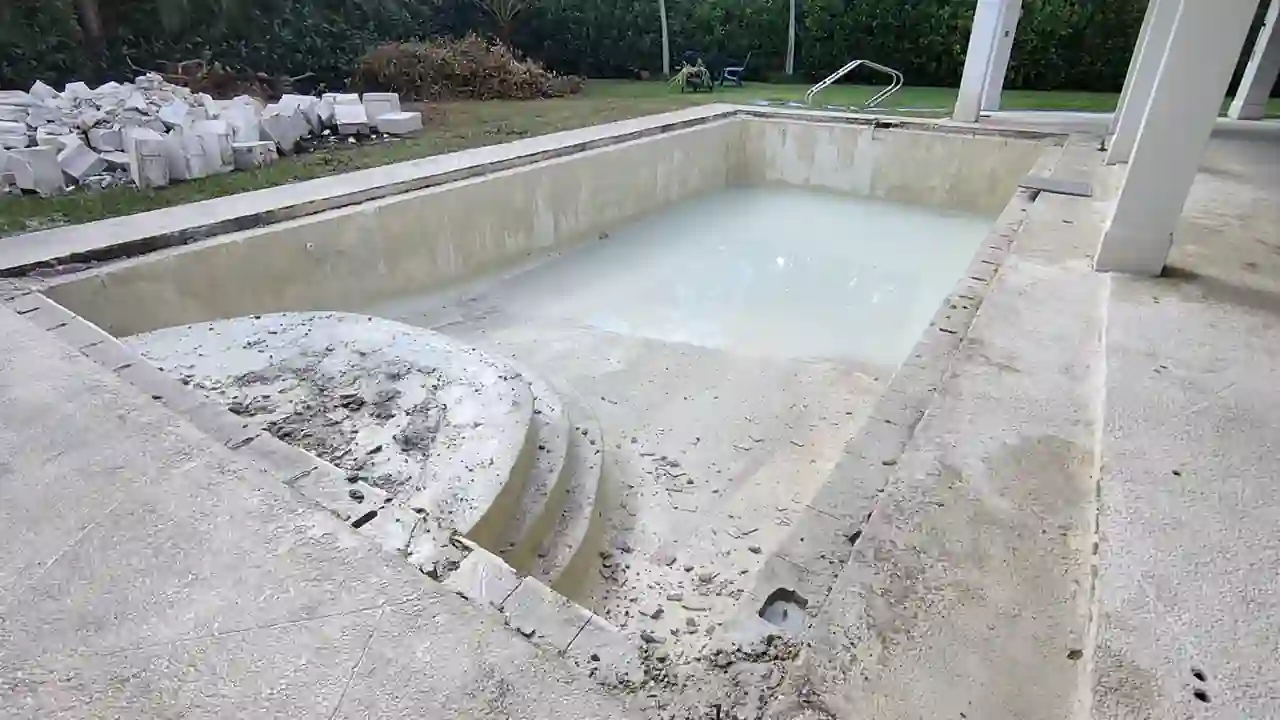
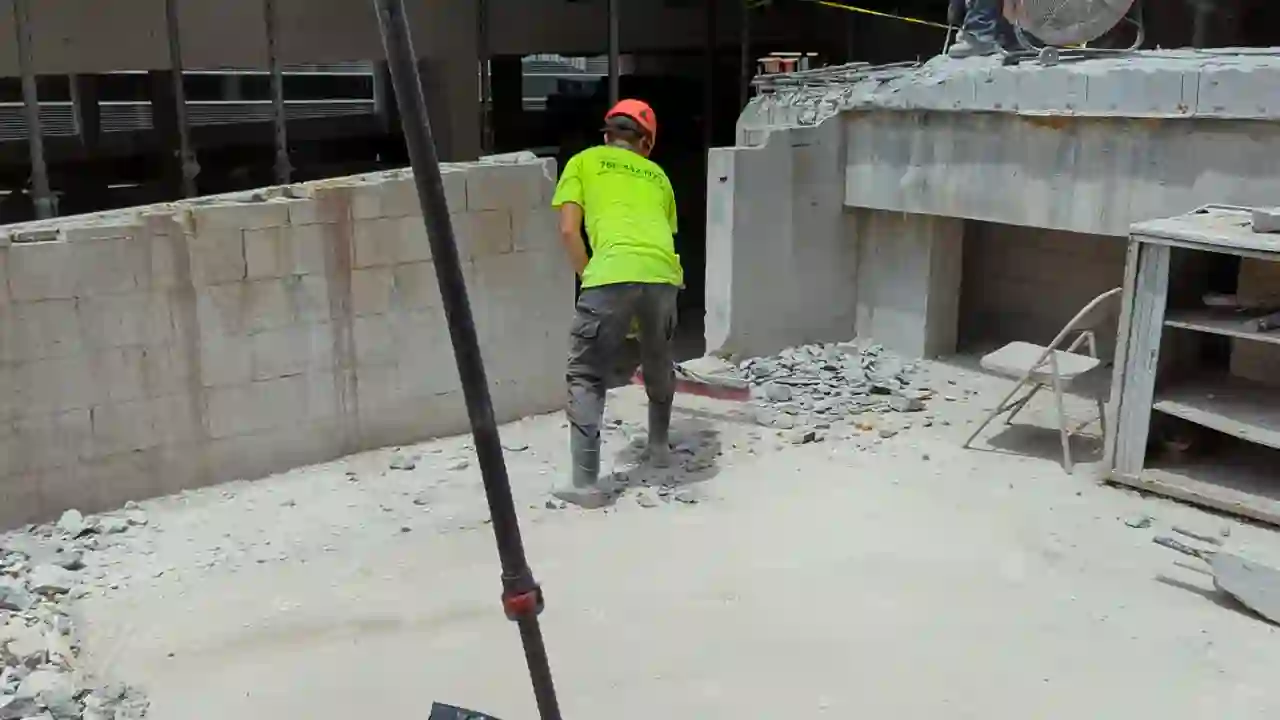
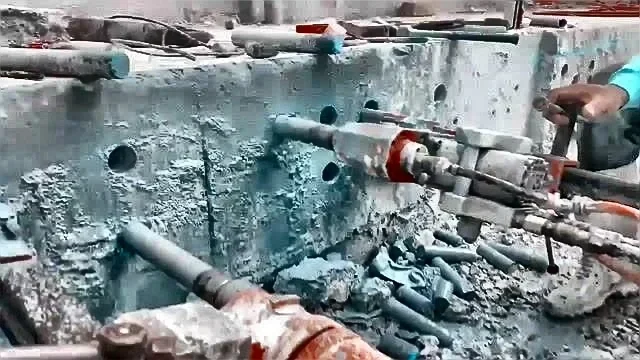
The upper portion of the pool walls is demolished to the depth required by code — typically 24 to 48 inches below finished grade. A hydraulic breaker mounted on an excavator or skid steer breaks the concrete. In areas with limited access, handheld pneumatic breakers accomplish the same thing, just more slowly. The broken wall sections can remain in the excavation — they become part of the fill.
Step 4: Floor puncturing
The pool floor is punctured with multiple holes — typically using the hydraulic breaker to punch through the concrete at several points. These holes allow groundwater to drain through the pool shell. Without floor punctures, the intact floor would trap water, creating an underground reservoir that could cause fill settlement, soil instability, and in extreme cases, flotation of the remaining pool structure.
Step 5: Backfill and compaction
Clean fill — soil free of organic material, debris, and large rocks — is placed in the excavation in lifts. Each lift is mechanically compacted before the next lift is placed. Lift thickness is typically 12 inches. A vibratory plate compactor or ride-on roller compacts each lift to the specified density. This is the step that determines whether the filled area stays flat or develops a depression. Poor compaction guarantees settlement.
Step 6: Final grading
The filled area is graded to match the surrounding yard elevation and to direct surface water away from the house and any structures. In Miami’s flat terrain, achieving positive drainage requires careful grading. The grade should not create a low spot where water collects.
Step 7: Inspection
A building inspector visits the site to verify that the demolition depth meets code requirements and that the fill and grading are acceptable. The inspector signs off on the permit, and the partial pool removal is documented and complete.
What you can and cannot do after partial pool removal
What you can do
- Landscape: Grass, plants, trees, gardens — all are fine over a partially removed pool. The buried concrete does not affect surface vegetation.
- Pave or hardscape: Pavers, concrete patio, deck, walkways — these are permitted because they are surface installations that do not require deep footings.
- Install lightweight structures: A pergola, a gazebo without deep footings, a shed on a floating slab — structures that do not require deep foundations are generally acceptable. Check with your municipality for specific requirements.
- Use as yard space: The area becomes normal yard space — play area, garden, dog run, whatever fits your needs.
What you cannot do
- Build structures with footings: House additions, garages, accessory dwelling units, and any other structure requiring foundation footings cannot be built over a partially removed pool. The buried shell does not provide uniform bearing capacity.
- Install a new pool: A new pool requires excavation through the buried shell, which is more complicated and expensive than excavating through undisturbed soil.
- Install heavy equipment pads: Generators, HVAC units requiring concrete pads with deep footings — the buried shell may complicate the installation.
These restrictions are permanent. They must be disclosed when you sell the property. Some buyers will be uncomfortable purchasing a property with a partially removed pool, which can affect resale. Pool demolition services can help you weigh partial vs full removal based on your current plans and future resale considerations.
Partial pool removal vs full pool removal — the comparison
- Cost: Partial removal costs substantially less — less concrete is extracted, less debris is hauled, less fill is needed, and no compaction testing is required (though it is recommended).
- Timeline: Partial removal is faster — typically 3 to 7 days depending on pool size and access, versus 1 to 2 weeks for full removal.
- Buildable land: Full removal returns the area to buildable condition. Partial removal does not.
- Resale implications: Both must be disclosed. Full removal is generally viewed more favorably by buyers because there is nothing buried and no restrictions on future use.
- Permit process: Similar for both — demolition permit, inspection, sign-off. Full removal may require additional engineering review and compaction testing.
What partial pool removal costs in Miami
The cost depends on pool size, access for equipment, water table conditions, and whether the pool deck is being removed. A small residential pool with good access is on the lower end. A large pool with limited access or with a high water table requiring dewatering during demolition is on the higher end. Fill material costs vary with the number of truckloads required.
The cost difference between partial and full removal is real and sometimes significant. Whether that savings is worth the permanent restrictions depends on your plans for the property. If you will never build on the pool footprint and you plan to stay in the home long-term, partial removal may be the right financial choice. If you might build an addition, want maximum resale flexibility, or simply do not want anything buried in your yard, full removal is worth the additional cost.
Questions to ask your partial pool removal contractor
- “How deep will you demolish the walls?” The code requirement is typically 2-4 feet below grade. The contractor should specify the exact depth for your municipality.
- “How do you puncture the floor?” They should describe the method (hydraulic breaker) and the number and distribution of puncture points.
- “What fill material are you using?” Clean fill or sand. Not construction debris, not random dirt, not the broken pool concrete (except as part of the fill at depth).
- “How do you compact the fill?” Lifts, mechanical compaction, specified lift thickness. Contact a Miami pool removal specialist who compacts properly and can provide compaction documentation.
- “What guarantee do you provide against settlement?” No contractor can guarantee zero settlement in all soil conditions, but a professional contractor stands behind their compaction work and will address settlement issues that arise from poor compaction.
Partial pool removal is the right choice for many Miami homeowners — it costs less, it takes less time, and it turns an unwanted pool into usable yard space. The key is understanding the permanent restrictions before you choose partial over full removal. The buried shell is not going anywhere. Neither are the restrictions on what you can do above it. Make the choice with your eyes open, and hire a contractor who handles the permits, the fill, the compaction, and the grading correctly. A properly executed partial pool removal is a one-time project with a lifetime of flat, usable yard space as the result.