Why Concrete Removal in South Miami Demands a Different Playbook Than the Rest of Florida
South Miami is not a generic job site. Between the high water tables, the proximity to Biscayne Bay, the aging mid-century construction stock, and the dense residential neighborhoods where a jackhammer at 7 a.m. gets you a code complaint by 7:15 — concrete removal here requires a level of planning that most out-of-town crews simply don’t bring to the table. If you’re a property owner, GC, or subcontractor trying to figure out how to remove a driveway, a pool deck, a structural slab, or a retaining wall in this area, this guide gives you the technical framework to do it right, on schedule, and without blowing your budget on avoidable mistakes.
Start Here — Assessing the Concrete Before Any Equipment Rolls In
The single most expensive mistake in concrete removal is skipping the assessment phase. Before you rent a skid steer or call for a dumpster, you need to understand exactly what you’re dealing with. In South Miami, concrete structures built before 1980 often used lower-grade aggregate and inconsistent rebar placement. Post-tension slabs — common in residential construction from the 1990s onward — require a completely different removal approach because cutting a post-tension cable without proper identification can cause catastrophic slab failure or serious injury.
Here’s what your pre-removal assessment must cover:
- Slab thickness measurement — Use a ground-penetrating radar (GPR) scan or core sample to confirm actual depth, not assumed depth from old blueprints.
- Rebar and post-tension cable mapping — GPR scanning identifies steel placement so cuts are made between tendons, not through them.
- PSI rating estimation — Older South Miami slabs may be 2,500 PSI; modern commercial pours can hit 5,000 PSI or higher. This directly affects blade selection and equipment tonnage.
- Utility location — Call 811 and get a private utility locator on-site. South Miami has underground irrigation, electrical conduit, and plumbing embedded directly in or beneath slabs in many residential properties.
- Soil conditions beneath the slab — South Miami’s limestone bedrock and sandy fill create uneven support. Undermined slabs can shift during removal, creating hazards for equipment operators.
Choosing the Right Removal Method for Each Concrete Type
There is no single removal method that works across all concrete types. Matching the technique to the material is where experienced crews separate themselves from generalists.
Flatwork Slabs — Driveways, Patios, Pool Decks
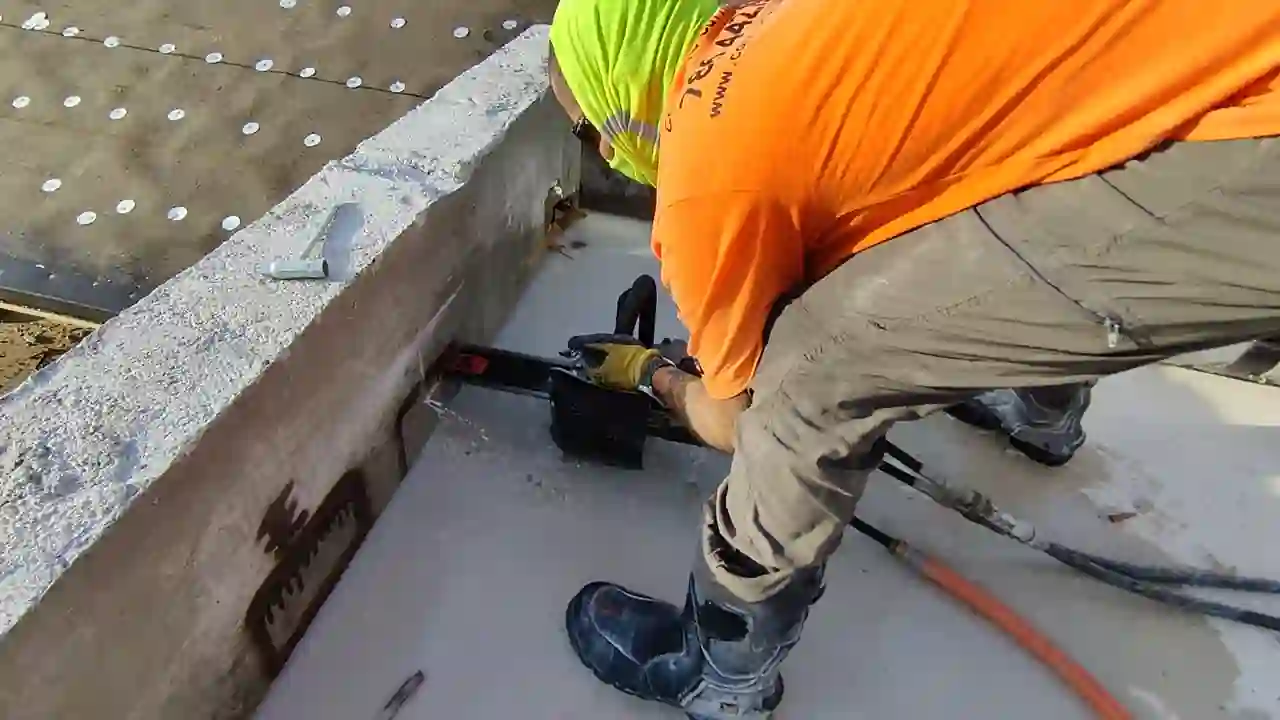
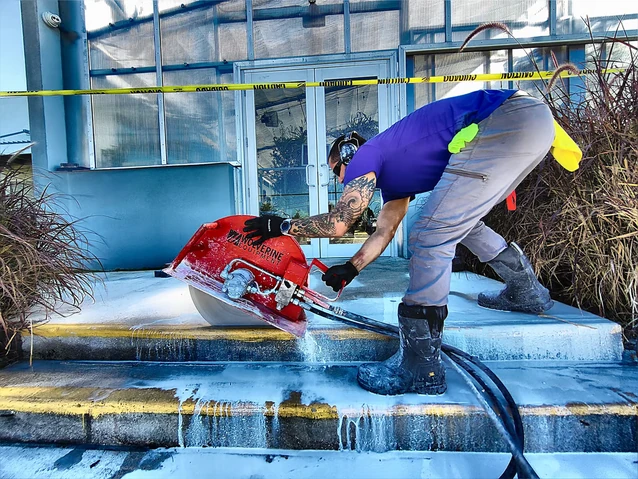
For unreinforced or lightly reinforced flatwork up to 6 inches thick, a combination of slab sawing and hydraulic breaker attachment on a mini excavator is the most efficient approach. The slab saw scores the concrete into manageable sections — typically 2-foot by 4-foot panels — which are then broken free and loaded out. In tight residential lots common throughout South Miami’s Sunset and Ponce-Davis neighborhoods, a compact track loader with a hydraulic hammer is often the only equipment that can maneuver without damaging landscaping or adjacent structures.
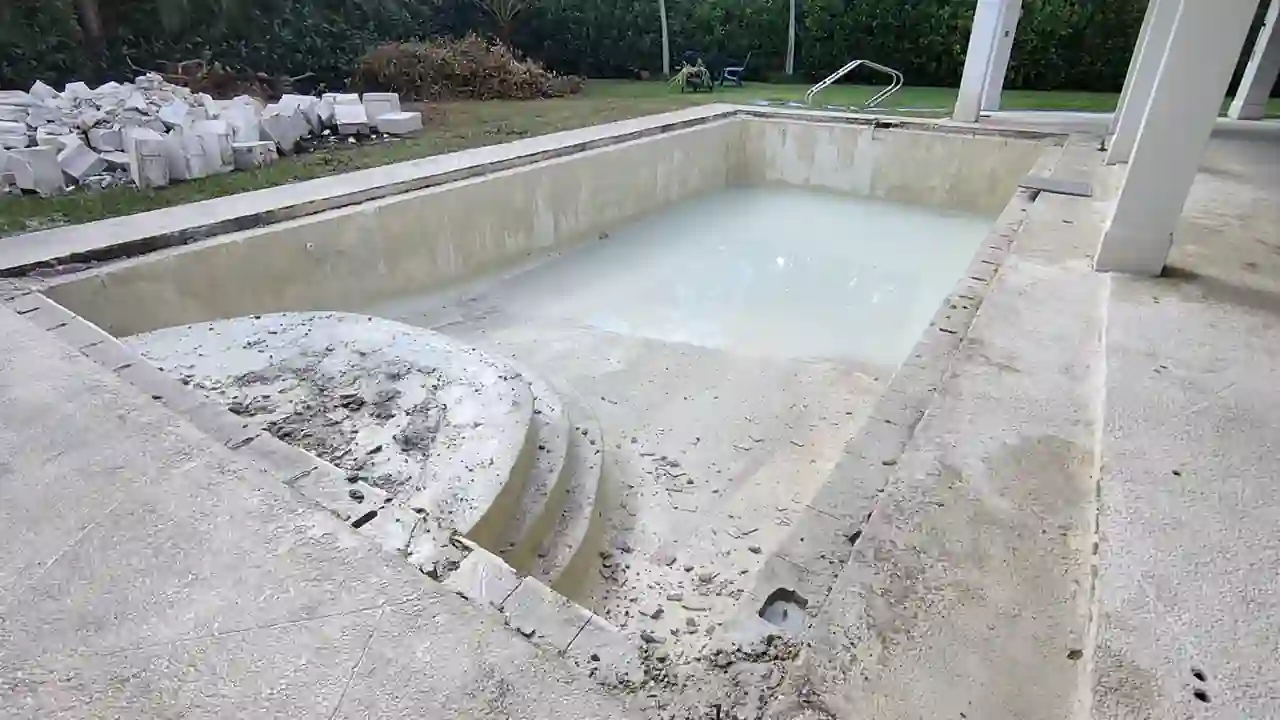
For post-tension pool decks, the cable locations must be marked before any mechanical breaking begins. Saw cutting along pre-identified safe zones is mandatory. This is not optional — it’s a liability and safety requirement. If you’re unclear on blade selection for this kind of precision work, this detailed guide on selecting the right saw for concrete cutting will walk you through diamond blade specifications and feed-rate calculations for different PSI ratings.
Structural Slabs and Foundation Walls
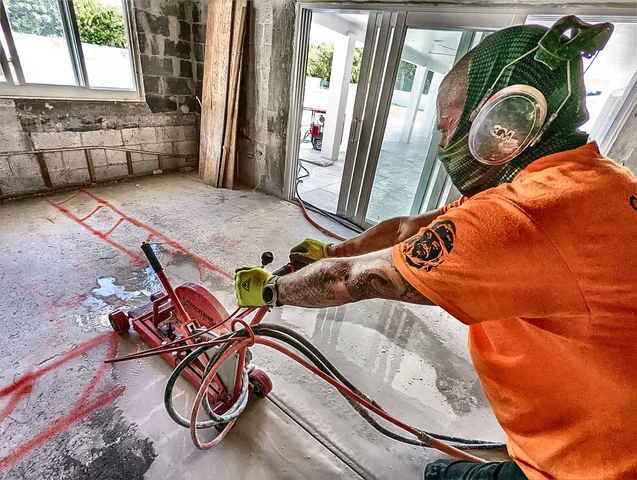
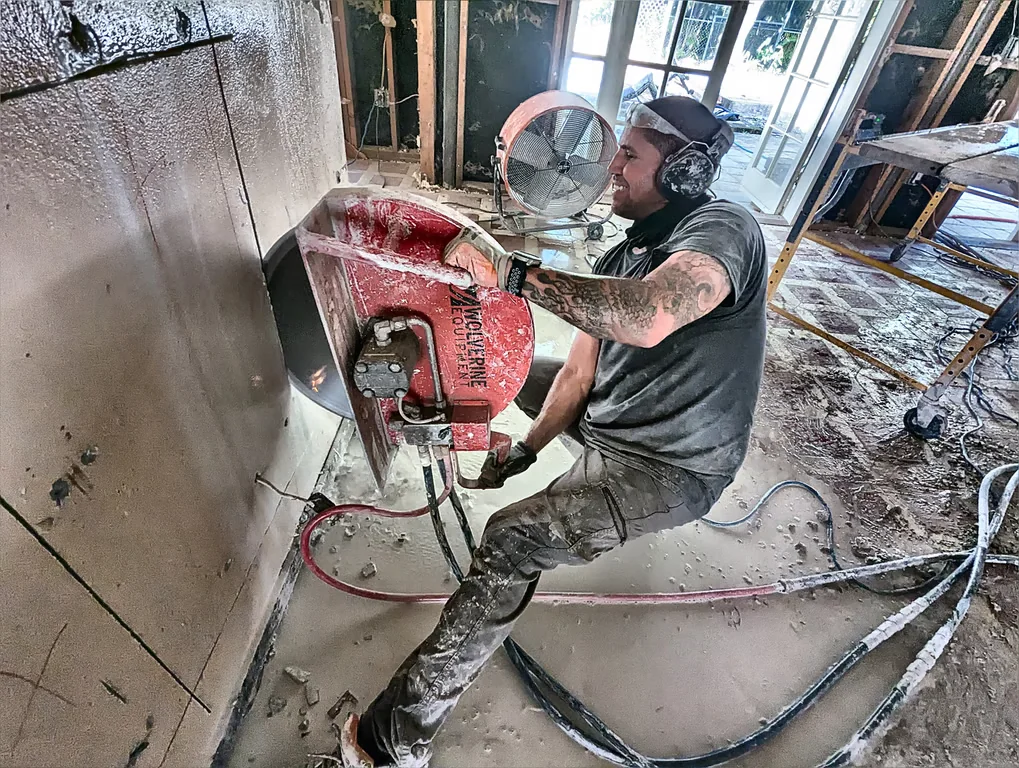
Removing structural slabs or foundation walls in South Miami’s older bungalows and commercial buildings requires wall sawing and core drilling in addition to standard breaking. Wall sawing allows precise rectangular cuts through reinforced vertical concrete — essential when you’re opening a new doorway, removing a load-bearing section for a structural modification, or cutting out a deteriorated section of a retaining wall. Learn more about the technical specifications involved in wall sawing applications for projects like these.
For foundation removal, hydraulic splitters are often preferred over percussion breakers in areas where vibration could affect neighboring structures. The splitter inserts into a pre-drilled hole and applies outward pressure — cracking the concrete cleanly with minimal vibration transmission. In South Miami’s dense residential corridors, this method protects adjacent foundations and avoids the neighbor complaints that can halt a job.
South Miami Permitting and Miami-Dade Code Requirements for Demolition Work
Concrete removal that involves any structural element — including foundation walls, structural slabs, or load-bearing columns — requires a demolition permit from Miami-Dade County. Non-structural flatwork removal (driveways, patios, sidewalks) typically falls under a simpler right-of-way or building permit depending on scope. Here’s what you need to have in order before work begins:
- Demolition permit application — Filed through Miami-Dade’s iBuild portal. Structural projects require a licensed engineer’s letter of intent.
- Asbestos survey — Required for any structure built before 1989. South Miami has significant housing stock from the 1950s through 1970s where asbestos-containing materials may be present in floor adhesives and fireproofing compounds embedded in or adjacent to concrete.
- NPDES compliance — Concrete slurry from wet cutting operations cannot be allowed to enter storm drains. South Miami’s proximity to Biscayne Bay makes this a serious environmental enforcement priority. Slurry must be collected, allowed to settle, and disposed of as solid waste.
- Noise ordinance windows — Miami-Dade limits construction noise to 7 a.m. – 6 p.m. Monday through Saturday. Plan your equipment-intensive breaking work accordingly.
Debris Hauling and Concrete Recycling Logistics in the South Miami Area
Concrete debris from a standard 2,000 square foot driveway removal can weigh upward of 20 tons. That’s not a single dumpster load — that’s a coordinated hauling operation. In South Miami, street access can be limited, so roll-off container placement requires advance coordination with the county right-of-way office if the container must be placed on a public street or sidewalk.
Crushed concrete is accepted at several Miami-Dade recycling facilities and can be repurposed as base aggregate for new construction. If your project generates significant volume, arranging a direct haul to a recycler rather than a landfill can reduce your tipping fees substantially. Some recyclers will accept clean, uncontaminated concrete at reduced or no cost — a meaningful savings on large commercial removal projects.
The same logistical precision required for South Miami concrete removal applies to coastal projects throughout the region. If you’re working near the water or on marine structures, this resource on concrete cutting for boat docks and coastal construction covers the additional environmental and structural considerations unique to saltwater-adjacent sites.
Equipment Staging and Site Protection on Tight South Miami Lots
Many South Miami properties — particularly in the Sunset Drive corridor, Pinecrest border areas, and the neighborhoods around Dante Fascell Park — have minimal setback from the street and mature landscaping that took decades to establish. Equipment staging must account for root zone protection, irrigation system locations, and overhead utility clearances.
- Plywood or crane mats over lawn areas prevent compaction damage from tracked equipment.
- Concrete washout areas must be lined and positioned away from any drainage features.
- Dust suppression via water misting is required during dry breaking operations — South Miami’s prevailing easterly winds can carry concrete dust into neighboring properties quickly.
- Temporary fencing is required around active demolition zones per OSHA 29 CFR 1926 Subpart Q.
For contractors looking to expand their technical knowledge base on concrete removal and related cutting techniques, the concrete category resource library covers a wide range of applications, and the DIY construction section is particularly useful for property owners managing smaller-scale removal projects with partial self-performance.
What Separates a Successful South Miami Concrete Removal Project From a Costly One
At the end of the day, the difference between a removal job that comes in on time and on budget versus one that spirals into change orders and delays almost always comes down to the quality of the pre-job assessment, the crew’s familiarity with local conditions, and the selection of appropriate equipment for the specific concrete type and site constraints. South Miami is not a forgiving environment for guesswork — the regulatory environment is strict, the neighborhoods are watchful, and the soil and water conditions add complexity that doesn’t exist on inland Florida sites.
Whether you’re pulling out a cracked driveway, gutting a deteriorated pool deck, or removing a structural slab as part of a major renovation, treat this as an engineered operation — not a brute-force job. Map your utilities, scan your slab, pull your permits, protect your site, and use equipment that’s properly sized for the work. That’s how concrete removal gets done right in South Miami.