Why Filling In a Swimming Pool Is a Concrete Demolition Job First and a Landscaping Job Second
Most homeowners and property managers come into this project thinking it’s primarily a dirt-and-gravel operation. It’s not. Before any backfill material touches that shell, you’re dealing with a reinforced concrete structure — typically 6 to 8 inches thick, steel-reinforced, and anywhere from 10,000 to 30,000 gallons in volume. The concrete has to be addressed strategically, either through full removal or engineered perforation, and that decision alone drives the majority of your project cost. Getting the bidding phase wrong on a pool fill-in can cost you tens of thousands of dollars in permit violations, settling issues, or failed inspections down the line. Let’s break down exactly what this job entails, what it costs in the Miami market, and what separates a legitimate bid from a lowball trap.
Full Removal vs. Partial Demolition — The Decision That Sets Your Entire Budget
There are two primary methods for filling in a swimming pool, and the cost difference between them is substantial. Understanding which method applies to your property is the single most important variable in any accurate bid.
Full Pool Removal (Complete Excavation and Haul-Off)
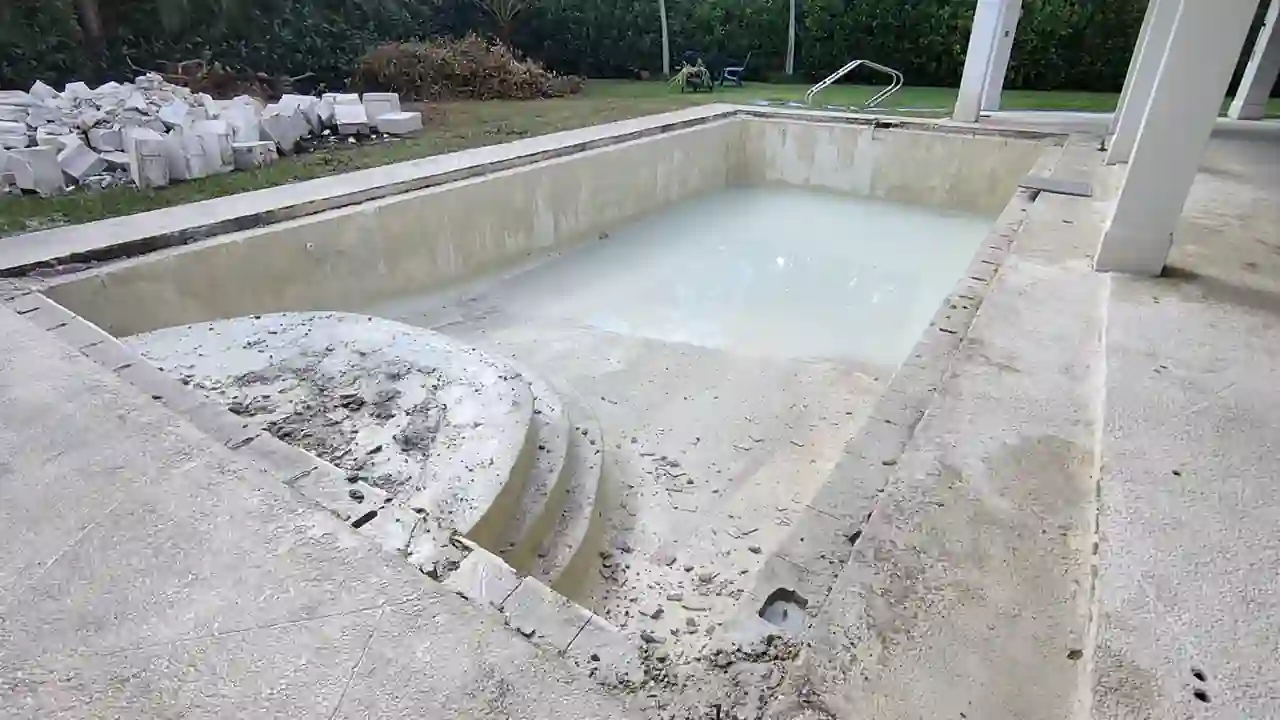
Full removal means breaking out the entire concrete shell — walls, floor slab, bond beam, and coping — loading the debris, and hauling it to a licensed disposal facility. This is the cleanest outcome from a property value and future development standpoint. A fully removed pool leaves no subsurface voids, no drainage concerns, and no disclosure complications if you sell the property later.
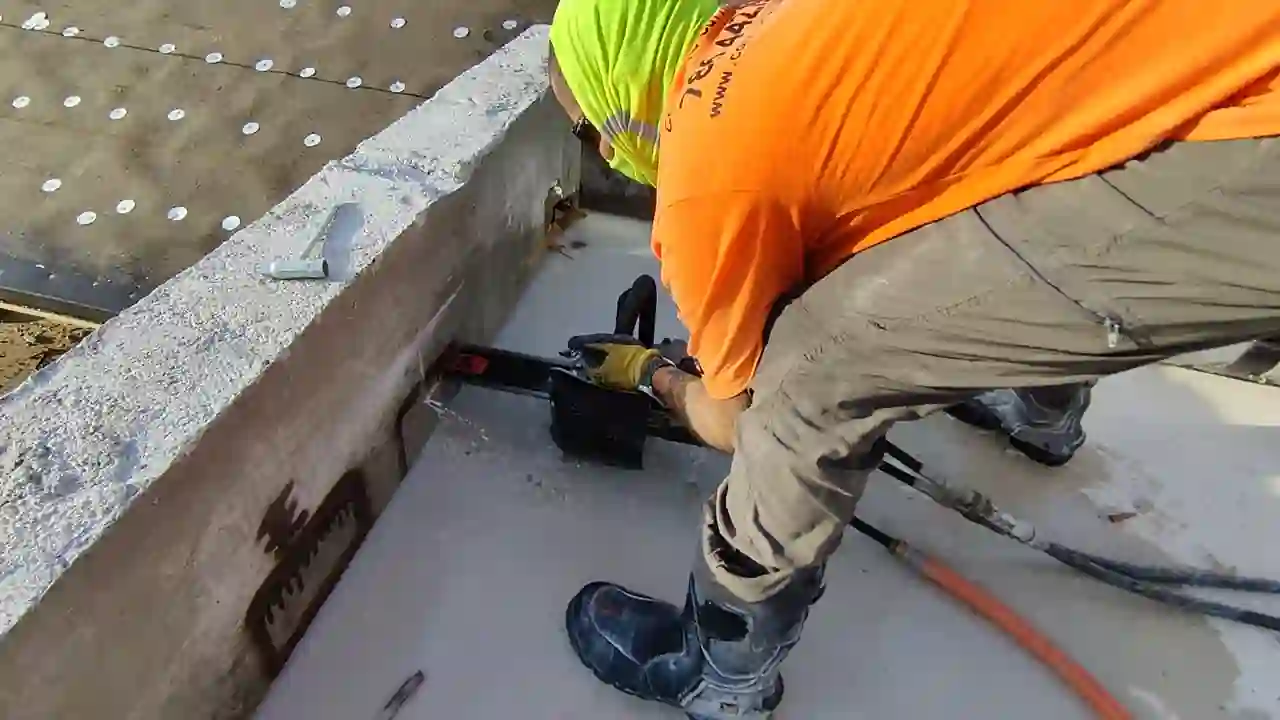
In the Miami metro area, full pool removal for a standard 12×24 foot residential pool typically runs between $9,500 and $18,000, depending on access, reinforcement density, and haul distance. Larger freeform pools or those with attached spas, water features, or deck systems push that range to $20,000–$35,000. The concrete cutting and breaking phase alone — using hydraulic breakers, diamond blade saws, and in some cases wire saws for thick walls — accounts for roughly 40–50% of total labor cost. Proper concrete waste management and debris disposal is a non-negotiable line item in any legitimate full-removal bid.
Partial Demolition with Engineered Backfill (Abandonment Method)
The abandonment method involves breaking holes through the pool floor and lower walls to allow drainage, then backfilling the shell in controlled lifts with granular material, crushed concrete, or engineered fill. Miami-Dade County requires a minimum number of penetrations per square foot of pool floor — typically one 18-inch diameter hole per 50 square feet — and the backfill must be compacted in lifts no greater than 12 inches to prevent future settling.
Costs for the abandonment method range from $5,000 to $12,000 for a standard residential pool. The lower end assumes good equipment access, minimal deck removal, and straightforward backfill with on-site or locally sourced material. The upper end reflects pools with limited access, high groundwater tables requiring dewatering, or pools requiring significant deck demolition before work can begin. Note that the abandonment method typically requires a licensed engineer’s sign-off in Miami-Dade, adding $800–$1,500 to your engineering and permitting costs.
Permit Costs, Engineering Fees, and the Miami-Dade Inspection Timeline
No legitimate pool fill-in project in Miami-Dade County proceeds without permits, and any contractor telling you otherwise is a liability waiting to happen. The permitting process for pool demolition involves submitting a demolition permit application, a site plan showing the pool’s location relative to property lines and structures, and — for the abandonment method — a signed and sealed engineer’s report confirming the backfill design.
Permit fees in Miami-Dade typically run $350–$750 for residential pool demolition projects. Add engineering fees of $800–$2,000 if a structural engineer’s report is required. Inspection scheduling currently runs 5–15 business days for initial review and another 3–7 days for each required inspection. Budget your total permitting and engineering phase at 2–4 weeks before physical work begins. Projects that skip this phase and get caught face stop-work orders, fines starting at $500 per day, and mandatory removal of any unpermitted backfill — an expensive lesson.
Breaking Down the Concrete Phase — Equipment, Labor Hours, and Access Surcharges
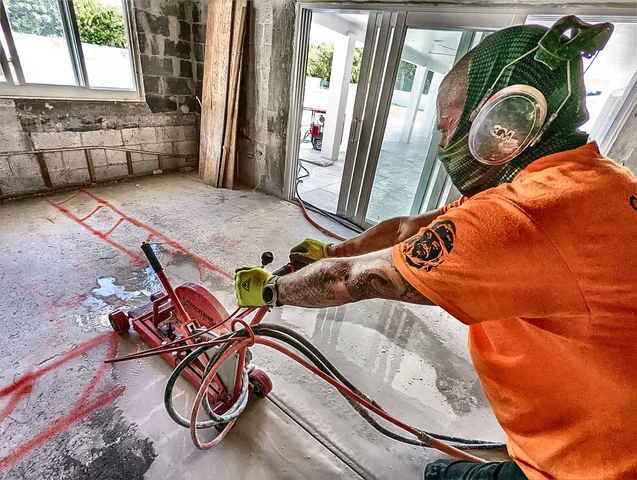
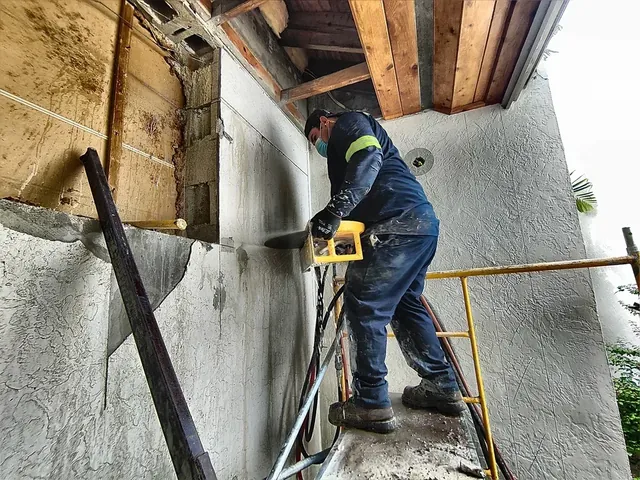
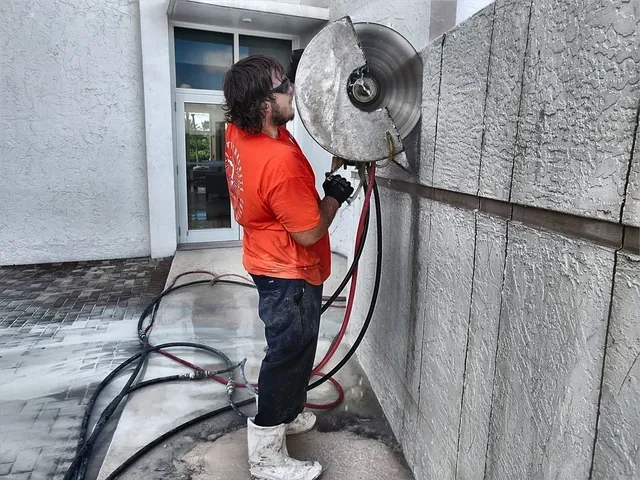
The concrete demolition phase is where trade expertise matters most. A standard 6-inch reinforced pool wall requires a different approach than an 8-inch gunite shell with heavy rebar. Our crews use a combination of electric demolition hammers for precision breaking near plumbing penetrations, hydraulic breakers mounted on mini-excavators for bulk slab demolition, and diamond blade flat saws for controlled section cutting when debris size needs to be managed for haul-off containers.
Labor hours for the concrete phase on a mid-size residential pool (approximately 600 square feet of surface area) run 16–28 crew hours depending on wall thickness and reinforcement. At Miami market labor rates of $85–$120 per hour for skilled demolition crews, that’s $1,360–$3,360 in labor for the breaking phase alone, before equipment rental, fuel, and supervision are factored in. Access surcharges apply when pools are located in tight side yards, behind fences requiring disassembly, or in properties with overhead obstructions limiting crane or excavator reach. Expect a 15–25% access surcharge in those scenarios.
For properties where advanced concrete cutting techniques are required — such as wire sawing thick bond beams or core drilling drainage holes through the pool floor — those specialized operations add $500–$2,500 to the total depending on scope. Similarly, if the project involves any pipe cutting and capping for pool plumbing lines that run under the deck or slab, budget an additional $300–$800 per line.
Backfill Material Selection and Compaction Standards That Affect Long-Term Settlement
The backfill phase is where shortcuts create 5-year problems. Organic fill, uncompacted soil, and oversized debris create voids that consolidate over time, resulting in surface depressions, cracked patios, and in severe cases, structural damage to adjacent foundations. Miami’s high water table adds another layer of complexity — poorly draining backfill traps water and accelerates subsidence.
Acceptable backfill materials for Miami-Dade pool abandonment projects include clean granular fill (FDOT #57 or #89 stone), crushed concrete fines (from the demolished pool shell itself, screened to remove rebar), and flowable fill (controlled low-strength material) for projects requiring maximum compaction assurance without mechanical tamping. Flowable fill costs more upfront — typically $120–$180 per cubic yard delivered — but eliminates compaction labor and provides the most predictable long-term outcome. A standard 15,000-gallon pool has approximately 65–80 cubic yards of void volume, putting flowable fill material costs at $7,800–$14,400 for material alone on larger pools.
For projects near structures with crawl space or access hatch openings, the backfill compaction plan must account for lateral pressure on adjacent footings. This is a detail that separates experienced demolition contractors from general excavators who occasionally take on pool jobs.
Reading a Pool Fill-In Bid — What Every Line Item Should Tell You
A properly structured bid for a pool fill-in project should itemize the following distinct cost categories:
- Permit and engineering fees — listed separately, not bundled into a vague “project management” line
- Concrete demolition labor and equipment — specified by method (hydraulic breaker, flat saw, core drill)
- Debris haul-off and disposal — with tonnage estimates and disposal facility named
- Backfill material — type, source, and cubic yard quantity specified
- Compaction labor and equipment — number of lifts and compaction testing if required
- Final grading and surface restoration — sod, asphalt patch, or concrete flatwork as applicable
- Access surcharges — itemized if applicable, not hidden in overhead
Any bid that bundles all of these into a single lump sum without line-item detail is a bid you cannot evaluate or compare accurately. In the Miami market, total project costs for a complete, permitted pool fill-in range from $6,500 for a small above-ground shell abandonment to $38,000+ for a full-removal project on a large freeform gunite pool with attached spa and extensive deck demolition. The median residential project lands between $10,000 and $16,000 all-in.
Realistic Project Timelines from Permit Application to Final Grade
Here’s a realistic week-by-week breakdown for a standard residential pool fill-in in Miami-Dade:
- Week 1–2: Site assessment, engineering report (if required), permit application submission
- Week 3–4: Permit review and approval period (Miami-Dade turnaround varies by workload)
- Day 1 of work: Pool draining, utility disconnection, deck demolition if required
- Day 2–3: Concrete breaking and debris loading (full removal) or floor perforation (abandonment)
- Day 3–4: Backfill placement in compacted lifts, inspection scheduling
- Day 5: Final inspection, final grade, surface restoration
From permit application to final grade, expect 4–7 weeks total on a straightforward project. Complex projects with engineer revisions, inspection delays, or weather interruptions can extend to 10–12 weeks. Any contractor promising a complete, permitted pool fill-in in under two weeks is either skipping permits or has unrealistic expectations about Miami-Dade’s inspection scheduling.
The bottom line on filling in a swimming pool is this — it’s a structural demolition project that requires trade-level expertise, proper permitting, and a detailed bid that reflects the actual scope of work. Cutting corners on any phase creates compounding problems that cost far more to fix than they saved upfront. Work with a licensed concrete demolition contractor who can demonstrate experience with Miami-Dade permitting requirements and who provides itemized, transparent pricing from the first conversation.