Why Cutting a Concrete Driveway Is More Complex Than Most Homeowners Expect
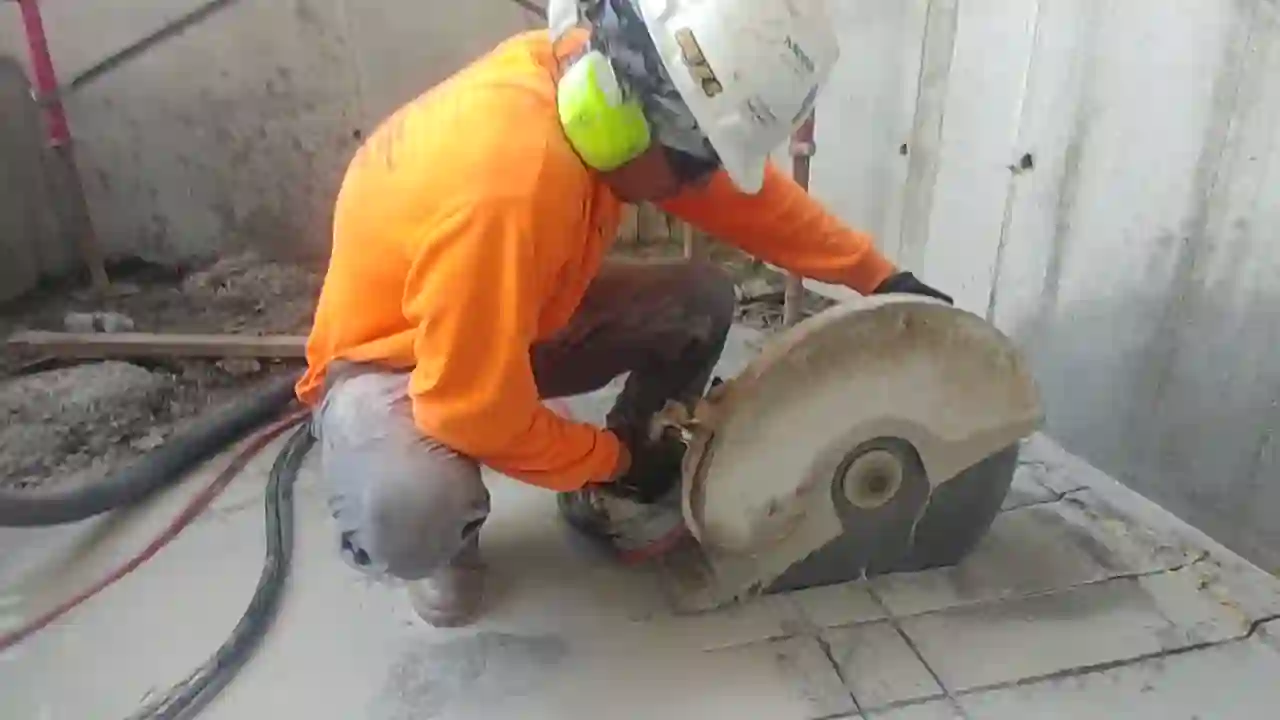
When a homeowner calls us asking how to cut a concrete driveway, they’re usually picturing a straight line, a saw, and an hour of work. What they’re not picturing is a full site assessment, blade selection based on aggregate hardness, dust suppression logistics, rebar mapping, and a bid that accounts for every one of those variables. The reality is that concrete driveway cutting is a precision trade operation — and the cost, timeline, and complexity scale dramatically depending on what’s actually under that slab. This post breaks down every factor a qualified contractor evaluates before putting a number on paper, so you can walk into a bidding conversation fully prepared.
The Real Cost Range for Concrete Driveway Cutting in Miami
Let’s start with numbers. In the South Florida market, professional concrete driveway cutting typically runs between $3.50 and $8.00 per linear foot for standard flatwork cuts using a walk-behind slab saw. That range sounds wide — and it is — because “cutting a driveway” encompasses everything from a single expansion joint repair to a full-perimeter demolition cut on a 3,000-square-foot slab reinforced with #5 rebar on 12-inch centers.
For a typical residential driveway in Miami — say, a two-car pad roughly 20 feet wide by 40 feet deep — a contractor might quote anywhere from $400 to $1,800 depending on scope. Commercial driveways, apron cuts at road interfaces, or projects requiring hydraulic concrete cutting in Miami for reinforced sections can push that figure significantly higher. Always get itemized bids. A flat quote with no line items is a red flag.
Line Items That Drive Up the Final Invoice
- Slab thickness: Standard residential concrete is 4 inches. Anything above 6 inches — common in commercial driveways or older Miami properties with double-poured slabs — requires slower blade passes, more water, and faster blade wear.
- Rebar and wire mesh presence: Cutting through rebar accelerates diamond segment wear and can require blade upgrades mid-job. This is often billed as a surcharge per linear foot of reinforced cut.
- Aggregate hardness: Miami-Dade’s local limestone aggregate is moderately abrasive, but imported granite aggregate in premium pours will destroy a soft-bond blade. Blade selection directly affects cost.
- Access and mobilization: Tight residential lots, fenced yards, or driveways with overhead obstructions that prevent standard equipment access may require hand-held cutting, which is slower and more expensive per foot.
- Slurry and dust management: Wet cutting produces concrete slurry that must be contained and disposed of properly under Miami-Dade environmental codes. Vacuum-assisted dry cutting requires specialized equipment. Both add to the base rate.
- Depth of cut required: A control joint score cut at 1 inch depth is priced differently than a full-depth demolition cut at 6 inches. Always specify depth requirements in writing.
Blade Selection and Its Direct Impact on Project Bidding
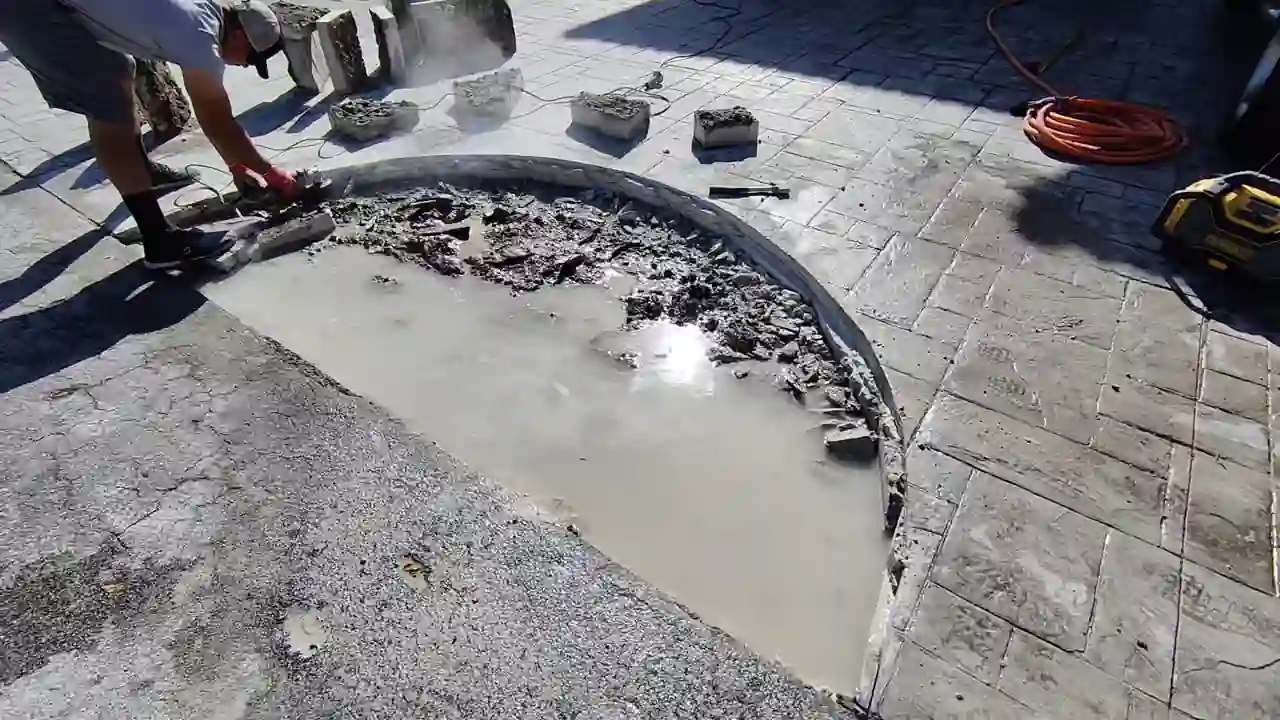
A contractor who doesn’t ask about your concrete mix design before quoting is guessing. The diamond blade specification is one of the single largest cost variables on any driveway cutting project. Segmented diamond blades for general flatwork run $80–$250 each. Premium continuous-rim or turbo blades for decorative or precision cuts can run $400–$600. On a heavily reinforced commercial driveway, a contractor might burn through two to three blades on a single job — and that cost gets passed to you.
Hard concrete with low-abrasion aggregate requires a soft-bond blade (the matrix wears away faster, continuously exposing fresh diamonds). Soft, abrasive concrete needs a hard-bond blade. Using the wrong bond specification on a Miami driveway doesn’t just slow the job — it can glaze the blade entirely, requiring dressing cuts on abrasive material just to restore cutting action. That’s billable time. When reviewing a bid, ask the contractor what blade spec they’re planning to use and why. It tells you immediately whether you’re dealing with a professional or someone who buys whatever’s on sale at the supply house.
Timeline Estimations by Project Type
One of the most common questions we field is how long a driveway cutting project will take. Here’s a realistic breakdown by project category:
- Single control joint or crack repair cut (residential): 1–2 hours on-site, including setup and slurry cleanup. Same-day completion is standard.
- Full perimeter cut for driveway section removal (residential, unreinforced): 3–5 hours. Most contractors can complete this in a single morning mobilization.
- Reinforced residential driveway with rebar grid: Add 30–50% to the base timeline. Rebar encounters slow blade travel speed and require periodic equipment checks.
- Commercial driveway apron cut at road interface: These often require coordination with Miami-Dade County permitting and may involve lane closures. Add 1–3 days for permit processing; the physical cut itself may take 4–8 hours.
- Decorative saw-cut pattern on existing driveway: Highly variable. A simple grid pattern on a 400-square-foot pad might take 6–8 hours. Complex radial or curved patterns requiring layout time can run 2–3 full days.
Weather is a real factor in South Florida. Wet cutting in rain creates visibility and safety issues; afternoon thunderstorms can halt outdoor work entirely. Build a weather buffer of at least one additional day into any timeline estimate for projects scheduled between May and October.
How Experienced Contractors Structure a Driveway Cutting Bid
A professional bid for concrete driveway cutting should include at minimum the following components: mobilization fee, linear footage rate, blade consumption estimate, slurry disposal fee, and a contingency line for unforeseen rebar or aggregate conditions. If a contractor hands you a single-number quote on a napkin, walk away.
Proper budgeting for a driveway cutting project also means understanding what’s not included in the base cut price. Debris hauling, concrete disposal fees (which are regulated under Miami-Dade solid waste ordinances), patching or resurfacing after the cut, and re-sealing are almost always separate line items. A complete project budget for cutting and removing a driveway section should typically be 40–60% higher than the cutting quote alone once all downstream costs are factored in.
For ongoing concrete driveway maintenance projects — including routine joint resealing, crack routing, and preventive control joint cutting on new pours — establishing a service relationship with a local contractor often yields better per-foot pricing than one-off emergency calls. Contractors price risk into emergency mobilizations. Scheduled maintenance work is priced more competitively.
Permitting Requirements That Affect Your Project Cost in Miami-Dade
Not every driveway cut requires a permit, but many do — and failing to pull one when required can result in stop-work orders, fines, and mandatory restoration at your expense. In Miami-Dade County, cuts that alter drainage patterns, affect public right-of-way, or are associated with a larger permitted construction project typically require a Right-of-Way permit at minimum. Apron cuts connecting private driveways to public streets almost always require county coordination.
Permit fees in Miami-Dade for driveway-related work generally run $150–$500 for residential projects, with commercial permits scaling higher based on project value. Factor in 5–15 business days for permit processing unless you’re working with an expediter. A reputable local demolition contractor will handle permit pulling as part of their service offering — if yours doesn’t, that’s worth discussing before work begins.
Red Flags to Watch for When Comparing Bids
After reviewing hundreds of contractor bids in the South Florida market, certain warning signs appear consistently in low-ball quotes that later blow up into expensive problems:
- No mention of blade specification: Means the contractor hasn’t assessed your concrete type and is guessing on consumable costs.
- Flat per-square-foot pricing regardless of thickness: Cutting 4-inch slab and 8-inch slab at the same rate is physically impossible to sustain profitably — someone’s going to pay for the difference, and it won’t be the contractor.
- No slurry disposal line item: Either it’s buried in overhead (acceptable) or it’s being dumped illegally (not acceptable and potentially your liability as the property owner).
- No contingency for rebar: Any driveway over 15 years old in Miami may have rebar. A bid that doesn’t acknowledge this possibility is incomplete.
- Vague timeline commitments: “We’ll get it done” is not a schedule. Get a start date, an estimated completion date, and a clause for weather delays in writing.
Cutting a concrete driveway correctly — safely, cleanly, and within budget — requires the same level of professional discipline as any structural trade work. The equipment is specialized, the consumable costs are real, and the regulatory environment in Miami-Dade adds layers of compliance that cut-rate operators routinely ignore. Invest in a qualified contractor, ask the right questions during the bidding process, and you’ll get a result that holds up for decades rather than one that creates new problems six months down the road.