Why Miami Job Sites Demand a Higher Safety Standard Than Most Contractors Expect
Miami’s construction landscape is unforgiving. High humidity, relentless heat, dense urban worksites, and a regulatory environment that has grown sharper every year — these are the daily realities for any concrete contractor in Miami FL. I’ve walked hundreds of South Florida job sites over the past two decades, and the pattern is always the same: the crews that operate cleanly, document everything, and treat OSHA compliance as a competitive advantage are the ones still in business five years later. The ones who cut corners on safety protocols end up cutting corners on their futures. This post breaks down exactly what a professional concrete cutting and demolition operation looks like from a safety standpoint — not the bare minimum, but the standard that protects workers, protects clients, and protects your license.
Crystalline Silica Exposure Controls Under OSHA 29 CFR 1926.1153
If there is one regulatory topic that has reshaped how every concrete contractor in Miami FL must operate over the past several years, it is OSHA’s crystalline silica standard. Effective since 2017 and enforced aggressively since 2018, 29 CFR 1926.1153 sets a permissible exposure limit (PEL) of 50 micrograms per cubic meter of air as an 8-hour time-weighted average. That is half the previous PEL. For concrete cutting, grinding, and coring operations, this is not a theoretical concern — it is an active daily hazard.
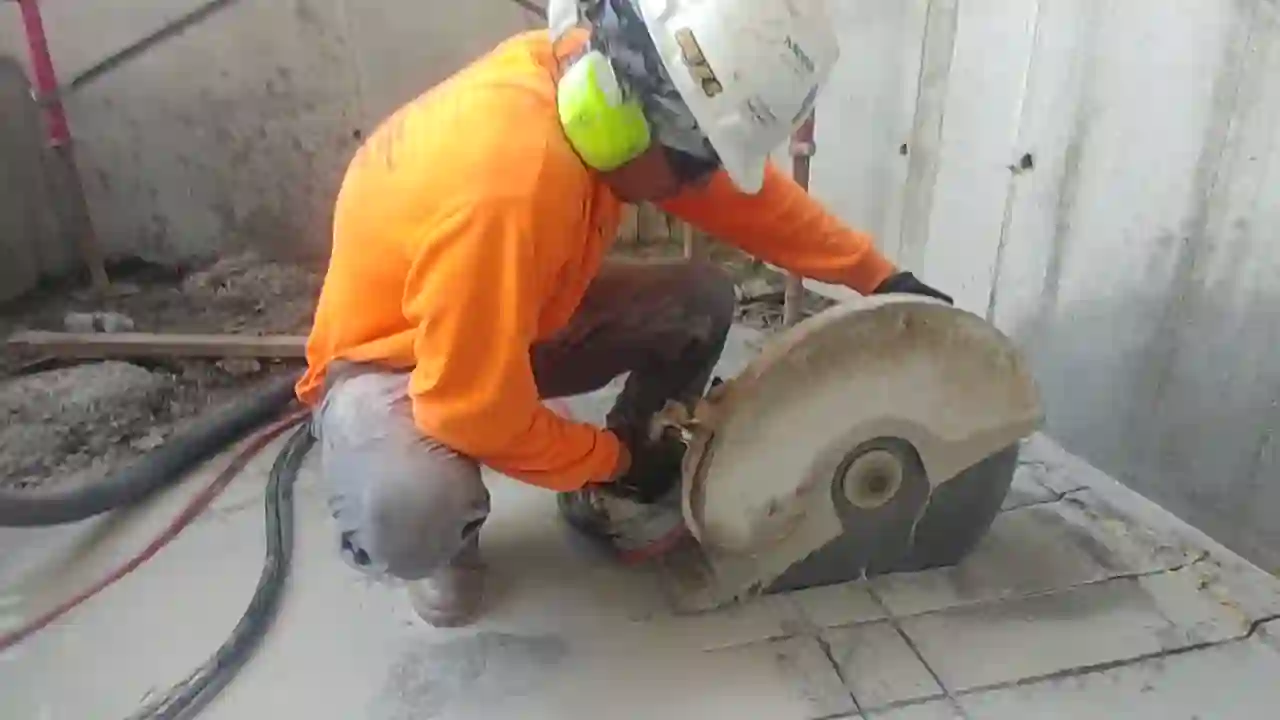
Engineering controls are the first line of defense. Wet cutting methods using integrated water delivery systems on diamond blades suppress respirable silica at the source. When wet cutting is not feasible — such as during interior slab work where water intrusion is a problem — HEPA-filtered vacuum systems must be used in combination with the cutting tool. Table 1 of the silica standard provides specific control methods for common concrete tasks, and every foreman on a Miami job site should have that table memorized or posted in the site office.
- Wet cutting systems: Minimum water flow rates must be maintained throughout the cut; intermittent water delivery does not meet the standard.
- HEPA vacuum shrouds: Must be fitted directly to grinders, core drills, and saws — not used as a general area vacuum after the fact.
- Respiratory protection: When engineering controls alone cannot achieve the PEL, a NIOSH-approved N95 respirator is the minimum; a half-face respirator with P100 filters is the professional standard for extended operations.
- Exposure assessment: Contractors performing tasks not listed in Table 1 must conduct air monitoring to verify exposure levels.
- Written Exposure Control Plan: Required for any employer with employees performing regulated tasks — this is not optional.
For deeper technical guidance on blade selection and wet-cutting system compatibility, the team at Concrete Cutting Miami’s blade selection resource covers the engineering side in detail.
Lockout/Tagout and Saw Kickback Prevention Protocols for Concrete Cutting Equipment
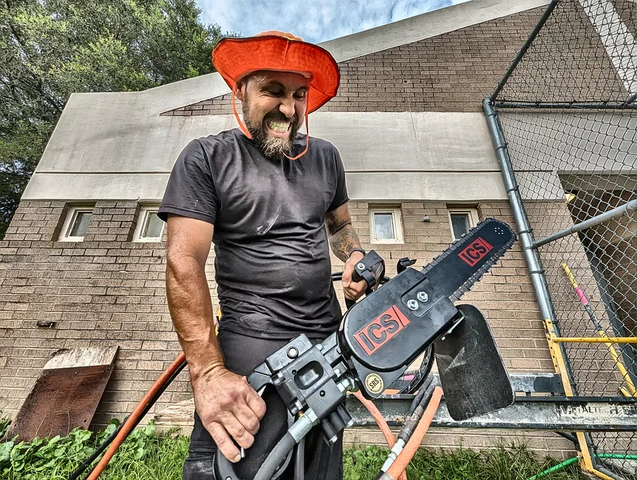
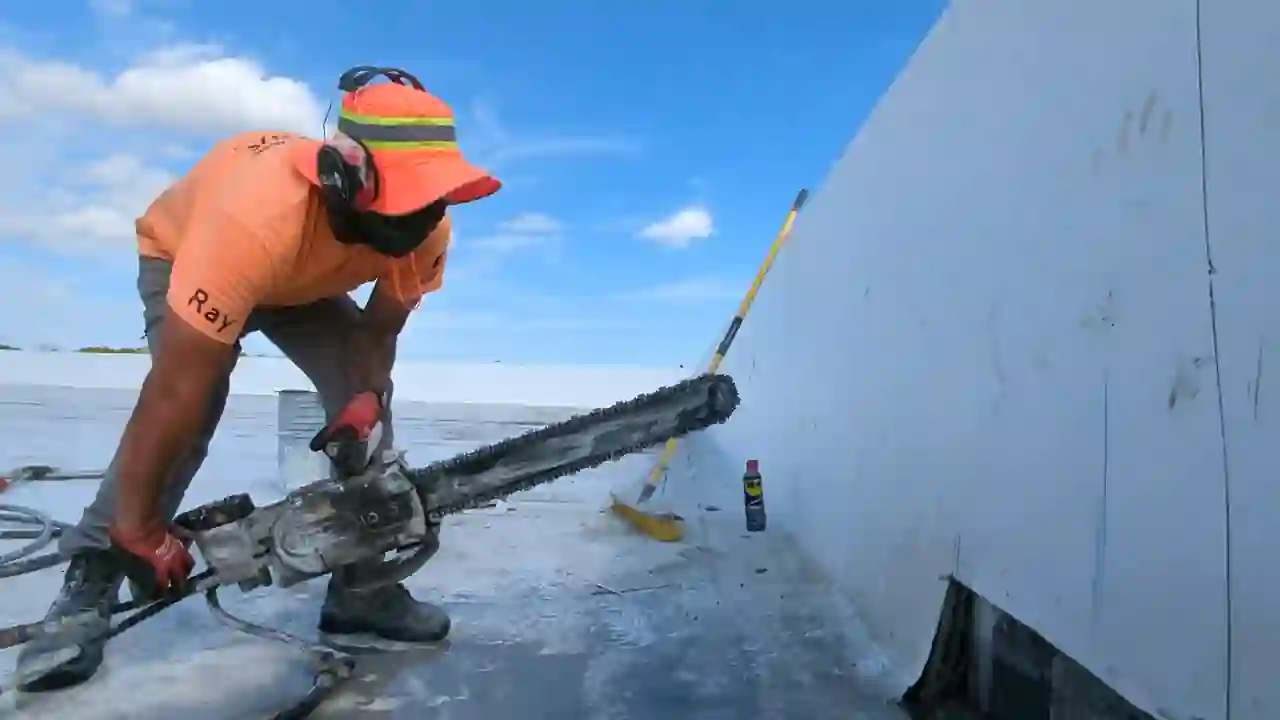
Concrete saws — whether walk-behind flat saws, ring saws, or wall saws — are among the most kinetically dangerous tools on any job site. Blade kickback is the primary mechanical hazard. It occurs when a blade binds in a cut, typically due to slab deflection, improper blade depth, or cutting into rebar without the correct blade specification. The result is an instantaneous, violent reverse thrust of the saw toward the operator.
OSHA 29 CFR 1926.300 governs hand and power tool safety, and it requires that all tools be used in accordance with manufacturer specifications. But compliance goes beyond the standard. A professional concrete contractor in Miami FL should implement the following saw safety protocols on every project:
- Pre-cut slab inspection: Use a rebar locator (cover meter) to map reinforcement layout before any blade touches concrete. Cutting through unexpected rebar at full blade depth is a primary kickback trigger.
- Blade depth discipline: Never exceed the manufacturer’s recommended cutting depth per pass. Multiple shallow passes on thick slabs are safer than a single aggressive cut.
- Blade guard integrity checks: Guards must be inspected before every shift. A missing or damaged blade guard is an immediate stop-work condition.
- Lockout/Tagout (LOTO) compliance: Before any blade change, maintenance task, or jam clearance, the saw must be fully de-energized and locked out per OSHA 29 CFR 1910.147 procedures.
- Operator stance and positioning: Operators must never stand directly behind or in line with the blade. A kickback event sends the saw along the plane of the cut — the operator must always be offset to the side.
Heat Illness Prevention on Miami Construction Sites in Summer Operations
South Florida’s climate creates a physiological hazard that does not appear in most OSHA standards as a specific regulation but is responsible for a significant number of construction fatalities annually. OSHA’s Heat Illness Prevention campaign and the proposed Heat Illness Prevention in Outdoor and Indoor Work Settings rule signal that formal regulation is coming — but the liability exposure exists right now.
A concrete contractor in Miami FL running crews during summer months — when heat indices regularly exceed 105°F — must implement a structured acclimatization program. New workers and workers returning from absences of more than two weeks must be gradually exposed to heat over a seven to fourteen day period, starting at 20% of the workload and building incrementally. This is not a recommendation; it is the physiological requirement for safe heat adaptation.
Mandatory rest-to-work ratios, shaded rest areas within 200 feet of all work zones, and electrolyte replacement fluids are operational requirements, not perks. Supervisors must be trained to recognize the early symptoms of heat exhaustion — heavy sweating, weakness, rapid pulse, nausea — before they progress to heat stroke, which carries a mortality rate above 50% if not treated within minutes. For projects involving debris and material removal in high-heat conditions, the protocols outlined in this guide on dirt and gravel removal in Miami Beach address the physical demands and safety staging required for those specific operations.
Fall Protection and Excavation Safety for Below-Grade Concrete Work
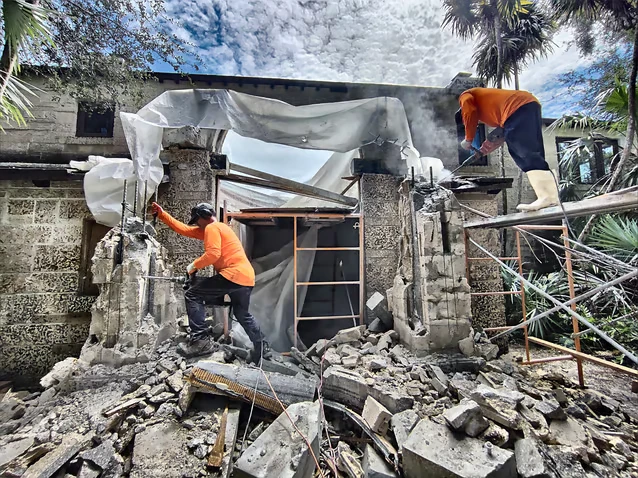
Core drilling through elevated slabs, cutting opening in parking garage decks, and working adjacent to excavations for foundation work all introduce fall hazards that trigger OSHA 29 CFR 1926 Subpart M requirements. Any opening cut into a floor or roof — regardless of size — must be immediately covered with a material capable of supporting twice the maximum intended load, or guarded with a standard railing system. The cover must be secured against displacement and labeled “HOLE” or “COVER” in a visible manner.
For excavation work adjacent to concrete cutting operations, OSHA 29 CFR 1926 Subpart P requires a competent person to classify the soil type and specify the appropriate protective system before any worker enters a trench or excavation deeper than 5 feet. In Miami’s sandy, high-water-table soils, Type C classification is almost always the appropriate designation — meaning maximum 1.5H to 1V sloping or a trench box system is required. Contractors who treat Miami’s loose soils like stable inland clay are one rainfall event away from a catastrophic cave-in. The Lauderdale-by-the-Sea construction and demolition guide addresses similar coastal soil challenges in detail.
Personal Protective Equipment Hierarchy for Concrete Cutting Operations
PPE is the last line of defense in the hierarchy of controls — not the first. But it must be specified correctly and worn consistently. The following PPE matrix represents the minimum standard for professional concrete cutting operations in Miami:
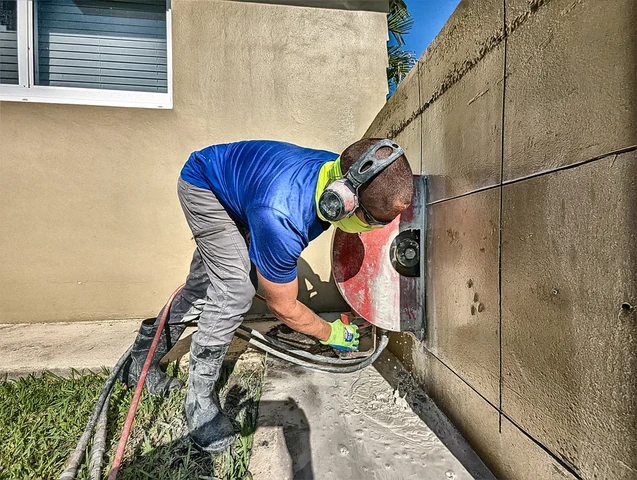
- Eye and face protection: ANSI Z87.1-rated safety glasses for all operations; full face shield required during saw operation, core drilling, and any overhead cutting.
- Hearing protection: Concrete saws generate 95-110 dB at the operator position. OSHA requires hearing protection at 85 dB for 8-hour exposure. Foam earplugs (NRR 29+) or earmuff-style protection is mandatory during all saw operations.
- Hand protection: Cut-resistant gloves rated ANSI/ISEA 105 Level A4 or higher for blade handling; vibration-dampening gloves for extended power tool use to mitigate hand-arm vibration syndrome (HAVS).
- Foot protection: ASTM F2413-rated safety boots with metatarsal guards for saw operators.
- High-visibility vests: Class 2 or Class 3 ANSI/ISEA 107 vests required whenever working in proximity to vehicle traffic or active crane operations.
Many of these PPE requirements intersect with the broader DIY and owner-operator construction context as well. If you are managing your own project and want to understand the full scope of safety obligations, the DIY construction resources at Concrete Cutting Miami provide accessible guidance without sacrificing technical accuracy.
Documentation, Incident Reporting, and OSHA Recordkeeping That Protects Your Business
A concrete contractor in Miami FL operating with five or more employees is required to maintain OSHA Form 300 (Log of Work-Related Injuries and Illnesses), Form 300A (Annual Summary), and Form 301 (Injury and Illness Incident Report). The 300A must be posted in the workplace from February 1 through April 30 each year. Failure to maintain these records is a separate citation category — you can be cited for recordkeeping violations even if you have no injuries to report.
Beyond regulatory compliance, documentation serves a critical business function. When an OSHA inspection occurs — whether triggered by a complaint, a referral, or a programmed inspection — the first thing an inspector requests is your written safety programs, training records, and incident logs. Contractors who can produce organized, current documentation demonstrate good faith, which directly influences penalty calculation. Contractors who cannot produce documentation face enhanced penalties and the presumption of willful non-compliance.
Maintain signed training records for every worker, document all toolbox talks with date, topic, and attendee signatures, and photograph pre-work conditions and PPE compliance at the start of each shift. These are not bureaucratic exercises — they are the evidentiary record that protects your company when disputes arise.
Building a Safety Culture That Outlasts Any Single Project
The most technically proficient concrete contractor in Miami FL is not necessarily the safest one. Safety culture — the shared belief that every worker goes home whole at the end of every shift — is built through consistent leadership behavior, not policy documents. Foremen who stop work when conditions are unsafe, supervisors who praise hazard identification rather than dismissing it, and owners who invest in training before a project starts rather than reacting after an incident: these are the organizational behaviors that produce genuinely safe job sites.
Miami’s construction market is competitive, but the contractors who lead on safety also tend to lead on quality, schedule, and client retention. The two are not coincidental. The discipline required to run a clean, compliant job site is the same discipline that produces clean, precise concrete cutting work. If your current safety program feels like a compliance exercise rather than an operational standard, the time to change that is before the next project begins — not during it.