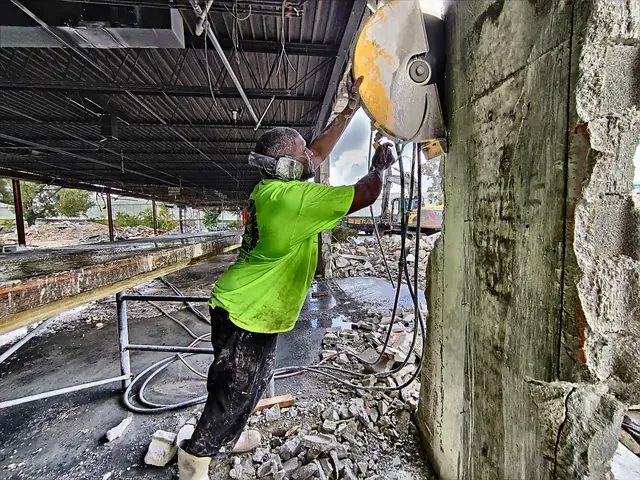
Most property owners assume dirt or gravel removal is a straightforward task — load it up, haul it out, done. In Miami Beach, that assumption gets expensive fast. The coastal geology here is unlike anything you’ll find inland. You’re dealing with a combination of sandy fill, shell rock subbase, compacted marl, and in some cases, decades-old gravel drainage beds that were installed without any documentation. Add in the city’s strict environmental ordinances, proximity to Biscayne Bay, and the sheer density of underground utilities running beneath older properties, and you’ve got a job that demands a structured, technical approach from the first shovel to the last load ticket.
Step 1 — Site Assessment and Material Classification Before Any Equipment Rolls In The first thing a qualified contractor does before touching a Miami Beach site is classify the material being removed. This isn’t just about knowing whether it’s dirt or gravel — it’s about understanding what’s in that material. South Florida fill soil frequently contains elevated levels of arsenic, petroleum hydrocarbons, and heavy metals from historical land use. Gravel beds in older Miami Beach properties sometimes served as French drain systems, meaning they may be saturated with groundwater or contaminated runoff.
A proper site assessment includes:
Visual soil profiling — identifying layers of native sand, imported fill, shell rock, and organic materialMoisture content testing — critical in Miami Beach where the water table can sit as shallow as 18 inches below gradeUtility locating via 811 and private electromagnetic scanning — FPL conduits, irrigation lines, and legacy septic laterals are common surprisesEnvironmental screening — especially on commercial sites or lots with prior industrial useVolume estimation — calculating cubic yards of material to determine haul-out logistics and disposal costsSkipping this phase is the single most common reason dirt and gravel removal projects in Miami Beach go over budget. You can learn more about how pre-job assessments affect overall project pricing by reviewing our detailed cost breakdown for Miami concrete and excavation work .
Step 2 — Understanding Miami Beach Permitting Requirements for Soil Removal Miami Beach operates under Miami-Dade County’s regulatory framework but adds its own layer of municipal requirements, particularly for properties near the coastal construction control line (CCCL). If your project falls within 50 feet of the mean high-water line or within a designated flood zone — which covers a significant portion of Miami Beach — you may need both a Miami-Dade grading permit and a Florida DEP coastal permit before any material leaves the site.
For residential projects involving gravel removal from driveways, planters, or landscaped areas, the permit threshold is typically triggered at volumes exceeding 50 cubic yards or any excavation deeper than 18 inches. Commercial projects have stricter thresholds. Contractors operating without the correct permits risk stop-work orders, fines, and mandatory restoration — all of which cost far more than pulling the permit upfront.
It’s also worth noting that if your gravel or dirt removal is tied to a larger concrete demolition scope — say, removing a concrete planter box and its surrounding gravel bed — those two scopes may require coordinated permitting. See how we handle concrete planter box removal in Miami for a practical example of how these scopes overlap.
Step 3 — Equipment Selection Based on Material Type and Site Access Equipment choice for dirt and gravel removal in Miami Beach is dictated by three variables — material density, site access constraints, and proximity to existing structures. Miami Beach lots are notoriously tight, and many older properties have fencing, mature trees, or narrow side yards that limit what can physically get onto the site.
Compact Excavators and Skid Steers for Tight Urban Sites For most Miami Beach residential jobs, a compact excavator in the 1.5 to 3.5-ton class or a rubber-tracked skid steer is the right tool. These machines can access gates as narrow as 36 inches, operate without damaging pavers or existing concrete flatwork, and generate enough force to break through compacted gravel beds that have been in place for decades. Rubber tracks are non-negotiable on finished surfaces — steel tracks will destroy pavers and stamped concrete.
Vacuum Excavation for Utility-Dense Areas When utility conflicts are identified during the assessment phase, hydrovac (vacuum excavation) becomes the correct method. A hydrovac truck uses pressurized water to break up soil and gravel while simultaneously vacuuming the slurry into a holding tank. This method allows precise excavation within inches of live electrical conduits, irrigation systems, and communication lines without the risk of mechanical strike. It’s slower and more expensive than mechanical excavation, but in Miami Beach’s utility-dense urban grid, it’s often the only responsible option.
Wheel Loaders for High-Volume Gravel Removal On larger sites — commercial parking lots, multi-family properties, or construction sites converting gravel staging areas back to grade — a wheel loader paired with articulated dump trucks is the most efficient configuration. A single operator can move 200+ cubic yards of gravel per day with this setup, which significantly reduces labor costs on high-volume jobs.
Step 4 — Proper Disposal and Recycling of Excavated Material in Miami-Dade County Clean fill dirt and gravel removed from Miami Beach sites can often be recycled rather than landfilled, which reduces disposal costs and supports sustainable site management. Miami-Dade County operates several permitted fill acceptance facilities, and many aggregate recyclers will accept clean gravel for processing into road base or drainage aggregate.
However, material classification matters here. If the soil or gravel is classified as contaminated based on screening results, it must be transported to a permitted hazardous or solid waste facility under a waste manifest. Disposing of contaminated fill at a clean fill site is a violation of Florida Statutes Chapter 403 and can result in significant penalties for both the property owner and the contractor.
For standard clean material, the typical disposal chain looks like this:
Clean sand and sandy fill — accepted at fill sites, sometimes at no charge if the material is high qualityMixed gravel and shell rock — accepted at aggregate recyclers for crushing and reuseOrganic-rich topsoil — accepted at composting facilities or used as landscape fill at other sitesContaminated material — must go to a permitted solid waste or hazardous waste facility with proper documentationStep 5 — Grading and Compaction After Material Removal Once the dirt or gravel is out, the work isn’t finished. The exposed subgrade must be properly graded and compacted before any new surface — concrete, pavers, sod, or drainage aggregate — can be installed. In Miami Beach, poor compaction after fill removal is one of the primary causes of foundation settlement issues that show up 12 to 24 months after a project closes out.
Compaction requirements depend on the end use of the area. Structural areas beneath slabs or footings require compaction to 95% of modified Proctor density, verified by a nuclear density gauge or Clegg impact hammer test. Non-structural areas like landscaping or drainage fields have lower compaction requirements but still need to be graded to positive drainage away from structures — a critical detail in a flood-prone city like Miami Beach.
Common Mistakes Miami Beach Contractors Make During Dirt and Gravel Removal After working on dozens of Miami Beach excavation projects, our senior project lead Ray has catalogued the errors that consistently derail these jobs:
Underestimating material volume — visual estimates are almost always low; always measure and calculate cubic yards before pricingIgnoring groundwater — Miami Beach’s high water table means excavations deeper than 18 inches often require dewatering equipmentUsing steel-tracked equipment on finished surfaces — destroys pavers, stamped concrete, and existing flatworkFailing to document material classification — creates liability exposure if contamination is discovered laterSkipping post-removal compaction testing — leads to settlement, cracking, and costly remediation
What a Professional Dirt and Gravel Removal Quote Should Include When you’re evaluating bids for dirt or gravel removal in Miami Beach, a professional quote should break out the following line items clearly — not bundle everything into a single number. Bundled quotes make it impossible to identify where cost overruns are coming from if the project hits complications.
Look for explicit line items covering site assessment and utility locating, mobilization and equipment costs, excavation labor by the hour or cubic yard, haul-out and disposal fees with the receiving facility named, compaction and grading after removal, and permit fees if applicable. Any contractor who can’t provide this level of detail upfront is not operating at a professional level for Miami Beach work.
Dirt and gravel removal in Miami Beach is a technical discipline that intersects geology, environmental compliance, equipment science, and municipal regulation. Approaching it with the right methodology — assessment first, permitting second, equipment selection third, and proper disposal and compaction to close — is what separates a clean, compliant project from one that turns into a liability. If your site has both gravel and concrete elements that need to come out, coordinating those scopes from the start saves time, money, and regulatory headaches.
 Concrete Cutting Miami