What Pool Removal Actually Involves From a Structural Standpoint
Most homeowners think pool removal means breaking up a shell and filling a hole. That is a dangerous oversimplification. An inground concrete pool is a reinforced structure sitting below grade, often with gunite or shotcrete walls four to eight inches thick, steel rebar on a grid pattern, a coping perimeter tied into the surrounding deck, and plumbing lines running in multiple directions beneath your yard. Removing it incorrectly causes soil settlement, drainage failure, and in some cases structural compromise to adjacent hardscape or even the home’s foundation. Before a single saw blade touches concrete, you need a plan that accounts for every one of those variables.
Partial Removal Versus Full Removal — Choosing the Right Method Before You Start
The first technical decision is whether you are doing a partial removal (also called an abandonment fill) or a full removal. Both are legitimate approaches, but they carry different long-term consequences and permitting requirements, especially in Miami-Dade County.
Partial Pool Removal — The Abandonment Method
In a partial removal, the top 18 to 36 inches of the pool shell are demolished and removed, holes are punched through the remaining walls and floor for drainage, and the cavity is backfilled with clean fill material and compacted in lifts. This method is faster and less expensive, but it permanently limits what you can build on that footprint. Most lenders and buyers require disclosure of an abandoned pool, and some local jurisdictions require a permit and engineer sign-off confirming the fill meets compaction standards. If you ever want to build a structure over that area, you will need a geotechnical report regardless.
Full Pool Removal — The Clean Slate Method
Full removal means extracting every piece of the shell, all plumbing, and all associated concrete decking, then backfilling and compacting the excavation to engineered specifications. This is the correct choice when you are planning new construction, adding an addition, or simply want the property returned to a buildable condition without encumbrances. It costs more and takes longer, but the site is clean, documentable, and fully usable.
For most residential projects we handle across Miami, Coral Gables, and Pinecrest, full removal is what serious homeowners choose. The residential renovation projects we work on almost always involve full extraction when the end goal is a functional yard or future structure.
The Concrete Cutting Phase — Where Precision Equipment Makes or Breaks the Job
Once the permit is pulled and utilities are marked, the cutting phase begins. This is where the technical work separates professional results from amateur disasters.
Diamond Blade Flat Sawing for Pool Deck Separation
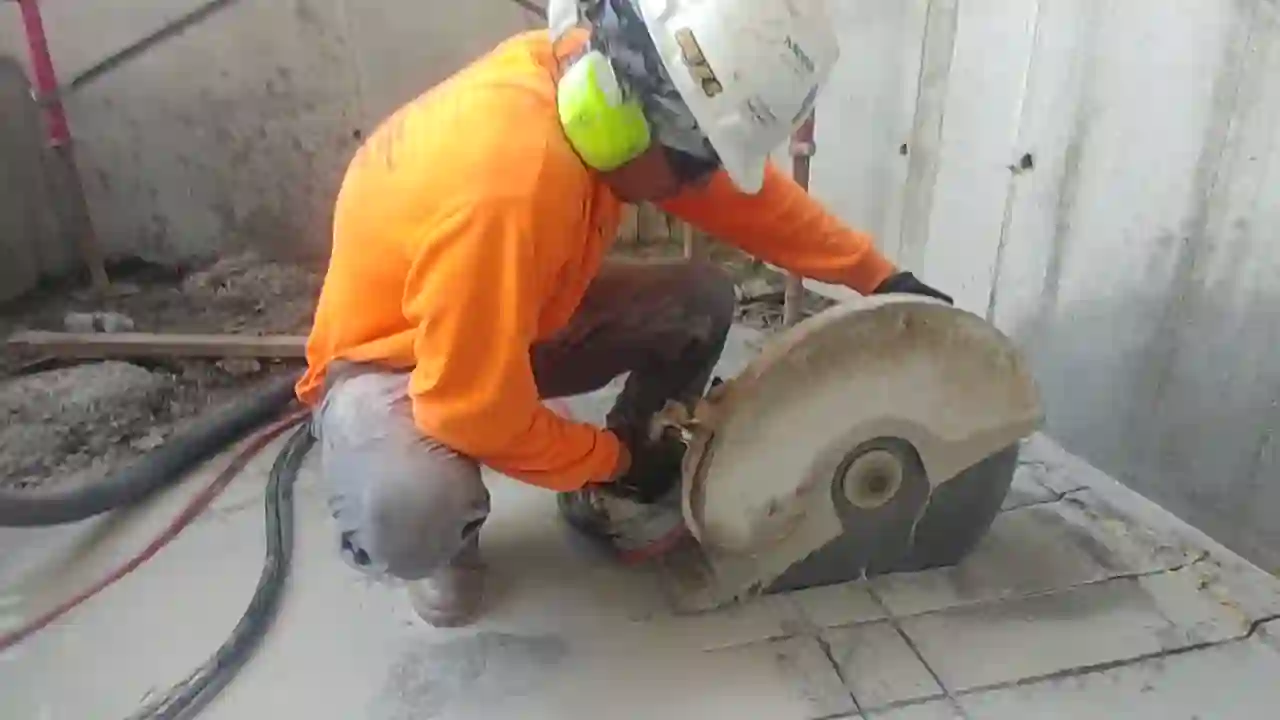
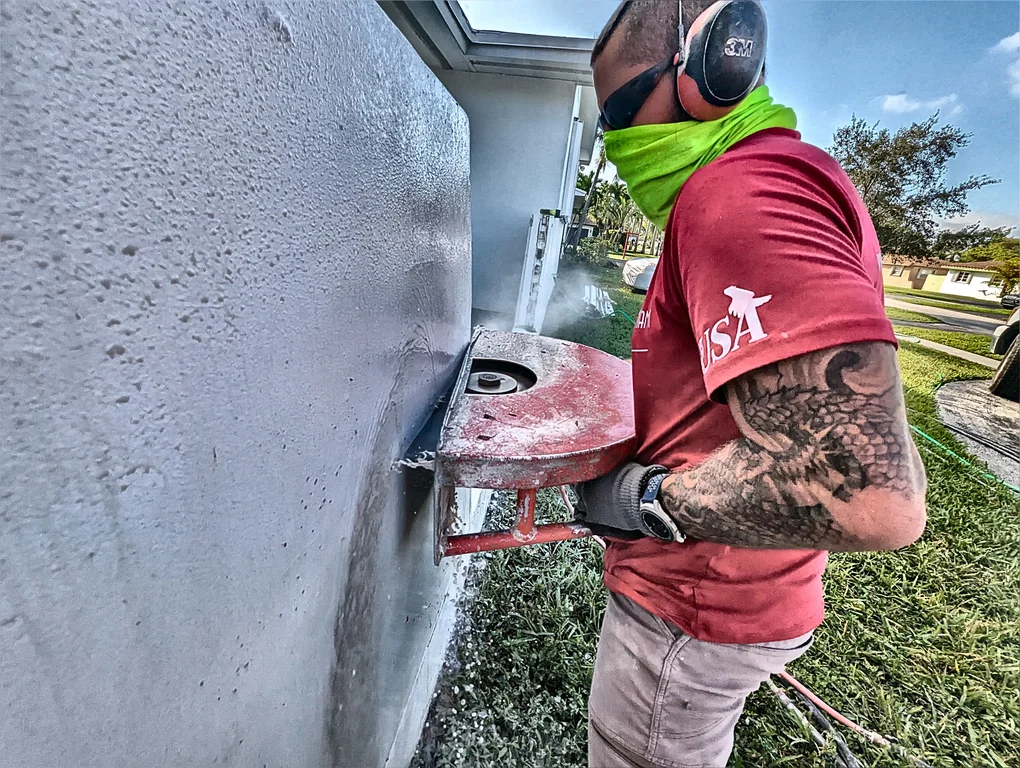
Before any excavation, the pool deck must be cut free from adjacent flatwork, driveways, and any structure it abuts. We use flat saws with segmented diamond blades — typically 14 to 18 inches in diameter — to make clean, controlled separation cuts. The cut depth must clear the slab thickness plus any bonding to the pool coping below. Rushing this step causes uncontrolled cracking that propagates into surfaces you want to keep. If your deck connects to a patio that connects to a covered lanai slab, those cuts need to be planned as a sequence, not an afterthought.
Wall Scoring and Panel Breaking for Gunite Shell Demolition
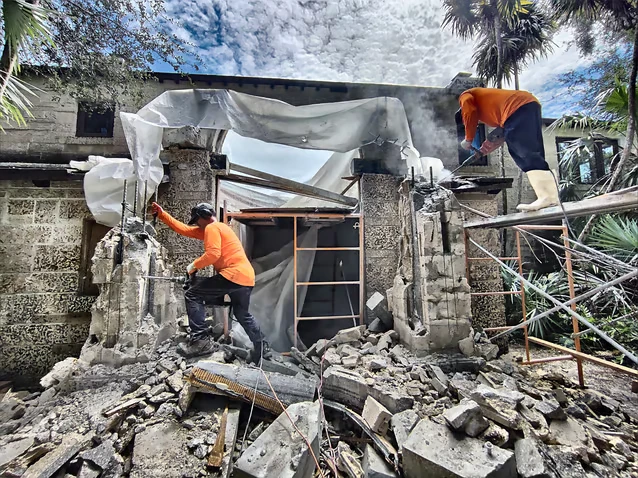
The pool shell itself is typically attacked with a combination of hydraulic breakers and diamond blade scoring. Scoring the walls into manageable panels — usually two to four feet wide — before breaking allows the excavator operator to pull sections cleanly without collapsing the entire shell inward at once. Inward collapse is a problem because it buries rebar, plumbing, and debris in a tangled mass that dramatically slows extraction and increases haul-off costs.
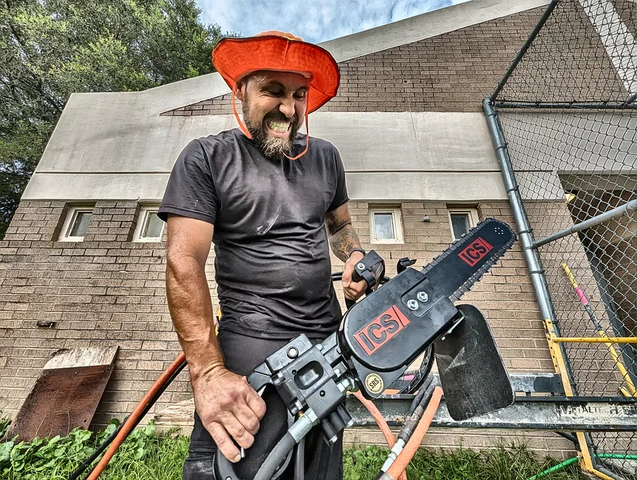
On pools with thick gunite walls, we sometimes use wire saw or core drilling techniques to pre-score corners and radius sections where flat sawing cannot reach cleanly. This is the same precision approach we apply to other below-grade and confined-space concrete work — the logic is identical even if the application differs.
Rebar Extraction and Sorting
Steel rebar inside the shell has scrap value and must be separated from the concrete debris before haul-off. A good demolition crew pulls rebar as panels are broken, cuts it to manageable lengths with a torch or rebar cutter, and stages it separately. Leaving rebar embedded in crushed concrete debris increases dump fees and is sloppy practice. On a standard 15 by 30 foot pool, you can expect 400 to 800 pounds of steel depending on the original construction spec.
Plumbing Abandonment and Utility Disconnection Done Correctly
Every inground pool has a plumbing network — main drain lines, return lines, skimmer lines, and often dedicated cleaner lines. Before demolition, all of these must be properly capped or removed. In Miami-Dade, the standard is to cut and cap all lines at the point where they exit the pool shell, then trace and remove as much of the buried run as is accessible during excavation. Lines left in the ground must be grouted or capped in a way that prevents them from becoming voids or conduits for water migration.
The equipment pad — where the pump, filter, heater, and automation equipment sit — also needs to be demolished. That equipment pad is usually a separate concrete slab, and it needs the same careful cutting and removal treatment as the deck. Do not leave it in place and cover it with soil. It will settle differently than the surrounding grade and create a visible depression within two to three years.
Engineered Backfill and Compaction — The Step Most Contractors Shortcut
This is where pool removal projects either succeed long-term or fail visibly. The excavation left after full pool removal is a large, irregular void. Filling it improperly with uncontrolled material — construction debris, oversized rocks, or unsorted soil — creates differential settlement that shows up as sinkholes, cracked hardscape, and drainage problems years later.
Proper backfill protocol requires clean fill material (no organics, no construction debris, no oversized aggregate), placed in compacted lifts of no more than 12 inches, with a plate compactor or jumping jack compactor used on every lift. The final lift should be topsoil or a material appropriate to the intended surface use. If you are pouring a slab or building a structure over this area, you need a geotechnical engineer to specify the compaction standard and certify the work — typically 95 percent Modified Proctor density.
We have seen projects where a homeowner hired a cheap crew that dumped fill in one shot and walked away. Within 18 months, the yard had a visible depression three feet deep and eight feet wide. Redoing that work costs more than doing it right the first time.
Permit Requirements in Miami-Dade County for Pool Demolition
Pool removal requires a demolition permit in Miami-Dade County. The permit application typically requires a site plan showing the pool location, a description of the removal method (partial or full), and in some cases a soil compaction plan. The permit must be closed out with a final inspection before the project is considered complete. Working without a permit exposes you to fines, stop-work orders, and complications when you sell the property.
The permitting process is not complicated, but it takes time. Factor two to four weeks for permit approval into your project timeline. If your project also involves cutting openings into the home — for example, adding a new door or window where the pool equipment area was — those require separate permits. We have detailed guidance on that type of work in our post on cutting concrete walls for doorways in tight conditions.
What to Do With the Space After Pool Removal
Once the excavation is backfilled, compacted, and inspected, you have a blank slate. Common uses include:
- New lawn or landscaping — the most straightforward option, requiring only topsoil and sod
- New concrete flatwork — a patio, sport court, or extended driveway, provided compaction specs were met
- Home addition or accessory dwelling unit — requires geotechnical certification and proper foundation design
- Permeable paving or pavers — a good choice for South Florida’s drainage requirements
- Roof opening integration — in rare cases where the pool was adjacent to a covered structure, removal opens up roof opening possibilities for natural light and ventilation
The key point is that what you do next must be designed around the fill condition you created. Do not assume a freshly filled pool excavation is equivalent to undisturbed native soil. It is not, and your contractor, architect, or engineer needs to know the history of that ground.
Hiring the Right Crew for Pool Removal in Miami
Not every concrete contractor has the equipment or experience to handle pool removal correctly. You want a crew that operates diamond blade flat saws and hydraulic breakers, understands compaction standards, has pulled demolition permits in Miami-Dade before, and can coordinate with a licensed plumber for utility disconnection. Ask for references on completed pool removals specifically — not just general demolition work. The technical requirements are different enough that general experience does not automatically transfer.
If you are managing a larger renovation that includes pool removal alongside other concrete work, consolidating that work under one experienced contractor reduces coordination headaches and often reduces total cost. Our team handles the full scope of precision concrete cutting and demolition work across Miami-Dade and Broward — from pool shells to structural wall openings to flatwork removal — and we pull our own permits.