Why Lauderdale by the Sea Construction and Demolition Demands a Different Playbook
If you’ve ever tried to run a standard demolition operation in Lauderdale by the Sea and walked away scratching your head, you’re not alone. This barrier island municipality — sandwiched between the Atlantic Ocean and the Intracoastal Waterway — operates under a completely different set of physical, regulatory, and logistical pressures than inland South Florida job sites. Salt-laden air accelerates rebar oxidation inside existing slabs, coastal setback ordinances shrink your operational footprint, and the Town of Lauderdale-by-the-Sea’s building department enforces noise and vibration ordinances that can shut down a conventional jackhammer crew before 9 AM. Understanding these site-specific variables before mobilizing equipment is not optional — it’s the difference between a profitable project and a costly, permit-suspended disaster.
Diagnosing Your Existing Concrete Before Demolition Begins
Every Lauderdale by the Sea demolition job starts with a proper structural assessment of the concrete you’re dealing with. Coastal concrete poured before 1990 frequently used lower cover depths over rebar — sometimes as little as 3/4 inch — which means decades of chloride intrusion have compromised tensile reinforcement in ways that aren’t visible from the surface. Before you spec out blade diameter or wire saw tension, you need ground-penetrating radar (GPR) scanning to map rebar density, post-tension cable locations, and any embedded conduit or plumbing.
This matters operationally because hitting an unexpected post-tension tendon with a diamond blade doesn’t just damage equipment — it releases stored energy violently and creates an immediate life-safety event. For a deep dive into proper pre-cut assessment protocols, this comprehensive guide to cutting and breaking concrete the right way covers the diagnostic sequencing every crew chief should follow before the first blade touches a slab.
Reading Salt-Damaged Concrete for Structural Integrity
On coastal sites, delamination is your primary enemy during demolition sequencing. Chloride-induced corrosion expands rebar by up to four times its original diameter, creating internal spalling pressure that can cause large slab sections to fracture unpredictably during cutting operations. Use a hammer sounding survey — a simple but effective technique where an experienced technician taps the surface with a steel rod and listens for hollow “delamination pops” — to map compromised zones before any mechanical work begins. Mark those zones clearly, because they’ll require controlled hydraulic breaking rather than saw cutting to prevent uncontrolled slab collapse.
Navigating the Town of Lauderdale-by-the-Sea Permit and Compliance Framework
The Town operates under Broward County’s building code umbrella but enforces its own supplemental ordinances, particularly around noise, vibration, and coastal construction setbacks. For any demolition involving structural concrete removal, you’ll need a Demolition Permit from the Building Department at Town Hall, and if your project is within 100 feet of the Coastal Construction Control Line (CCCL), you’ll also need a Florida DEP Coastal Construction Permit before a single shovel hits the ground.
Key compliance checkpoints for Lauderdale by the Sea C&D work include:
- Noise ordinance hours: Construction activity is restricted to 7:00 AM–6:00 PM Monday through Saturday; no work on Sundays or federal holidays without a variance.
- Vibration thresholds: Ground-borne vibration from demolition equipment must not exceed 0.5 inches per second peak particle velocity (PPV) at adjacent residential structures — a standard that eliminates hydraulic breakers on most zero-lot-line sites.
- Dust and debris control: NPDES stormwater compliance is mandatory; concrete slurry from wet cutting cannot be allowed to enter storm drains that discharge to the ocean.
- Asbestos survey requirement: Any structure built before 1980 requires a licensed asbestos inspector survey prior to demolition under NESHAP regulations.
For projects involving full structural takedown, reviewing building demolition practices in Miami and coastal Broward County provides critical context on how regional contractors handle the regulatory sequencing from permit application through final inspection.
Choosing the Right Concrete Cutting Method for Coastal Site Constraints
Lauderdale by the Sea’s dense residential and mixed-use fabric — think oceanfront condos sharing property lines with single-family homes — means your equipment selection is constrained by access, vibration limits, and noise ordinances simultaneously. Here’s how to match cutting method to site condition:
Diamond Wire Sawing for Structural Member Removal in Tight Corridors
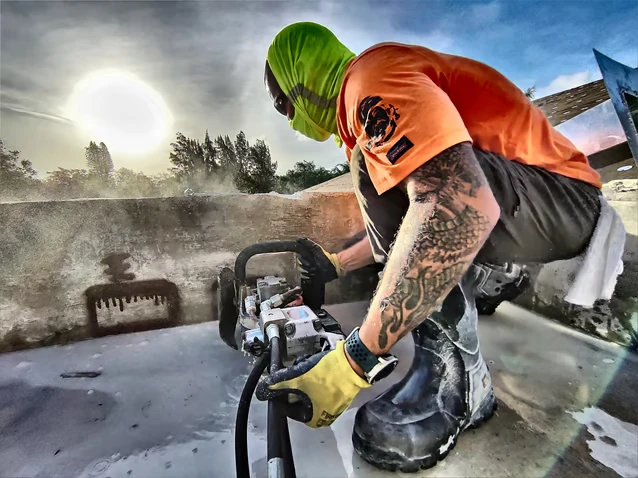
When you’re removing load-bearing concrete beams or columns in a building where adjacent units remain occupied — a common scenario in partial condo renovation demolition — diamond wire sawing is the only viable approach. Wire saws generate minimal vibration (typically under 0.1 in/sec PPV), operate with water-cooled continuous cutting action, and can be threaded through pre-drilled pilot holes to make cuts in geometrically complex configurations. Wire tension should be set between 1,800 and 2,200 N depending on concrete compressive strength; for salt-damaged coastal concrete testing below 3,000 PSI, reduce tension to prevent wire snap under inconsistent resistance.
Wall Sawing for Openings in Existing Structural Walls
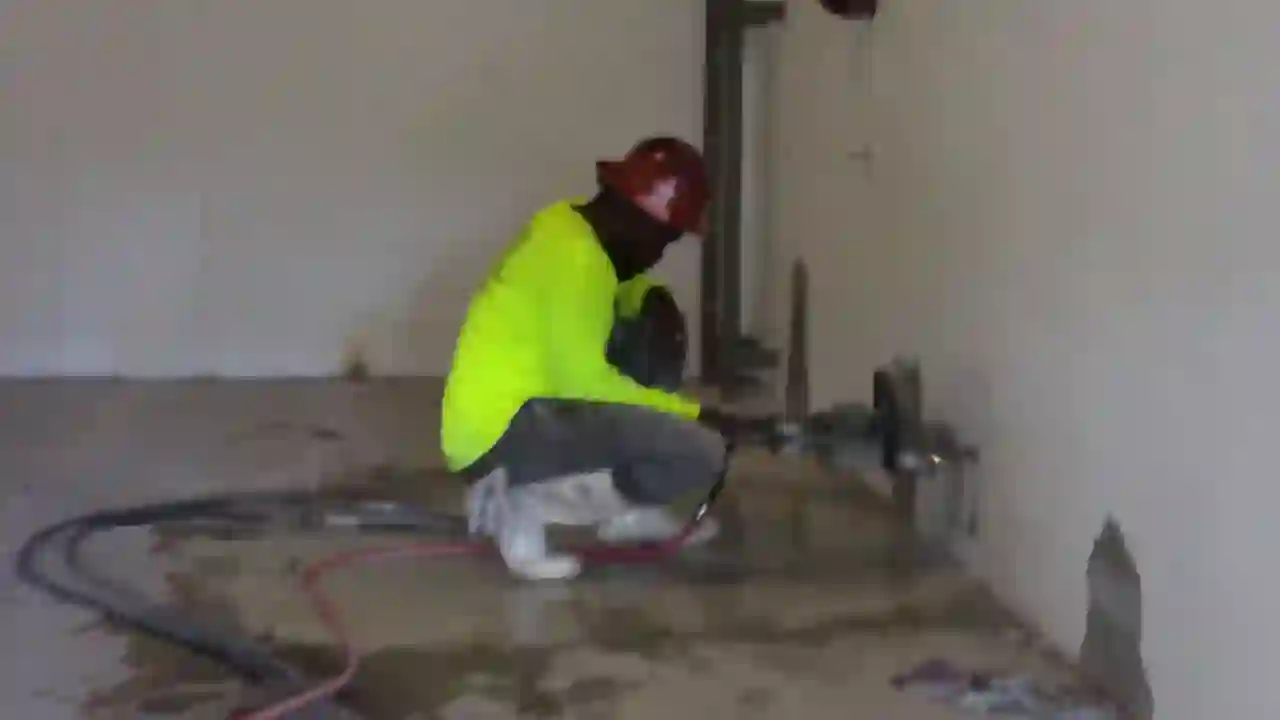
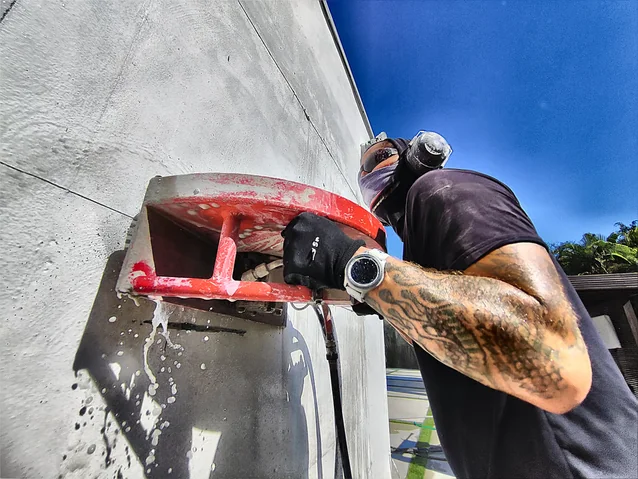
Creating new window or door openings in concrete masonry unit (CMU) or poured-concrete walls — a frequent requirement in Lauderdale by the Sea’s older oceanfront properties undergoing renovation — demands track-mounted wall saws. The track system allows precise depth control, which is critical when cutting adjacent to post-tension slabs above. Always verify slab post-tension cable layout via GPR before cutting any wall opening to avoid severing tendons routed through beam pockets. For projects involving below-grade or foundation-level openings, basement and foundation window cutting techniques outline the shoring requirements and cut sequencing needed to maintain structural stability during the opening phase.
Flat Slab Sawing for Pool Deck and Driveway Removal
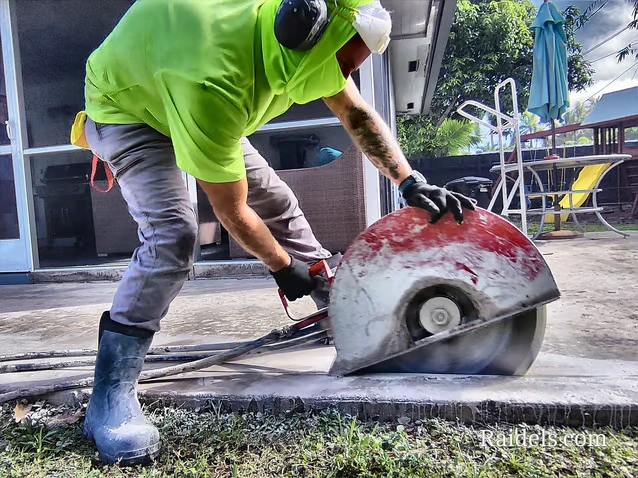
Pool deck demolition and driveway removal are among the most common C&D scopes in Lauderdale by the Sea’s residential market. For flat slabs up to 12 inches thick, a self-propelled flat saw with a 24-inch diamond blade running at 2,800–3,200 RPM delivers the fastest cut-to-removal cycle. Always cut in panels no larger than 4×4 feet to keep lift weights under 1,500 lbs — the practical limit for mini-excavator attachment on residential sites with limited staging area. Wet cutting is mandatory to control silica dust under OSHA’s Silica Standard (29 CFR 1926.1153), and slurry must be vacuumed and containerized before it reaches any drainage inlet.
Managing Concrete Debris Logistics on a Barrier Island
Hauling demolition debris off a barrier island adds a logistical layer that mainland contractors consistently underestimate. The primary access to Lauderdale by the Sea runs via Commercial Boulevard and Oakland Park Boulevard bridges — both subject to weight limits and peak-hour traffic restrictions. Schedule heavy debris haul-out during off-peak windows (6:00–8:30 AM or after 7:00 PM on weekdays) to avoid bridge congestion that turns a 20-minute haul into a two-hour delay. Concrete debris from demolition qualifies as clean fill in most cases and can be directed to Broward County’s recycling facilities, which accept crushed concrete for road base aggregate — a disposal pathway that’s both cost-effective and environmentally compliant.
For a broader look at how Miami-area contractors handle large-volume slab removal and debris management in dense urban environments, this guide to cutting and removing concrete slabs in South Florida is an essential operational reference.
Vetting and Hiring a Qualified Contractor for Lauderdale by the Sea C&D Work
Not every licensed concrete cutting contractor in South Florida has the site-specific experience to execute coastal demolition correctly. When evaluating firms for a Lauderdale by the Sea project, require documentation of the following before signing any contract:
- Florida State Certified General Contractor or Specialty Contractor license with active Broward County local business tax receipt.
- Proof of OSHA 30-hour training for the site superintendent and OSHA 10-hour for all crew members — non-negotiable on any project with adjacent occupied structures.
- GPR scanning capability either in-house or through a named subcontractor with documented coastal project experience.
- Vibration monitoring equipment — specifically a seismograph capable of real-time PPV logging — to demonstrate compliance with the Town’s vibration ordinance during operations.
- NPDES stormwater compliance plan specific to the project site, not a generic template.
For a structured framework on evaluating contractor qualifications before committing to a scope, contractor hiring best practices for concrete and demolition work outlines the vetting questions and red flags that separate professional operations from cut-rate crews who’ll leave you holding a stop-work order.
Sequencing Your Lauderdale by the Sea Demolition Project for Maximum Efficiency
The single most common mistake on coastal C&D projects is treating demolition as a single-phase operation. In Lauderdale by the Sea, a properly sequenced project runs in at least four distinct phases: pre-demolition assessment and permitting, selective interior demolition (non-structural), structural concrete cutting and removal, and debris haul-out with site restoration. Compressing these phases to save time almost always produces permit violations, structural incidents, or both.
Start with the asbestos and lead paint survey — this gates everything downstream. Once clearance is issued, proceed with selective demolition of non-structural elements (drywall, flooring, MEP rough-in) to expose the concrete structure for GPR scanning. Only after the scan results are reviewed and the cutting plan is finalized should any diamond tooling touch structural concrete. This sequencing isn’t bureaucratic overhead — it’s the operational logic that keeps crews safe and projects on schedule in one of South Florida’s most demanding construction environments.
Lauderdale by the Sea rewards contractors who respect its unique coastal physics and regulatory framework. Get the assessment right, choose the correct cutting technology for the constraint set, manage your debris logistics proactively, and hire a crew that can document compliance in real time — and your C&D project will close out on schedule, on budget, and without a single stop-work order.