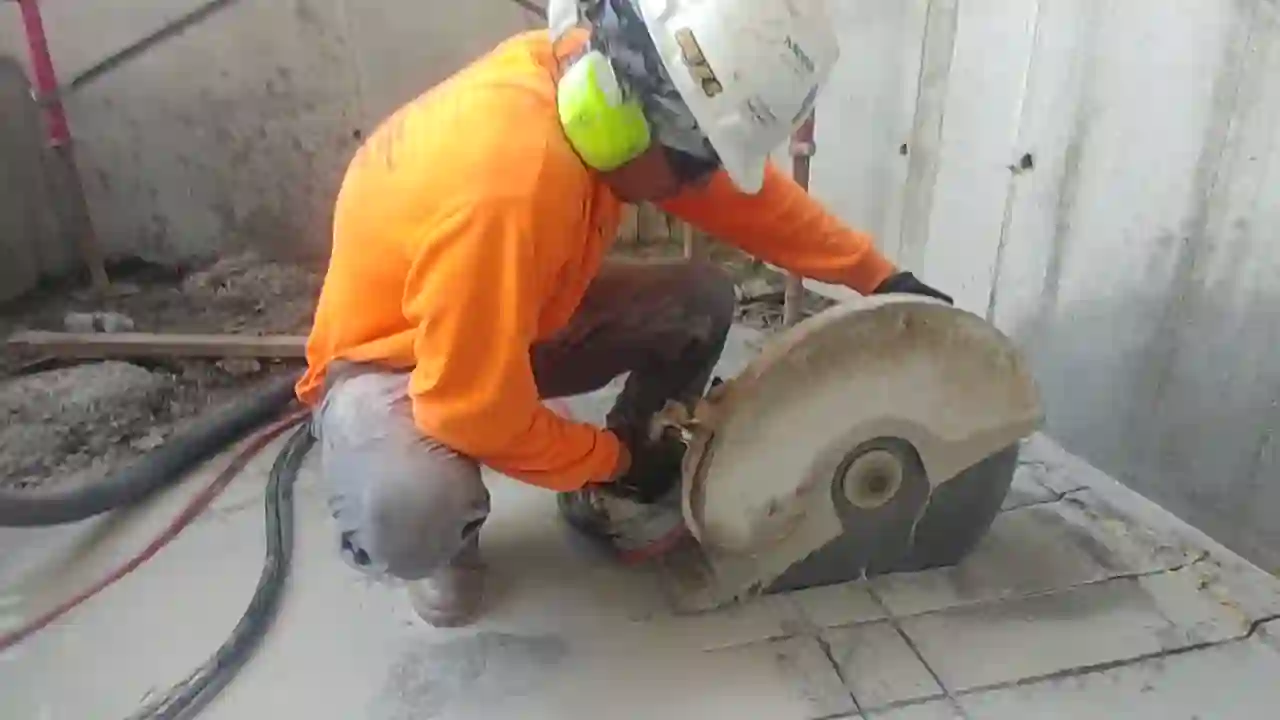
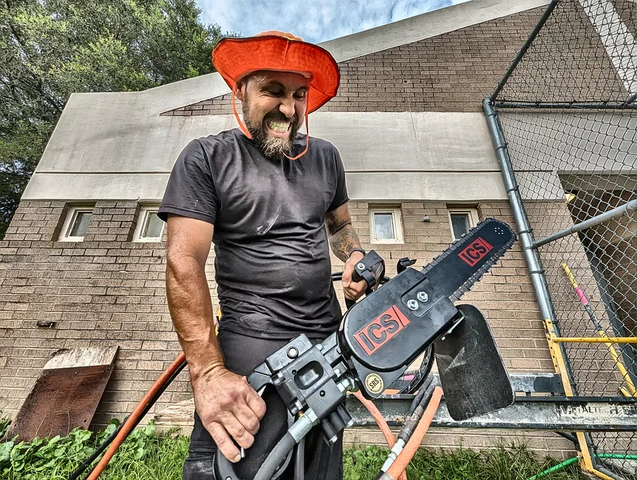
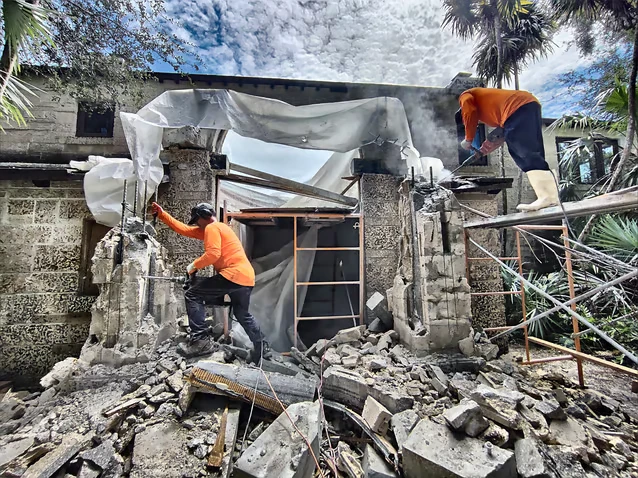
Why Concrete Drilling in Clearwater Demands a Different Approach Than Inland Work
Clearwater’s construction environment is not forgiving. You’re dealing with coastal aggregate mixes that were poured decades ago under Florida’s old building codes, chloride-contaminated rebar that has already begun to corrode beneath the surface, and slab designs that were never engineered with future penetrations in mind. When a contractor calls us about concrete drilling in Clearwater, the first question we ask is never “how big is the hole?” — it’s “what’s inside that slab, and what’s on the other side of it?” That discipline is what separates a clean penetration from a $40,000 structural repair. This guide walks you through the complete professional process, step by step, so you understand exactly what should happen on your job site before a single bit touches concrete.
Pre-Drill Site Assessment — The Step Most Contractors Skip
Before any diamond core barrel makes contact with a Clearwater slab, a thorough pre-drill assessment is mandatory. This is not optional paperwork — it is the technical foundation that determines bit diameter selection, drilling speed (RPM), water flow rate, and anchor placement for the rig itself.
Ground-Penetrating Radar Scanning for Embedded Hazards
GPR scanning must be performed on every drill location, no exceptions. In Clearwater’s older commercial and residential stock — particularly anything built between 1960 and 1990 — you’ll regularly encounter unexpected conduit runs, post-tensioned cables, and rebar that was placed off-spec from the original drawings. A 400 MHz antenna is standard for slabs up to 18 inches thick. For thicker foundations or grade beams, a 250 MHz antenna provides deeper penetration at the cost of some resolution. The scan data should be marked directly on the concrete surface using a paint pen, creating a clear exclusion zone around every embedded element before the drill rig is even staged.
Concrete Compressive Strength and Mix Identification
Clearwater’s coastal concrete frequently contains fly ash or slag cement as a partial Portland cement replacement, both of which affect drilling behavior. High fly ash content produces a harder, denser matrix that wears diamond segments faster. If as-built documents are unavailable — which is common in older Clearwater structures — a Schmidt Hammer rebound test gives a field estimate of compressive strength. Anything above 6,000 PSI warrants a softer diamond bond segment to allow proper self-sharpening during the cut. Using a hard-bond segment on high-PSI concrete glazes the bit and kills productivity while generating dangerous heat.
Selecting the Correct Core Drill Rig and Bit Configuration for Each Bore
Equipment selection is not a one-size-fits-all decision. The hole diameter, slab thickness, rebar density, and available workspace all drive the choice of rig and barrel. For the detailed breakdown of professional-grade tooling used in these applications, the tools and equipment resource at Concrete Cutting Miami covers the full spectrum of drill rigs, core barrels, and ancillary gear used across South Florida and the Gulf Coast.
Electric vs. Hydraulic Drill Rigs for Interior Clearwater Applications
For interior work — utility penetrations through walls, anchor holes in parking structures, HVAC sleeves through floor slabs — electric diamond core rigs in the 2 to 3 HP range are standard. They’re quieter, produce no exhaust, and give the operator precise RPM control through a variable speed trigger. Hydraulic rigs are reserved for large-diameter bores (12 inches and above) or heavily reinforced elements where torque demand exceeds what electric motors can sustain continuously. On Clearwater’s beachfront condo projects, where occupied floors are directly above and below the work zone, electric rigs with integrated vacuum slurry recovery systems are the only acceptable choice.
Diamond Core Barrel Sizing and Segment Geometry
Core barrels for standard utility penetrations typically run 2 to 6 inches in diameter. Structural anchor applications often require 1-inch to 1.5-inch bores. The segment geometry — specifically the kerf width and diamond concentration — must match the aggregate hardness. Clearwater’s coastal mixes frequently contain hard silica sand and crushed limestone aggregate, both of which are abrasive. A 30/40 mesh diamond concentration in a medium-hard bond matrix handles this well. For heavily reinforced slabs where the barrel will intersect rebar, a rebar-rated segment with a reinforced steel core tube prevents barrel deflection and maintains hole straightness.
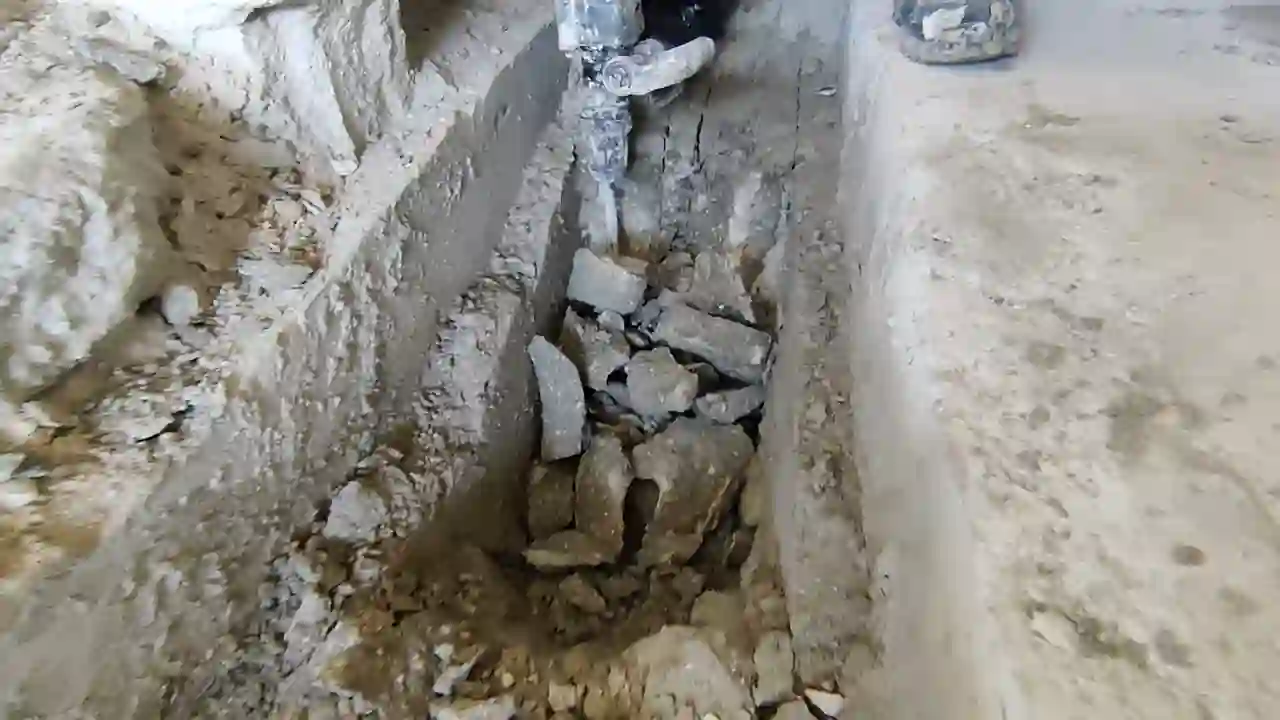
The Wet Drilling Process — Water Flow Rates, Slurry Management, and Depth Control
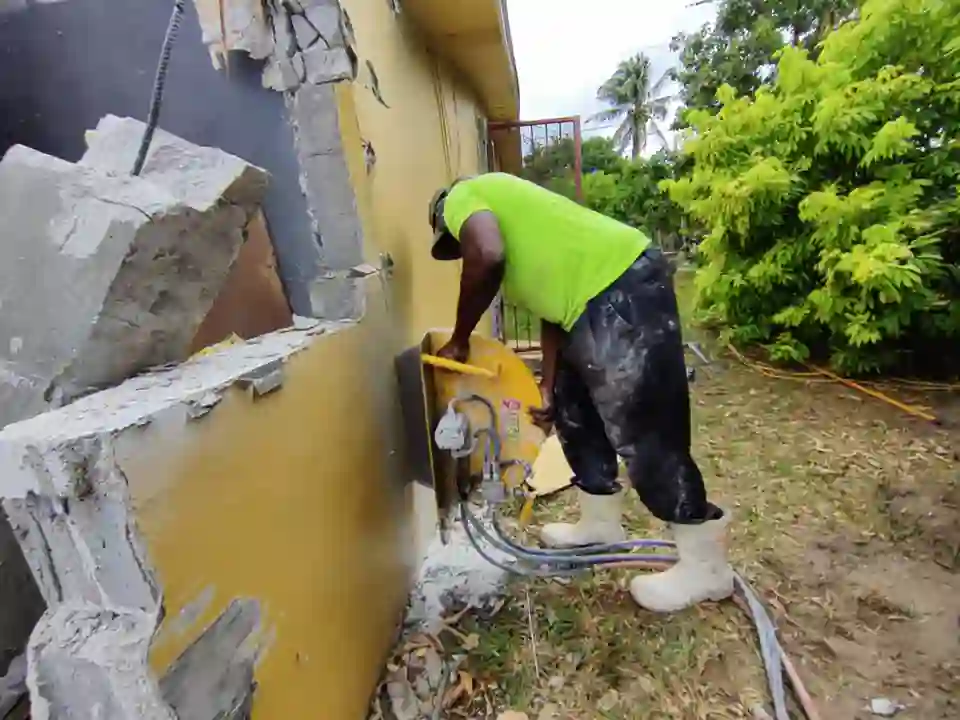
Wet diamond core drilling is the industry standard for all but the thinnest, least-reinforced applications. Water serves two critical functions — it cools the diamond segments to prevent thermal glazing, and it flushes cuttings from the kerf to prevent recutting, which destroys segments prematurely. In Clearwater’s commercial environment, slurry management is not just a best practice — it’s an environmental compliance requirement. Concrete slurry has a pH between 11 and 13, making it a caustic waste that cannot be discharged to storm drains or surface water under Florida DEP regulations. For a detailed look at compliant concrete waste handling practices across the region, the environmentally compliant concrete removal guide is an essential reference for any property owner or GC managing a permitted project.
Optimal Water Flow Rates by Bore Diameter
Water flow must be calibrated to bore size. Under-watering is the single most common cause of premature bit failure in the field. General industry guidelines call for approximately 1 gallon per minute for every inch of core diameter. A 4-inch bore therefore requires a minimum of 4 GPM sustained throughout the cut. For bores exceeding 8 inches, a dedicated water pump with a pressure regulator is necessary — relying on building water pressure alone rarely delivers adequate flow at depth. The water should exit the bore as a light gray slurry. If it exits clear, you’re under-watering. If it exits as a thick paste, the flush rate is inadequate for the cutting speed and you risk segment loading.
Feed Pressure and RPM Calibration by Slab Thickness
Feed pressure — the downward force applied to the drill rig — must be balanced against RPM to maintain consistent segment contact without stalling the motor or deflecting the barrel. For a 4-inch barrel in 4,000 PSI concrete, a starting point of 1,200 RPM with moderate feed pressure (roughly 50 to 75 lbs of applied force) is appropriate. As the barrel deepens past 6 inches, reduce RPM slightly and increase flush frequency to prevent slurry buildup. Through-slab bores require a controlled breakthrough protocol — reduce feed pressure significantly in the final inch to prevent the core plug from fracturing and falling, which can damage the barrel and create a hazard below the slab.
Post-Drill Inspection, Anchor Verification, and Sleeve Installation Protocols
A drilled hole is not a finished product. Every bore requires post-drill inspection before it’s handed off to the trade that ordered it. For anchor bolt applications — which are extremely common in Clearwater’s commercial renovation and hurricane retrofit market — the hole must be blown clean with compressed air and brushed with a wire brush before adhesive anchor systems are installed. ICCES-certified adhesive anchor systems require a specific hole cleanliness standard; a single pass with compressed air is not sufficient. The protocol is blow, brush, blow — three cycles minimum for holes up to 12 inches deep, five cycles for deeper bores.
For MEP sleeve penetrations, the annular gap around the sleeve must be sealed with an appropriate firestop system if the bore passes through a fire-rated assembly. This is a code compliance item that gets missed on a surprising number of Clearwater commercial projects. The GC or building owner is ultimately responsible for firestop installation, but the drilling contractor should document the bore diameter and location to support the firestop installer’s work.
Projects in Clearwater that are part of larger construction projects often require drilling work to be sequenced with other trades. Coordinating drill schedules with MEP rough-in timelines prevents rework and keeps the critical path intact. Teams working under Concrete Cutting Miami LLC are experienced in multi-trade coordination across Gulf Coast commercial and residential projects, and our core drilling specialists bring that same scheduling discipline to every Clearwater engagement.
What Every Clearwater Property Owner Should Demand From Their Drilling Contractor
Before signing any contract for concrete drilling work in Clearwater, verify the following non-negotiables. The contractor must carry a minimum of $1 million in general liability insurance with a concrete specialty endorsement. They must perform GPR scanning on every drill location — any contractor who skips this step is exposing you to structural liability. They must have a documented slurry containment and disposal plan that complies with Florida DEP guidelines. And they must be able to provide a post-drill report that includes hole coordinates, diameters, depths, and any embedded elements encountered during the bore.
Clearwater’s building stock is aging, its coastal exposure is severe, and its structural details are frequently undocumented. The drilling contractor who treats every bore as a routine task is the one who eventually hits a post-tensioned cable or severs a grounding electrode conductor. The contractor who treats every bore as a precision engineering operation is the one who delivers a clean, compliant hole that the next trade can work with immediately. That is the standard this work demands — and the standard every Clearwater property owner should insist on.