The Baseline Number Every Foreman Should Have Memorized Before the First Cut
Standard portland cement concrete — the mix your crew encounters on virtually every residential slab, commercial deck, or infrastructure project in South Florida — weighs approximately 145 to 150 pounds per cubic foot. The American Concrete Institute (ACI) uses 150 lb/ft³ as the standard unit weight for normal-weight concrete in structural calculations. Lightweight concrete mixes drop to roughly 95–115 lb/ft³, while heavyweight radiation-shielding concrete can exceed 200 lb/ft³. For most field decisions, 150 lb/ft³ is your working number — and every safety protocol, rigging calculation, and manual handling plan on your site should be built around it.
Breaking Down the Physics Before Anyone Touches a Slab
Let’s put 150 lb/ft³ into immediate field context. A standard 4-inch residential slab occupies 0.333 cubic feet per square foot of surface area. That means every single square foot of that slab weighs approximately 50 pounds. A modest 3-foot by 3-foot cut section — something a laborer might casually attempt to pry up with a breaker bar — weighs 450 pounds before you account for any moisture saturation, embedded rebar, or aggregate density variation. Saturated concrete in Miami’s humid climate can add another 5–8% to that figure due to absorbed moisture in the pore structure.
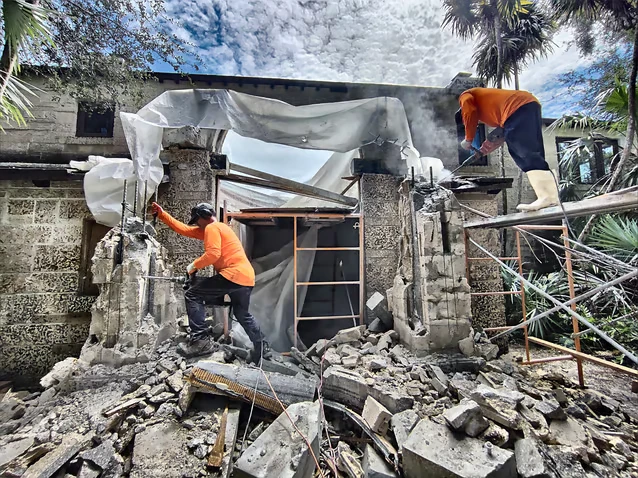
A 6-inch slab bumps the per-square-foot weight to 75 pounds. An 8-inch commercial or industrial slab hits 100 pounds per square foot. When you’re working on concrete slab foundation thickness variations common in South Florida construction — where soil conditions often demand thicker pours — these numbers escalate fast. A 2-foot by 4-foot section of 8-inch slab weighs 800 pounds. That is not a two-man lift. That is a rigging operation.
OSHA 1926 Subpart Q and What the Weight Number Triggers on Your Site
OSHA’s construction industry standards under 29 CFR 1926 Subpart Q govern concrete and masonry construction. The weight-per-cubic-foot figure is not academic — it directly triggers specific compliance thresholds your supervisors must act on. Here is where 150 lb/ft³ intersects with federal regulation:
- Manual Lifting Limits: OSHA does not set a single absolute weight limit for manual lifts, but NIOSH’s Revised Lifting Equation establishes a Recommended Weight Limit (RWL) of 51 pounds under ideal conditions. Any concrete fragment exceeding that threshold requires a two-person lift, mechanical assist, or engineered rigging plan. Given that even a 1-foot by 1-foot by 4-inch piece weighs 50 pounds, virtually every slab section your crew handles requires a formal handling plan.
- Formwork and Shoring Load Calculations: Under 1926.703(a)(1), formwork must be designed to support vertical and lateral loads. Knowing that fresh concrete weighs 150 lb/ft³ is mandatory for any engineer stamping a formwork drawing.
- Caught-In/Between Hazards: OSHA’s Fatal Four includes caught-in/between incidents. Slab sections rolling, shifting, or dropping during removal operations are a primary mechanism. Weight calculations are the first line of defense in preventing these fatalities.
- Crane and Rigging Compliance (1926.1400): Any mechanically assisted lift requires a pre-lift plan that includes the weight of the load. Estimating incorrectly — even by one cubic foot — can exceed a rigging component’s Working Load Limit (WLL) and cause catastrophic failure.
Calculating Cut Section Weight Before the Blade Touches the Concrete
The formula is straightforward but non-negotiable on every job site: Weight (lbs) = Length (ft) × Width (ft) × Thickness (ft) × 150. Run this calculation before any mechanical or manual removal begins. For a 24-inch by 36-inch section of a 5-inch slab: 2 × 3 × 0.417 × 150 = 375.3 pounds. That section requires mechanical handling. No exceptions.
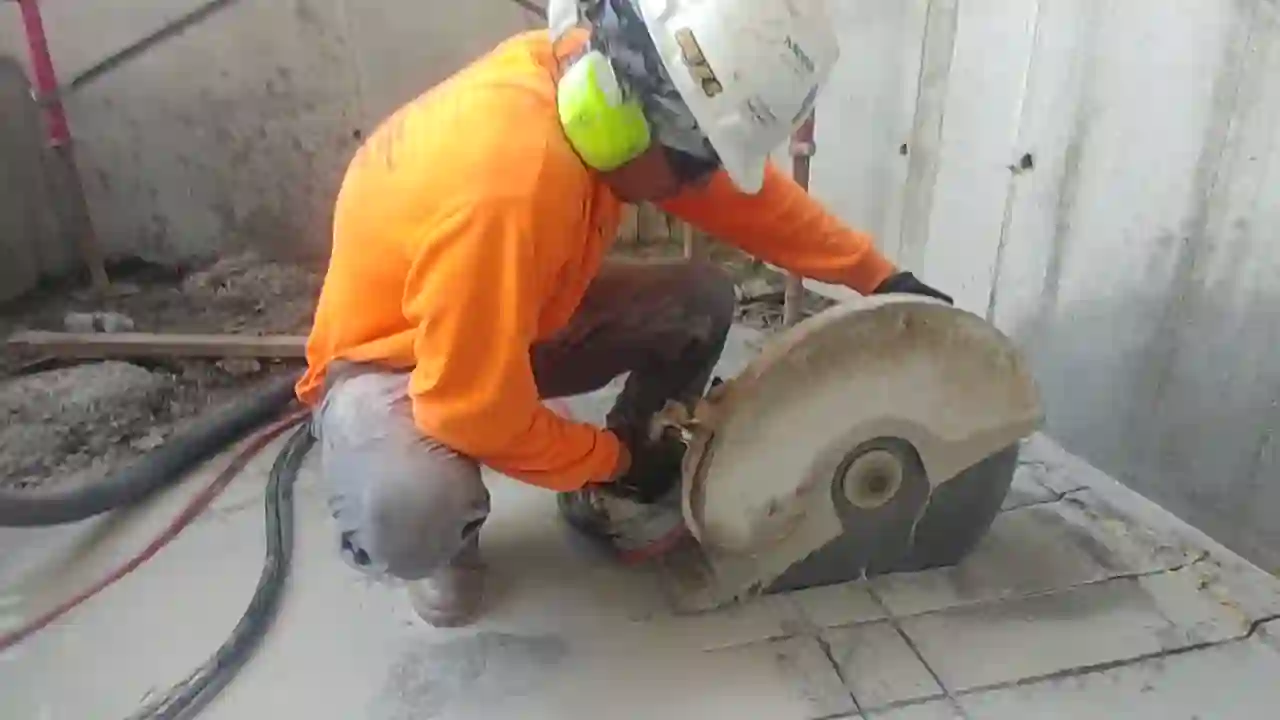
When your crew is performing saw cut concrete joints to define removal sections, the cut dimensions you choose directly determine the weight of each piece your team must subsequently handle. Experienced operators plan their cut grid specifically to keep individual sections within the capacity of the available lifting equipment — not based on what looks geometrically convenient. A 12-inch blade depth on a wall saw cutting through a 10-inch barrier wall produces sections that can weigh well over 1,000 pounds per linear foot of cut length. That is crane territory, full stop.
Moisture, Rebar, and Aggregate Variables That Change the Weight Equation on Miami Sites
South Florida’s environment introduces weight variables that inland markets rarely consider. Concrete in direct contact with groundwater or subject to tidal influence — common in seawall concrete cutting in Miami — can be significantly heavier than the standard 150 lb/ft³ baseline due to sustained moisture saturation. Field measurements on coastal structures have recorded unit weights of 155–158 lb/ft³ in persistently wet zones.
Embedded steel adds weight that your volume calculation will miss entirely. A standard #5 rebar (0.668 lb/ft) running through a slab section adds meaningful mass when you’re dealing with heavily reinforced industrial slabs. A 3-foot by 3-foot section of a 6-inch slab with a 12-inch rebar grid (both directions) can carry an additional 15–20 pounds of steel beyond the concrete volume weight. For rigging purposes, always add a 10% safety buffer to your calculated section weight to account for rebar, residual moisture, and aggregate density variation.
Rigging Hardware Selection Based on Concrete Weight Calculations
Once you have your section weight — including the safety buffer — rigging hardware selection follows a clear hierarchy. The Working Load Limit of every component in the lifting system must exceed the calculated load. This includes the sling, the shackle, the spreader bar if used, and the crane hook block. The weakest link in that chain governs the entire operation.
- Wire rope slings: Rated by diameter and configuration. A 3/8-inch wire rope sling in a straight vertical hitch has a WLL of approximately 2,800 lbs. Choker hitch reduces that to 2,100 lbs. Basket hitch doubles it to 5,600 lbs. Know your hitch before you hook.
- Round slings (synthetic): Convenient for concrete removal but vulnerable to abrasion from cut edges. Always use corner protectors on sawn concrete sections. A sharp cut edge can sever a synthetic sling at a fraction of its rated load.
- Vacuum lifting systems: Highly effective for flat slab sections but require a minimum surface area and a clean, non-porous contact zone. Saw-cut surfaces often qualify; broken or jackhammered surfaces rarely do.
- Concrete anchor inserts: For engineered lifts, cast-in or drilled anchor inserts rated for the specific load provide the most controlled lift point. Always verify the insert manufacturer’s load rating against your calculated section weight.
Hazard Avoidance Protocols During Mechanical Slab Removal Operations
Weight awareness is the foundation, but hazard avoidance requires procedural discipline on top of the numbers. At Concrete Cutting Miami, LLC, our field protocols for slab removal operations include the following non-negotiable steps that align with both OSHA requirements and industry best practices:
- Exclusion zones: Establish a minimum 1.5× drop-height exclusion zone around any suspended concrete section. For a 6-foot lift height, no personnel within 9 feet of the load path — period.
- Pre-lift inspection: Inspect all rigging hardware before every single lift. Concrete cutting operations generate silica dust, vibration, and impact loads that accelerate wear on slings and hardware far faster than standard construction lifts.
- Tag lines mandatory: Every suspended concrete section requires at least one tag line to control rotation and drift. Uncontrolled rotation of a heavy slab section is a caught-in/between fatality waiting to happen.
- Spotter communication protocol: Establish hand signals before the lift begins. Engine noise from cutting equipment makes verbal communication unreliable. Standardize signals across your crew at the start of every shift.
- Ground bearing capacity verification: Before positioning a crane or telehandler, verify that the ground can support the equipment’s outrigger loads plus the suspended concrete weight. Miami’s fill soils and proximity to groundwater create bearing capacity surprises that have tipped equipment on otherwise routine jobs.
For projects involving demolition equipment and environmental compliance concerns — particularly in urban Miami neighborhoods — our detailed breakdown of jackhammer rental and environmental compliance in Miami covers the regulatory landscape your team needs to navigate before breaking ground.
Silica Dust Exposure During Cutting and the Weight-to-Dust Relationship
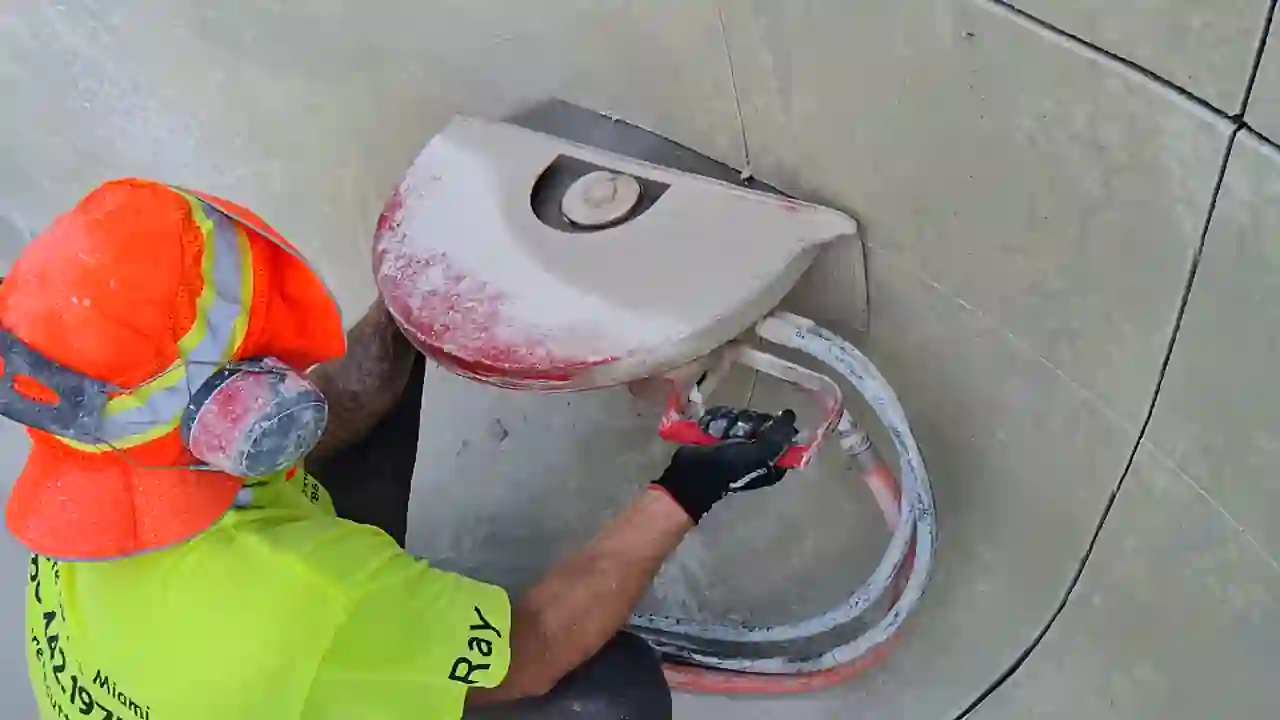
Every pound of concrete your crew cuts, grinds, or breaks generates respirable crystalline silica dust. OSHA’s silica standard for construction (29 CFR 1926.1153) sets the Permissible Exposure Limit (PEL) at 50 micrograms per cubic meter of air as an 8-hour time-weighted average. The heavier the concrete section being processed — meaning more material being cut — the greater the cumulative silica generation. Weight calculations are therefore not just a lifting safety issue; they inform your air monitoring strategy and wet-cutting water supply requirements.
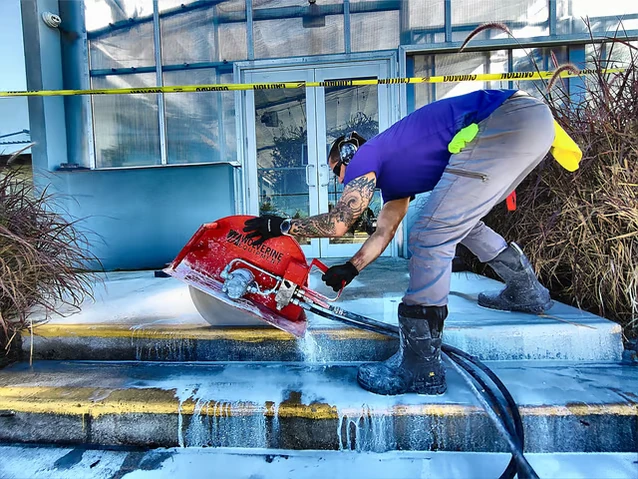
A crew cutting through 10 cubic feet of concrete per shift is processing 1,500 pounds of silica-bearing material. Wet cutting methods must maintain continuous water flow at the blade to suppress dust at the source. Dry cutting is prohibited under OSHA’s Table 1 for most concrete cutting operations without engineering controls that demonstrably achieve equivalent exposure reduction.
Putting the Weight Data to Work Before Your Next Project Starts
The 150 lb/ft³ figure is not just a textbook number — it is a safety-critical input that should appear in your pre-task planning documents, your rigging calculations, your OSHA compliance records, and your crew toolbox talks before any concrete removal begins. Treating it as background knowledge rather than an active operational parameter is how job sites generate recordable incidents, OSHA citations, and — in the worst cases — fatalities.
Whether you are managing a residential slab removal in Coral Gables, a commercial demo in Doral, or a marine structure project along Biscayne Bay, the physics of concrete weight do not change with the zip code. Your protocols need to match the material. Review our full range of concrete cutting and removal services to understand how our crews operationalize weight-based safety planning on every project we touch, or contact our team directly to discuss your specific project requirements with a senior field consultant.