Why Environmental Compliance Is the Line Item That Rewrites Your Concrete Cutting Price
When a property owner calls us for a concrete cutting price, they’re thinking about blade size, crew hours, and maybe equipment rental. What they’re rarely thinking about — but absolutely should be — is the environmental compliance stack that sits underneath every legitimate bid. In Miami-Dade County, where stormwater drainage connects almost directly to Biscayne Bay and the Atlantic, slurry management isn’t optional paperwork. It’s a technical discipline with real equipment, real labor, and real cost consequences that can shift a bid by 20 to 40 percent depending on the scope of work. This post breaks down exactly what that means, how it’s priced, and what separates a compliant contractor from one who’s about to hand you an EPA violation.
The Chemistry of Concrete Slurry and Why Discharge Is Illegal
Concrete slurry is not just muddy water. When a diamond blade cuts through Portland cement, it generates a highly alkaline suspension — pH levels routinely measure between 11 and 13 — combined with fine silica particulate, calcium hydroxide, and trace heavy metals from aggregate and rebar oxidation. That mixture is classified as a pollutant under the Clean Water Act, Section 402, and under Florida’s National Pollutant Discharge Elimination System (NPDES) permit program administered by the Florida Department of Environmental Protection (FDEP).
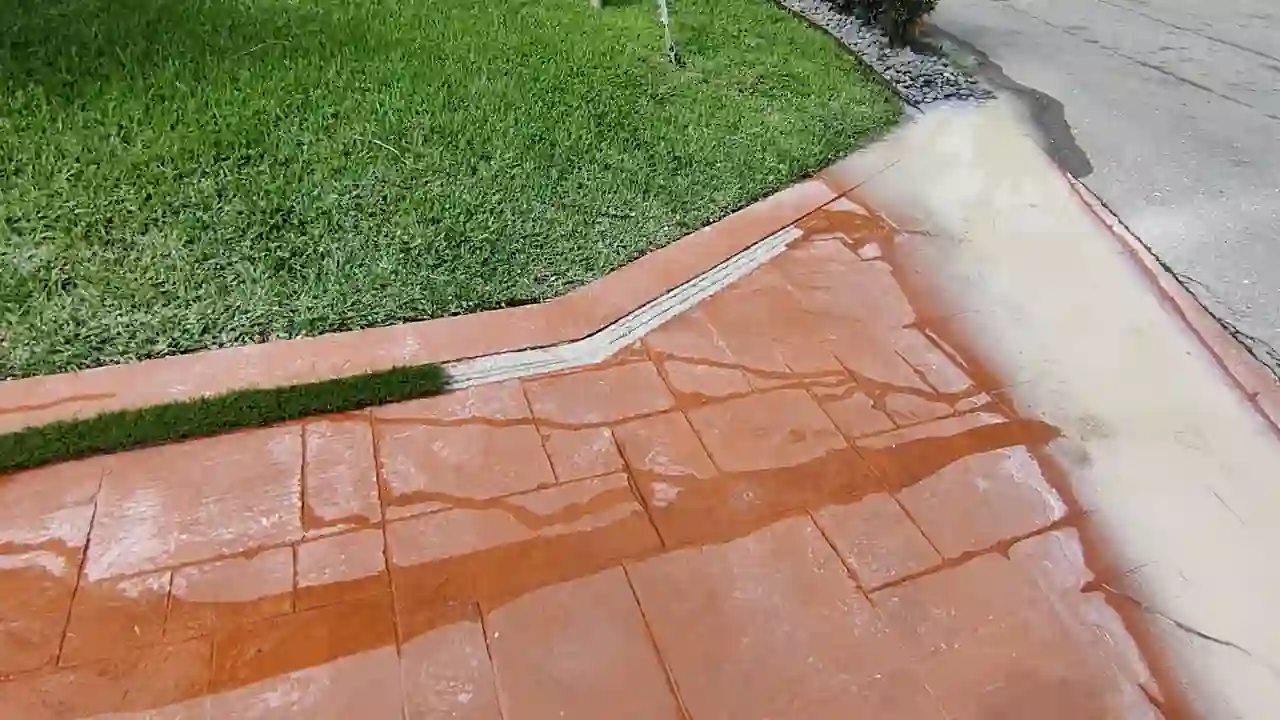
Discharging that slurry into a storm drain, a swale, or onto a permeable surface without proper containment and neutralization is a direct violation. Fines from FDEP for unpermitted discharge start at $10,000 per incident and can escalate to $15,000 per day for continuing violations. This is not theoretical risk — Miami-Dade’s stormwater inspectors actively monitor construction sites, and complaints from adjacent property owners trigger immediate site visits. Any contractor who quotes you a rock-bottom concrete cutting price in Miami without a visible slurry management plan is pricing in liability that you will eventually absorb.
Wet Cutting Versus Dry Cutting and the Water Volume Equation
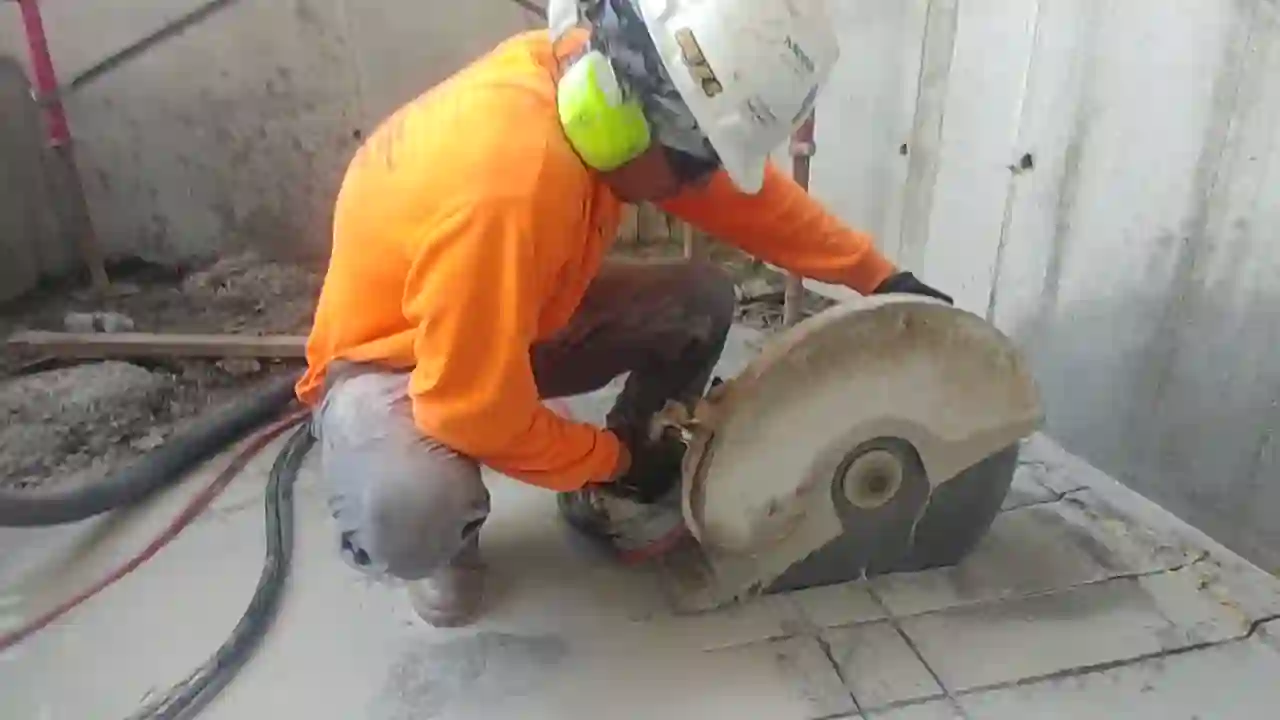
Diamond blade cutting is almost always performed wet. Water serves two critical functions: it cools the blade to prevent segment loss and it suppresses airborne respirable silica dust, which is regulated under OSHA’s 1926.1153 standard with a permissible exposure limit of 50 micrograms per cubic meter averaged over an 8-hour shift. A standard 14-inch walk-behind flat saw running at full depth on 6-inch slab consumes approximately 1.5 to 3 gallons of water per minute. On a 4-hour cutting session, that’s 360 to 720 gallons of contaminated slurry that must be captured, contained, and disposed of correctly.
Core drilling generates a different but equally significant volume. A 6-inch diameter core drill in a 12-inch thick deck produces roughly 0.5 gallons of slurry per foot of penetration. Multiply that across a utility penetration project with 40 cores and you’re managing 20-plus gallons of high-pH slurry in a confined space. These volumes directly drive equipment selection, and equipment selection directly drives your concrete cutting price. Contractors who skip wet cutting and go dry to avoid slurry management are trading your silica exposure liability for their convenience — and that’s a concrete cutting mistake that can follow a project owner for years.
Slurry Vacuum Recovery Systems and Their Pricing Impact
The industry standard for contained slurry recovery is a dedicated wet-vac or slurry vacuum system integrated directly into the cutting setup. These units — brands like Pullman-Holt, Husqvarna, and Ermator dominate the professional tier — operate with filtration stages designed to separate particulate from water before any liquid enters a holding tank. A properly specified slurry vacuum for flat sawing work includes a 15-to-30 gallon primary collection tank, a secondary filtration stage, and a float shutoff to prevent overflow.
Renting a compliant slurry vacuum system runs $150 to $350 per day depending on capacity. Owned equipment amortizes differently, but labor to set up, monitor, empty, and break down the system adds 45 to 90 minutes to every job. When you’re reviewing a detailed bid breakdown and you see line items for slurry recovery equipment and environmental setup labor, those are not padding — they’re the cost of legal operation.
pH Neutralization Before Disposal
Collected slurry cannot simply be dumped into a sanitary sewer without treatment, and it absolutely cannot be discharged to surface water. The standard field protocol involves pH adjustment using dry citric acid or CO2 injection systems to bring the slurry from pH 11-13 down to the legally acceptable range of pH 6-9 before disposal. Citric acid runs approximately $2 to $4 per pound, and a typical day of cutting may require 5 to 15 pounds depending on slurry volume and initial alkalinity. CO2 injection systems are faster and more precise but require pressurized equipment and add $80 to $150 per mobilization. Either method adds real cost to the final concrete cutting price — cost that a compliant contractor will show you explicitly.
Slurry Solidification and Off-Site Disposal
When liquid disposal isn’t feasible on-site — common in parking structures, interior slabs, and enclosed mechanical rooms — slurry is solidified using Portland cement powder or commercial solidification agents and bagged for off-site disposal as construction debris. This approach eliminates liquid handling risk entirely but adds material cost ($15 to $40 per bag of solidification agent) and disposal fees. In Miami-Dade, licensed construction debris disposal runs $75 to $150 per ton at permitted facilities. A full day of interior core drilling can generate 200 to 400 pounds of solidified slurry, meaning disposal alone adds $15 to $30 to the job cost before any other factor.
Containment Berms, Drain Plugs, and Perimeter Control
Physical containment at the cut zone is the first line of defense before any vacuum system activates. Professional crews deploy rubber drain plugs to seal nearby storm inlets, polyethylene containment berms to direct slurry flow toward collection points, and absorbent socks along perimeter edges to catch lateral migration. This setup takes 20 to 45 minutes per mobilization and requires materials that are either rented or consumed. Drain plug sets cost $40 to $120 per set. Containment berms run $60 to $200 depending on linear footage. These costs are legitimate, they’re code-driven, and they belong in every honest concrete cutting price.
Interior work — particularly in occupied commercial buildings — adds another layer of complexity. Slurry migration into adjacent tenant spaces, elevator pits, or electrical rooms creates liability that dwarfs the cost of prevention. Crews working in these environments should be using squeegee systems, wet-dry vacuums with HEPA filtration, and continuous monitoring of pH at the perimeter. If a contractor is offering demolition and cutting services for interior commercial work without specifying containment protocols in writing, that’s a significant red flag.
How Slurry Compliance Varies by Project Type and Site Conditions
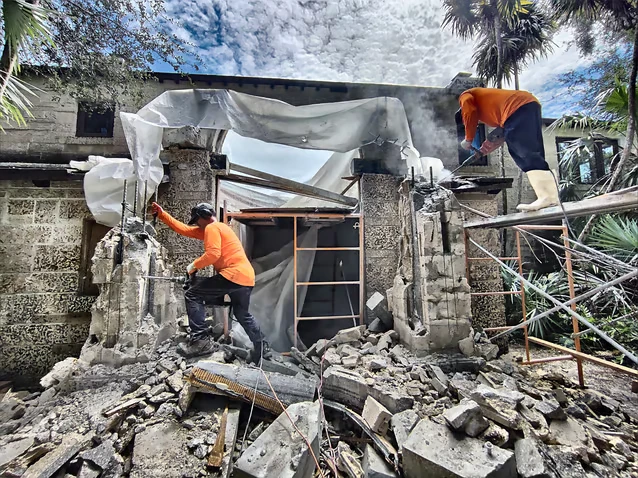
Not every job carries the same environmental compliance burden, and a skilled estimator prices accordingly. Outdoor flatwork on an impervious lot with a contained drainage path to a vacuum truck is relatively straightforward. A parking deck above a retail space with live drains flowing to a municipal system is a completely different compliance profile. Bridge deck cutting near navigable water triggers additional FDEP review and may require a specific stormwater pollution prevention plan (SWPPP) filed before work begins. High-impact breaking and cutting operations near waterways may also require turbidity barriers if any slurry has potential to reach open water.
The variables that most dramatically affect compliance cost in a concrete cutting price include proximity to storm inlets, whether the site is in a designated wellfield protection zone (common in Miami-Dade), floor level and drainage configuration for interior work, total estimated slurry volume based on cut length and depth, and whether the site requires a pre-work environmental assessment. A contractor who asks detailed questions about your site before quoting is doing their job. One who quotes on square footage alone is guessing — and you’ll pay for that guess during the job or after it.

Reading a Compliant Bid Against an Undercompliant One
The clearest signal of a compliant concrete cutting price is line-item transparency. You should see explicit entries for slurry management equipment, pH neutralization materials, disposal fees, and environmental setup labor. You should also see references to the applicable regulatory framework — FDEP NPDES permit compliance, OSHA silica standard adherence, and local stormwater ordinance conformance. If a bid is a single number with a vague scope description, you are not looking at a compliant proposal. You are looking at a price that will grow the moment environmental reality intersects with the job site.
In Miami’s construction environment, where regulatory scrutiny is high and environmental sensitivity is real, the cheapest concrete cutting price is rarely the lowest-risk one. The contractors who invest in proper slurry vacuum systems, pH monitoring equipment, and trained crews to operate them are building compliance cost into their bids because they’ve seen what happens when it’s left out. That investment protects your property, your permit standing, and ultimately your project timeline. Price the whole job — not just the blade hours.