Why Concrete Cutting Near Hollywood FL Demands a Different Technical Approach
Hollywood, Florida sits in a zone where construction conditions punish inexperienced contractors fast. The concrete poured across Broward County — from the high-rises along Hollywood Beach Boulevard to the tilt-up warehouse slabs in the Dania Beach industrial corridor — is often a mixed bag of compressive strengths, aggregate types, and rebar configurations that don’t behave uniformly under a diamond blade. If you’re planning a concrete cutting project near Hollywood and you want it done without blade walk, overcutting, or structural compromise, the decisions you make before the saw ever touches the slab are the ones that matter most.
Diagnosing Your Slab Before Selecting a Cutting Method
The single most common mistake on Hollywood-area concrete cutting jobs is skipping the pre-cut investigation phase. Before any equipment is mobilized, a qualified crew should pull the original pour specs or, if those aren’t available, conduct a ground-penetrating radar (GPR) scan to identify rebar depth, post-tension cables, conduit runs, and slab thickness. In South Florida, post-tension slabs are extremely common — particularly in residential construction built after the mid-1980s. Cutting through a post-tension tendon without releasing it properly is a catastrophic, irreversible mistake.
Once you have GPR data in hand, verify the concrete’s compressive strength. Older Hollywood-area slabs from the 1960s and 1970s frequently test at 2,500–3,000 PSI, while modern commercial pours regularly hit 4,000–6,000 PSI. That range directly affects your blade bond hardness selection — softer bonds for harder concrete, harder bonds for softer aggregate mixes. Getting this wrong burns through segments prematurely and drives up your concrete demolition cost significantly.
Flat Sawing Versus Wall Sawing — Choosing the Right Tool for the Cut
Hollywood projects tend to fall into two dominant cut categories: horizontal slab cuts for utility access or demolition, and vertical wall or curb cuts for door openings, window expansions, or structural modifications. Each requires a fundamentally different machine setup.
Flat Slab Sawing for Broward County Substrates
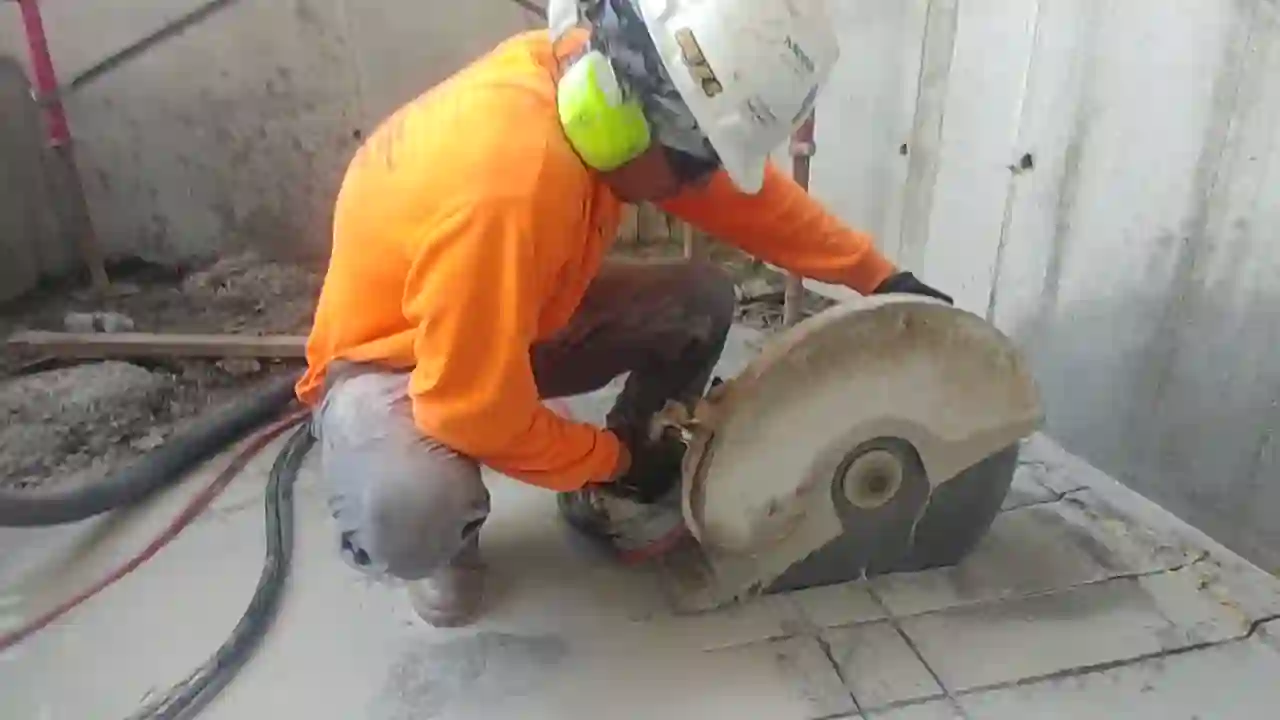
For horizontal cuts — driveways, parking decks, warehouse floors, pool decks — a walk-behind flat saw with a 14″ to 36″ diamond blade is the standard tool. In Hollywood specifically, you’re often cutting over a shallow water table, which means wet-cut operation isn’t just recommended for blade cooling; it’s necessary for dust suppression under Florida’s air quality regulations. Slurry management becomes a job site logistics issue. You’ll need a vacuum slurry system or containment berms to prevent silica-laden runoff from reaching storm drains, which in Hollywood flow directly toward the Intracoastal and the Atlantic.
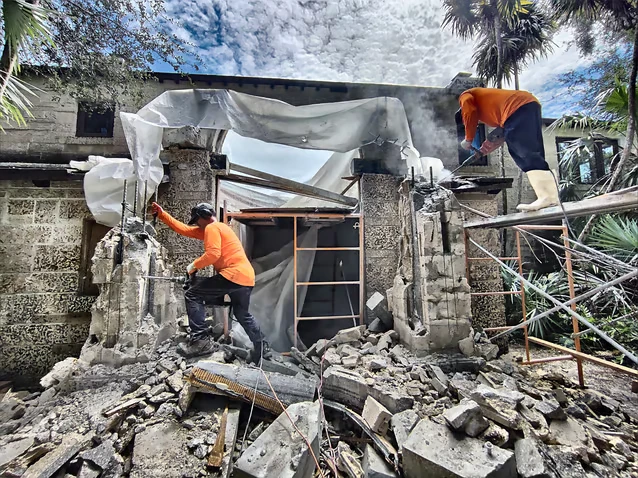
Depth of cut matters here. A single-pass flat saw maxes out around 16–18 inches depending on blade diameter. For thicker slabs — think commercial loading docks or bridge approach slabs — you’ll need a diamond wire saw setup or a series of overlapping flat saw passes with a flip cut on the underside.
Wall Sawing for Hollywood High-Rise and Commercial Renovations
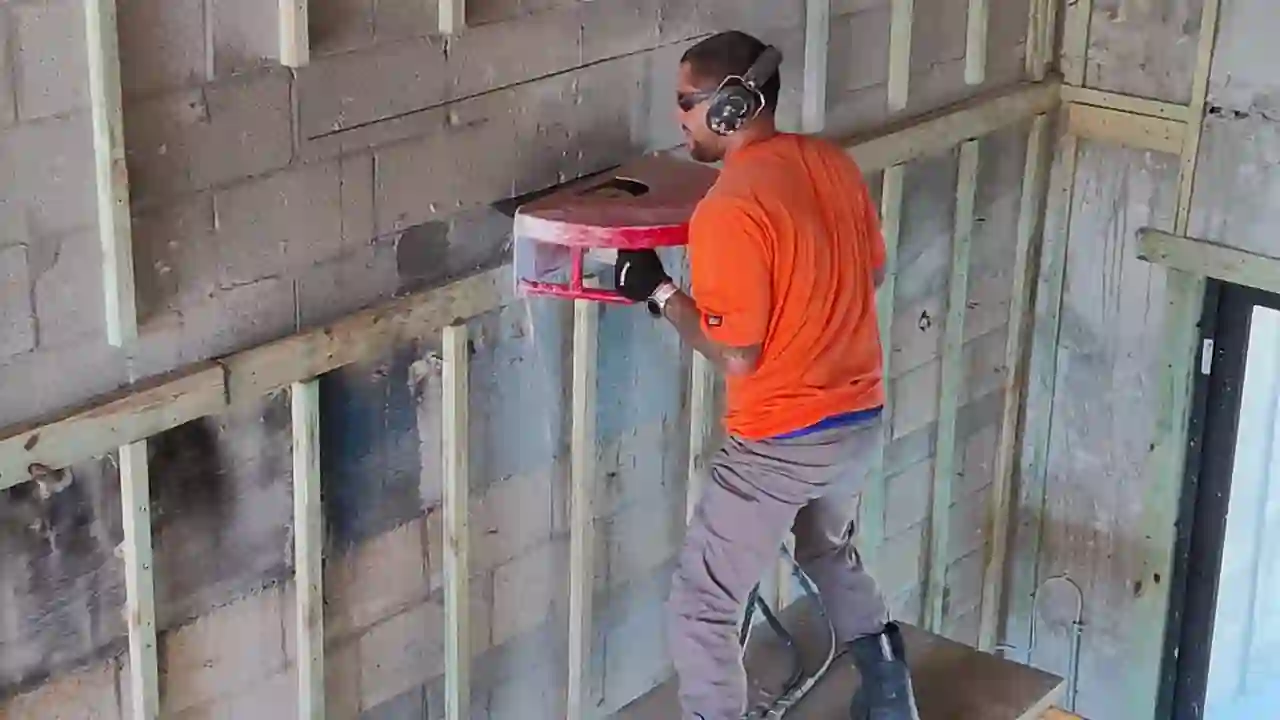
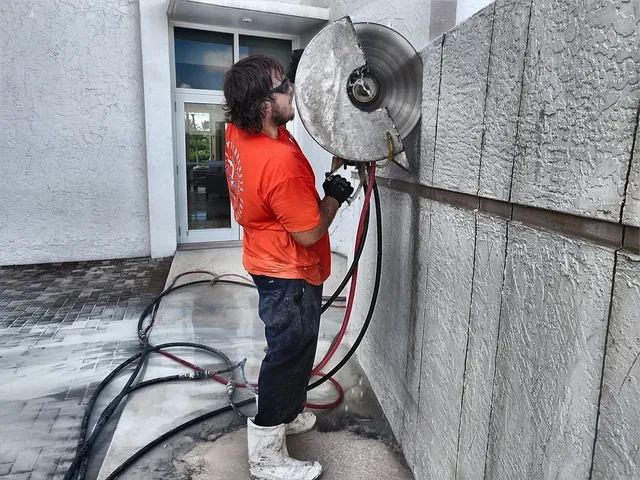
Track-mounted wall saws are the go-to for vertical cuts in Hollywood’s dense commercial and residential renovation market. These machines mount directly to the wall surface via a vacuum or anchor system and run a tilting blade head that can achieve bevel cuts, angled openings, and precise rectangular penetrations. For door openings in reinforced concrete walls — common in Hollywood’s aging hotel and condo stock — a wall saw with a 24″ to 36″ blade can handle walls up to 24 inches thick in a single pass per side.
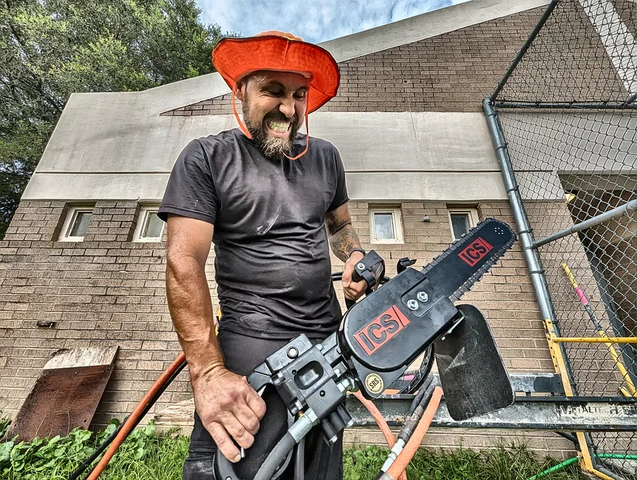
When the wall contains heavy rebar at tight spacing (less than 6″ on center), blade segment life drops sharply. Experienced Hollywood concrete cutting crews will switch to a premium diamond cutting tool configuration with higher diamond concentration and a softer matrix bond to maintain cut speed without glazing the segments.
Core Drilling Specifications for Hollywood Utility and MEP Penetrations
Core drilling is the most frequently requested concrete cutting service across Hollywood’s commercial and multifamily sectors. HVAC contractors, plumbers, and electricians all need clean, precise circular penetrations — and they need them without cracking the surrounding slab or wall. Core drill bits range from 1/2″ for single conduit passes up to 36″ for large-diameter pipe penetrations in treatment facilities or pump stations.
In Hollywood’s coastal construction environment, you’ll frequently encounter concrete with elevated chloride content from decades of salt air exposure. This doesn’t change the drilling technique significantly, but it does mean the rebar inside those walls is often corroded and unpredictable. A corroded rebar bar that’s partially delaminated from the concrete matrix can grab a core bit unexpectedly, causing torque spikes that damage the drill motor or the anchor system. Always use a torque-limiting clutch on coastal South Florida core drilling jobs.
For reference on what these services cost in the greater Miami-Dade and Broward corridor, this breakdown of concrete removal costs and timelines in North Miami gives you a solid regional pricing baseline that applies directly to Hollywood-area projects.
Dust and Slurry Control Protocols Specific to Hollywood Job Sites
Hollywood’s proximity to the ocean, the Intracoastal Waterway, and the South New River Canal system means environmental compliance isn’t optional. Broward County enforces NPDES stormwater permits aggressively, and silica dust exposure limits under OSHA’s Table 1 (29 CFR 1926.1153) apply to every saw cut and core drill operation your crew performs.
For dry cutting operations — rare but sometimes necessary for electrical safety reasons — a HEPA-rated vacuum system must be attached directly to the blade guard housing. Wet cutting generates slurry that must be collected, allowed to settle, and disposed of as solid waste. Never allow concrete slurry to enter a floor drain, catch basin, or surface water feature. On Hollywood Beach-adjacent job sites, inspectors actively monitor runoff during active cutting operations.
How to Vet a Concrete Cutting Contractor Near Hollywood
Not every company that advertises concrete cutting near Hollywood has the equipment depth or technical knowledge to handle complex South Florida conditions. Here’s what to verify before you sign a contract:
- GPR scanning capability — They should either own a ground-penetrating radar unit or have a verified subcontract relationship with a scanning company. Any crew that cuts without scanning post-1980 slabs is a liability.
- Post-tension experience — Ask directly whether they’ve worked on PT slabs and how they handle tendon identification and stress release coordination with a structural engineer.
- Slurry containment plan — A legitimate contractor will walk you through their containment setup before the job starts, not improvise it on-site.
- Licensed and insured in Florida — Verify their Florida contractor license number through the DBPR portal. Concrete cutting work that damages structural elements or utilities can result in six-figure liability claims.
- Equipment inventory — A serious crew near Hollywood should have flat saws, wall saws, core drills in multiple diameters, and either an in-house wire saw or a clear plan for subcontracting it when needed.
If your project is in a coastal or island environment, it’s also worth reviewing how cutting crews handle the unique challenges of marine-adjacent concrete — the Florida Keys concrete cutting resource library covers salt-saturated aggregate behavior and marine structure demolition techniques that are directly relevant to Hollywood Beach and the barrier island projects in Broward County.
Scheduling and Logistics for Hollywood Concrete Cutting Projects
Hollywood’s urban density creates real scheduling constraints. Noise ordinances in residential zones typically restrict power tool operation to 7:00 AM–6:00 PM on weekdays and 8:00 AM–5:00 PM on Saturdays. Many commercial renovation projects near Young Circle or the ArtsPark district require night-shift cutting to avoid disrupting neighboring businesses. Night cutting with a wall saw or flat saw requires additional lighting, extended water supply management, and crew safety protocols that add to mobilization time and cost.
Traffic and parking for a concrete cutting crew is also a legitimate logistical concern in Hollywood’s downtown core. A full flat saw setup requires a trailer, a water tank, a slurry vacuum unit, and typically a separate vehicle for the core drilling rig. Coordinating staging areas with the general contractor or property owner before mobilization day prevents costly delays.
What the Right Concrete Cutting Crew Delivers on a Hollywood Project
When a technically competent crew executes concrete cutting near Hollywood correctly, the results are measurable and immediate. Cuts are straight, within 1/8″ of the specified line over a 10-foot run. Core holes are plumb, smooth-walled, and sized to spec without secondary chipping. Structural elements adjacent to the cut show zero cracking or spalling. Slurry is contained and removed. And the next trade — the plumber, the ironworker, the tile installer — walks onto a clean, ready substrate.
That level of execution doesn’t happen by accident. It comes from pre-job scanning, correct blade selection, properly maintained equipment, and a crew that understands South Florida’s specific concrete characteristics. If you’re pricing out a Hollywood concrete cutting project and want to understand the full cost picture — including removal, disposal, and restoration — the regional cost data at this concrete demolition cost resource will give you the numbers you need to build an accurate project budget.