How Bobcat Machine Hours Get Priced Into Miami Concrete Bids
Walk any active concrete cutting job site in Miami-Dade or Broward County and you will likely see a bobcat machine positioned near the work zone before the first blade ever touches the slab. That machine is not incidental — it is a core cost driver, and the way contractors price its use separates a competitive bid from an overpriced one. Whether the project involves commercial concrete services like slab removal, trench backfill, or debris hauling, the bobcat’s role gets baked into the estimate at multiple levels. Most clients see a single equipment line item. What they don’t see is the layered calculation behind it.
The standard billing model for a compact track loader or skid steer — what most people call a bobcat machine — runs between $85 and $145 per hour in the South Florida market as of current rates. That range reflects operator skill level, machine size class (S70 versus S850, for example), attachment configuration, and whether fuel is included. On a typical concrete trenching project in Miami, a bobcat may run four to seven hours per day depending on spoil volume and haul distance within the site. A three-day trench job can generate $1,800 to $3,000 in equipment costs before a single mobilization or dump fee is added.
Mobilization Fees and Why They Hit Harder on Small Projects
Mobilization — the cost to transport the bobcat machine to and from your site — is where small-scale project budgets take a disproportionate hit. In Miami, transport fees for compact equipment typically range from $250 to $550 per round trip, depending on distance from the staging yard, trailer availability, and permit requirements for oversized loads on certain corridors. For a $4,000 concrete removal job, a $400 mobilization charge represents 10% of the project budget before the machine even starts. On a $40,000 structural project, that same charge is noise.
Experienced contractors minimize this exposure by batching jobs geographically or scheduling the bobcat across multiple projects in the same neighborhood on consecutive days. When you are soliciting bids, ask directly whether the mobilization fee is fixed or prorated. Some firms absorb it into the hourly rate; others bill it separately. Neither approach is dishonest, but the transparency matters when you are comparing three bids side by side.
Site Access Conditions That Escalate Bobcat Operating Costs
Miami’s residential and commercial building stock creates access challenges that directly affect how long a bobcat machine operates — and therefore what you pay. Narrow driveways, low-clearance carports, mature landscaping, and pool decks positioned tight against structures all restrict machine movement. A compact skid steer that would clear debris in two passes on an open commercial pad may require six passes and repositioning on a residential site with a 10-foot gate opening.
For projects involving driveway sectioning and repair cuts, the bobcat often has to operate in reverse-heavy patterns that reduce efficiency by 20 to 35 percent. Contractors who bid this type of work without a site walk are either padding the estimate to cover unknowns or underbidding and planning to cut corners. A legitimate bid for access-restricted sites will include a site assessment fee or clearly state that the estimate is contingent on verified access dimensions.
Attachment Costs That Most Bids Don’t Itemize Clearly
A bobcat machine without the right attachment is a machine doing the wrong job. The attachment selection — auger, hydraulic breaker, bucket, grapple, or sweeper — changes both the productivity rate and the rental cost. Hydraulic breaker attachments for concrete demolition add $150 to $300 per day to equipment costs and require higher-flow hydraulic machines, which themselves carry a premium. When reviewing a bid for concrete drilling services or demolition work, look for attachment line items. Their absence doesn’t mean the contractor isn’t using them — it means the cost is hidden somewhere else in the estimate.
- Standard bucket (general debris): Typically included in base machine rate
- Hydraulic hammer/breaker: $150–$300/day surcharge, higher on reinforced slabs
- Auger attachment: $100–$200/day, used for post holes and anchor placements
- Grapple bucket: $125–$225/day, essential for rebar-laden concrete chunks
- Cold planer attachment: $400–$700/day, used for surface preparation on large pads
Timeline Estimation Based on Bobcat Productivity Rates
Project timelines in concrete work are directly tied to machine productivity, and bobcat productivity is measured in cubic yards moved per hour. A standard skid steer with a 72-inch bucket moves approximately 40 to 60 cubic yards of broken concrete per hour under ideal conditions. Miami’s climate introduces variables — afternoon thunderstorm windows, heat-related operator fatigue, and ground saturation after rain — that routinely reduce effective operating hours to five or six per day even on a scheduled eight-hour shift.
For roof opening projects where concrete debris must be lowered from elevated slabs before the bobcat can engage, the timeline extends further. A 200-square-foot roof opening in an occupied commercial building might generate four to six tons of concrete debris. Staging that material, loading it, and hauling it within site constraints can consume a full day of bobcat time on what looks like a half-day job on paper. Any contractor who doesn’t account for vertical material handling in their timeline is giving you an optimistic estimate that will require a change order.
Fuel Consumption as a Hidden Project Cost Variable
Diesel fuel consumption on a bobcat machine running a hydraulic breaker attachment averages 2.5 to 4 gallons per hour under load. At current South Florida diesel prices, that adds $10 to $18 per operating hour in fuel cost alone. On a five-day project with six operating hours per day, fuel costs reach $300 to $540 — a line item that some contractors absorb and others pass through. In competitive bidding environments, the difference between a contractor who includes fuel and one who adds it as a project close-out charge can swing your final invoice by several hundred dollars.
How Bobcat Costs Factor Into Maintenance and Repair Scope Bids
For ongoing property maintenance contracts that include periodic concrete work, bobcat machine costs are often structured differently than single-project bids. Maintenance scope agreements may include a monthly equipment retainer, a reduced mobilization fee for recurring calls, or a flat hourly rate locked in for the contract term. This structure benefits property managers who need consistent budget predictability across multiple sites. The tradeoff is that retainer-based agreements typically require a minimum monthly commitment of four to eight machine hours, whether used or not.
When evaluating these agreements, calculate your actual average monthly equipment need over the past 12 months. If your concrete maintenance needs are seasonal or event-driven, a per-call model with a slightly higher hourly rate may outperform a retainer structure over a full year.
Reading a Bobcat Line Item on a Concrete Cutting Proposal
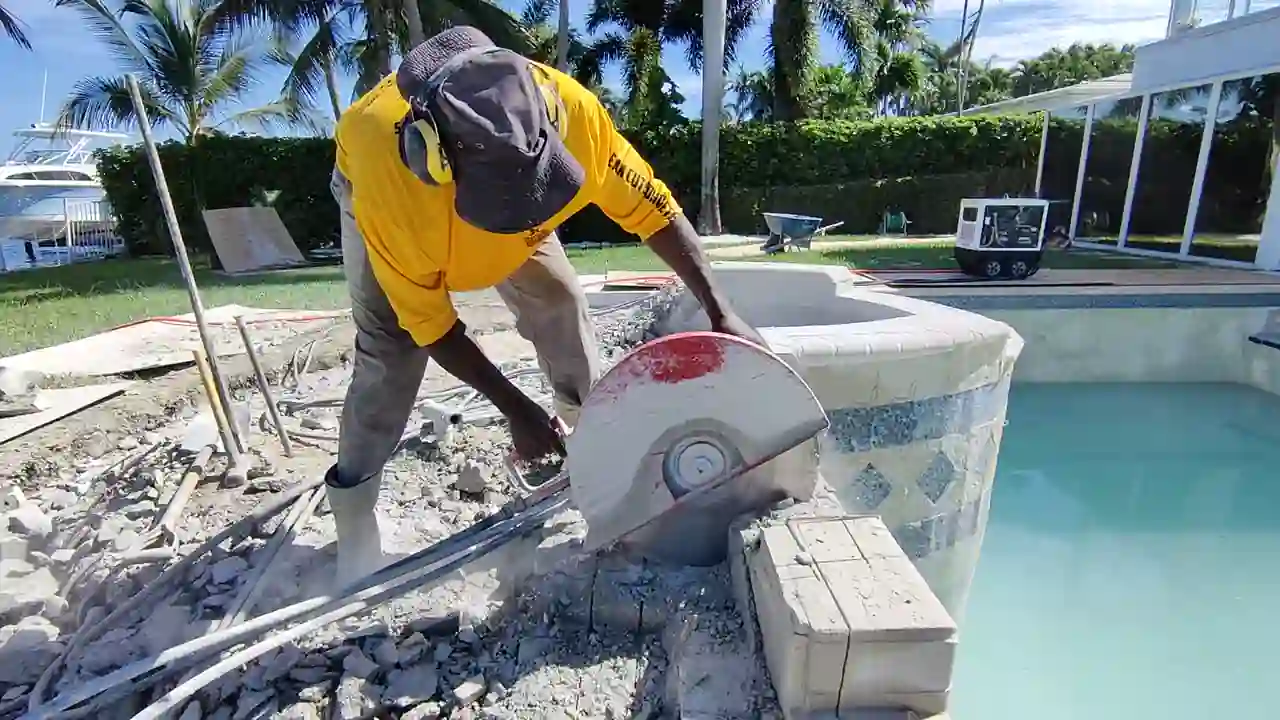
A well-structured concrete cutting bid will separate bobcat machine costs into at minimum three components: mobilization, operating hours, and disposal. Some will add a fourth line for attachments. When you receive a bid that lumps all equipment costs into a single number labeled “equipment and labor,” you have no visibility into whether the machine time is inflated, the operator rate is padded, or the disposal estimate is realistic for your material volume.
Ask every bidder to break out the bobcat line item. If they resist, that’s information. If they comply, compare not just the totals but the unit rates. A contractor billing $95 per hour for eight hours is a different conversation than one billing $65 per hour for twelve hours — the latter may be indicating a less productive machine, a less experienced operator, or a site condition they haven’t fully scoped. The math is the same, but the operational story is completely different.
Miami’s concrete cutting market is competitive, and bobcat machine costs are one of the clearest signals of how a contractor has actually scoped your job. Firms that have done the site walk, measured the access points, identified the attachment requirements, and calculated realistic productivity rates will produce bids that hold up through project completion. Those that haven’t will produce change orders. Knowing how to read the machine cost section of a proposal is one of the most practical skills a project owner or facilities manager can develop before the next concrete job goes out for bid.