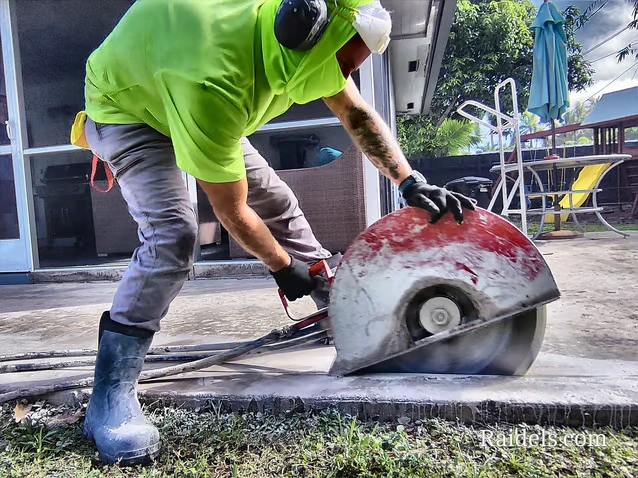
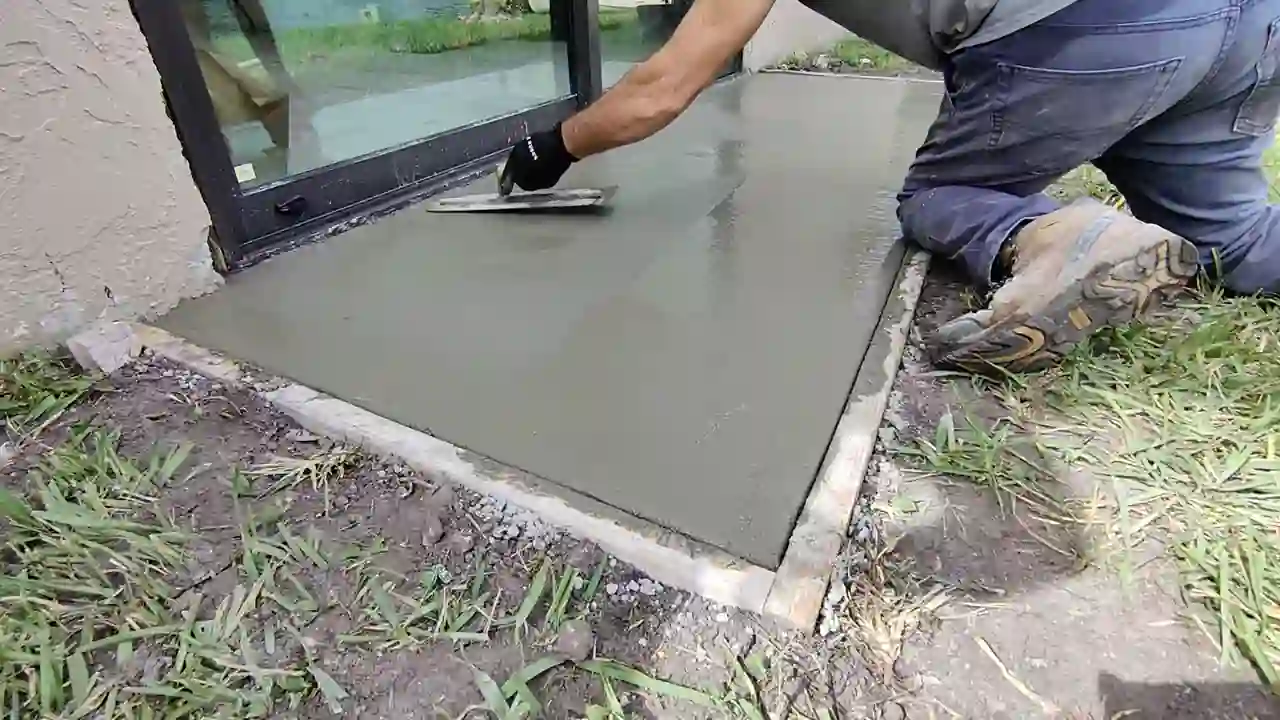
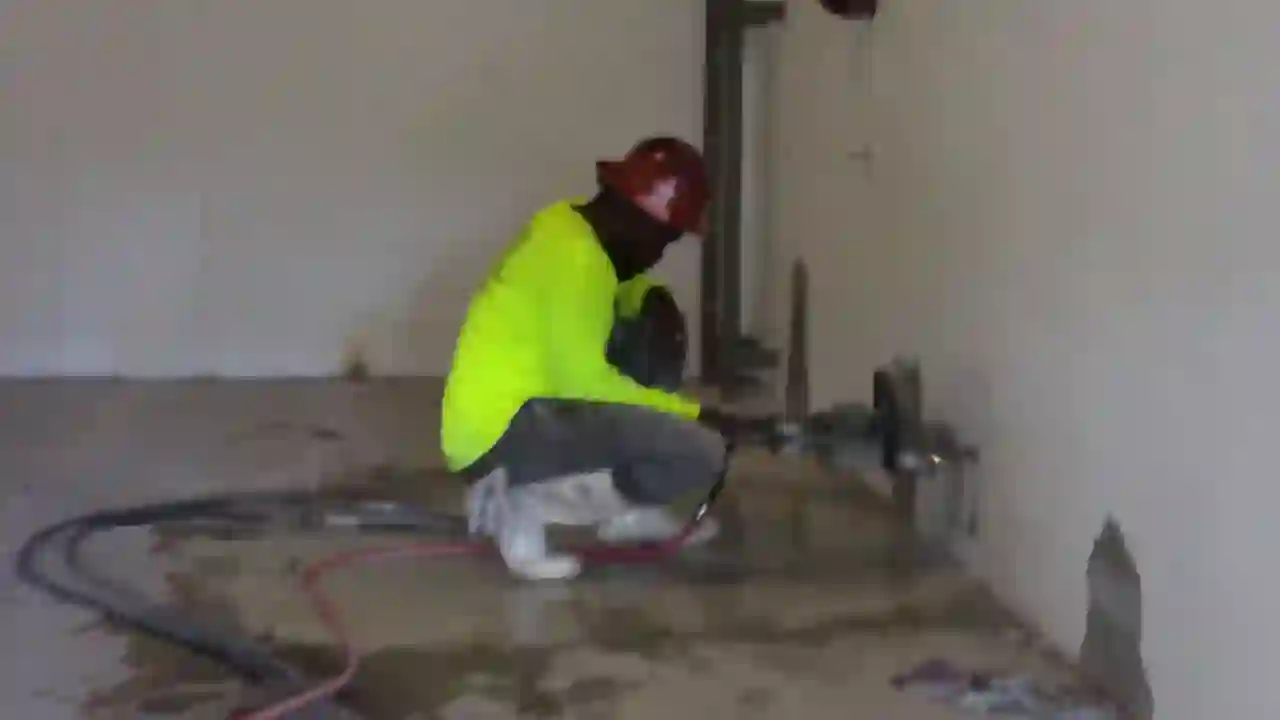
Why Site Logistics Are the Real Test for Any Core Drilling Crew
When contractors, mechanical engineers, and facility managers search for core drilling companies near me, they’re usually focused on one thing — getting a hole through concrete. What they don’t always anticipate is that the hole itself is rarely the hard part. The hard part is everything surrounding it: how you get the rig in, how you manage water and slurry in a finished space, whether your equipment fits through a 36-inch doorway, and whether your crew actually understands confined space protocol. At Concrete Cutting Miami, LLC, we’ve worked on everything from oceanfront high-rises to underground utility vaults, and the jobs that separate competent crews from elite ones are never the straightforward ones. They’re the jobs with constraints.
Breaking Down the Access Problem on Restricted Miami Job Sites
Miami’s built environment creates access challenges that don’t exist in most other markets. You have post-tension slabs in 1980s condo towers, heavily reinforced transfer beams in mixed-use podium structures, and mechanical rooms tucked into parking levels with overhead clearances that won’t accommodate a standard upright drill rig. When someone searches for core drilling companies near me and calls the first number they find, they often get a crew that shows up with a full-size electric drill stand — and can’t get it through the stairwell door.
The fix isn’t just having smaller equipment. It’s having a pre-mobilization site assessment protocol. Before we commit to a mobilization time, we ask the right questions: What is the slab thickness and estimated PSI? Is this a post-tension or conventionally reinforced deck? What is the ceiling height at the drill location? Is there an elevator with enough cab depth for a drill stand, or are we carrying components up stairs? What’s the slurry management plan — is there a floor drain nearby, or are we vacuuming and hauling? These aren’t administrative questions. They determine what equipment we bring and how long the job actually takes.
Low-Clearance Drilling Configurations for Parking Structures and Mechanical Rooms
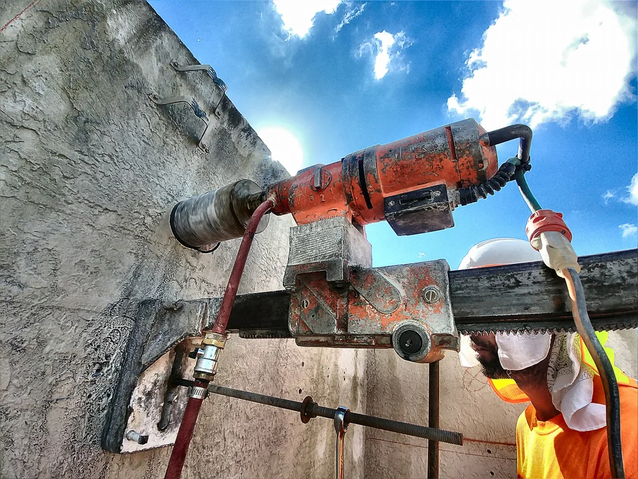
Standard core drill stands require roughly 8 to 10 feet of vertical clearance depending on the core barrel length and the motor height. In a parking structure with 7-foot-2-inch clearance — which is extremely common in Miami’s older garages — that’s a non-starter. The solution is a low-profile drill rig paired with a sectional core barrel system. Instead of running a single 18-inch or 24-inch barrel, you run a series of connected 12-inch sections, advancing through the slab incrementally. This keeps the motor height manageable and allows the operator to work in clearances that would otherwise make the job impossible.
The same principle applies to mechanical rooms where HVAC equipment, pipe runs, and electrical conduit create a maze of obstructions at every elevation. In these environments, we often anchor the drill base directly to the slab using expansion anchors rather than relying on a vacuum base — because the slab surface may be contaminated with oil, dust, or moisture that breaks vacuum adhesion. A mechanically anchored rig is slower to set up, but it doesn’t walk under load, and in a congested mechanical room, a walking drill stand is a serious injury risk.
Confined Space Entry Requirements and What Most Drilling Crews Skip
A significant percentage of core drilling work in South Florida happens in spaces that meet OSHA’s definition of a permit-required confined space — utility vaults, cisterns, below-grade pump rooms, and enclosed mechanical pits. OSHA 29 CFR 1910.146 is explicit: before entry, you need atmospheric testing, a written permit, an attendant posted outside the space, and a rescue plan. Most core drilling companies near you are not equipped to comply with this. They don’t carry four-gas monitors. They don’t have a trained confined space attendant on the crew. They definitely don’t have a rescue retrieval system in the van.
We do. And when a GC or facility manager asks us to core through the floor of a below-grade vault to run conduit to a lower level, we treat it as a confined space job from the moment we arrive. That means atmospheric testing before the first person descends, continuous monitoring during the work, and a communication protocol between the operator inside and the attendant above. It adds time to the job. It also means nobody gets hurt and nobody faces an OSHA citation. Miami’s architectural complexity makes these scenarios more common than most people realize — and the liability exposure for skipping proper protocol is enormous.
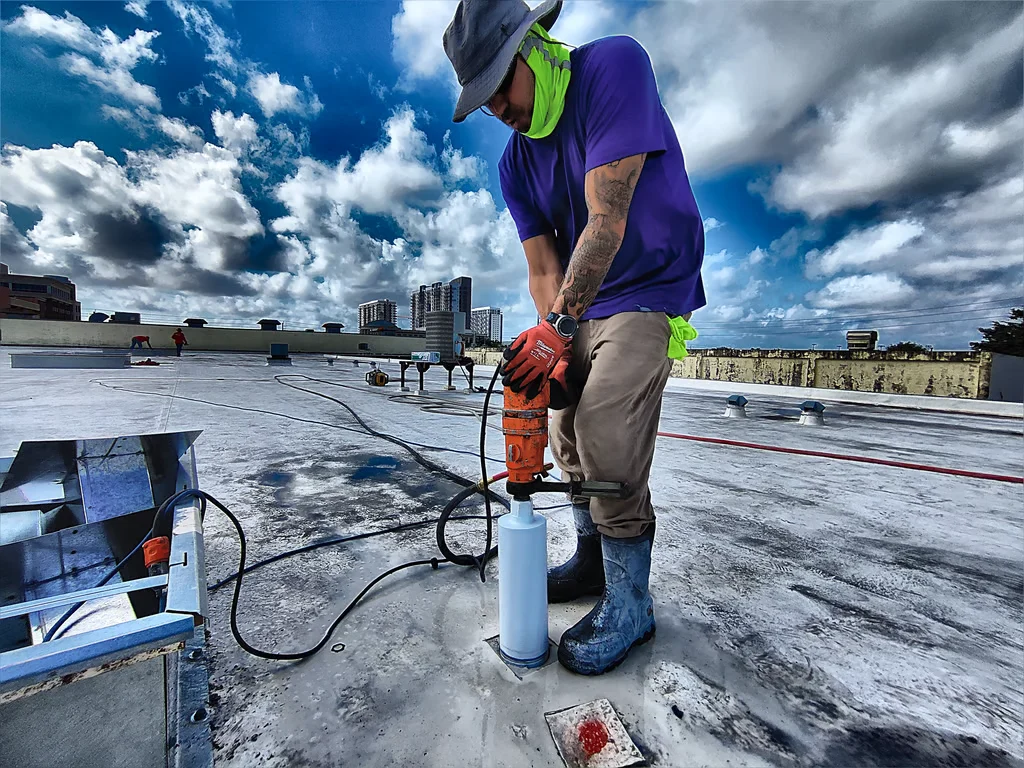
Slurry Control in Occupied and Finished Spaces
Core drilling is a wet process. Diamond core bits require water for cooling and to flush cuttings out of the bore, and that water comes back out of the hole as slurry — a gray, silica-laden suspension that stains finished floors, damages electrical equipment, and creates a slip hazard if not managed immediately. In an unoccupied construction site, slurry management is simple. In an occupied hospital, a hotel lobby, or a finished condominium unit, it’s a major operational challenge that determines whether your client ever calls you back.
Our approach in sensitive environments involves a three-stage slurry management system: a vacuum-assisted drill shroud that captures slurry at the point of generation, a secondary containment dam built from hydraulic putty around the drill base, and a wet-dry vacuum staged to receive overflow. For overhead drilling — coring through a ceiling from below — we use a custom catch pan system that attaches to the drill stand and directs slurry into a collection bucket rather than onto the floor or onto the operator. It’s not glamorous, but it’s the difference between a clean job and a damage claim.
Coordinating With Other Trades on Active Job Sites
One of the most underappreciated logistics challenges in core drilling is scheduling around other active trades. On a busy commercial renovation, you may be drilling a 6-inch core through a 12-inch post-tension slab while an electrician is pulling wire in the ceiling below, a plumber is roughing in above, and a GC superintendent is trying to keep a schedule that’s already two weeks behind. The drill operator who can communicate clearly, adapt to schedule changes, and understand the downstream impact of their work on other trades is worth far more than one who just knows how to run the machine.
This is especially relevant on historic preservation projects in Miami, where the structural fabric of a building may be irreplaceable and the tolerance for error is essentially zero. Drilling in a 1920s Mediterranean Revival building means working with original poured-in-place concrete of unknown mix design, potentially no rebar documentation, and architectural elements that cannot be disturbed. Pre-drill GPR scanning is non-negotiable. Core placement needs to be confirmed with the structural engineer before the bit touches the surface. And the crew needs to understand why all of this matters — not just follow instructions blindly.
Equipment Selection for High-Rise Vertical Shaft Access
Drilling in a high-rise elevator shaft, mechanical shaft, or stairwell presents a different category of access problem. You’re often working on a temporary platform or scaffold, the drill must be rigged to prevent any possibility of it falling, and the core barrel extraction process — pulling a heavy wet core plug from a vertical bore — requires a mechanical assist system rather than raw muscle. We use a core extraction clamp and chain hoist system for vertical shaft work that allows a single operator to safely remove plugs from bores up to 12 inches in diameter without risking a dropped load. For projects where slab saw work is also involved at the same elevation, coordinating the two operations requires careful sequencing to avoid creating an unstable slab section before the core work is complete.
If you’re evaluating how much concrete cutting and core drilling costs for a complex access job, understand that the premium you pay for a crew with the right equipment, the right protocols, and the right site management experience is not overhead — it’s insurance. The cost of a damaged finished floor, an OSHA violation, or a dropped core plug through a suspended ceiling is orders of magnitude higher than the difference in bid price between a qualified crew and an unqualified one.
What to Actually Ask When Vetting Core Drilling Companies Near You
The next time you’re searching for core drilling companies near me and comparing bids, move past the price and ask these specific questions. Do you carry a four-gas monitor and are your operators confined space trained? What is your slurry management protocol for occupied spaces? Can your equipment operate in clearances under 8 feet? Do you perform pre-drill GPR scanning in-house or do you subcontract it? What is your anchor method on non-porous or contaminated slab surfaces? How do you handle a discovered post-tension tendon during drilling?
The answers to those questions will tell you everything you need to know about whether a crew has actually done this work under real conditions or whether they’ve only drilled in ideal ones. At Concrete Cutting Miami, LLC, we’ve built our reputation on the jobs that other companies couldn’t finish — not because the concrete was too hard, but because the site was too complicated. That’s the standard we hold ourselves to, and it’s the standard you should demand from any core drilling contractor working on your project.