Why Concrete Removal in West Miami Carries Serious Environmental Obligations
West Miami sits within Miami-Dade County’s jurisdiction, and that means every concrete removal project — whether it’s a residential driveway, a commercial slab, or a structural demolition — operates under a layered framework of environmental regulations that most property owners never see coming. The Florida Department of Environmental Protection (FDEP), Miami-Dade DERM (Department of Environmental Resources Management), and local stormwater ordinances all have teeth. When a contractor fires up a wet-cutting saw or a hydraulic breaker on your property without proper containment protocols in place, the resulting slurry doesn’t just disappear. It migrates. It enters storm drains. It contaminates soil. And the liability lands squarely on the property owner.
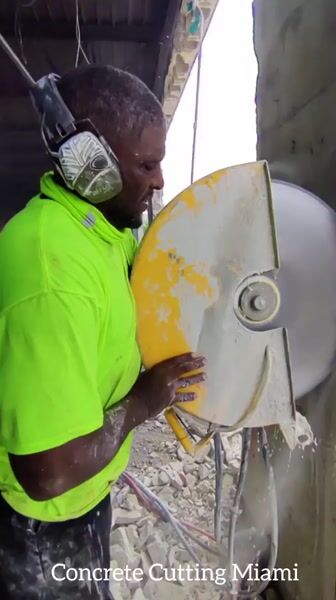
At Concrete Cutting Miami, LLC, we approach every West Miami removal project with a pre-mobilization environmental assessment. That means we’re identifying drain locations, soil permeability, proximity to water bodies, and the concrete composition itself before a single cut is made. Older structures — anything pre-1980 — may contain materials that require special handling, including silica-heavy aggregate mixes that generate regulated fine particulate during dry demolition. This isn’t optional protocol. It’s the baseline standard for professional concrete removal work in South Florida.
Understanding Concrete Slurry and Why It Cannot Enter the Storm System
Concrete slurry is the byproduct of wet cutting and wet grinding operations. It’s a suspension of water, fine concrete particles, silica dust, and — depending on the substrate — trace heavy metals like chromium and arsenic that can leach from cured concrete over time. The pH of fresh slurry typically runs between 11 and 13, making it highly alkaline. When that material enters West Miami’s storm drainage network, it doesn’t just clog pipes. It kills aquatic life, disrupts the biological balance of receiving water bodies, and triggers regulatory action from DERM inspectors who actively monitor discharge points across the county.
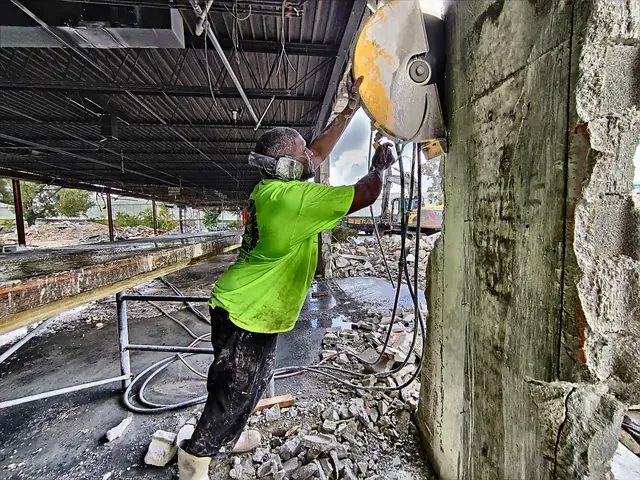
Florida Statute 403 and Miami-Dade Code Chapter 24 both prohibit the discharge of process water — including concrete slurry — into stormwater systems without treatment and permit authorization. On a typical concrete removal job, this means every gallon of water used in cutting operations must be accounted for. We use a closed-loop slurry recovery system on eligible sites, where a vacuum-equipped wet saw captures the slurry at the blade and routes it to a containment vessel for off-site disposal at an approved facility. For larger demolition footprints, we deploy berms, filter socks, and sediment control barriers to create a contained work zone before any mechanical work begins.
Slurry pH Neutralization Protocols Used on Active West Miami Job Sites
When closed-loop recovery isn’t feasible — such as on large slab removals with irregular geometry — we implement in-field neutralization. This involves introducing a buffering agent, typically carbon dioxide injection or dry sodium bicarbonate, into the slurry containment area to bring pH down to the acceptable discharge range of 6.5 to 8.5 before any water is released. We test with calibrated pH meters at multiple intervals throughout the job, not just at the end. This is a non-negotiable step on any West Miami site where slurry volume exceeds containment capacity.
The neutralization process also reduces the risk of concrete fines hardening in drainage infrastructure. Untreated slurry that enters a pipe system doesn’t stay liquid — it sets. We’ve seen city infrastructure damaged by contractor negligence on exactly this point, and it’s one reason West Miami building inspectors have become increasingly vigilant about requiring slurry management plans as part of demolition permit applications.
Water Containment System Design for West Miami Concrete Demolition Projects
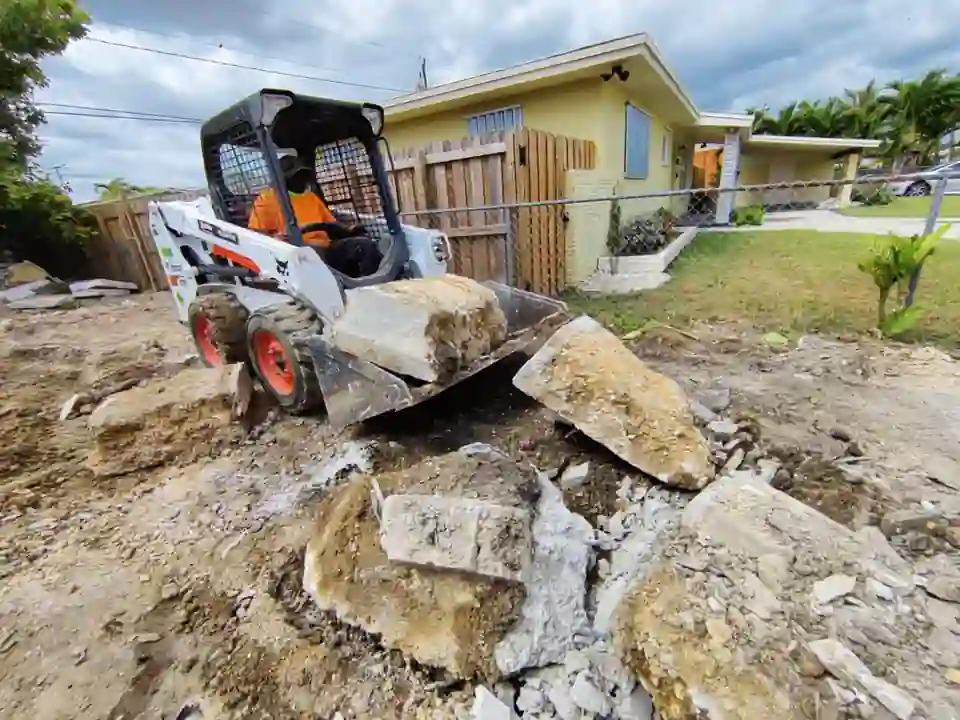
Containment design isn’t one-size-fits-all. A 500-square-foot driveway removal in a residential neighborhood requires a different approach than a 10,000-square-foot parking structure demolition adjacent to a drainage canal. Our field supervisors assess four key variables before selecting a containment strategy: site grade and natural drainage direction, proximity to storm inlets and swales, soil type and permeability, and projected slurry volume based on cut depth and concrete density.
For residential concrete removal in West Miami, our standard deployment includes perimeter filter socks (ASTM D6707-compliant), inlet protection devices on all storm drains within 50 feet of the work zone, and a portable containment berm system around the immediate cutting area. On commercial projects, we escalate to full turbidity curtain deployment where work is near open drainage, combined with a dewatering pump system that routes collected water through a filter bag assembly before any discharge consideration.
These aren’t theoretical measures. They’re the same protocols that keep our crews compliant during DERM field inspections, which can occur without notice on permitted demolition projects across Miami-Dade. Our professional construction techniques are built around the reality that South Florida’s regulatory environment demands documentation, not just intention.
Handling Reinforced Concrete Removal Near Drainage Infrastructure
Reinforced concrete presents additional challenges during removal. When rebar is exposed and cut with an angle grinder or hydraulic shear, metal particulate enters the slurry stream. Iron oxide from corroded rebar can stain pavement, alter slurry chemistry, and introduce metals into the waste stream that may require classification as hazardous depending on concentration levels. We conduct pre-demolition core sampling on structures where corrosion is visually evident, allowing us to characterize the waste before disposal rather than discovering a classification problem at the transfer facility.
This is particularly relevant for pool demolition projects, where concrete shells often contain decades of chemical exposure from pool treatment compounds. If you’re dealing with a pool structure, our guidance on hurricane-related pool removal considerations covers how structural compromise from storm damage further complicates the waste characterization process. Similarly, indoor pool removal introduces confined space slurry management challenges that require specialized vacuum extraction equipment rather than open-site containment methods.
Dust Suppression as a Secondary Environmental Control Measure
Water containment isn’t only about liquid slurry. During mechanical breaking — whether by hydraulic breaker, electric chipping hammer, or expansive demolition agent — dry concrete dust becomes airborne. In West Miami’s dense residential and commercial zones, that dust travels. Crystalline silica, classified as a Group 1 carcinogen by IARC, is present in virtually all Portland cement concrete. OSHA’s silica standard (29 CFR 1926.1153) mandates engineering controls — specifically wet methods or local exhaust ventilation — during demolition activities that generate respirable dust above the action level of 25 μg/m³.
Our crews operate with HEPA-filtered vacuum systems attached to breaking equipment wherever enclosed or semi-enclosed environments are involved. On open-air sites, continuous water misting at the break point suppresses dust generation at the source. This misting water is also captured within our perimeter containment system, ensuring that dust suppression doesn’t become a slurry discharge problem. The two systems — dust control and slurry containment — must be designed together, not independently. Contractors who mist aggressively without containment simply convert an air quality problem into a water quality problem.
Concrete Crack Repair and Partial Removal Compliance Considerations
Not every West Miami project involves full slab removal. Selective demolition — removing damaged sections for concrete crack repair in Miami — still triggers the same environmental obligations as full removal, just at smaller scale. Saw-cutting around a repair zone generates slurry. Grinding the repair surface generates slurry. The volume is lower, but the regulatory framework is identical. We’ve seen property owners assume that small repair jobs are exempt from slurry management requirements, and that assumption has led to code violation notices from Miami-Dade inspectors. There is no minimum volume threshold in DERM’s stormwater discharge prohibition. Any process water discharge is regulated.
For partial removal and repair scopes, our containment approach shifts to micro-containment — absorbent berms directly around the saw cut perimeter, wet/dry vacuum recovery at the blade, and immediate slurry transfer to sealed containers. The job may take an extra 30 minutes to set up properly. That 30 minutes is the difference between a compliant project and a notice of violation that delays your construction timeline by weeks.
Selecting a West Miami Concrete Removal Contractor Who Understands Regulatory Exposure
The cheapest bid on a concrete removal project in West Miami is almost never the compliant bid. Environmental compliance adds real cost — equipment, disposal fees, labor for containment setup and monitoring, and documentation time. When a contractor skips these steps, they’re not being efficient. They’re transferring risk to you. Property owners are considered responsible parties under Florida’s stormwater regulations, and “my contractor didn’t tell me” is not a recognized defense in a DERM enforcement action.
Before hiring any concrete removal contractor in West Miami, ask for their slurry management plan in writing. Ask how they handle pH testing and what their disposal facility documentation looks like. Ask whether they carry the appropriate general liability coverage that includes pollution liability endorsements — because standard GL policies often exclude pollution events, and slurry discharge into a storm drain is a pollution event by legal definition. A contractor who can answer these questions without hesitation is a contractor who has done this work correctly before. That’s the baseline you need on any West Miami concrete removal project.
Concrete Cutting Miami, LLC brings that compliance infrastructure to every job we take in West Miami and throughout Miami-Dade County. From pre-mobilization site assessment through final slurry disposal documentation, we run a closed-loop process that protects your property, your timeline, and your regulatory standing from start to finish.