Remove a Pool in Miami Means Making One Big Choice First
When you decide to remove a pool in Miami, the first and biggest decision is between full removal and partial fill. The choice determines what the land can be used for afterward, what the job costs, and what the city will require. Get it right and you have a buildable, usable yard. Get it wrong and you have land with hidden restrictions you did not expect.
Miami adds its own factors to the decision: a high water table, specific fill requirements, and permitting that varies by municipality. Let me walk through the options so you can make the call with confidence.
Full Pool Removal Leaves a Buildable Site
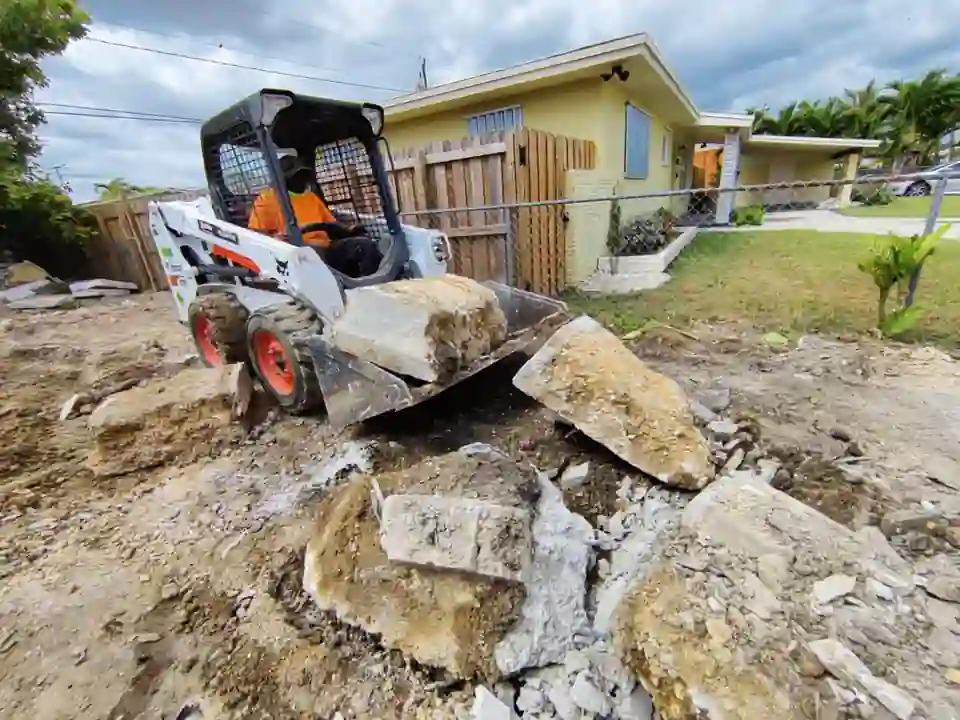
Full removal means taking out the entire pool shell, including the walls and floor, and then filling and compacting the hole. The result is land with no pool buried underneath, which means you can build on it, add an addition, or use it for anything your zoning allows. If there is any chance you will build on the spot, full removal is almost always required.
The tradeoff is cost. Full removal is more expensive because there is more demolition, more haul-off, and more fill to import and compact. But it removes the restrictions and the future headaches. Our guide to swimming pool demolition covers full removal in detail.
Partial Fill Costs Less but Comes With Limits
A partial fill breaks up the bottom of the pool shell so it drains, fills the pool with dirt, and covers it over. The shell walls remain in the ground. It is cheaper and faster, but it comes with restrictions: you typically cannot build a structure over a partially filled pool, and the buried shell can affect drainage and settlement over time.
For a lawn, garden, or patio area, a partial fill can be a smart, economical choice. For a future addition or pool house, it is not. The right call depends entirely on your plans for the land. Our guide to partial pool removal explains what you can and cannot do with the space afterward.
The Water Table Factor You Cannot Ignore
Miami’s high water table is the wildcard in any pool removal. When the shell is broken, groundwater can seep in, and the fill has to be placed and compacted in wet conditions. A contractor who does not plan for the water table ends up with a fill that settles and a yard that sinks over time.
A local contractor knows how to handle it: dewatering if needed, placing the fill in compacted lifts, and leaving a stable surface. This is exactly why local experience matters. Our guide to getting rid of an inground pool walks through the water table and the fill process.
Permits and the Paperwork
Pool removal in Miami requires a permit, and the requirements vary by municipality. The permit process ensures the removal is done safely and the fill meets the local standard. A professional contractor handles the permitting as part of the job, and that is one more reason to hire someone who does pool removal regularly.
There may also be utility considerations, especially if the pool has a gas heater or electric pump that needs disconnecting before the work begins. A licensed contractor coordinates all of this so the job starts clean.
What You Can Build After Full Removal
The biggest argument for full pool removal is what it lets you do with the land afterward. Because the entire shell is gone and the hole is filled and compacted with engineered fill, the site is buildable, which means you can put an addition, a garage, or another structure where the pool once was. That freedom is worth a lot if your long-term plans include expanding the home.
The value question cuts both ways. A pool can be an asset to some buyers and a liability to others, so removing it is not automatically a value hit. The right answer depends on your market, your neighborhood, and your plans for the property. Our guide to whether removing a pool affects home value walks through the factors that actually move the number.
What a Partial Fill Restricts
A partial fill is cheaper up front, but it comes with restrictions you should understand before you commit. Because the pool shell remains in the ground, you generally cannot build a structure over it, and the buried shell can affect drainage and settlement over time. The land is fine for a lawn, a garden, or a patio, but it is not buildable in the way a fully removed site is.
For many homeowners, that is a perfectly good trade, because they never plan to build on the spot and the savings are real. The key is knowing the restriction exists, so you do not find out later when you want to add a room. Our guide to partial pool removal spells out exactly what you can and cannot do with the space.
Drainage and the Finished Grade
However you remove the pool, the finished grade matters, because the old pool was a low point in the yard and the filled hole has to drain correctly. A good contractor sets the final grade so water flows away from the house and does not pond where the pool used to be. In Miami’s heavy rains, that drainage detail is the difference between a usable yard and a muddy low spot.
The fill and grading also have to be done so the surface does not settle into a depression over time, which is why compaction is so important. A yard that settles and sinks is the classic sign of a rushed fill. Our guide to filling in a pool explains how the fill and grade are done right.
There are two very different ways to remove a pool, and they are not interchangeable. A full removal takes the entire shell out, hauls the debris, and backfills the hole so the space can be built on. A partial removal, sometimes called a fill-in, breaks out the upper walls, punches drainage holes in the bottom, and fills the rest, which is cheaper but restricts what you can do with the land afterward. The choice depends on what you want the space to become.
The water table is the wildcard in a Miami pool removal. A pool is essentially a hole below grade in ground that stays wet, and emptying it changes the pressure on the shell. A contractor who understands hydrostatic pressure will manage the dewatering and the fill so the empty pool does not float or crack the surrounding deck. It is the kind of detail that separates a pool demolition done right from one done cheap.
Think about what the space becomes before you decide how to remove the pool, because the method follows the future use. If you want to build an addition or put a driveway over the spot, you need a full removal with proper compaction, not a fill-in. If the space will just be lawn or landscaping, a partial fill is often the cheaper and perfectly acceptable route. The mistake is choosing the method first and discovering later that it limits what you can build, so start with the plan for the land.
What Removing a Pool Costs
The cost to remove a pool depends on the size, the method, the access, and the fill. Full removal is the higher end because of the extra demolition and fill. A partial fill is more affordable but comes with restrictions. Get quotes for both, and factor in your long-term plans for the land. The method you choose now determines what you can do with the space for years to come, so make the call with the future in mind.