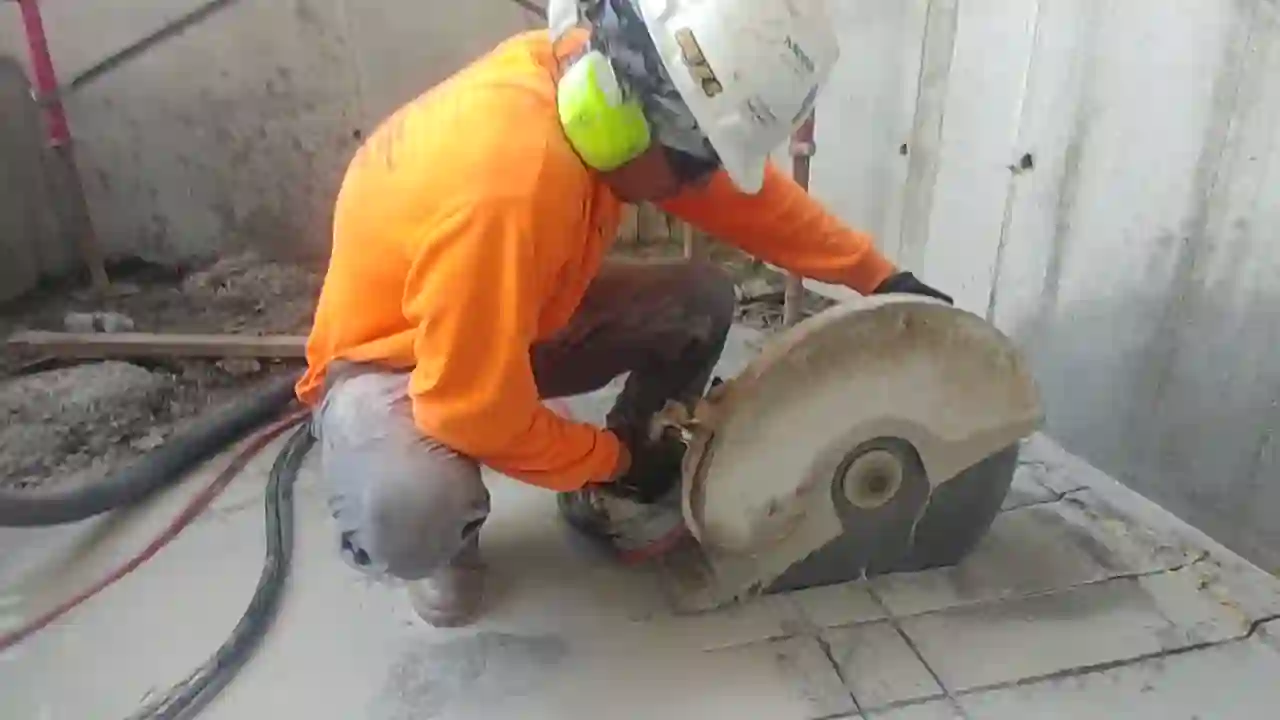
Why the Hydraulic Hand Saw Is the Go-To Tool When Space Punishes Every Other Option
There’s a moment on every complex concrete job when your flat saw hits a wall — literally. The slab runs under a beam. The cut needs to start six inches from a structural column. The ceiling is too low for a wall-mounted track system. That’s the moment experienced crews reach for the hydraulic hand saw, and knowing exactly how to deploy it separates a clean, on-schedule cut from a botched, over-budget disaster. This guide breaks down the mechanics, the blade science, the hydraulic system requirements, and the field techniques that make this tool perform at its ceiling — not its floor.
Understanding Hydraulic Hand Saw Mechanics Before You Touch the Trigger
A hydraulic hand saw operates on a fundamentally different principle than an electric or gas-powered circular saw. Instead of a direct-drive motor spinning a blade via a crankshaft or electric coil, the hydraulic hand saw uses pressurized hydraulic fluid — typically operating between 2,000 and 3,000 PSI — to drive a hydraulic motor integrated directly into the saw body. That motor converts fluid pressure into rotational torque, spinning a diamond blade at controlled RPMs optimized for concrete penetration rather than raw speed.
The practical outcome of this design is significant. Hydraulic hand saws produce torque curves that are far more consistent under load than electric alternatives. When a diamond segment bites into aggregate or hits rebar, the hydraulic system doesn’t bog down the same way an electric motor does — it maintains cutting pressure through the resistance. For crews working on heavily reinforced Miami slabs, this torque stability is the difference between a clean pass and a seized blade.
The power unit — whether a standalone hydraulic power pack or a machine-mounted system — must be matched to the saw’s flow and pressure requirements. Most professional-grade hydraulic hand saws require a flow rate between 4 and 8 gallons per minute (GPM). Running a saw on insufficient flow starves the motor, generates excess heat, and accelerates seal wear inside the hydraulic circuit. Always verify your power unit’s output specs against the saw manufacturer’s requirements before the first cut.
Blade Selection for Hydraulic Hand Saw Applications in Miami Concrete
Blade selection is where most operators leave performance on the table. Hydraulic hand saws typically accept blades ranging from 9 inches to 16 inches in diameter, with 12-inch and 14-inch configurations being the workhorses of commercial concrete cutting in South Florida. The blade you select must match three variables: the concrete’s compressive strength (PSI), the aggregate hardness, and the presence of rebar or post-tension cables.
- Soft bond segments — Used in hard, dense concrete (5,000 PSI and above). The bond matrix wears faster, continuously exposing fresh diamond crystals. Miami’s high-strength commercial slabs typically demand this configuration.
- Medium bond segments — The all-around choice for standard residential and light commercial concrete in the 3,000–4,500 PSI range. Versatile but not optimal at either extreme.
- Hard bond segments — Reserved for abrasive, soft concrete with high sand content. The slower bond wear prevents diamond crystals from pulling out prematurely in material that would otherwise strip a soft-bond blade in minutes.
- Rebar-rated blades — Feature reinforced segment geometry and a steel core designed to handle repeated steel contact without cracking the core plate. Non-negotiable when cutting through post-tension slabs or heavily tied rebar mats.
Blade diameter also dictates maximum cut depth. A 14-inch blade on a standard arbor configuration delivers approximately 4.5 inches of usable cut depth — enough for most residential slabs but potentially insufficient for thick commercial decks. When depth requirements exceed what a single-pass hand saw can achieve, crews must make multiple offset passes or transition to a wall saw system entirely.
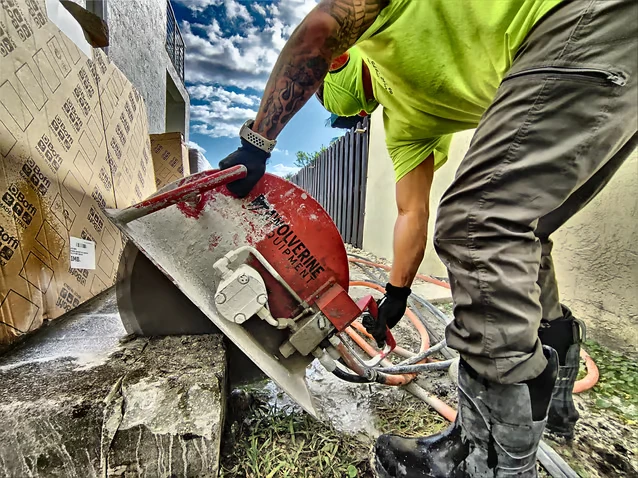
Step-by-Step Hydraulic Hand Saw Setup for Confined Space Cutting
The hydraulic hand saw earns its reputation in confined spaces — under stairs, in crawl spaces, adjacent to structural walls, and in demolition scenarios where equipment footprint is brutally constrained. Setting up correctly in these environments is a disciplined process, not a rushed one.
Pre-Cut Hydraulic System Checks That Prevent Mid-Job Failures
Before the blade makes contact with concrete, run through this system verification sequence:
- Hydraulic fluid level and condition — Check the reservoir on your power unit. Fluid should be at the full mark and free of milky discoloration, which signals water contamination. Contaminated fluid degrades motor seals rapidly.
- Hose condition and connection integrity — Inspect hydraulic hoses for abrasion, kinking, or fitting corrosion. A blown hose under 2,500 PSI in a confined space is a serious safety event. Ensure quick-disconnect fittings are fully seated and locked.
- Pressure and flow calibration — Use a hydraulic flow meter to verify your power unit is delivering within the saw’s specified range. Don’t assume — verify.
- Blade torque and guard clearance — Confirm the blade is torqued to manufacturer spec on the arbor. Check that the blade guard rotates freely and that no debris is lodged between the guard and the blade flange.
- Water supply for blade cooling — Hydraulic hand saws require continuous water delivery to the blade for cooling and dust suppression. Connect your water supply line and confirm flow reaches the blade contact zone before starting.
This pre-cut discipline is especially critical on jobs like confined swimming pool demolitions, where equipment access is limited and a mid-job equipment failure can mean hours of lost productivity in a space where swapping tools isn’t simple.
Cutting Technique for Straight, Accurate Passes in Tight Conditions
Hydraulic hand saws are not self-guiding. Operator technique determines cut quality. For straight cuts, snap a chalk line and use a guide rail system whenever the geometry allows — even in tight spaces, a clamped aluminum guide rail dramatically improves accuracy over freehand cutting. When a guide rail isn’t feasible, score the cut line with a grinder first to create a visible channel that keeps the blade tracking true.
Feed rate control is critical. Forcing the blade into the concrete faster than the diamond segments can efficiently abrade material generates heat, causes segment glazing, and risks blade deflection. Let the blade do the work. Apply steady, controlled forward pressure and listen to the motor tone through the hydraulic system — a laboring, low-tone sound indicates you’re overfeeding. Back off, let the blade clear, and re-engage at a controlled rate.
For cuts near rebar, reduce feed rate by approximately 30% as the blade approaches the steel. The transition from concrete aggregate to reinforcing steel changes the cutting dynamics abruptly, and a high feed rate at that moment can deflect the blade or cause segment cracking. This technique is detailed further in our guide on cutting through rebar and reinforced slabs — required reading for any crew working South Florida commercial projects.
OSHA Compliance and Hydraulic Hand Saw Safety on the Job Site
Hydraulic hand saws introduce specific hazards that gas and electric saws do not. Hydraulic fluid injection injuries — where high-pressure fluid penetrates skin through a pinhole hose leak — are catastrophic and require immediate medical intervention. Every operator must inspect hoses before each use and never use hands to check for leaks. Use cardboard or a dedicated leak detection tool instead.
Silica dust exposure is the chronic hazard. OSHA’s Table 1 requirements for concrete cutting mandate wet cutting methods and, in many configurations, additional engineering controls. The hydraulic hand saw’s water delivery system must be functioning at all times during cutting — not optional, not discretionary. For a full breakdown of OSHA compliance requirements for hydraulic cutting equipment, review our crew chief’s guide to hydraulic saw safety and OSHA compliance.
Personal protective equipment for hydraulic hand saw operation must include: ANSI-rated face shield (not just safety glasses), hearing protection rated for continuous noise above 90 dB, cut-resistant gloves, steel-toed boots, and wet-rated knee pads when working at grade. In enclosed spaces, a half-face respirator with P100 filters is mandatory even with wet cutting in effect.
For projects with specific environmental considerations — such as cutting near water tables, in flood zones, or in LEED-certified buildings — slurry containment becomes a compliance issue, not just a cleanup preference. Hydraulic hand saw operations generate silica-laden slurry that must be collected, contained, and disposed of per local environmental regulations. Never allow slurry to enter storm drains.
Integrating the Hydraulic Hand Saw with Other Cutting Methods on Complex Jobs
The hydraulic hand saw rarely operates in isolation on large commercial projects. It functions as a precision instrument within a broader cutting strategy. On a typical slab removal job, a flat saw handles the bulk field cuts, a wall saw addresses vertical penetrations, and the hydraulic hand saw cleans up corners, makes plunge cuts at structural interfaces, and handles any geometry the larger equipment physically cannot reach.
When integrating with core drilling operations, the sequencing matters. Core drill your relief holes at the corners of any rectangular cut-out first. This eliminates the need for the hand saw to make a blind plunge cut at the corner — a technique that risks blade binding and overloading the hydraulic motor. The core hole provides a clean, stress-free terminus for each linear cut to run into.
Understanding how these tools complement each other is the hallmark of an experienced concrete cutting crew. The hydraulic hand saw is powerful, precise, and indispensable in the right context — but it’s a scalpel, not a sledgehammer. Deploy it where its strengths apply, support it with the right system setup, and maintain your hydraulic equipment with the same discipline you’d apply to any high-pressure mechanical system on a job site.

The crews that consistently deliver clean, on-spec concrete cuts in Miami’s demanding construction environment aren’t just skilled with the saw — they understand the hydraulic system behind it, the diamond science in the blade, and the compliance framework surrounding every cut they make. That’s the standard this tool demands, and it’s the standard that separates professional concrete cutting from everything else.