Why Pool Demolition Is a Site Logistics Problem First and a Concrete Problem Second
Every homeowner who calls us to demolish a swimming pool describes the same mental image — a big machine rolls in, breaks everything up, and hauls it away by lunch. That image is almost never accurate. In South Florida’s dense residential corridors, the real challenge isn’t the concrete itself. It’s getting the right equipment to the concrete, managing the confined space around the shell, and executing a demolition sequence that doesn’t compromise the surrounding slab, landscaping, or neighboring structures. Before a single blade or hydraulic breaker touches the pool shell, a competent crew has already solved a dozen logistical problems that most homeowners never see.
Full Removal vs. Partial Fill — Structural and Permitting Implications in Miami-Dade
Before any logistics planning begins, the scope of work must be locked in with precision. Miami-Dade County distinguishes between a full pool removal — where the entire shell is demolished, excavated, and the void backfilled with compacted engineered fill — and a partial demolition (abandonment fill), where the bottom of the shell is perforated for drainage and the cavity is filled with rubble and soil. Each method carries different permitting requirements, different equipment footprints, and dramatically different site impact profiles.
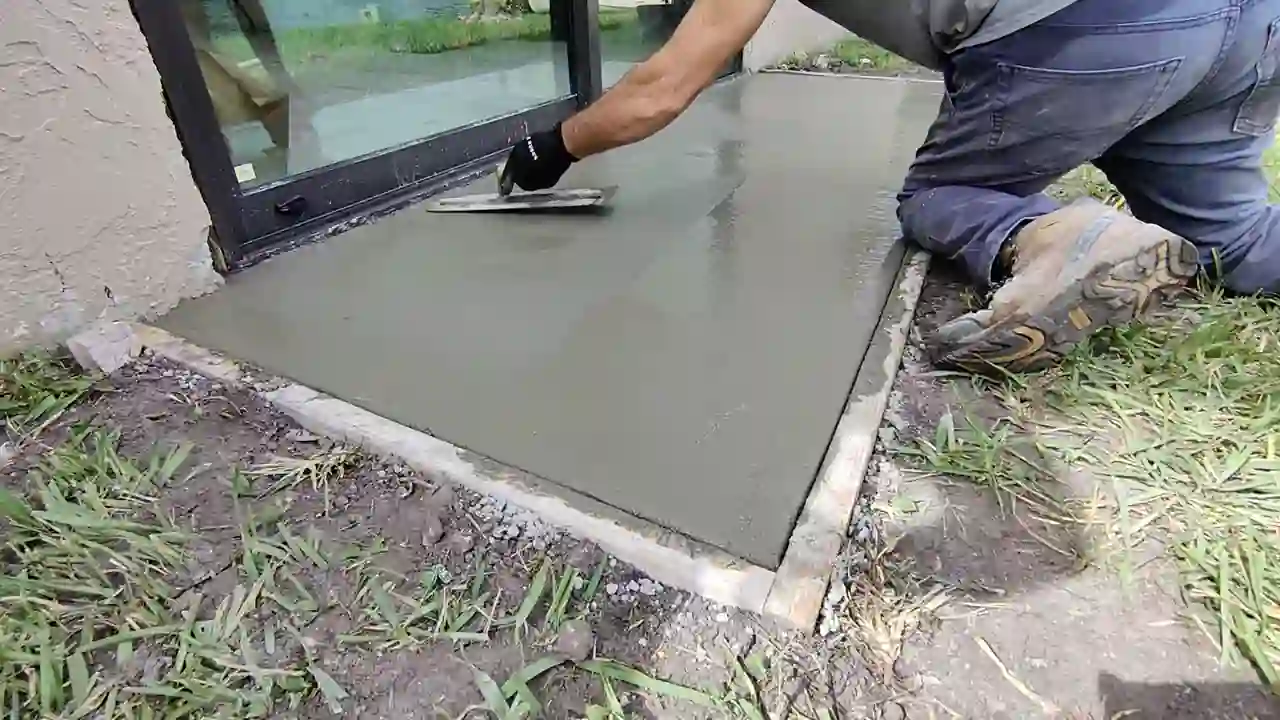
Full removal is the technically superior option for any homeowner planning future construction over the footprint. Abandonment fill, while faster and cheaper, can create long-term settlement issues if compaction isn’t performed in certified lifts. If you’re also planning to modify or extend an adjacent concrete patio, understanding how the pool shell interfaces with the surrounding flatwork is critical — see our complete guide to cutting existing concrete patios for how those transitions are managed without cracking the surrounding deck.
Access Audits — The Gate Width, Grade Change, and Overhead Clearance Problem
The single most underestimated constraint in residential pool demolition is physical access. In Miami’s older neighborhoods — Coral Gables, Coconut Grove, Hialeah, and throughout the Keys — properties were built with narrow side yards, mature tree canopies, and gates that were never designed to accommodate demolition equipment. A standard mini-excavator with a hydraulic hammer attachment is typically 36 to 48 inches wide in transport configuration. A 36-inch gate opening — the most common residential gate width — creates an immediate problem.
Our pre-demolition site audit covers six specific access variables:
- Gate width and swing clearance — We measure the clear opening, not the gate panel width. Hinges, posts, and decorative elements routinely reduce usable clearance by 4 to 6 inches.
- Grade transitions — A slope change between the gate and pool deck affects equipment stability and may require temporary grading or steel plate bridging.
- Overhead obstructions — Pergolas, utility lines, and mature tree canopies can restrict the boom height of any mechanical equipment and dictate whether manual breaking must supplement machine work.
- Surface load capacity — Decorative pavers and older concrete flatwork may not support the ground pressure of even a compact excavator. Steel plate distribution mats are often required.
- Utility corridors — Pool equipment pads, conduit runs, and gas lines frequently run through the only viable equipment path.
- Neighbor proximity — Vibration thresholds and debris containment become active constraints when the pool shell sits within 5 feet of a shared fence or structure.
When mechanical access is genuinely impossible, we transition to a hand-demolition protocol using electric demolition hammers, core drills for perforation lines, and manual removal of broken material in manageable lifts. This is slower and more labor-intensive, but it’s the correct approach — not a compromise. Our crews operating across South Florida from Miami to Fort Lauderdale and the Florida Keys encounter access-restricted sites on a regular basis and maintain the hand-tool inventory to handle them without delay.
Concrete Shell Composition and How It Dictates the Demolition Method
Not all pool shells are built the same, and the construction method directly determines the most efficient demolition approach. The three most common shell types in South Florida are:
- Gunite (dry-mix shotcrete) — Extremely hard, typically 4,000 to 6,000 PSI, heavily reinforced with rebar on 12-inch centers. Requires high-impact hydraulic breaking or diamond wire sawing for clean sectioning.
- Shotcrete (wet-mix) — Similar compressive strength to gunite but with slightly more uniform density. Breaks in more predictable fracture patterns.
- Vinyl-liner over steel or polymer panels — The shell itself is not concrete, but the surrounding bond beam and deck almost always are. The liner and panels are removed first; the concrete perimeter is then demolished conventionally.
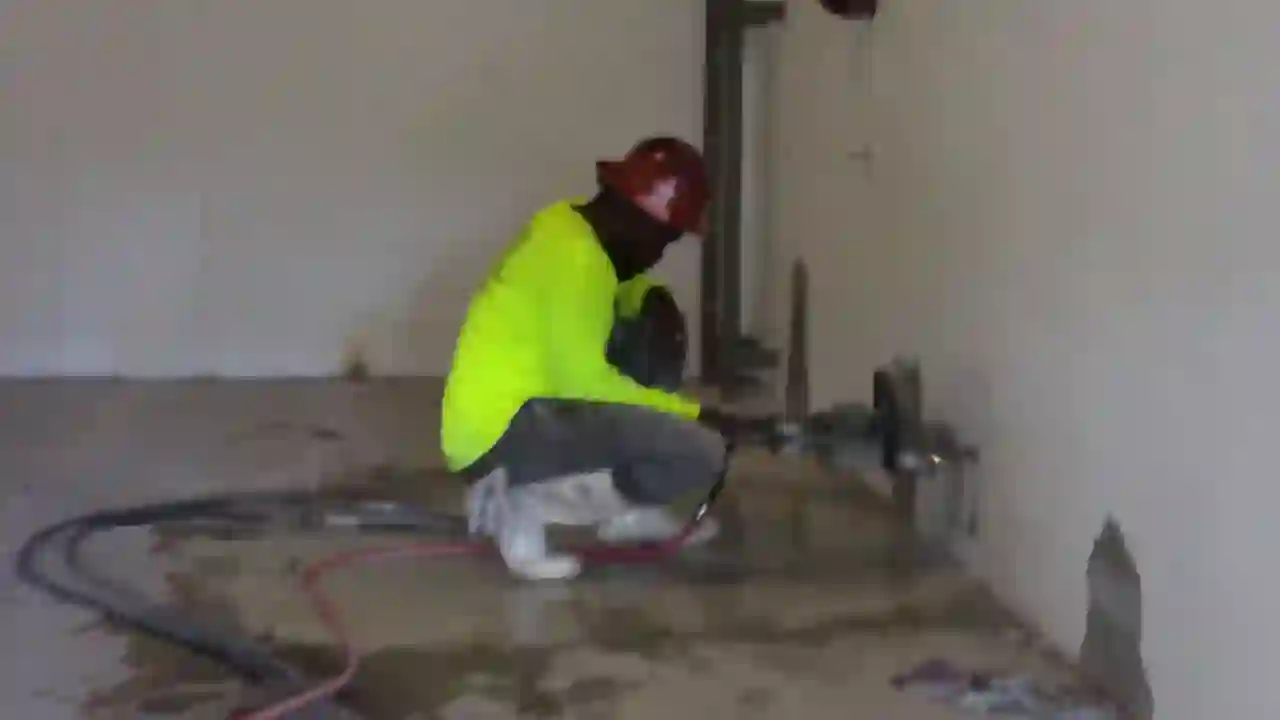
In confined-access scenarios where a hydraulic breaker can’t be positioned effectively, we use a core drill perforation grid technique — drilling a series of 4-inch cores in a pattern across the shell walls and floor to create fracture initiation points, then using electric chipping hammers to break between cores. This method produces smaller, more manageable rubble pieces that can be manually loaded into a debris chute or bucket-brigade staged to a dumpster positioned at the access point.
Rebar Extraction, Haul-Out Sequencing, and Compaction Lift Protocol
Once the shell is broken, the work is only half done. Rebar extraction from a demolished gunite shell is physically demanding and time-sensitive — bent, jagged steel embedded in broken concrete must be cut, pulled, and staged for separate haul-out as ferrous scrap. We use reciprocating saws with demolition blades and angle grinders with cutoff wheels for in-place rebar cutting when full extraction isn’t practical prior to breaking.
Haul-out sequencing in a confined yard is a choreography problem. With no room to stage large quantities of broken material, crews work in a continuous loop: break a section, load debris into a power buggy or manual cart, transport to the access point, transfer to the dumpster or truck bed, return. The loop size and speed determine how quickly the excavation can be completed and backfilling can begin.
Backfill compaction is non-negotiable for any full removal project. Miami-Dade permitting typically requires engineered fill placed in 12-inch compacted lifts with nuclear density gauge testing at specified intervals. Skipping or shortcutting compaction lifts is the most common cause of post-demolition settlement — a problem that can crack driveways, patios, and foundations years after the job is closed out. If you’re a contractor managing this process and need reliable subcontractor pricing, our contractor quotes section is a practical starting point.
Pool Deck Integration — Cutting the Existing Slab Without Propagating Cracks
The pool deck surrounding the shell is almost always a separate concrete pour from the shell itself, but the two are frequently bonded by rebar dowels, coping stones, or simple friction. When the shell is demolished, the deck is at risk — particularly at the bond beam interface where the coping meets the deck slab.
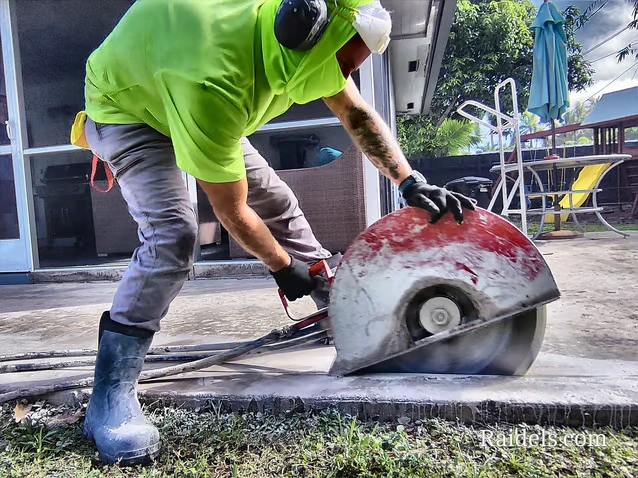
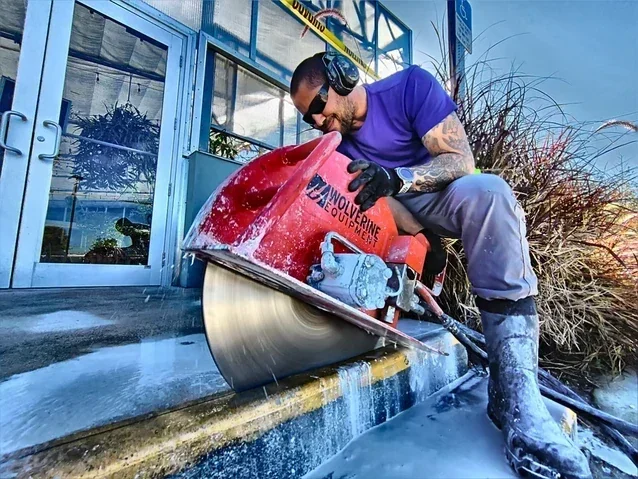
The correct approach is to establish a relief cut along the perimeter of the coping using a diamond blade walk-behind saw before any breaking begins. This cut — typically 2 to 3 inches deep — severs the mechanical connection between deck and shell, allowing the shell to be demolished without transmitting shock and tensile stress into the deck slab. Without this cut, hydraulic breaking vibration will propagate through the bond beam and crack the deck in unpredictable patterns, often requiring expensive flatwork repair that wasn’t in the original scope.
For homeowners or contractors managing ongoing concrete maintenance around pool areas and adjacent flatwork, our resources on concrete maintenance best practices provide useful guidance on monitoring, sealing, and addressing early-stage cracking before it becomes a structural issue.
Dewatering, Utility Disconnection, and Environmental Compliance Before Breaking Begins
No demolition crew should be breaking concrete over a pool that still contains water, active electrical connections, or pressurized gas lines. Pre-demolition dewatering using a submersible pump is standard, but in a confined yard, where does the water go? Miami-Dade stormwater ordinances prohibit discharging pool water — which contains chlorine, algaecides, and pH adjustment chemicals — directly into storm drains. Proper discharge requires either dechlorination on-site before discharge or pumping to sanitary sewer with a licensed plumber coordinating the connection.
Electrical disconnection at the panel and physical removal of the pool equipment pad conduit must be completed and inspected before breaking begins. Gas lines serving pool heaters require a licensed gas contractor to cap at the meter — not at the equipment. These aren’t optional steps; they’re permit conditions and safety requirements that carry real liability if skipped.
Why DIY Pool Demolition in a Confined Yard Almost Always Escalates in Cost
The internet makes pool demolition look approachable, and for a handful of scenarios — large open yards, easy equipment access, simple gunite shells — a capable DIYer with equipment rental experience can manage portions of the work. But in the confined, access-restricted sites that define most of Miami’s residential stock, the margin for error collapses quickly. An improperly sequenced demolition that cracks the adjacent patio, an uncut relief line that propagates through the deck slab, or a compaction failure that causes settlement under a new concrete pour — these outcomes cost multiples of what professional execution would have cost upfront.
If you’re evaluating whether a DIY approach is viable for your specific site, our DIY concrete resources offer an honest assessment of where the skill and equipment thresholds actually sit. For most confined-access pool demolition projects in South Florida, professional execution isn’t a luxury — it’s the only path to a result that holds up under permit inspection and long-term site use.
The concrete in a swimming pool shell is not the hard part. The hard part is everything that has to happen before and around it — and that’s exactly where experienced crews earn their value.