Why Environmental Compliance Starts the Moment You Power Up the Blade
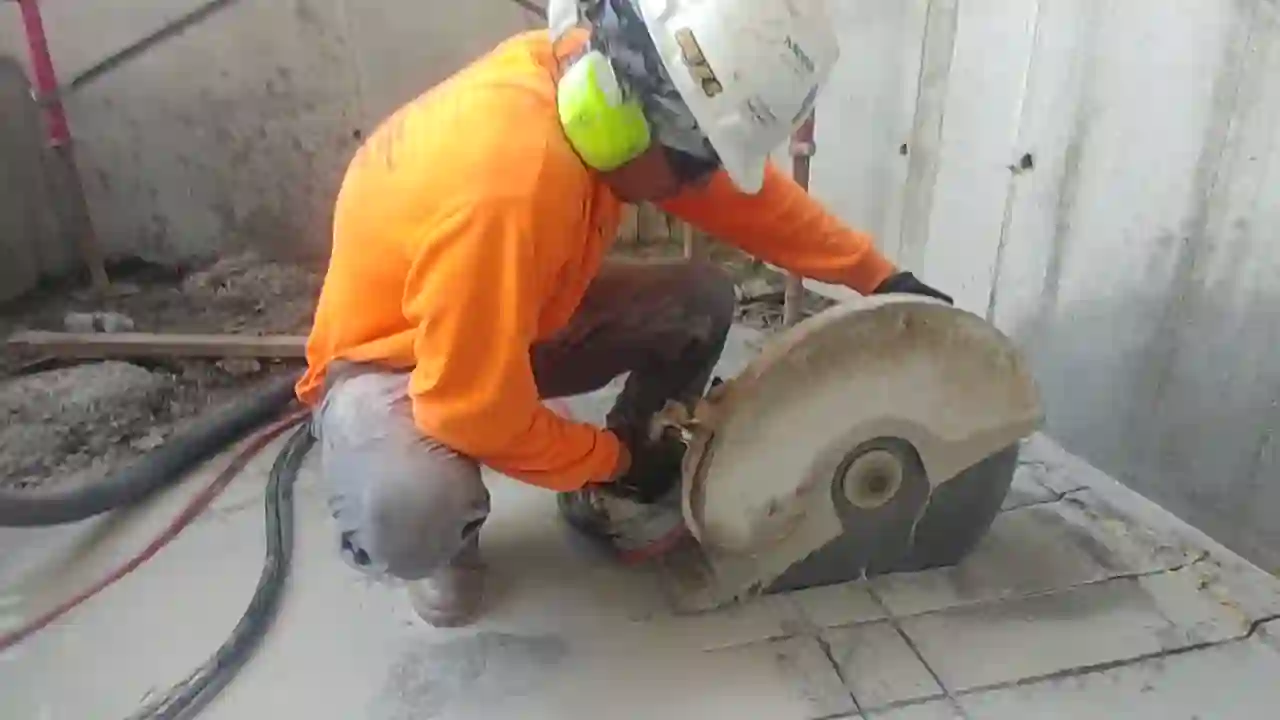
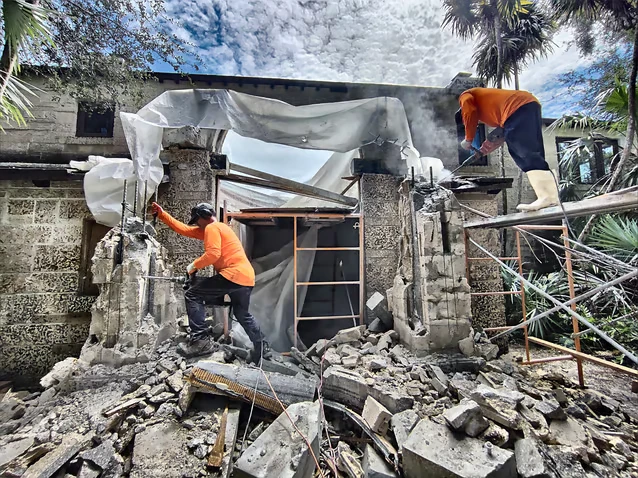
Every contractor who’s spent serious time on Miami jobsites knows the drill: you fire up a wet-cutting diamond blade, water starts flowing, and within minutes you’ve got a gray slurry creeping toward the nearest storm drain. That’s not just a mess — in Miami-Dade County, that’s a potential Clean Water Act violation, an NPDES permit breach, and a fine that can dwarf the cost of the entire cutting contract. Before we get into blade specs and cut depths, let’s be absolutely clear about something: how to cut through concrete properly is inseparable from how you manage the environmental footprint of that cut. The two cannot be decoupled on any responsible, professional jobsite.
Miami’s proximity to Biscayne Bay, its shallow water table, and its extensive storm drain network make slurry containment a non-negotiable operational requirement — not an afterthought. Working with a qualified concrete cutting company that understands local environmental regulations is the single most important decision a project manager can make before breaking ground.
Understanding What Concrete Slurry Actually Is and Why It’s Dangerous
Concrete slurry — the byproduct of wet diamond blade cutting — is an alkaline suspension with a pH typically ranging between 11 and 13. That makes it caustic enough to kill aquatic life, disrupt soil biology, and contaminate groundwater. It contains fine silica particles, heavy metals leached from rebar and aggregate, and Portland cement compounds that can harden inside drain systems and cause infrastructure damage. In short, it is a hazardous waste stream that must be treated as such from the first pass of the blade.
The volume of slurry generated depends on cut depth, blade diameter, material hardness, and water flow rate. A standard 14-inch diamond blade cutting a 6-inch slab at a water flow rate of 1.5 gallons per minute will generate approximately 0.75 to 1.2 gallons of slurry per linear foot of cut. On a commercial project with hundreds of linear feet of cutting, that’s hundreds of gallons of alkaline slurry that need to go somewhere — and that somewhere cannot be a storm drain, a curb line, or an open lot.
Primary Containment Methods for Wet Concrete Cutting Operations
Containment is the first line of defense, and it must be engineered before the first cut is made. Experienced crews deploy a layered containment strategy that accounts for surface slope, wind direction, and proximity to drainage infrastructure.
- Berms and foam dams: Flexible foam or rubber berms are installed around the cutting perimeter to prevent slurry from migrating. These are especially effective on flat slabs and parking structures where runoff paths are predictable.
- Vacuum slurry recovery systems: Industrial wet vacuums rated for slurry recovery (not standard shop vacs) are positioned at the cut line to capture slurry in real time. High-capacity units can recover 30 to 50 gallons per minute, keeping pace with most cutting operations.
- Absorbent boom socks: Deployed at storm drain openings as a secondary barrier, absorbent booms capture any slurry that escapes primary containment. They must be inspected and replaced frequently — a saturated boom provides zero protection.
- Portable containment tanks: All recovered slurry must be transferred to sealed, labeled containment tanks for off-site disposal. Never allow slurry to pool and dry on a surface — dried silica dust creates an airborne hazard and a secondary cleanup problem.
Crews that skip these steps aren’t just cutting corners on compliance — they’re creating liability that can follow a contractor for years. Proper safety and protective protocols extend well beyond personal protective equipment and into the environmental management systems that surround every cut.
Slurry pH Neutralization Before Disposal
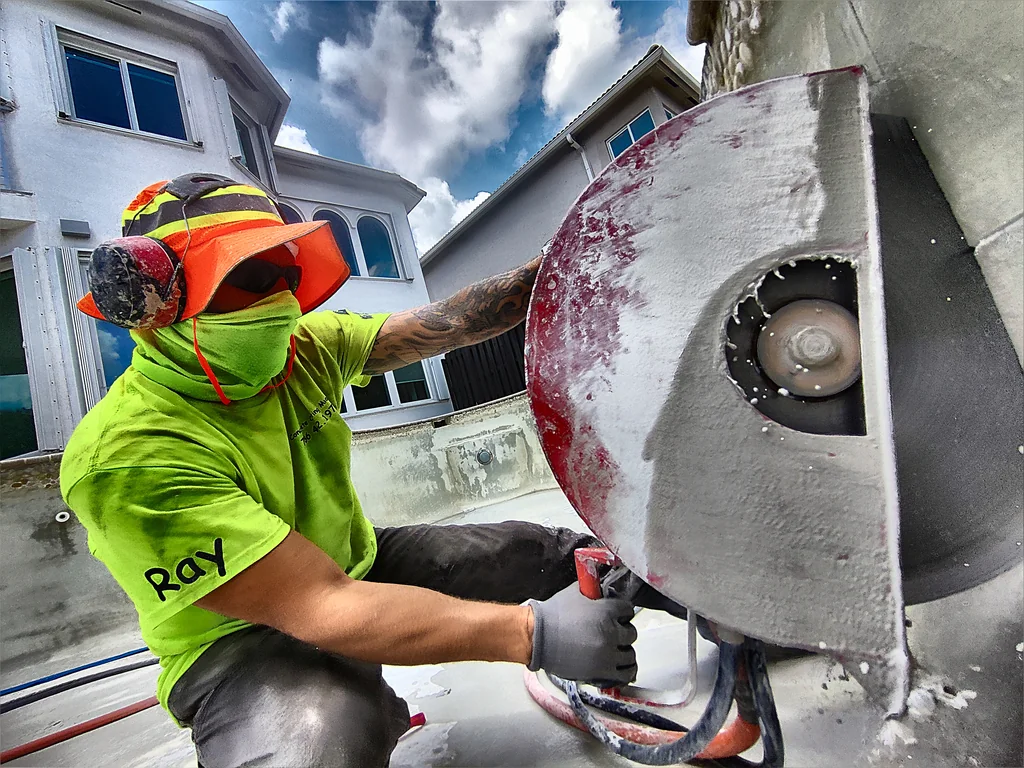
Recovered slurry cannot simply be dumped into a sanitary sewer without pre-treatment in most jurisdictions. Miami-Dade’s wastewater regulations require that discharge pH fall within the range of 6.0 to 9.0. Raw concrete slurry at pH 12 is well outside that window and must be neutralized on-site before any discharge is permitted.
The most common neutralization agent used in the field is carbon dioxide (CO₂), delivered through a carbonation system that bubbles CO₂ through the slurry tank. CO₂ reacts with calcium hydroxide in the slurry to form calcium carbonate — a benign precipitate — and drives the pH down to acceptable levels efficiently and safely. Dry ice can serve as a field-expedient alternative for smaller volumes. Sulfuric acid and hydrochloric acid are sometimes used but introduce additional handling hazards and are generally avoided on urban jobsites.
After neutralization, the slurry must be allowed to settle so that solids separate from the liquid fraction. The clarified water can then be discharged to sanitary sewer (with appropriate permits), while the solid cake is disposed of as non-hazardous construction debris — provided heavy metal testing confirms it meets TCLP (Toxicity Characteristic Leaching Procedure) thresholds. On projects involving older concrete with lead-based additives or chromium-containing admixtures, the solid fraction may require disposal as hazardous waste.
Dry Cutting Versus Wet Cutting — The Environmental Trade-Off
Some contractors attempt to sidestep slurry management entirely by switching to dry cutting methods. While dry cutting eliminates liquid slurry, it replaces one environmental problem with another: respirable crystalline silica (RCS) dust. OSHA’s silica standard (29 CFR 1926.1153) mandates engineering controls — typically wet suppression or local exhaust ventilation — for any dry cutting operation. Without these controls, airborne silica concentrations can exceed the permissible exposure limit within seconds.
Dry cutting is appropriate for shallow scoring passes (typically under 1.5 inches) in well-ventilated outdoor environments with proper dust suppression. For full-depth cuts through structural slabs, walls, or post-tensioned decks, wet cutting with a proper slurry management system is the only technically sound and environmentally defensible approach. The opportunity to do this right exists on every project — it’s a matter of planning and commitment to professional standards.
Rebar Encounters and Their Impact on Slurry Composition
When a diamond blade contacts rebar, the slurry chemistry changes. Iron particles enter the mix, and the slurry can take on elevated iron concentrations that affect its classification for disposal purposes. On projects where rebar density is high — post-tensioned slabs, heavily reinforced grade beams, shear walls — the slurry should be tested for iron content and other metals before any discharge decision is made.
Beyond chemistry, rebar encounters stress the blade and the cutting system in ways that affect water delivery. A blade that deflects on rebar contact can momentarily interrupt the water stream to the cutting zone, causing localized overheating and segment loss. Maintaining consistent water flow — typically 1.0 to 2.5 gallons per minute depending on blade diameter — is critical both for blade life and for maintaining adequate slurry dilution at the cut face. For a deeper look at protecting your blades during rebar-heavy cuts, this resource on cutting rebar in Miami covers the operational specifics in detail.
Documentation, Permits, and On-Site Compliance Records
Environmental compliance isn’t just about what you do on the jobsite — it’s about what you can prove you did. Professional concrete cutting operations maintain a slurry management log for every project, documenting:
- Volume of slurry generated (estimated by water consumption tracking)
- pH readings before and after neutralization, with timestamps
- Disposal method and receiving facility for solid and liquid waste fractions
- Names of personnel responsible for containment and neutralization operations
- Photographic documentation of containment setup and drain protection measures
In Miami-Dade, contractors working near waterways or in environmentally sensitive areas may also be required to obtain a dewatering permit from the South Florida Water Management District. These permits specify discharge limits, monitoring requirements, and reporting obligations that must be met throughout the project duration. Failure to obtain required permits before cutting begins — not just before discharge — can trigger enforcement action.
Environmental compliance in concrete cutting is also directly tied to the quality of the finished work. Slurry that’s allowed to cure inside a cut joint can compromise sealant adhesion and create long-term durability problems. That’s a point made clearly in the context of Miami concrete crack repair services — environmental shortcuts during cutting create repair problems that cost far more to fix later.
The Professional Standard That Separates Compliant Crews from Liability Risks
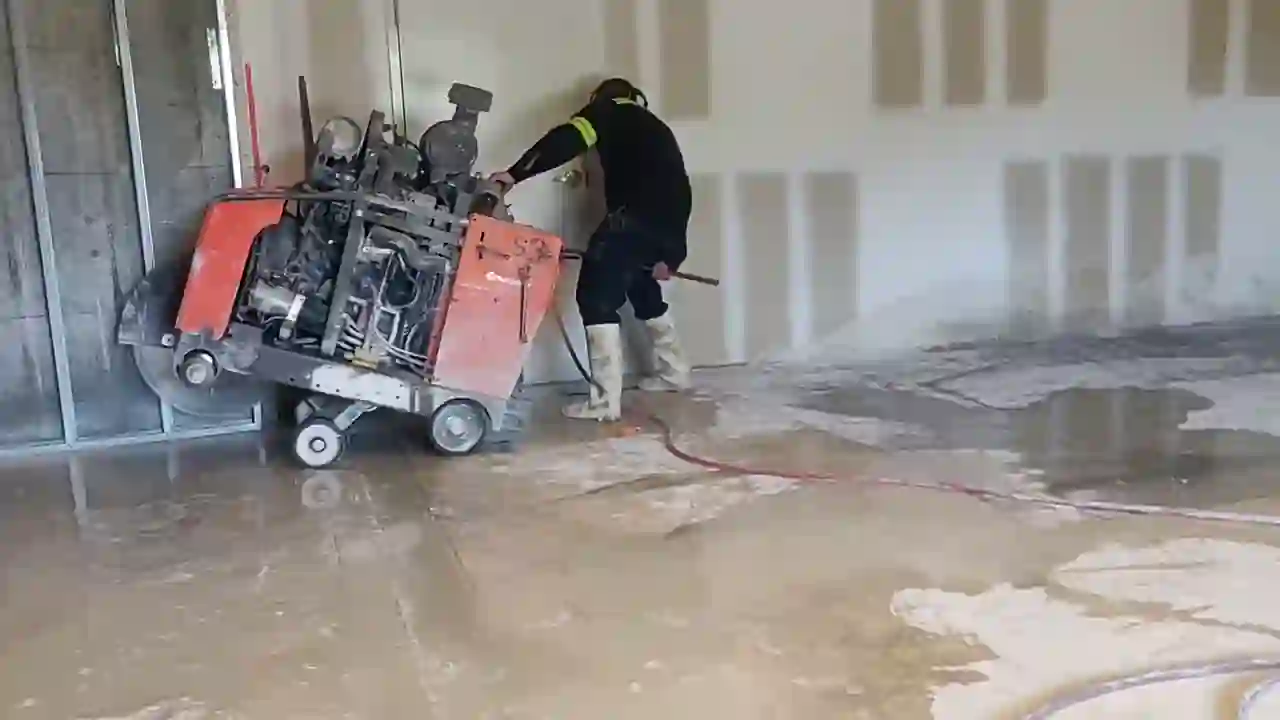
Knowing how to cut through concrete at a professional level means understanding that the blade is only one component of a complete operational system. Water management, slurry containment, pH neutralization, proper disposal, and thorough documentation are equally critical elements of every cut made on a compliant Miami jobsite. The contractors who internalize this — who treat environmental management as a core technical competency rather than a regulatory inconvenience — are the ones who build lasting reputations, avoid enforcement actions, and deliver work that holds up under scrutiny from inspectors, owners, and the environment itself.
Every linear foot of concrete cut in this city sends a message about the professionalism of the crew that made it. Make sure yours says the right thing.