Why Miami Concrete Crack Repair Services Operate Under Stricter Environmental Rules Than Most Contractors Expect
Miami’s proximity to Biscayne Bay, the Everglades watershed, and a high-density stormwater drainage network means that concrete crack repair isn’t just a structural trade — it’s an environmentally regulated activity. Every time a crew opens a crack, injects epoxy, routes a joint, or grinds a surface to prepare for repair material, they generate alkaline slurry, silica-laden particulates, and chemically active wastewater. In Miami-Dade County, discharging that material — even unintentionally — into storm drains or surface water can trigger violations under the Clean Water Act, Florida Department of Environmental Protection (FDEP) Chapter 62-621 standards, and local MS4 (Municipal Separate Storm Sewer System) permit conditions. The crews who understand this don’t just do better work. They stay in business longer.
The Chemistry of Concrete Slurry and Why It’s Dangerous Near South Florida Waterways
When diamond blades, angle grinders, or routing bits engage hardened concrete during crack preparation, the cutting fluid — typically water — mixes with pulverized cement paste, calcium hydroxide, and silica to form what the industry calls concrete slurry. This material has a pH range of 11 to 13, making it highly alkaline. For reference, household bleach sits around pH 12. When slurry reaches Miami’s storm drainage infrastructure, it flows directly into canals, retention ponds, and ultimately into the Biscayne Bay Aquatic Preserve — a federally protected ecosystem.
Aquatic organisms, particularly fish and invertebrates, experience gill damage and oxygen depletion at pH levels above 9. A single crack repair project on a parking garage or bridge deck, if improperly managed, can discharge enough slurry to cause localized ecological damage. Beyond ecology, alkaline discharge corrodes aluminum drainage infrastructure and compromises the biological treatment processes in nearby wastewater systems. Understanding this chemistry is step one for any crew performing Miami concrete crack repair services professionally and legally.
Crack Routing and Saw Cutting — The Primary Slurry Generation Points
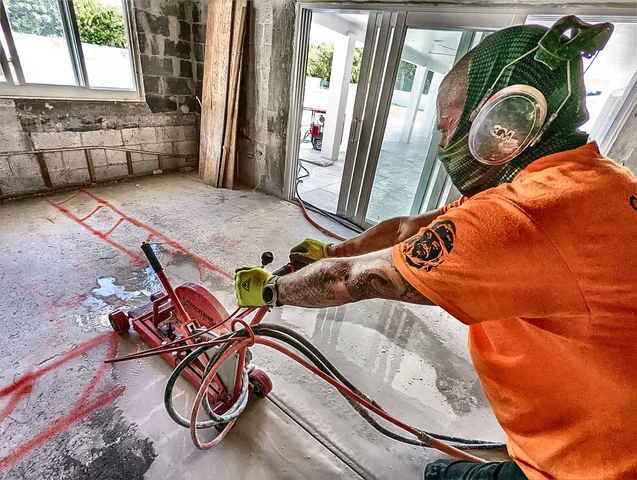
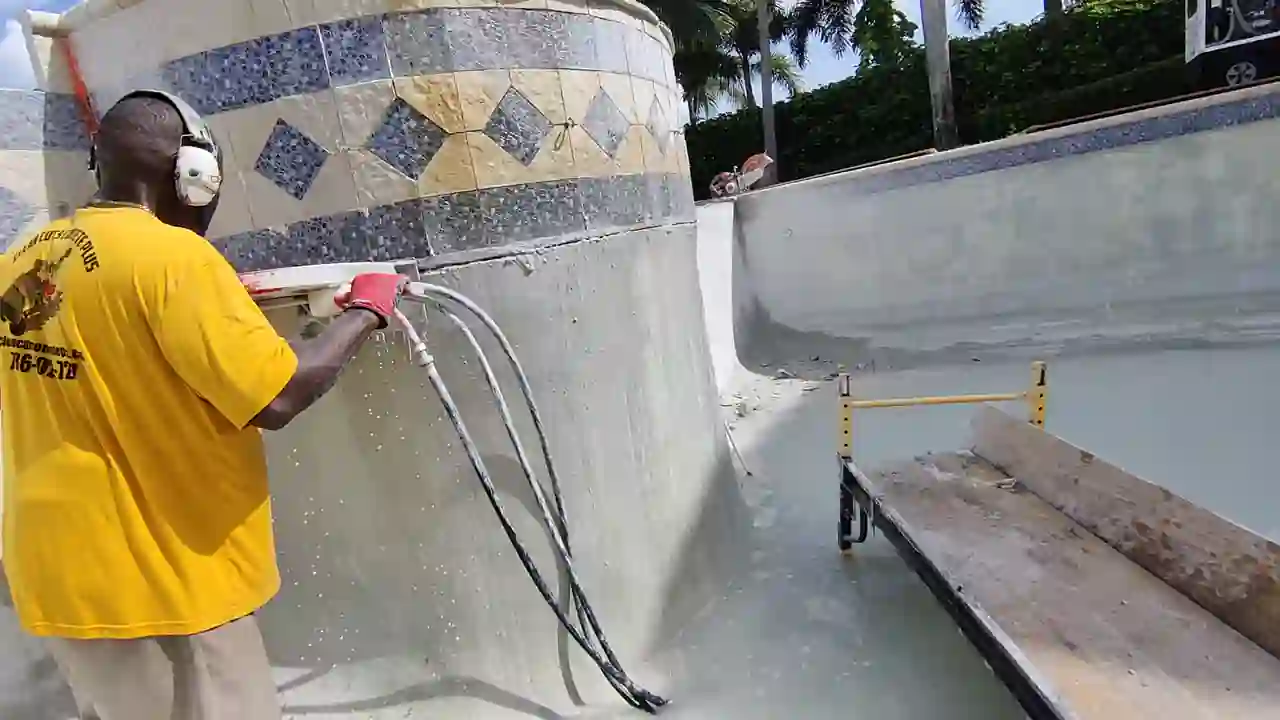
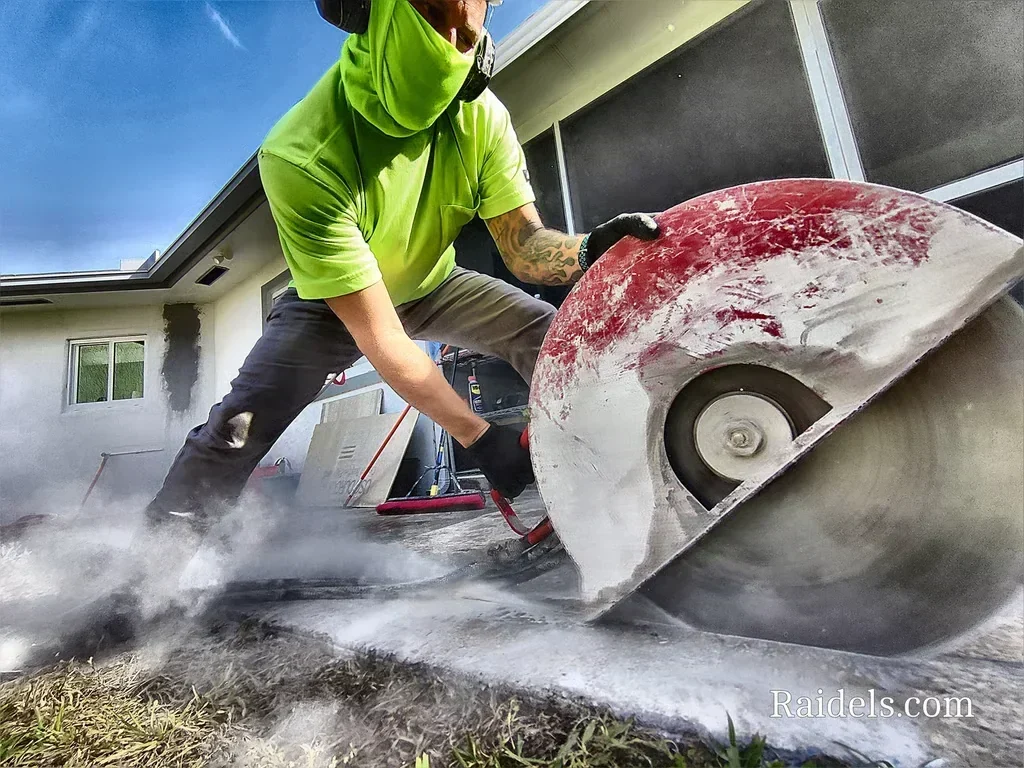
Crack repair almost always begins with surface preparation. Routing involves running a carbide or diamond-tipped router along the crack path to create a uniform, clean channel for repair material. Saw cutting is used when cracks need to be widened or when adjacent deteriorated concrete must be removed. Both operations require water cooling to protect tooling and suppress silica dust — and both generate significant slurry volumes. A single linear foot of crack routing at 1/4-inch depth can produce 0.5 to 1.5 ounces of wet slurry per pass, depending on aggregate density and water flow rate.
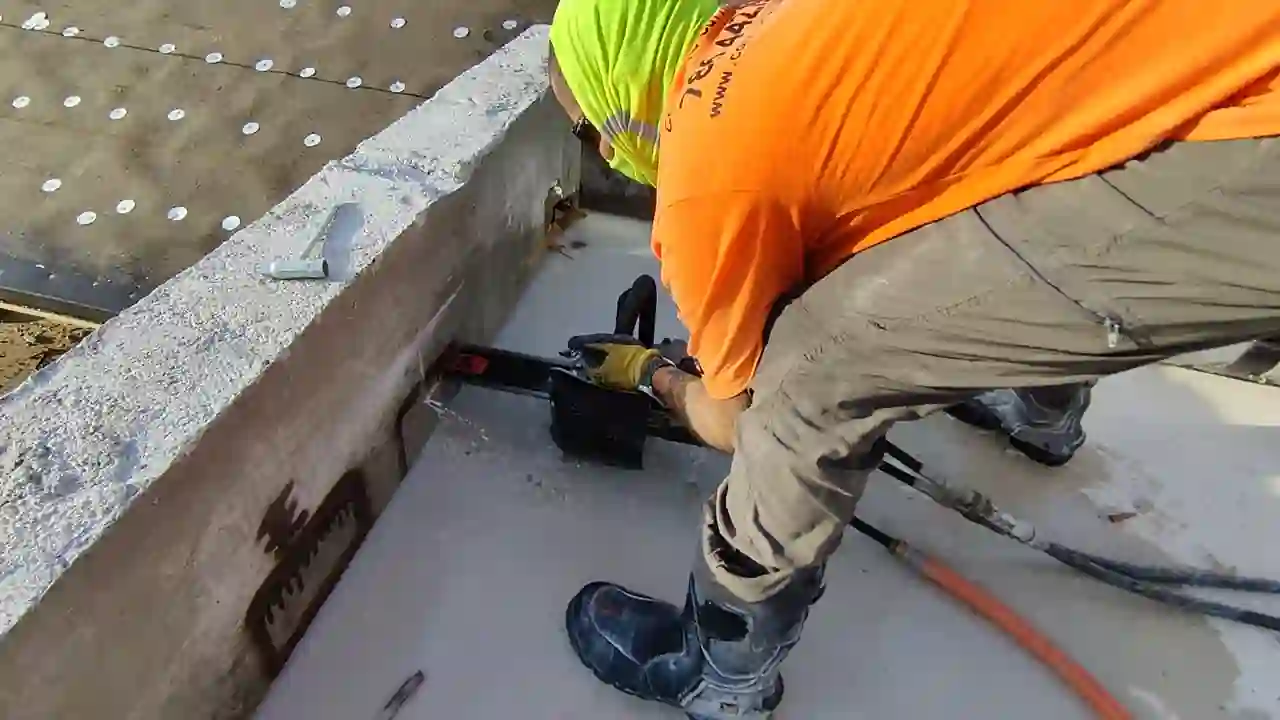
On a typical Miami commercial project — say, a 500-linear-foot crack repair on a parking deck — that translates to several gallons of slurry that must be collected, contained, and disposed of properly. Crews using chainsaw cutting systems for deeper crack excavation in structural walls generate even higher volumes, particularly when working through reinforced sections where multiple passes are required. The containment strategy must be planned before the first cut, not improvised after the slurry starts flowing.
Slurry Containment Systems Used by Compliant Miami Repair Crews
Professional-grade slurry containment isn’t a single product — it’s a layered system. The following components are used by compliant crews performing concrete crack repair across Miami-Dade and Broward Counties:
- Berms and absorbent socks: Placed around drain inlets and at the perimeter of the work zone before any wet cutting begins. Foam or coir fiber socks rated for pH 12+ fluids are standard for alkaline slurry applications.
- Vacuum slurry systems: Wet-dry industrial vacuums with HEPA filtration collect slurry directly at the point of generation. High-capacity units (20+ gallon tanks) are required for longer crack repair runs.
- Containment berms and poly sheeting: 6-mil polyethylene sheeting creates temporary containment zones on flat deck surfaces. Combined with inflatable or foam rubber berms, this system prevents slurry migration across the deck surface toward drains.
- pH neutralization stations: Collected slurry is transferred to portable pH adjustment tanks where citric acid or carbon dioxide injection brings the pH to compliant discharge levels (typically 6.0–9.0 per FDEP standards) before disposal.
- Slurry drying beds: For projects where liquid disposal isn’t feasible, slurry is allowed to dry in lined containment areas. The dried material is then classified and disposed of as solid waste, typically non-hazardous unless contaminants are present.
Water Containment During Epoxy Injection and Polyurethane Foam Repair
Not all crack repair methods generate slurry, but water containment remains critical even during injection-based repairs. Polyurethane foam injection — commonly used for active water-infiltration cracks in Miami’s below-grade parking structures and foundation walls — involves introducing a hydrophilic or hydrophobic resin that reacts with moisture and expands to seal the crack. When applied to actively leaking cracks, the displaced water must go somewhere. Without containment, it carries dissolved minerals, concrete fines, and potentially hydrocarbon contaminants from parking decks into the drainage system.
Epoxy injection, used for structural crack repair in load-bearing elements, requires surface ports bonded along the crack length. The injection process itself is dry, but the surface preparation — including grinding port locations and cleaning crack faces with compressed air — generates fine particulate that must be vacuumed, not blown into the surrounding environment. Proper safety measures in concrete cutting and preparation directly overlap with environmental compliance here — respiratory protection, dust suppression, and vacuum collection serve both worker safety and regulatory compliance simultaneously.
Managing Rebar Exposure During Crack Excavation
Structural cracks that have propagated to reinforcing steel require concrete removal around the bar to assess corrosion and restore cover. This is where crack repair intersects with demolition-level work. Chipping, grinding, and saw cutting around rebar in a wet environment creates a slurry contaminated not just with concrete fines but with rust particles and, in older Miami structures, potentially lead-based coatings from painted rebar. This changes the waste classification entirely.
Crews must test for heavy metal contamination before assuming the slurry is non-hazardous. If lead or chromium concentrations exceed TCLP (Toxicity Characteristic Leaching Procedure) thresholds, the slurry becomes a regulated hazardous waste requiring manifested disposal through a licensed hauler. When cutting near rebar, the right tooling matters — understanding how to cut rebar correctly and safely reduces tool breakage, minimizes secondary debris, and keeps the work zone cleaner for containment purposes.
Equipment Staging and Site Access Compliance on Miami Job Sites
Environmental compliance doesn’t start when the blade hits concrete — it starts when the equipment rolls onto the site. Heavy support equipment used for crack repair projects, including skid steers and compact track loaders, must be staged on containment mats or impervious surfaces to prevent hydraulic fluid and fuel leaks from reaching stormwater infrastructure. Bobcat and skid steer operations on repair sites require pre-deployment inspection logs documenting fluid levels, seal integrity, and drip pan placement before work begins.
Miami-Dade County’s stormwater ordinance (Chapter 24, Article IV) requires contractors to implement Best Management Practices (BMPs) for all construction and repair activities that disturb more than a threshold area or involve hazardous materials. Crack repair projects that span large deck areas or involve chemical injection materials (epoxies, polyurethanes, silanes) frequently trigger BMP plan requirements. A pre-construction BMP plan must identify slurry collection methods, chemical storage procedures, spill response protocols, and designated wash-out areas.
Wash-Out Zone Establishment and Concrete Slurry Disposal Logistics
Every crack repair job site in Miami should have a designated concrete wash-out zone established before work begins. This is a lined, contained area — typically constructed from straw bales and poly sheeting or a prefabricated wash-out container — where tools, mixing equipment, and slurry collection containers are cleaned. The wash-out zone must be located a minimum of 50 feet from any storm drain, drainage swale, or water body. Signage in English and Spanish (required on most Miami job sites) must clearly identify the zone and prohibit discharge of wash water outside the containment area.
Collected slurry and wash water must be disposed of through one of three compliant pathways: licensed liquid waste hauler transport to an approved facility, on-site pH neutralization followed by sanitary sewer discharge (with prior written approval from Miami-Dade Water and Sewer), or solar drying and solid waste disposal. Documentation of disposal — manifests, receipts, pH test logs — must be retained for a minimum of three years per FDEP inspection requirements.
What Separates a Compliant Miami Concrete Crack Repair Contractor From a Liability Risk
The technical capability to repair a crack is table stakes in this industry. What separates a contractor worth hiring — particularly for commercial, municipal, or infrastructure clients — is the ability to execute that repair within a documented environmental compliance framework. In Miami’s regulatory environment, a single stormwater violation can result in stop-work orders, fines ranging from $1,000 to $10,000 per day of violation, and reputational damage that follows a company through every future bid process.
Compliant contractors maintain current SWPPP (Stormwater Pollution Prevention Plan) training for field supervisors, keep slurry management equipment on every service vehicle, conduct pre-job environmental assessments, and document every step of the waste stream from generation to disposal. They also understand that the structural integrity of a crack repair and the environmental integrity of the job site are not competing priorities — they are both non-negotiable deliverables. When you’re evaluating Miami concrete crack repair services for your next project, the questions you ask about slurry management and environmental compliance will tell you more about a contractor’s professionalism than any portfolio photo ever could.