Why Concrete Patio Sawing in Miami Is an Environmental Compliance Operation as Much as a Cutting Job
Most property owners scheduling a concrete patio sawing project are thinking about one thing — getting clean, precise cuts through an aging slab so they can remove, repair, or reconfigure the surface. What they’re rarely thinking about is what happens to the water. In Miami, that oversight can be costly. The moment a diamond blade meets wet concrete, a highly alkaline slurry is produced — a mixture of water, fine silica particles, cement dust, and aggregate fines that carries a pH typically ranging between 11 and 13. That’s caustic enough to kill aquatic organisms on contact. With Miami’s storm drain network flowing directly into Biscayne Bay and the Atlantic coastal shelf, every patio sawing job is also an environmental compliance event, whether the contractor acknowledges it or not.
The Mechanics of Slurry Generation During Wet-Cut Patio Sawing
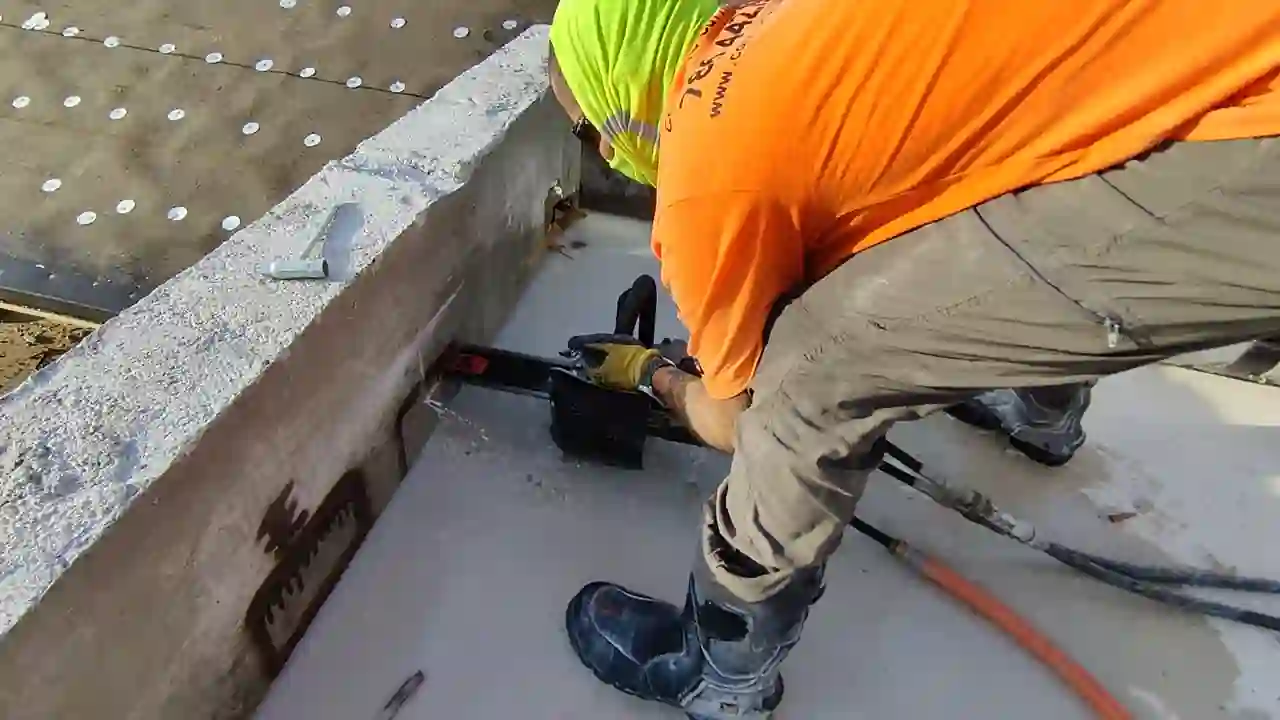
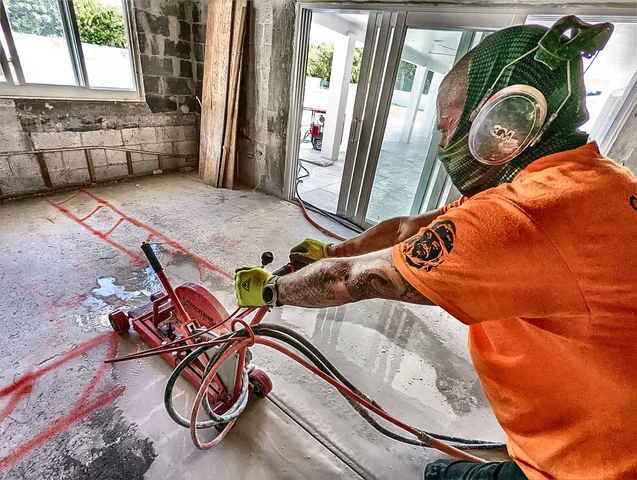
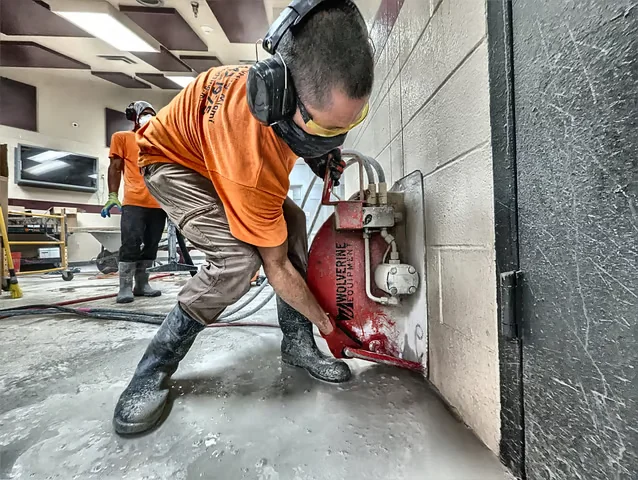
Wet cutting is the industry standard for concrete patio sawing because water serves two critical functions simultaneously — it cools the diamond segments on the blade, preventing thermal degradation, and it suppresses respirable crystalline silica (RCS) dust at the source. A typical walk-behind flat saw used for patio work consumes between 1.5 and 4 gallons of water per minute depending on blade diameter, cutting depth, and aggregate hardness. On a standard 500-square-foot patio removal job requiring multiple parallel and perpendicular cuts, total water usage can easily exceed 200 gallons.
That water doesn’t disappear. It combines with the pulverized concrete fines — particles often measuring less than 10 microns — to form a gray-white slurry that spreads laterally across the slab surface with every blade pass. On a level patio, slurry pools and sits. On a sloped patio draining toward a property edge, street gutter, or landscaping bed, it migrates rapidly. Without containment infrastructure in place before the first cut is made, that slurry reaches unintended areas within minutes. This is the fundamental problem that separates compliant patio sawing operations from non-compliant ones.
Slurry pH and Its Regulatory Significance
Under the U.S. Clean Water Act, specifically the National Pollutant Discharge Elimination System (NPDES) framework, discharging concrete slurry to storm drains or surface waters without a permit is a federal violation. At the state level, the Florida Department of Environmental Protection (FDEP) enforces stormwater rules that apply directly to construction-related activities, including concrete cutting operations. Miami-Dade County adds another layer through its own stormwater management ordinances. The combined regulatory burden means that a patio sawing contractor operating without documented slurry containment and disposal procedures is exposed to significant liability — and so is the property owner who hired them.
For context, the EPA’s effluent guidelines for construction activity require that stormwater discharges from sites disturbing more than one acre be covered under a Construction General Permit. But even smaller residential patio jobs fall under local ordinances that prohibit any concrete washwater or slurry from entering the storm drain system. The legal exposure is real, and it’s not theoretical — Miami-Dade Code Enforcement has issued notices of violation to contractors for exactly this type of discharge.
Containment Strategies That Actually Work on Residential Patio Slabs
Professional concrete patio sawing crews deploy containment systems before any equipment is staged. The specific approach depends on the site geometry, but the core principle is always the same — create a closed system where slurry cannot exit the work zone until it’s been processed and properly disposed of.
- Berms and earthen dikes: On flat patios, compacted soil or commercial foam berms are installed along the perimeter edges, particularly at any low points where slurry would naturally drain. These berms are typically 3 to 4 inches high and are pre-positioned before water is ever applied to the blade.
- Vacuum slurry recovery systems: Industrial wet-vacs and dedicated slurry vacuums follow directly behind the saw operator, recovering the slurry from the slab surface in real time. High-capacity units can recover 30 to 50 gallons per minute, keeping pace with the saw’s water output on most residential applications.
- Portable containment berms with impermeable liners: For patios adjacent to landscaping, pools, or permeable pavers, inflatable or rigid containment berms lined with HDPE sheeting create a temporary pond that captures all runoff. The liner prevents any slurry from infiltrating soil or reaching groundwater.
- Storm drain inlet protection: Any storm drain within the slurry migration path — on the property or in the adjacent street — must be blocked with filter fabric inserts, drain plugs, or sandbag arrangements before sawing begins. This is non-negotiable on any compliant job site.
For more complex patio projects involving structural modifications or integration with drainage systems, the containment plan must be coordinated with the broader scope of work. Our team covers this in detail at Structural Concrete Modification, where containment planning intersects with engineering requirements.

Slurry Disposal — The Step That Separates Professionals from Risk Liabilities
Capturing slurry is only half the equation. What happens to it afterward determines whether a contractor is genuinely compliant or just performing the appearance of compliance. Recovered slurry cannot be dumped on-site into soil, poured into a sanitary sewer without authorization, or left to dry and flake into a storm drain. The three compliant disposal pathways used by Miami concrete cutting professionals are as follows.
On-Site Solidification and Landfill Disposal
The most common method for residential patio sawing involves allowing recovered slurry to settle in portable containment tanks or sealed drums. Flocculants — typically polyacrylamide-based compounds — are added to accelerate particle settling, dropping the suspended solids to the bottom of the container within 30 to 60 minutes. The clarified water on top is pH-tested; if it reads between 6.5 and 8.5 (the acceptable range for discharge to sanitary sewer in most jurisdictions), it can be disposed of through an authorized drain connection. The settled solids are then allowed to dry into a solid cake, which is bagged and disposed of as construction debris at a licensed facility.
Off-Site Liquid Waste Hauling
On larger patio sawing projects or jobs where on-site processing isn’t feasible, the entire slurry volume is pumped into sealed transport tanks and hauled by a licensed liquid waste carrier to an approved concrete washout facility or wastewater treatment plant. This method is more expensive but eliminates any on-site disposal risk entirely.
Dry Cutting with HEPA Vacuum Systems
In situations where water use must be minimized — such as enclosed patios, covered lanais, or areas with zero-tolerance drainage constraints — dry cutting with continuous HEPA-filtered vacuum extraction becomes the preferred method. This eliminates slurry entirely but requires strict compliance with OSHA’s Silica Standard (29 CFR 1926.1153), including Table 1 engineering controls and, in some cases, air monitoring. This approach is also commonly used in conjunction with concrete core drilling operations where water management is similarly constrained.
Equipment Specifications That Define Compliant Patio Sawing Operations
Not every saw on a job site is equipped for compliant wet cutting. Compliant concrete patio sawing requires equipment with integrated water delivery systems that can maintain consistent flow rates to the blade, not improvised garden hose setups. Walk-behind flat saws used for patio work should have blade guards that direct slurry inward toward the cut line rather than outward across the slab. Self-propelled models with GPS-controlled depth settings reduce operator variability and ensure consistent water application throughout the cut. The diamond blades themselves must be rated for the specific aggregate hardness of the Miami-area concrete being cut — typically limestone-based aggregate with compressive strengths ranging from 3,000 to 5,000 PSI — to maintain efficient cutting without excessive heat that would require elevated water flow rates.
Choosing the right contractor for this type of work isn’t just about price. It’s about documentation, equipment capability, and regulatory knowledge. Our guide on how to get the right concrete services for your project without wasting time or money walks through the vetting process in practical terms.
Miami-Specific Considerations That Change How Patio Sawing Gets Done
Miami’s flat topography, high water table, and proximity to sensitive coastal ecosystems create a set of site conditions that don’t exist in most other U.S. markets. The water table in Miami-Dade County sits at depths of 2 to 10 feet below grade in many residential neighborhoods. When slurry infiltrates soil on a patio job — even briefly — there’s a realistic pathway to groundwater contamination that doesn’t exist in areas with deeper water tables. This makes surface containment not just a regulatory requirement but a genuine environmental protection measure.
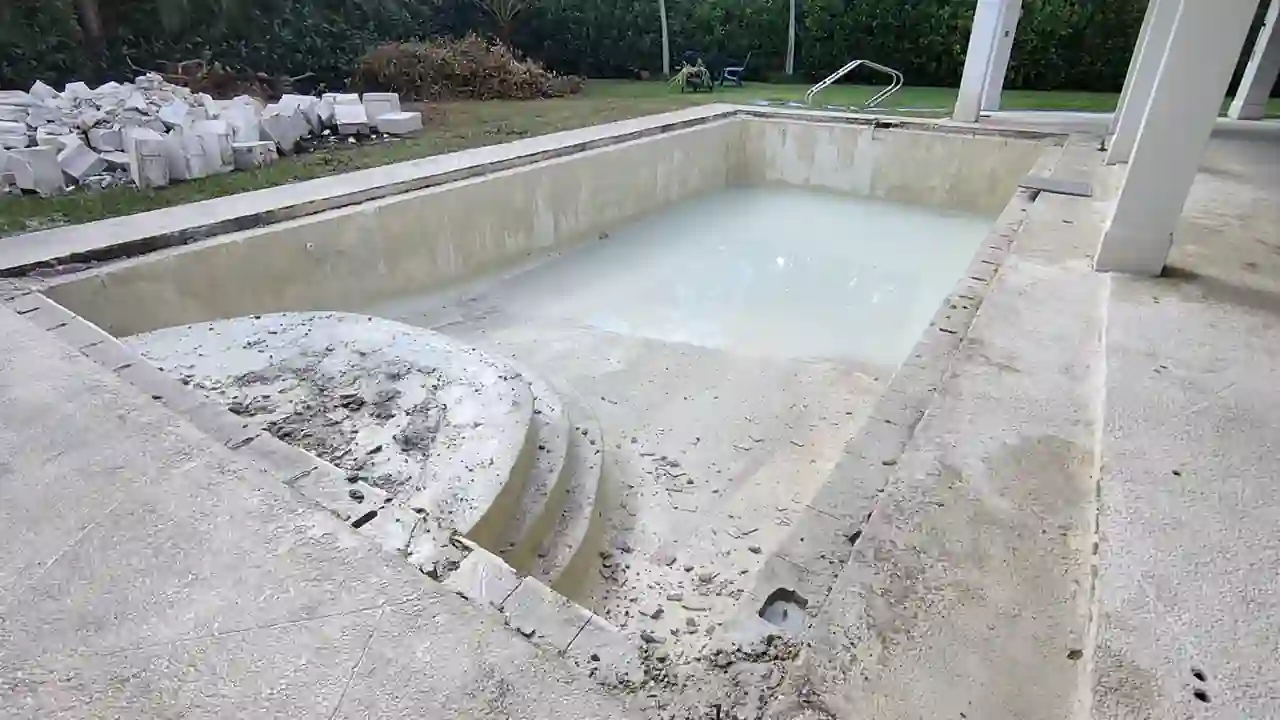
The prevalence of pool decks, outdoor entertainment slabs, and waterfront patio structures in Miami also means that sawing operations frequently occur in direct proximity to water features. Pool deck sawing and removal projects carry their own specific slurry management requirements, particularly when the pool shell itself is nearby and vulnerable to pH-altered water infiltration. Contractors experienced in pool deck removal in Miami understand these site-specific constraints and plan accordingly.
For contractors and developers working on larger residential or commercial builds that include patio elements, slurry management must be integrated into the overall site stormwater pollution prevention plan (SWPPP). Resources related to building construction compliance can provide additional context for how concrete cutting operations fit within broader site management frameworks. Similarly, any sawing operation within Miami’s urban core should reference current sawing concrete Miami best practices to ensure alignment with local enforcement priorities.
What Proper Documentation Looks Like on a Compliant Patio Sawing Job
Compliant contractors don’t just do the right thing in the field — they document it. A complete job file for a patio sawing project with slurry management should include a pre-job site assessment noting all storm drain locations and drainage patterns, a written slurry containment and disposal plan specific to the site, water consumption logs by day and by cut, pH test results for any water discharged to sanitary sewer, disposal receipts from licensed facilities for solid waste or liquid waste hauling, and post-job site photos confirming containment removal and clean site conditions. This documentation protects the contractor, protects the property owner, and provides a defensible record in the event of a regulatory inspection or complaint. In Miami’s increasingly enforcement-active environment, that paper trail isn’t optional — it’s the cost of doing business correctly.
Concrete patio sawing done right is a precision trade operation wrapped in an environmental compliance framework. The contractors who understand both dimensions deliver work that holds up under scrutiny — from the inspector, from the property owner, and from the ecosystem that surrounds every job site in South Florida.