Why Hacksaw Rebar Cutting Carries Real Injury Risk on Active Job Sites
Walk onto any active concrete pour in Miami-Dade County and you will find rebar everywhere — protruding from footings, laced through deck forms, sticking out of partially demolished walls. When a grinder or hydraulic cutter is not available, or when a confined space makes power tools impractical, crews reach for the hacksaw. That decision is not wrong. What is wrong is treating the hacksaw as a casual, low-stakes tool. Cutting rebar with a hacksaw generates metal shards traveling at high velocity, produces a workpiece that can spring under tension, and demands body positioning that puts hands, wrists, and eyes in direct proximity to a hardened steel edge. OSHA 29 CFR 1926 Subpart Q governs concrete and masonry construction broadly, and the general duty clause of the OSH Act fills every gap. Ignoring either is how a routine task becomes a recordable incident.
Mandatory PPE Matrix Before Any Blade Contacts Steel
Personal protective equipment is not optional layering. It is the last line of defense after every engineering and administrative control has been applied. For hacksaw rebar cutting specifically, the PPE matrix must include the following items, all verified before the task begins.
- ANSI Z87.1-rated safety glasses with side shields: Metal filings ejected during hacksaw cutting travel in unpredictable arcs. Standard prescription glasses do not qualify. Full side shields are non-negotiable.
- Cut-resistant gloves rated ANSI/ISEA 105 Level A4 or higher: Gripping a hacksaw frame while applying downward pressure against Grade 60 rebar creates slip hazards. Thin latex or standard work gloves offer inadequate protection against a freshly broken blade or a rebar burr.
- Steel-toed boots meeting ASTM F2413: Rebar sections cut free can drop or spring. A falling 10-foot stick of #5 rebar weighs over four pounds and can fracture metatarsals on contact.
- Hard hat when working beneath any elevated rebar cage or form structure: Vibration from sawing can dislodge unsecured bar sections overhead.
- Hearing protection if adjacent crews are operating power equipment simultaneously: OSHA mandates hearing protection at or above 85 dBA for an 8-hour TWA.
For contractors managing multi-trade sites, PPE compliance should be verified through a pre-task safety checklist signed by the worker and the foreman. Documentation protects both the employee and the company during any OSHA inspection or incident investigation.
Blade Specification and Tension Standards That Directly Affect Operator Safety
Blade failure is among the most common causes of hacksaw-related injuries. A blade that snaps under load sends metal fragments outward with significant force. Selecting the correct blade for rebar is not a preference — it is a safety engineering decision.
Rebar is typically ASTM A615 Grade 40 or Grade 60 carbon steel, with Brinell hardness values ranging from 130 to 200 HB. For this material, use a bi-metal hacksaw blade with a minimum 18 teeth-per-inch (TPI) count for bar diameters up to #4 (1/2 inch), and 14 TPI for #5 through #8 bar. High-speed steel (HSS) teeth bonded to a flexible alloy steel back body provide the fracture resistance needed to prevent catastrophic blade failure mid-stroke. Avoid carbon steel blades entirely on rebar — they work-harden and snap without warning.
Blade tension is equally critical. A properly tensioned blade in a quality hacksaw frame should register approximately 30,000 psi of tension. Most commercial frames include a wing nut or knob tensioner; the blade should produce a clear, high-pitched ring when flicked with a finger, not a dull thud. A slack blade wanders off the cut line, increases lateral force on the operator’s wrist, and is far more likely to buckle and fracture. Inspect blade tension before every new cut, not just at the start of the shift. Hand saw operations of all types demand this level of pre-use verification.
Workpiece Securing Protocols to Eliminate Rebar Spring and Kickback Hazards
Rebar under load is a stored energy system. A bar embedded in a partially demolished wall, a bar tied into a cage but not yet encased in concrete, or a bar cantilevered off a form edge can all store significant elastic energy. When the cut is nearly complete and the cross-section narrows, that energy releases suddenly. The free end can whip, the cut section can drop, or the hacksaw blade can catch and torque violently toward the operator.
The correct protocol for every rebar cut with a hacksaw requires the following securing steps:
- Clamp or vice-grip the bar within 6 inches of the intended cut on both sides whenever possible. For field cuts on embedded bar, use locking pliers on the free section to control the drop direction.
- Never stand directly in line with the long axis of the bar being cut. Position yourself perpendicular to the bar so that if the free end springs, it does not travel toward your torso or face.
- Support long free sections with a bar rest, sawhorse, or secondary worker holding the far end. Unsupported sections longer than 24 inches increase spring energy and unpredictable movement at cut completion.
- Mark the cut line with chalk or a soapstone marker. This keeps the blade tracking straight, reduces lateral blade stress, and minimizes the number of strokes needed — every additional stroke is an additional exposure event.
These protocols align with the general hazard control hierarchy under OSHA’s hierarchy of controls: engineering controls (clamping, support) come before administrative controls (positioning), which come before PPE. All three layers must be active simultaneously.
Ergonomic Positioning and Fatigue Management During Extended Rebar Cutting Tasks
Musculoskeletal strain is a slow-developing but serious hazard in hacksaw rebar work. The cutting stroke requires sustained grip force, repetitive shoulder flexion, and often awkward trunk posture when cutting bar at floor level or overhead. OSHA’s ergonomic guidelines under the general duty clause identify these conditions as recognized hazards when they are sustained over a shift.
For cuts at floor level, use a kneeling pad and keep the back as upright as possible. Position the work so the cut line is at approximately knee height when kneeling — this allows full arm extension on the forward stroke without rounding the lumbar spine. For overhead cuts, which should be avoided whenever a staging platform or sawhorse can elevate the work, two workers should alternate strokes to limit shoulder fatigue and maintain blade control. Fatigue directly degrades blade tracking accuracy and increases the probability of a slip event.
Rotate workers off hacksaw cutting tasks every 20 to 30 minutes during high-volume rebar work. This is not a productivity suggestion — it is a hazard control measure. A fatigued worker applies uneven stroke pressure, loses grip consistency, and is statistically more likely to experience a cut or puncture injury. Miami’s heat and humidity compound fatigue rates significantly, a factor that waterfront and coastal construction sites in South Florida must account for in their heat illness prevention programs alongside standard tool safety protocols.
Waste Material Control and Housekeeping Standards for Cut Rebar Sections
Cut rebar sections left on a job site floor are a serious secondary hazard. Protruding ends at ankle or shin height cause lacerations and trips. Sections scattered across a deck create slip hazards when workers step on a round bar. OSHA 29 CFR 1926.25 requires that construction areas be kept clear of debris that could cause tripping, fire, explosion, or pest harborage — cut rebar falls directly into the tripping and laceration categories.
Establish a dedicated cut-rebar collection bin within 10 feet of the cutting station. All cut sections go directly into that bin after each cut, not onto the floor, not leaned against a wall. Protruding rebar ends that cannot be immediately removed must be capped with OSHA-compliant mushroom-style rebar caps rated for impalement protection — flat caps are not acceptable under OSHA’s enforcement interpretation following multiple impalement fatalities. This applies to stubs left in concrete as well as free-standing cut sections.
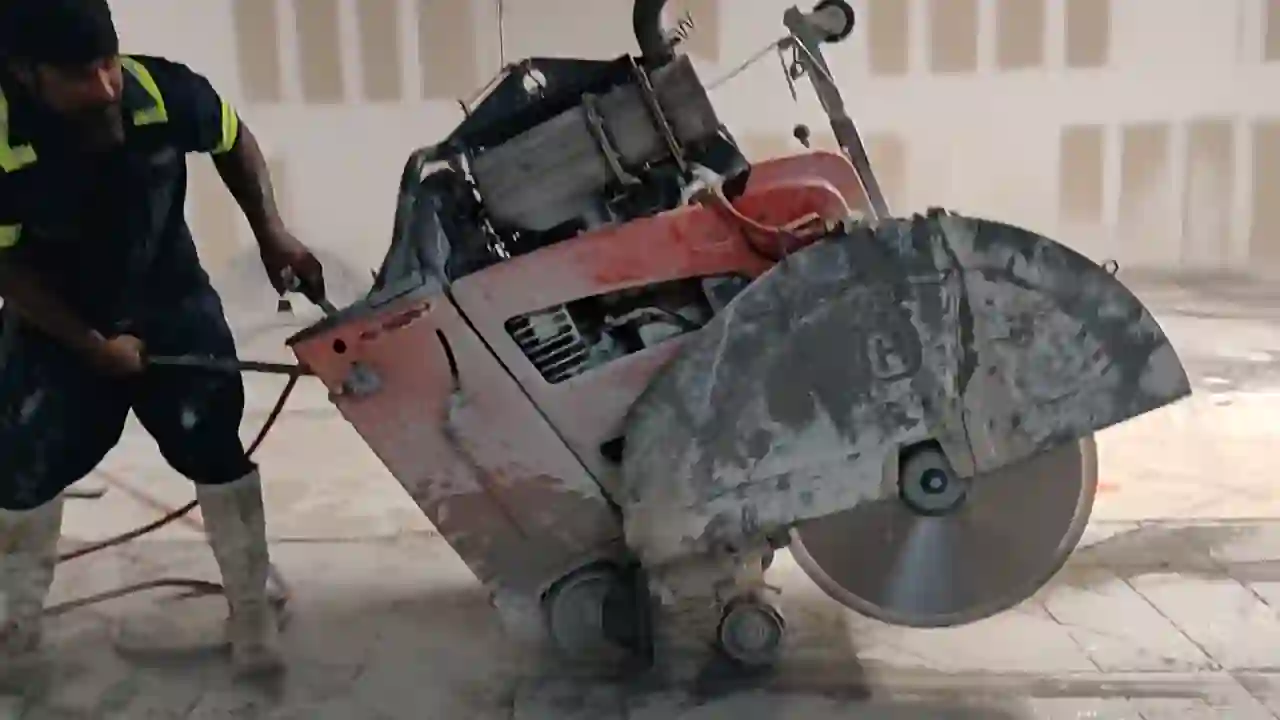
For larger demolition and precision cutting scopes where hacksaw work is one component of a broader concrete removal operation, reviewing the technical standards applied on Florida coastal infrastructure projects provides useful benchmarks for integrated site safety planning. The scale differs, but the hazard control logic is directly transferable to smaller rebar cutting tasks.
Pre-Task Safety Briefing Structure Every Foreman Should Run Before Hacksaw Rebar Work Begins
A pre-task safety analysis (PTSA) is the administrative control that ties all physical hazard controls together. For hacksaw rebar cutting, the foreman’s briefing should cover seven specific points:
- Confirm PPE compliance — glasses, gloves, boots, hard hat verified on every worker in the cutting zone.
- Identify the blade specification in use — confirm bi-metal, correct TPI for bar size, and verify tension before work starts.
- Establish the exclusion zone — no non-essential personnel within 10 feet of the cutting station during active cutting.
- Review workpiece securing method — clamps, supports, and operator positioning confirmed for each specific cut.
- Identify the waste collection point — every worker knows where cut sections go immediately after separation.
- Establish rotation schedule — worker rotation intervals assigned before the task starts, not improvised mid-shift.
- Identify nearest first aid resources — laceration treatment supplies and the location of the nearest emergency contact are confirmed verbally.
This briefing takes under five minutes. It creates shared situational awareness, establishes accountability, and provides documented evidence of hazard communication if an incident occurs. Landscaping and site preparation contractors who incorporate rebar cutting into grading or retaining wall work are equally subject to these requirements and should not treat the task as outside their safety management scope.
When to Stop Using a Hacksaw and Call for the Right Tool
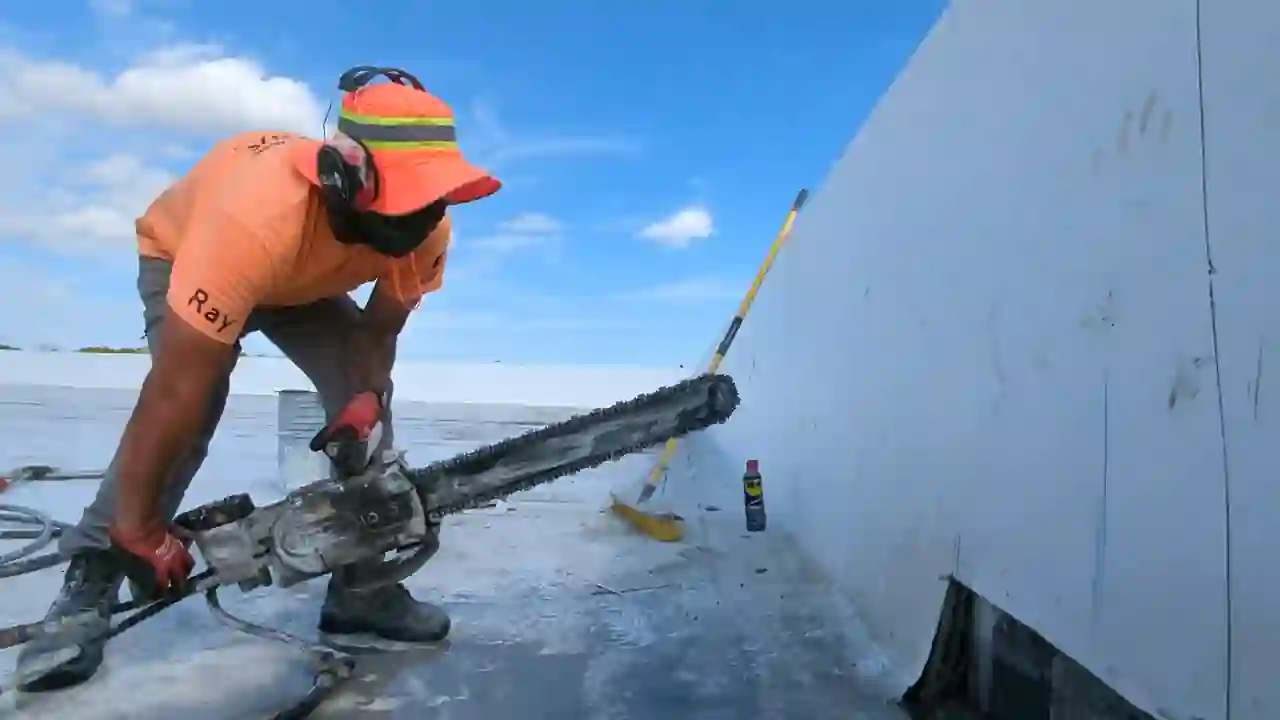
A hacksaw is appropriate for isolated cuts on #4 or #5 bar in accessible locations with adequate workpiece support. It is not appropriate for high-volume cutting, for bars larger than #6 under sustained field conditions, or for any situation where the workpiece cannot be adequately secured. Attempting to force a hacksaw through conditions it was not designed for multiplies every hazard described above. Blade failure rates increase, operator fatigue accelerates, and cut quality degrades — which means more strokes, more exposure time, and more risk.
Recognize the threshold and call for the correct tool. Battery-powered reciprocating saws with bi-metal blades, portable band saws, or hydraulic rebar cutters all offer faster, safer solutions when volume or bar size exceeds what a hacksaw can handle responsibly. The right tool decision is itself a safety protocol — and it is one that experienced, OSHA-compliant crews make before the first blade touches steel, not after the third broken blade of the morning.