Why Saw Cut Concrete Operations Carry the Highest On-Site Risk Profile in Concrete Work
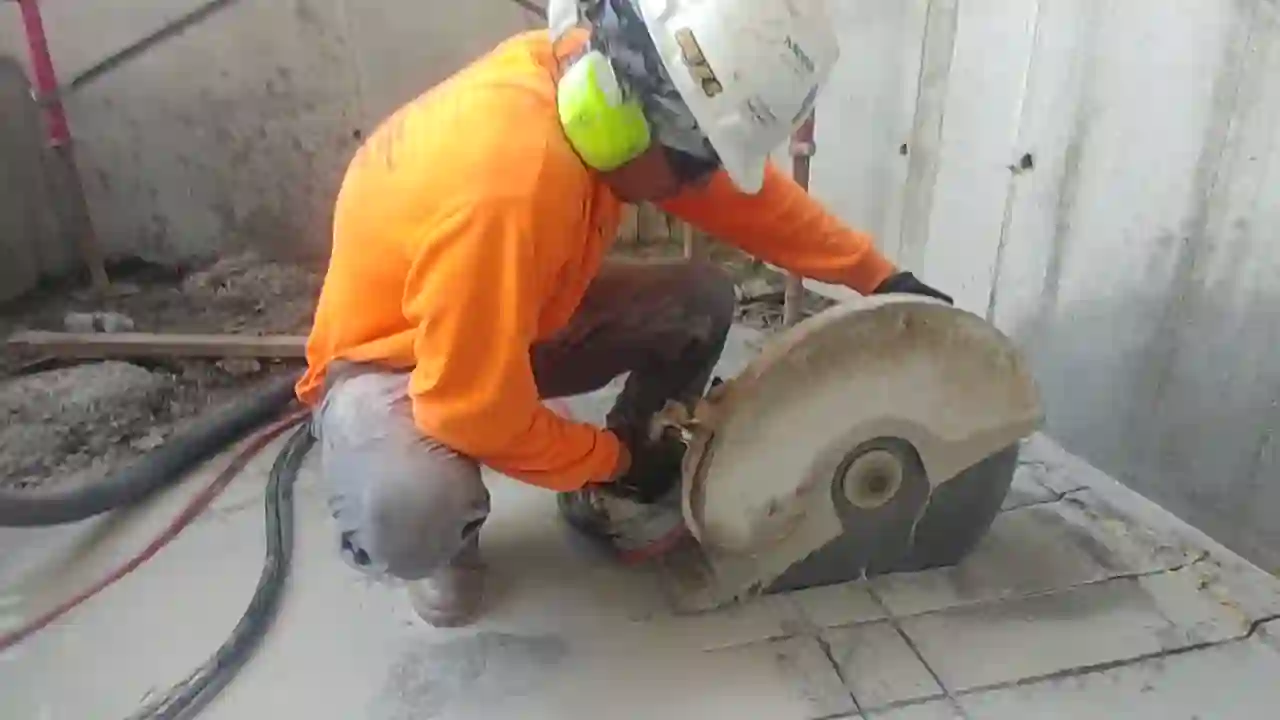
Walk onto any active concrete cutting job in Miami-Dade County and you’ll find a controlled environment — or you’ll find a liability waiting to happen. Saw cutting concrete sits at the intersection of high-speed rotating equipment, crystalline silica generation, subsurface utility exposure, and wet electrical hazards. It is, without question, the most regulation-dense task in the concrete trades. OSHA’s 29 CFR 1926.1153 — the silica standard for construction — combined with the agency’s general duty clause creates a compliance framework that demands pre-task planning, engineered controls, and documented crew training before a single blade makes contact with a slab. This post breaks down what that looks like in practice, from the moment equipment arrives on site to final slurry disposal.
Pre-Cut Hazard Assessment and Site Scanning Requirements
No saw blade should ever touch a concrete surface until a comprehensive subsurface scan has been completed and documented. Ground-penetrating radar (GPR) scanning is the industry standard for identifying post-tension cables, rebar mats, conduit runs, and embedded utilities before saw cutting begins. In Miami’s aging infrastructure — particularly in Brickell, Downtown, and the older industrial corridors of Hialeah — encountering unmarked electrical conduit or pressurized water lines during a blind cut is a genuine, documented risk.
Beyond GPR, the pre-task hazard assessment must address the following site-specific conditions:
- Overhead clearance — Verify no electrical lines, HVAC ductwork, or sprinkler systems fall within the operational swing radius of the saw or operator.
- Floor load capacity — Walk-behind slab saws with water tanks can exceed 800 lbs. Confirm structural load ratings before positioning equipment, especially on elevated decks.
- Proximity to open excavations — Vibration from saw cutting can destabilize trench walls. Maintain minimum setback distances per OSHA 29 CFR 1926 Subpart P.
- Wet surface conditions — Miami’s humidity and frequent rain events create standing water hazards. All electrical equipment must be GFCI-protected without exception.
- Traffic and pedestrian exposure — Urban saw cutting operations require barricading, signage, and in many cases, flagging personnel per FDOT and Miami-Dade right-of-way standards.
For a deeper look at how we structure our site operations to front-load hazard identification, our operational protocols reflect years of field-tested refinement across South Florida’s most complex job environments.
Crystalline Silica Exposure Controls That Actually Meet OSHA Table 1 Standards
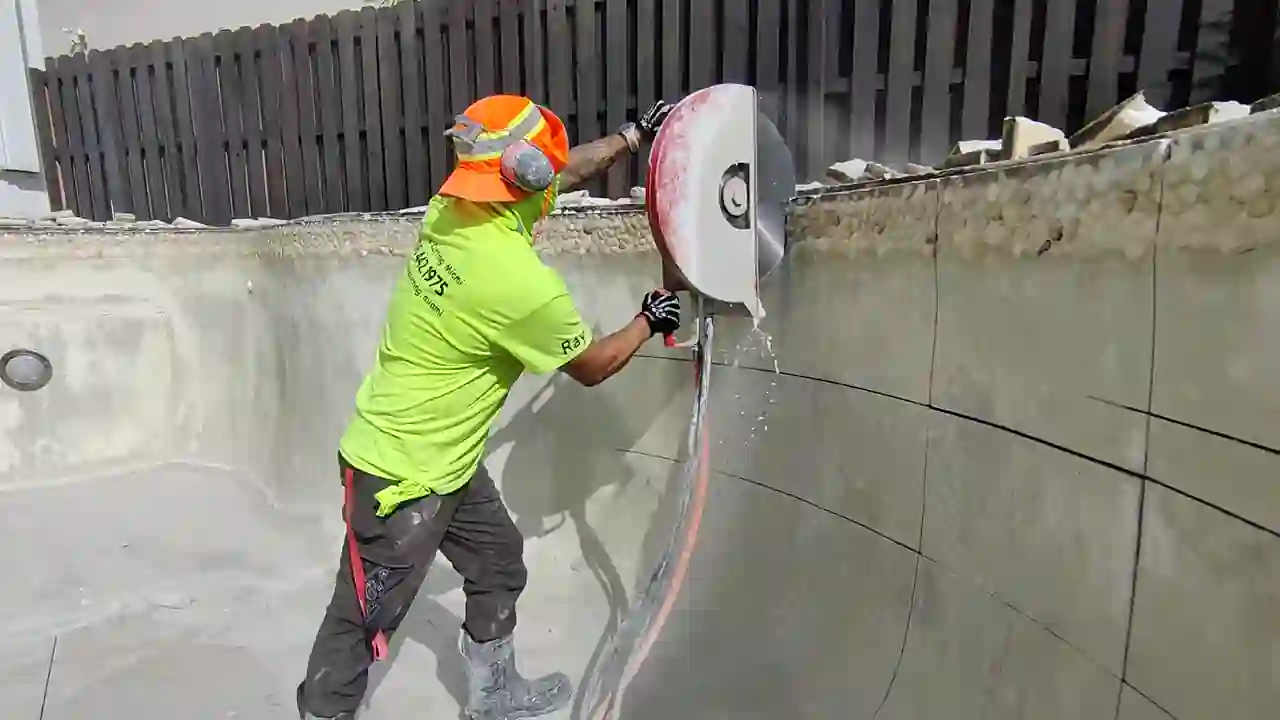
Respirable crystalline silica (RCS) is the single most regulated hazard in saw cut concrete operations. OSHA’s Table 1 for construction is explicit — wet cutting with a blade-mounted water delivery system is the required engineering control for handheld and walk-behind saws. There is no compliant alternative that substitutes PPE alone. A half-face respirator with P100 cartridges is a supplemental control, not a primary one.
Here’s what a fully compliant silica control program looks like for saw cutting operations:
- Water flow rate verification — The water delivery system must supply a minimum of 0.5 gallons per minute at the blade contact point, confirmed with a flow meter before each shift. Insufficient flow does not suppress silica to permissible exposure limits (PEL of 50 µg/m³ as an 8-hour TWA).
- Slurry containment and collection — Wet cutting generates silica-laden slurry that cannot be allowed to enter storm drains, which is both an OSHA and EPA Clean Water Act violation. Portable berms, wet vacuums with HEPA filtration, and slurry solidification agents are required on every wet-cut job.
- Designated competent person — OSHA requires a designated competent person to implement the Written Exposure Control Plan (WECP). This individual must be able to identify foreseeable silica hazards and has authority to take corrective action immediately.
- Medical surveillance triggers — Any employee exposed above the action level (25 µg/m³ as an 8-hour TWA) for 30 or more days per year must be enrolled in OSHA’s medical surveillance program, including periodic chest X-rays and pulmonary function testing.
Proper waste management of silica slurry is not optional — it’s a dual-agency compliance requirement that carries significant civil penalties when ignored.
Diamond Blade Selection and Mechanical Safety for High-Speed Saw Cutting
Blade failure during saw cutting is a catastrophic event. A 14-inch diamond blade spinning at 5,000 RPM carries kinetic energy sufficient to cause fatal injury to anyone within a 50-foot radius if it segments or shatters. Blade selection, inspection, and mounting are not administrative tasks — they are safety-critical mechanical operations.
Key mechanical safety requirements for saw cut concrete operations include:
- RPM rating verification — Every blade must have a maximum RPM rating that meets or exceeds the saw’s no-load speed. Never mount an underrated blade. Check the blade’s core stamp and the saw’s published speed specifications before every installation.
- Pre-use blade inspection protocol — Inspect for segment loss, core cracks, gullet cracks, and warping. Any blade showing segment height variance greater than 1mm across the perimeter should be pulled from service immediately.
- Arbor fitment and flange torque — Improper arbor fit causes eccentric rotation that accelerates segment stress. Flanges must be clean, flat, and torqued to manufacturer specification. Never use a blade adapter that changes the arbor bore without manufacturer approval.
- Guard integrity — OSHA 29 CFR 1926.304 requires blade guards that cover the unused portion of the blade. Removing or defeating guards is a willful violation carrying penalties up to $156,259 per incident under current OSHA penalty structures.
Our diamond tooling and equipment resources cover blade selection matrices for Miami’s varied concrete mix designs, from high-PSI marine-grade slabs to lightweight aggregate decks common in mid-rise residential construction.
Personal Protective Equipment Standards Specific to Saw Cutting Environments
PPE for saw cutting goes well beyond a hard hat and safety glasses. The hazard profile — rotating blades, silica dust, noise, water, and potential utility strike — demands a layered PPE approach that addresses each exposure vector independently.
- Hearing protection — Walk-behind slab saws routinely generate 100–110 dB at the operator position. OSHA’s hearing conservation standard (29 CFR 1910.95) requires dual protection (earplugs plus earmuffs) above 105 dB.
- Eye and face protection — Safety glasses alone are insufficient. A full-face shield rated for high-velocity impact (ANSI Z87.1) is required when operating within the blade’s debris ejection arc.
- Cut-resistant gloves — Blade handling during changes requires ANSI A6 or higher cut-resistance rating. Standard leather gloves do not meet this threshold.
- Respiratory protection — As noted, a half-face respirator with P100/OV combination cartridges is the minimum supplemental respiratory protection when wet cutting systems are in use. In dry-cut scenarios — which should be exceptional and documented — a powered air-purifying respirator (PAPR) with HEPA filtration is required.
- High-visibility apparel — Any saw cutting operation adjacent to vehicle traffic requires ANSI Class 2 or Class 3 high-visibility vests per MUTCD standards adopted by FDOT.
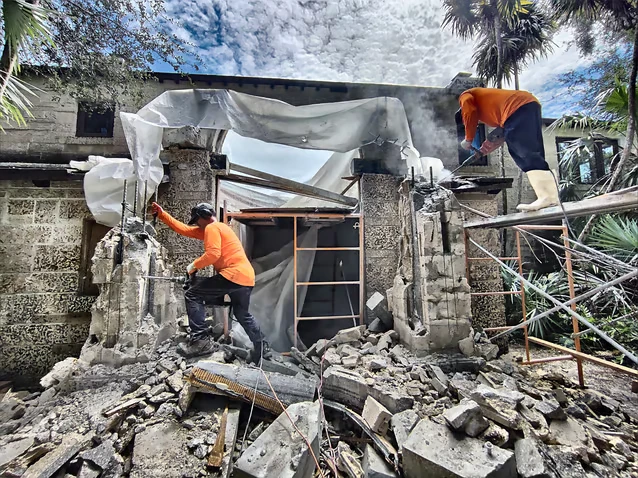
For projects involving concrete removal in Miami, the PPE matrix expands further to include fall protection, respiratory upgrade for demolition dust, and impact-resistant footwear rated for falling concrete debris.
Post-Cut Protocols Including Slurry Disposal and Site Restoration
The job isn’t done when the blade stops spinning. Post-cut protocols are where many contractors accumulate their most significant OSHA and environmental violations — not because they’re careless, but because they’re under-trained on what the regulatory requirements actually demand after the cut is complete.
Silica slurry generated during wet cutting must be treated as a regulated waste material. In Miami-Dade County, discharge to stormwater infrastructure is prohibited under both county ordinance and the National Pollutant Discharge Elimination System (NPDES) permit framework. Compliant disposal requires:
- Solidification of wet slurry using Portland cement, diatomaceous earth, or commercial solidification agents to achieve a non-liquid consistency for landfill acceptance.
- Manifested disposal at a licensed construction and demolition debris facility — not standard municipal solid waste streams.
- Documentation retained for a minimum of three years as part of the project’s environmental compliance record.
Beyond slurry, the cut area must be evaluated for structural integrity before any loading resumes. Saw cuts that penetrate post-tension tendons require immediate engineering review — the tendon must be assessed for stress loss and the structural engineer of record must sign off before the floor is returned to service. This is non-negotiable and non-delegatable.
Staying current on concrete safety in Miami means understanding that the regulatory environment here is shaped by both federal OSHA standards and Florida-specific environmental mandates that often exceed federal minimums.
Building a Culture of Compliance That Outlasts Any Single Project
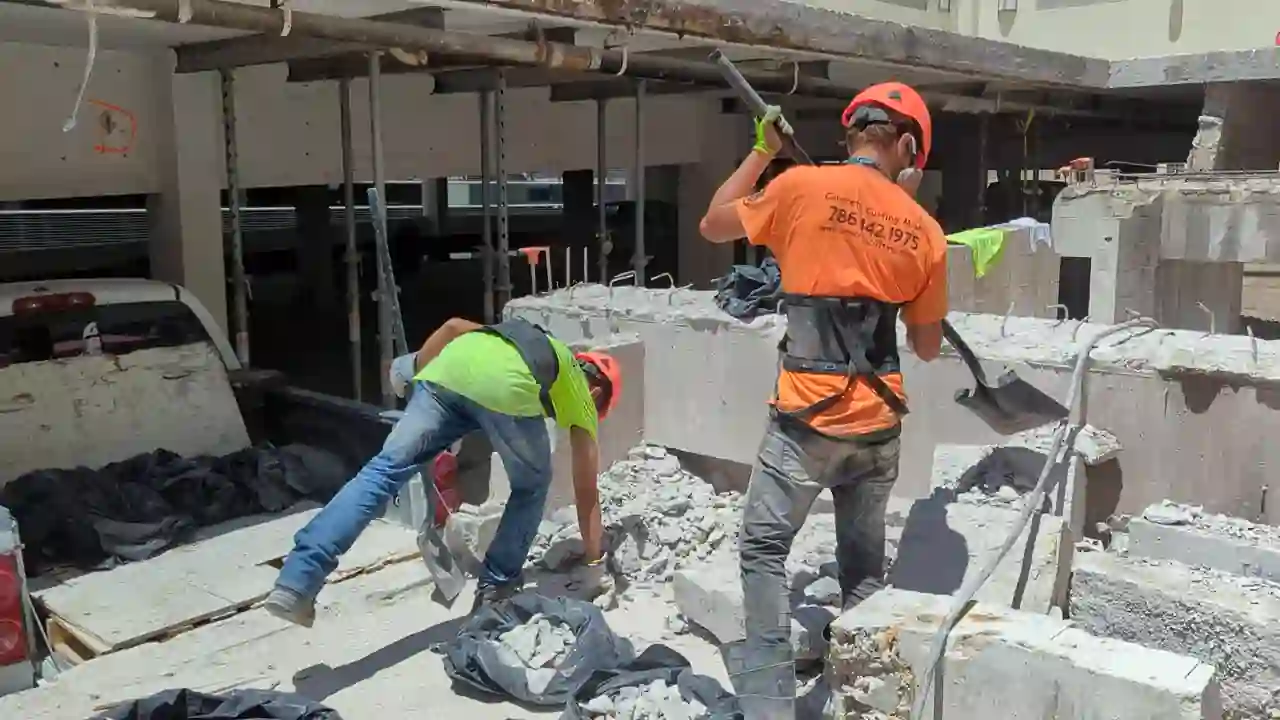
Safety in saw cut concrete operations isn’t a checklist you complete before the inspector shows up — it’s a set of ingrained behaviors that your crew executes automatically because they understand the consequences of not doing so. The best-performing concrete cutting crews in South Florida share one characteristic: their safety culture is built from the top of the organization down, not imposed from the bottom up by regulatory pressure.
That means investing in documented crew training, maintaining calibrated equipment, conducting pre-task planning on every job regardless of size, and treating every saw cut — whether it’s a 20-foot expansion joint in a parking garage or a precision utility penetration in a hospital floor — with the same level of technical discipline. The hazards don’t scale with the size of the project. A blade failure on a small residential job is just as catastrophic as one on a commercial site.
Concrete Cutting Miami, LLC operates under a full Written Exposure Control Plan, maintains OSHA 30-certified supervision on all active job sites, and documents every pre-task hazard assessment as a permanent project record. When you hire a crew that treats compliance as a competitive advantage rather than an administrative burden, you get better outcomes — safer workers, cleaner sites, and projects that close without incident reports.