Why Rebar Density in Miami Changes Everything About Blade Selection
Miami’s reinforced concrete is not average reinforced concrete. Between hurricane wind-load requirements under Florida Building Code Section 1609, coastal corrosion-resistance specs that push engineers toward epoxy-coated and stainless rebar, and the sheer volume of post-tension and mat-slab construction dominating the high-rise corridor from Brickell to Edgewater, the rebar density per cubic yard in a typical Miami pour is significantly higher than what you’d encounter in a standard mid-market commercial build in the interior Southeast. That matters enormously when you’re selecting diamond tooling, configuring your saw, and planning blade life per linear foot of cut. Getting this wrong doesn’t just cost you a blade — it costs you a day.
Diamond Segment Bond Hardness and What It Actually Means for Rebar Contact
The single most misunderstood specification in diamond blade selection is bond hardness, and it becomes critical the moment your blade starts cycling through rebar. Diamond segments are held in a metallic matrix — the bond — that wears away to expose fresh diamond crystals as cutting progresses. The hardness of that bond is rated on a scale that most manufacturers express as soft, medium, or hard, though the underlying metallurgy varies significantly between suppliers.
For rebar-heavy Miami slabs, the instinct is often to reach for a hard bond blade because rebar is an abrasive material. That instinct is wrong. Rebar is hard and tough, not abrasive in the way that aggregate is abrasive. A hard bond blade in a rebar-dense matrix will glaze over — the bond won’t release fast enough to expose new diamonds, and you’ll be riding a polished, non-cutting segment face through steel and concrete simultaneously. The blade heats, the gullets clog, and you’re done long before you should be.
The correct specification for cutting through reinforced Miami slabs with #5 through #9 rebar is a medium-soft to medium bond with a diamond concentration in the 25–35 range (using the industry standard where 100 concentration equals 4.4 carats per cubic centimeter). This bond releases fast enough to keep fresh diamonds exposed as the segment contacts rebar, while still maintaining structural integrity through the harder limestone aggregate common in South Florida concrete mixes.
Segment Height, Kerf Width, and Cooling Geometry for Rebar Cutting
Segment height matters more than most operators acknowledge. For production flat sawing through rebar-reinforced slabs in Miami — think parking garage decks, bridge approach slabs, and post-tension residential podiums — a segment height of 15mm to 20mm provides the depth reserve needed to sustain blade life across multiple cuts without resharpening stops. Shorter segments on rebar-dense cuts will burn through your usable diamond layer in a fraction of the time.
Kerf width is a function of blade plate thickness plus segment overhang, and for rebar cutting it should be generous enough to allow adequate water flow through the cut. A minimum kerf of 0.140 inches on blades in the 14-inch to 18-inch diameter range is the practical floor for wet cutting in Miami’s climate. Tighter kerfs restrict the water column, which is your primary cooling mechanism when rebar contact spikes the thermal load on the segment. In Miami’s ambient temperatures — regularly above 90°F on a job site — inadequate water flow translates directly to segment delamination and core stress fractures.
Gullet design is the third geometry variable. Deep, wide gullets with a minimum gullet depth-to-blade-diameter ratio of 1:10 are non-negotiable for rebar cutting. The gullets need to evacuate the slurry generated by simultaneous concrete and steel cutting, which is denser and more viscous than pure concrete slurry. Blocked gullets cause the blade to ride on material rather than cut through it, generating heat and lateral stress that will warp a blade plate in minutes.
Equipment Specifications for Flat Sawing Rebar-Dense Slabs in South Florida
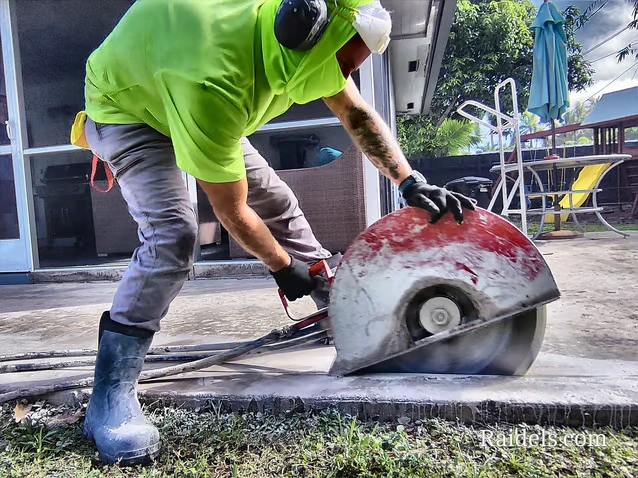
Blade selection is only half the equation. The saw driving that blade has to be configured correctly for rebar work, and Miami’s job conditions — tight urban sites, indoor parking structures, elevated slabs — add constraints that shape equipment choices significantly. For more on how advanced equipment is reshaping urban concrete work in this market, see our overview of advanced concrete cutting and demolition solutions in Miami.
Horsepower-to-Blade-Diameter Ratios for Sustained Rebar Contact
A 14-inch diamond blade cutting through a slab with continuous #6 rebar on 12-inch centers needs a minimum of 20 horsepower at the blade shaft to maintain consistent RPM under load. Undersized saws will bog down the moment the segment contacts rebar, causing the blade to stall and drag rather than cut. That’s a glazing event waiting to happen. For 18-inch blades — the standard for cutting 6-inch to 8-inch structural slabs in Miami high-rise construction — the minimum is 35 horsepower, with 40–50 HP preferred for sustained production cuts.
Blade RPM at the shaft for rebar cutting should target the manufacturer’s specified peripheral speed, typically in the range of 4,500 to 5,500 surface feet per minute for blades in the 14-to-20-inch range. Running below this threshold reduces cutting efficiency and increases the risk of segment loading. Running above it generates excess heat and can exceed the tensile rating of the blade core, particularly in older equipment with worn arbor bearings that introduce lateral runout.
Water Flow Rates and Pump Specifications for Miami Conditions
Water is not optional in rebar cutting. It is a functional cutting parameter. The minimum water flow for a 14-inch blade on a rebar-dense cut is 1.5 gallons per minute, delivered directly to both sides of the blade at the cut entry point. For 18-inch and larger blades, increase that to 2.5–3.5 GPM. In Miami’s heat, ambient temperatures elevate the baseline thermal load on the blade before the first cut is made — factor in a 10–15% increase in water flow over inland job specifications during summer months.
Pump pressure should maintain consistent delivery without pulsing. Pulsing water flow creates thermal cycling on the segment — heat spike, cool, heat spike — that accelerates micro-fracturing of the diamond matrix. A centrifugal pump with a pressure-regulated output in the 30–50 PSI range at the blade guard nozzle is the correct specification. This is also why gravity-feed water systems are inadequate for production rebar cutting; they cannot maintain consistent pressure as the water level drops.
Wall Sawing Rebar in Miami Vertical Applications
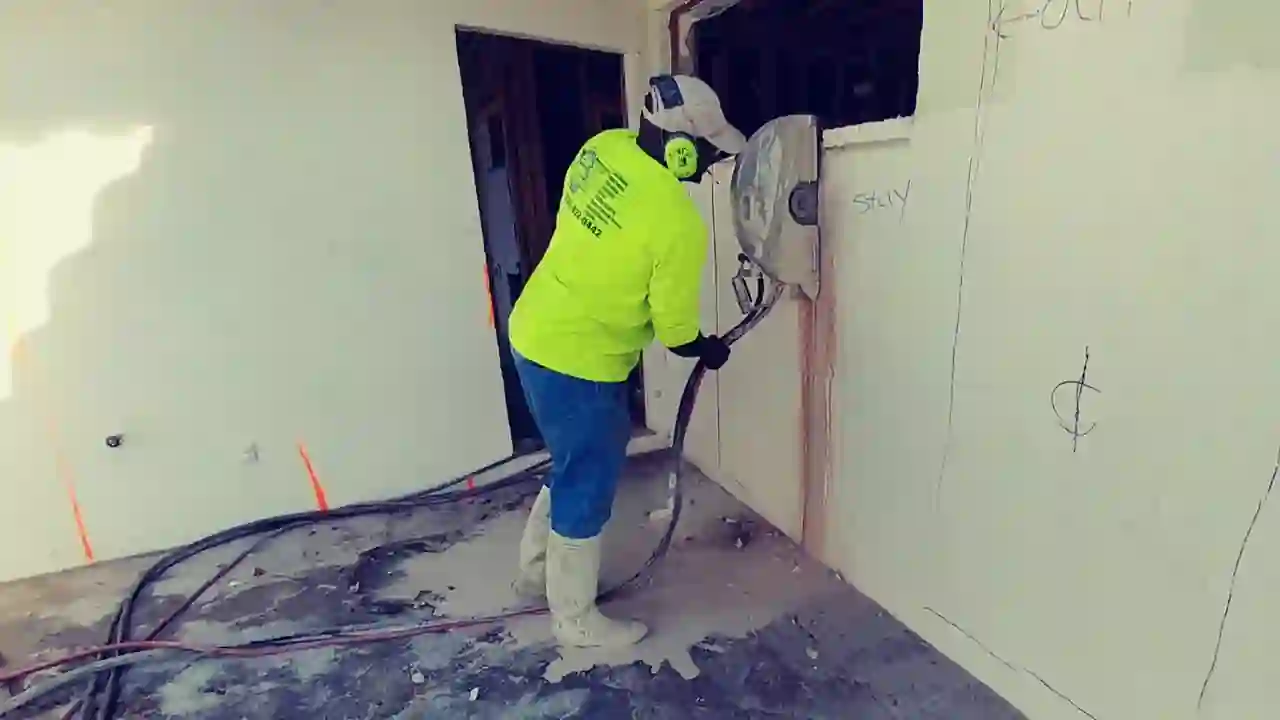
Vertical cuts through reinforced shear walls and core walls in Miami’s high-rise construction present a distinct set of tooling challenges. The blade is running vertically, water management is gravity-dependent, and rebar in shear walls is often placed in two-layer grids with #8 or #10 bars on 6-inch centers — some of the most aggressive rebar configurations you’ll encounter in any market. Our wall sawing Miami resource covers the operational side of these cuts in more detail.
For wall sawing through this density of reinforcement, blade specification shifts toward a segmented turbo-style rim with laser-welded segments rated for steel contact. The turbo geometry creates additional turbulence in the water film at the cut face, improving cooling on vertical passes where gravity works against water retention at the blade-material interface. Blade diameter selection for wall sawing is driven by cut depth — for walls up to 18 inches thick, a 24-inch blade on a track-mounted wall saw with a minimum 18 HP hydraulic motor is the baseline specification.
Coring Through Rebar and the Diamond Bit Specifications That Hold Up
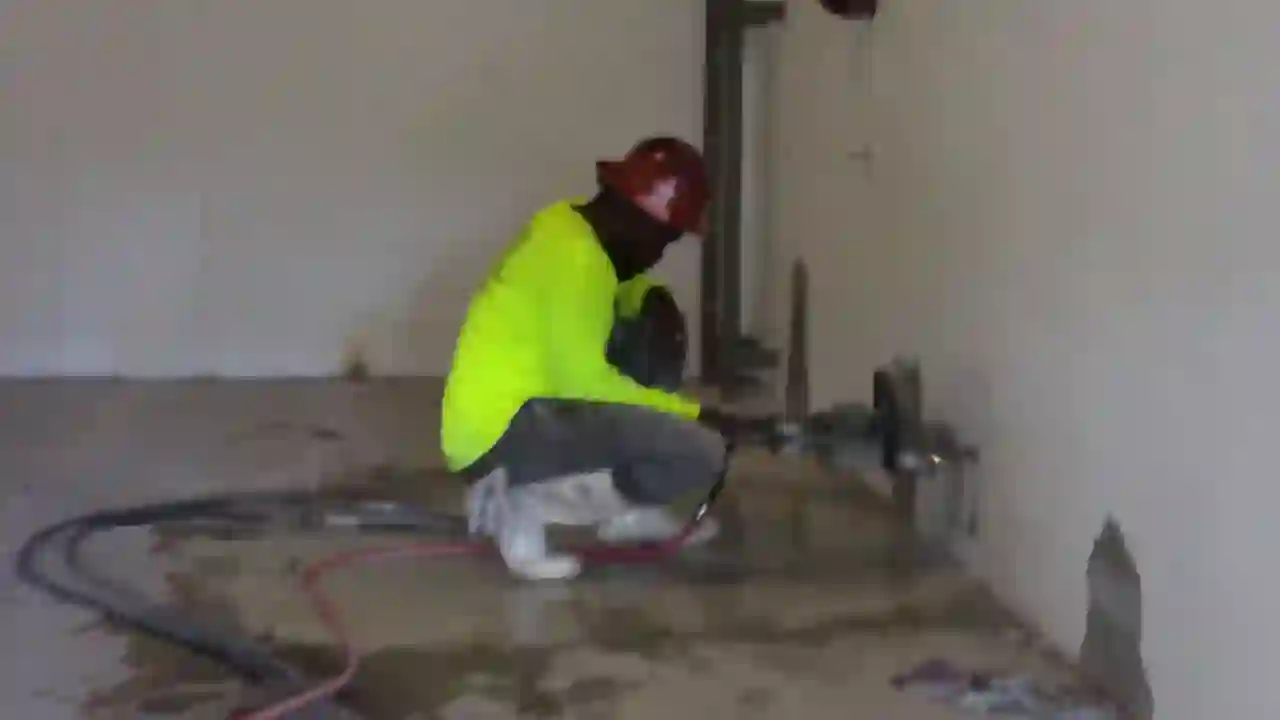
Core drilling through rebar in Miami is a daily reality on any active construction or renovation site, and the tooling specifications diverge sharply from flat sawing. Diamond core bits for rebar-intercepting holes need a soft to medium-soft bond with a high diamond concentration (35–45 range) and a segment geometry that allows the bit to transition smoothly between concrete aggregate and rebar contact without stalling. For technical detail on coring applications across Miami’s reinforced structures, see our resource on concrete coring.
Bit wall thickness for rebar-dense coring should be specified at a minimum of 0.160 inches for bits up to 6 inches in diameter, increasing proportionally for larger diameters. Thin-wall bits designed for clean aggregate coring will deform under rebar contact torque, particularly in the 3-to-6-inch diameter range where the bit has limited structural rigidity. Water flow through the bit barrel — the primary cooling path in coring — should be maintained at 0.5 to 1.0 GPM with a flush system that prevents slurry from packing in the barrel above the cut.
For post-tension slab environments specifically, where coring carries the added risk of intercepting stressed tendons, the tooling and procedural requirements are even more stringent. Our detailed breakdown of post-tension slab cutting and coring covers the GPR scanning protocols and blade path planning that precede any cut in these high-risk slabs.
Matching Blade Life Expectations to Miami Rebar Conditions
Blade life on rebar-heavy Miami cuts will always be shorter than manufacturer estimates based on aggregate-only concrete. A realistic expectation for a quality 14-inch diamond blade on a slab with #5 rebar at 12-inch centers in 4,000 PSI concrete is approximately 120 to 160 linear feet per blade under correct operating conditions — adequate water, correct RPM, appropriate feed rate. Push the feed rate to compensate for a slow cut and that number drops to 80 feet or less, often with visible segment damage.
Track blade performance by linear feet cut per blade, not by hours of operation. Rebar contact is intermittent and intense, and hour-based metrics will consistently mislead you on consumable costs and job scheduling. Keeping a cut log per blade per job is the only way to build accurate cost-per-linear-foot data for rebar-dense Miami work — data that directly informs competitive bidding and prevents the margin erosion that comes from underestimating consumable burn rates on heavily reinforced pours.
The bottom line is this: rebar in Miami is a specification problem before it is an operational problem. Get the bond hardness, segment geometry, horsepower, and water flow right before the blade touches concrete, and the cut takes care of itself. Show up with the wrong tooling and no amount of operator skill recovers the situation.