Why Concrete Drilling in Clearwater Demands a Different Level of Technical Scrutiny
Clearwater’s construction environment is not forgiving. You’re dealing with coastal humidity, salt-laden air, aging post-tension slabs in beachfront condos, and a mix of residential and commercial structures that span decades of building codes. When you bring in a concrete drilling company for any project — whether it’s anchor bolt placement, utility penetrations, HVAC sleeve installations, or structural core sampling — the margin for error is essentially zero. A misaligned bore through a post-tension tendon doesn’t just create a repair bill. It can compromise structural integrity and trigger a cascade of liability that no general contractor wants to navigate. This guide is built to give you a systematic, technically grounded framework for selecting, vetting, and working with a concrete drilling company in Clearwater that actually knows what they’re doing.
Step One — Verify Diamond Core Drilling Capabilities Before Anything Else
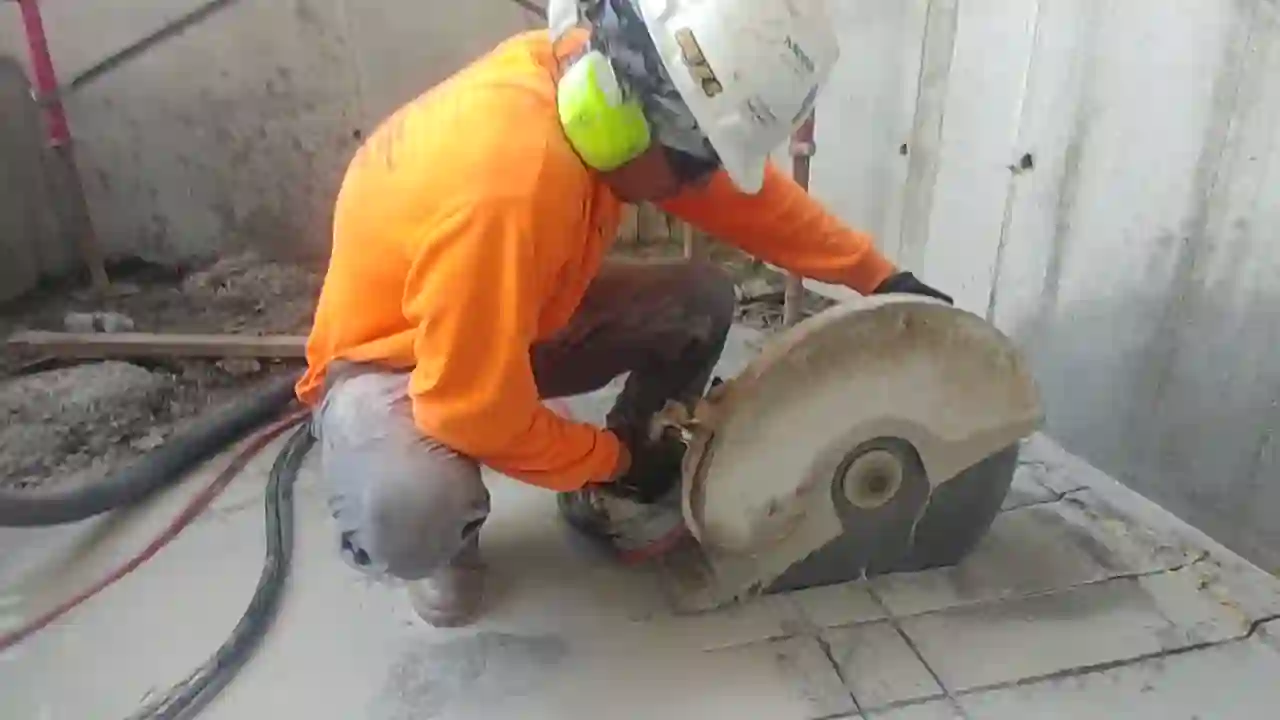
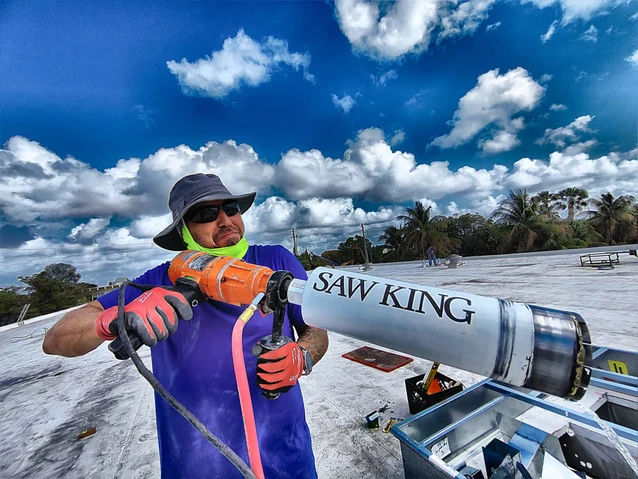
The first technical checkpoint is equipment. Not every company that calls itself a concrete drilling outfit actually operates professional-grade diamond core drilling systems. You want to see wet-core drilling rigs capable of handling diameters from 1-inch pilot holes all the way up to 36-inch large-diameter cores. The drill motor should be a two-speed or variable-speed unit with torque ratings appropriate for reinforced concrete — typically 1,000 to 2,000 RPM at the low end for large cores, and up to 4,000 RPM for small-diameter anchor bores.
Ask specifically about their bit inventory. A serious Clearwater drilling company will stock diamond segments with bond hardness matched to local aggregate types. Florida limestone aggregate — common in older Clearwater structures — is softer than granite-aggregate concrete found in northern states. Drilling through it with a hard-bond bit causes glazing, where the diamonds stop exposing fresh cutting edges and the bit essentially polishes rather than cuts. A competent driller knows to use a softer matrix bond in these conditions and can explain why without prompting.
GPR Scanning Integration — Non-Negotiable for Clearwater Post-Tension Structures
Any drilling company operating in Clearwater’s condo and commercial corridor that doesn’t offer or coordinate Ground Penetrating Radar scanning before drilling is a company you walk away from immediately. Post-tension cables run through a significant percentage of elevated slabs and parking decks in this region. Severing one is not a recoverable mistake on-site. GPR scanning at 1.6 GHz frequency provides resolution down to approximately 1 inch, which is sufficient to map tendon locations, rebar grids, conduit runs, and embedded utilities before a single bit touches the slab surface. Confirm whether the drilling company has in-house GPR capability or a vetted subcontract relationship with a scanning crew, and ask to see a sample scan report before committing.
Step Two — Evaluate Their Slurry Management and Water Control Protocols
Wet-core drilling produces slurry — a mixture of water, concrete fines, and diamond swarf — and how a company handles that slurry tells you everything about their professionalism and regulatory awareness. In Clearwater, stormwater ordinances are enforced, and concrete slurry entering a storm drain is an environmental violation with real consequences. A qualified drilling company will arrive with vacuum extraction systems, containment berms, and a slurry disposal plan that keeps waste off the slab surface and out of drainage systems.
On interior jobs, this matters even more. Uncontrolled slurry migration damages flooring finishes, infiltrates wall cavities, and creates silica dust hazards when it dries and gets disturbed. OSHA’s silica standard (29 CFR 1926.1153) requires engineering controls for concrete drilling operations, and wet methods combined with HEPA-filtered vacuum extraction are the primary compliance pathway. If a drilling company shows up without wet vacuum capability for interior work, they’re exposing you to both OSHA liability and property damage claims.
Anchor Drilling Tolerances and Epoxy Injection Compatibility
Structural anchor installations — whether for holdowns, curtain wall attachments, or mechanical equipment pads — require drilling tolerances that many general contractors underestimate. The annular clearance between a drilled hole and an anchor rod must fall within the adhesive manufacturer’s specified range, typically 1/16 to 1/8 inch oversize depending on the epoxy system. Drill too tight and the adhesive can’t develop full bond area. Drill too loose and the anchor becomes eccentric under load. Ask your drilling company what tolerance control process they use, and whether their equipment is calibrated for depth stops when blind-hole epoxy anchors are specified. This is the kind of technical question that separates crews who drill structural anchors correctly from those who just drill holes.
For more on how cutting and drilling intersect with pipeline and utility work, the technical breakdown at concrete cutting for pipelines — safety protocols every Miami contractor must follow is worth reviewing before your pre-construction meeting.
Step Three — Understand How Drilling Costs Are Actually Structured in This Market
Concrete drilling pricing in Clearwater is not linear. A company quoting a flat per-hole rate without knowing your slab thickness, reinforcement density, concrete compressive strength, or access conditions is giving you a number that will change the moment they mobilize. Legitimate drilling contractors price based on core diameter, depth, concrete hardness (often estimated from compressive strength data on the structural drawings), and site conditions that affect setup time.
Mobilization charges are real and justified — drilling rigs, vacuum systems, water supply, and scanning equipment don’t move for free. Expect a mobilization floor even for small jobs, and factor it into your per-unit cost analysis when comparing bids. If you’re managing a multi-phase project, negotiate a standing mobilization agreement that covers multiple drill dates under a single fee structure. For a detailed look at how contractors in this region build their bids, the analysis at what slab sawing actually costs in Miami and how contractors build their bids gives you the framework you need to read a drilling quote intelligently.
Specialty Applications — Large Diameter Coring for MEP Penetrations
Mechanical, electrical, and plumbing penetrations through concrete floors and walls are among the most common drilling applications in Clearwater’s commercial retrofit market. Core sizes from 4 inches up to 24 inches are standard for ductwork sleeves, pipe chases, and conduit bundles. At these diameters, the drilling rig must be anchor-mounted to the slab surface — handheld or stand-mounted rigs simply cannot control the torque reaction. The anchor point itself must be engineered to avoid the same post-tension and rebar conflicts the core is trying to avoid. A qualified crew runs GPR, marks exclusion zones, selects an anchor location, drills the anchor pilot, installs the rig, then proceeds with the production core. That sequence is non-negotiable on any slab with unknown or complex reinforcement.
Related technical content on cement slab cutting methods and considerations around soil compaction beneath slabs can help you understand how subsurface conditions affect drilling stability, particularly on grade-level slabs over compacted fill.
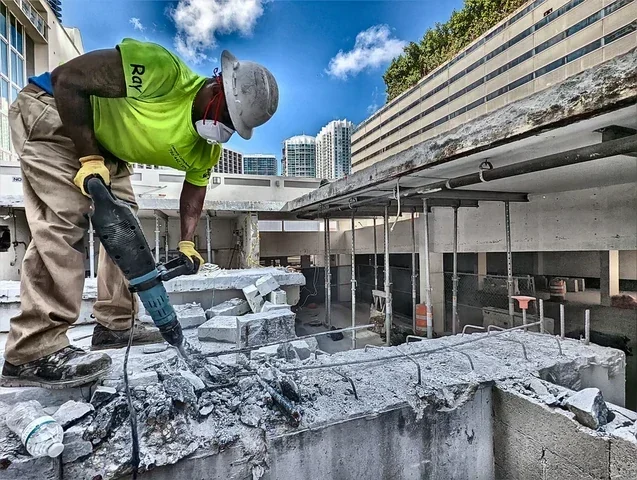
Step Four — Confirm Licensing, Insurance, and Florida-Specific Compliance
In Florida, concrete drilling performed as part of a construction project falls under the contractor licensing requirements administered by the Department of Business and Professional Regulation. Depending on the scope, the drilling company may need a specialty contractor license or operate under the license of the general contractor. Verify their license status directly through the DBPR online portal — do not accept a copy of a license card as sole verification. Insurance requirements should include general liability with a minimum $1 million per occurrence limit and workers’ compensation covering all field employees. Clearwater commercial projects often require additional insured endorsements naming the property owner and GC, so confirm this before the contract is signed.
If your project involves pool demolition or deck penetrations around aquatic structures, the technical demands increase significantly. The pool demolition resource library covers the structural and drainage considerations that affect drilling operations in those environments.
Red Flags That Should End the Conversation Immediately
- No GPR scanning offered or coordinated — unacceptable on any slab with post-tension or unknown reinforcement
- Flat per-hole pricing with no site assessment — indicates a crew that doesn’t understand variable concrete conditions
- No written slurry disposal plan — environmental and OSHA liability risk that falls on you
- Cannot specify bit bond hardness for local aggregate — signals lack of technical training in Florida concrete conditions
- Unverifiable license or lapsed insurance — walk away without exception
- No depth stop capability for blind-hole anchor installations — structural anchor performance will be compromised
- Rig setup without slab anchor on large-diameter cores — safety and accuracy failure waiting to happen
Getting the Most Out of Your Drilling Crew Once You’ve Hired Them
The best concrete drilling companies in Clearwater perform better when you give them complete information upfront. Provide structural drawings, post-tension shop drawings if available, MEP coordination drawings showing penetration locations, and any existing GPR scan data from previous work on the structure. Hold a pre-drill walkthrough with the crew lead, confirm all core locations are marked and verified, and establish a communication protocol for what happens if the bit encounters unexpected conditions — embedded conduit, a rebar cluster in the bore path, or anomalous concrete hardness that suggests a cold joint or aggregate pocket. A professional crew will stop, document, and consult rather than push through. That’s the behavior you’re paying for.
Concrete drilling in Clearwater done right is a precision trade operation, not a commodity service. The companies that understand local materials, follow scanning and slurry protocols, price transparently, and carry proper credentials are the ones worth building long-term relationships with. Every other option is a gamble with your project timeline, your budget, and your liability exposure.