Why Backfilling a Pool in Miami-Dade Is Nothing Like Doing It Anywhere Else
Miami-Dade County sits on top of the Biscayne Aquifer — one of the most productive and most vulnerable freshwater aquifers in the United States. That geological reality changes everything about how pool removal and backfilling operations must be executed. What passes as acceptable site practice in a landlocked state becomes a regulatory liability here. When you’re punching through a concrete shell, breaking apart gunite, and introducing fill material into a below-grade void that communicates directly with a high water table, you are operating in an environmentally sensitive zone whether you acknowledge it or not. The Florida Department of Environmental Protection (FDEP), Miami-Dade DERM (Department of Environmental Resources Management), and local municipal codes all have overlapping authority over how that process unfolds — and ignoring any one of them is how projects get shut down, fined, or forced into expensive remediation.
Understanding the Slurry Problem Before the First Cut Is Made
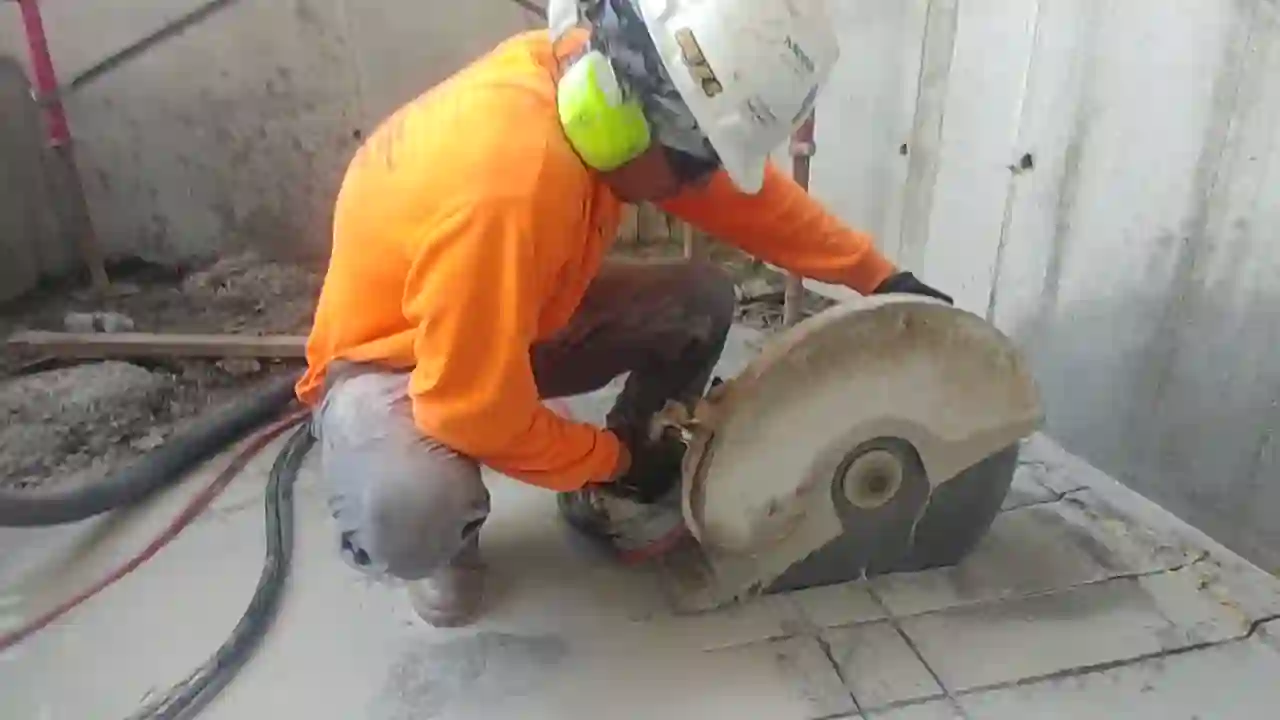
Concrete cutting generates slurry. That’s not a side effect — it’s physics. Diamond blades and core bits require water cooling to maintain cutting efficiency and extend blade life, and that water immediately bonds with concrete dust to form a highly alkaline, pH-elevated slurry that can range from 11 to 13 on the pH scale. In a standard commercial or residential pool removal scenario in Miami-Dade, you’re looking at cutting through 6 to 10 inches of reinforced gunite or poured concrete shell, often in multiple passes. The slurry volume generated during that demolition phase is substantial, and in a county where storm drains connect directly to canals and tidal waterways, uncontrolled slurry discharge is a clean water violation.
Our approach at Concrete Cutting Miami, LLC begins with a pre-cut slurry containment plan before any blade touches the shell. This involves berming the immediate work zone with absorbent containment booms or sand berms, deploying wet-vac systems to capture slurry at the point of generation, and staging a dedicated slurry holding tank on-site. We do not allow slurry to migrate toward the pool basin interior or toward any drainage pathway. For technical context on the blade selection and water flow rates that influence slurry volume, see our detailed breakdown on diamond tooling and blade selection that actually matter — the tooling choices you make directly affect how much slurry you’re managing.
Groundwater Intrusion During Pool Shell Demolition in High Water Table Zones
Miami-Dade’s water table is notoriously shallow — in many neighborhoods, you’ll hit standing groundwater at 18 to 36 inches below grade. Pool shells are typically installed at 48 to 72 inches below finished grade, meaning the base of the shell often sits at or below the seasonal high water table. When you begin breaking up that shell, you’re removing the one barrier that was keeping groundwater out of the excavation. This is not a minor inconvenience — it’s a site management crisis if you’re not prepared for it.
Proper dewatering during pool backfill operations requires permitted well-point systems or submersible pump arrays positioned at the perimeter of the excavation. Discharge from these dewatering systems must be directed to a vegetated buffer, a permitted discharge point, or a settling basin — never to a storm drain without a turbidity filter. DERM inspectors in Miami-Dade actively monitor active demolition and backfill sites near canal corridors, and turbid discharge is one of the fastest paths to a stop-work order.
Additionally, the act of removing a pool shell that has been chemically treating water for years introduces another variable — residual chlorine, stabilizers, and pH-adjusting chemicals that may have leached into the surrounding soil. A responsible backfill contractor should assess whether soil testing is warranted before introducing fill material, particularly if the pool was ever treated with copper-based algaecides or if there is any evidence of prior chemical spills.

Engineered Fill Specifications That Miami-Dade Building Department Actually Requires
The Miami-Dade Building Department does not accept “fill dirt” as a specification. When you pull a pool removal permit — and you absolutely must pull one — the permit application requires documentation of the intended fill material, compaction methodology, and inspection schedule. The standard technical requirement for pool backfill in Miami-Dade calls for clean fill with a maximum plasticity index of 10, compacted in lifts no greater than 12 inches using a plate compactor or jumping jack compactor, with each lift achieving a minimum of 95% of maximum dry density per ASTM D1557 (Modified Proctor).
Flowable fill, also called controlled low-strength material (CLSM), is increasingly specified for pool backfills in Miami-Dade because it eliminates the compaction variable entirely. CLSM flows into irregular void spaces created by the broken shell debris and achieves sufficient bearing capacity without lift-by-lift compaction. It also significantly reduces the risk of long-term settlement, which is a documented failure mode in improperly backfilled pool sites where future construction is planned. If you’re considering any future structure over the backfilled zone — a patio slab, an addition, or a driveway — CLSM is the technically superior choice.
Drainage Perforation and Anti-Flotation Measures That Prevent Future Structural Failure
Before any fill material is introduced, the pool shell must be perforated at the base to allow groundwater to migrate through the fill column rather than creating a bathtub effect that could cause the shell remnants to float or heave during high water table events. This is a code requirement in Miami-Dade, not a recommendation. Perforation is typically achieved by core drilling a series of 4-inch to 6-inch holes through the pool floor at a spacing determined by the engineer of record — commonly 4 feet on center in a grid pattern.
This is precision work. The core drill operator must maintain perpendicular alignment to avoid blowouts into the surrounding soil matrix, and the drill must be positioned to avoid rebar concentrations that could deflect the bit and compromise hole geometry. For projects where the pool shell is being partially demolished rather than fully removed, precision concrete cutting techniques are essential to maintain structural integrity of the retained portions while achieving the required perforation pattern.
How Hurricane Season Amplifies Every Environmental Risk on a Backfill Site
Miami-Dade’s hurricane season runs June through November, and any backfill project that extends into that window carries elevated environmental risk. An open excavation or partially backfilled pool site during a rain event — even a non-tropical storm — can become a sediment discharge point that violates NPDES permit conditions. Sites with exposed soil and incomplete compaction are also vulnerable to rapid erosion that can compromise adjacent structures and utilities.
The relationship between pool removal timing and hurricane risk is something we’ve covered in detail in our analysis of how hurricanes affect Miami pools and why pool removal can mitigate storm damage. From a backfill compliance standpoint, the practical implication is that project scheduling should target dry season completion or include a robust stormwater pollution prevention plan (SWPPP) if work must proceed during the wet season. Silt fencing, inlet protection, and stabilized construction entrances are not optional on permitted Miami-Dade demolition sites — they are inspected.
Disposal and Documentation of Concrete Debris Under DERM Regulations
The concrete shell material removed during a pool demolition is classified as construction and demolition (C&D) debris under Florida Statute 403. It cannot be buried on-site in quantities that would constitute illegal disposal, and it cannot be transported to a facility that is not permitted to receive C&D material. In practice, this means every load of concrete debris leaving a Miami-Dade pool removal site should be accompanied by a manifest documenting the origin, material type, quantity, and receiving facility.
Crushed concrete from pool shells can be recycled as sub-base aggregate if it is free of contamination — another reason why pre-demolition soil and material assessment matters. Contaminated concrete, or concrete from pools with documented chemical treatment histories that raise concern, should be tested before being offered for recycling. This is not bureaucratic overcaution — it is the standard that keeps your project defensible if DERM ever requests documentation.
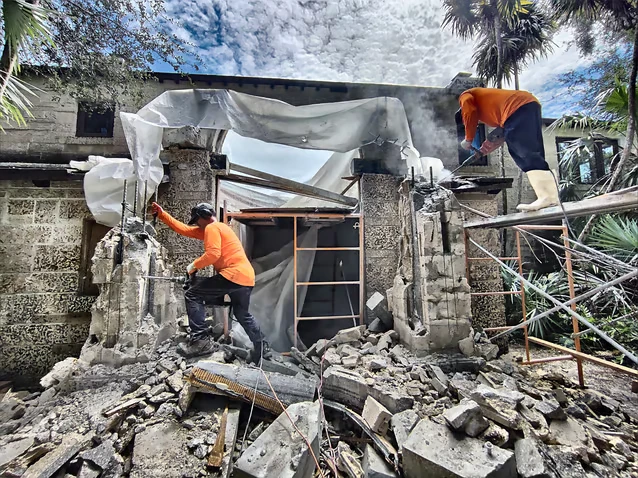
For projects involving significant structural concrete removal beyond the pool shell itself — retaining walls, equipment pads, or deck slabs — the scope of work may expand to include wall removal and slab sawing operations that carry their own permitting and slurry management requirements. Treating each phase as a discrete compliance event, with its own containment plan and documentation trail, is the operational standard that protects both the contractor and the property owner.
What Separates a Compliant Backfill Operation From a Liability Event
The difference between a pool backfill project that closes out cleanly and one that generates a DERM notice of violation comes down to three things — documentation, containment, and sequencing. Every phase of the operation, from the initial concrete cutting through final compaction testing, should be documented with photographs, material tickets, and inspection records. Containment of slurry and turbid water must be active and continuous, not reactive. And the sequence of operations — perforation before fill, dewatering before demolition, compaction testing before final grade — must follow a logical, code-compliant order that can be demonstrated to any inspector who shows up on-site.
Miami-Dade County enforces these standards because the environmental stakes are real. The Biscayne Aquifer supplies drinking water to millions of residents, and the coastal waterways that surround this county are both ecologically critical and economically essential. A pool backfill project done right is invisible — it leaves no trace, no violation, no settlement crack, and no contamination plume. That’s the standard we work to on every site, and it’s the standard any contractor operating in this county should be held to.