Why Site Logistics Are the Real Challenge Behind Precision Sawing Services
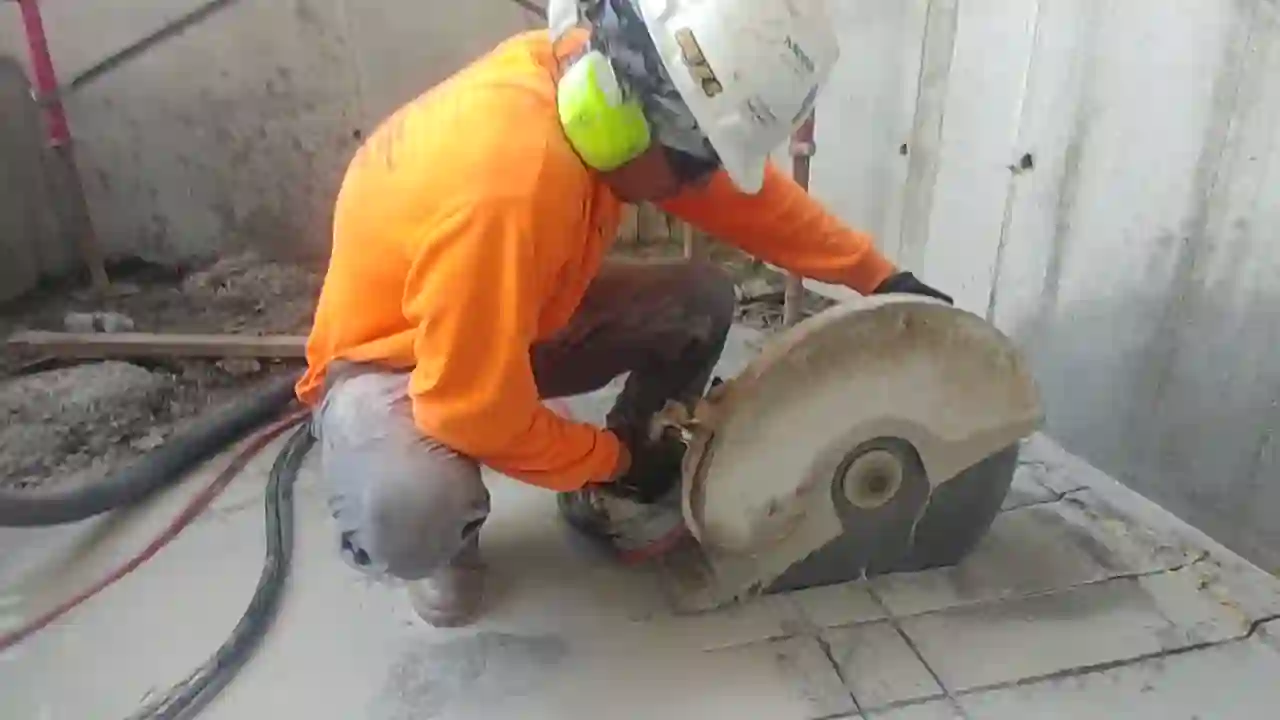
Most project managers think the hard part of precision sawing is the cut itself. It isn’t. The cut — given the right blade, the right RPM, and a competent operator — is the predictable part. What separates a smooth operation from a two-day delay is everything that happens before the blade ever touches concrete. Equipment staging, dust suppression routing, slurry containment, power sourcing, and access path engineering are what determine whether a precision sawing service actually delivers on its name. In Miami’s dense urban environment — where job sites stack on top of each other in high-rises, sit below grade in parking structures, or squeeze into historic districts with zero staging room — site logistics aren’t a secondary concern. They are the job. Understanding how experienced crews plan and execute precision sawing in these conditions is what this post is about.
Staging Equipment in Zero-Footprint Urban Job Sites
Urban concrete cutting in Miami — particularly in Brickell, Downtown, and along Miami Beach — routinely involves sites where there is no available staging area outside the structure itself. A contractor performing precision sawing on the 14th floor of an occupied residential tower cannot stage a flat-saw rig, a vacuum slurry recovery system, and a diesel power generator in the parking lot. Everything has to move through the building’s freight elevator, be broken down into manageable components, and be reassembled at the work level.
This is why equipment selection during the pre-job planning phase is non-negotiable. Electric-powered wall saws and track-mounted flat saws are preferred in these environments — not just for emissions compliance in enclosed spaces, but because their modular design allows component-by-component transport. A hydraulic power unit can be staged on a separate floor from the saw head if necessary. Blade transport requires its own protocol: diamond blades above 18 inches in diameter are awkward to carry through standard doorways and must be handled with blade caddies or custom slings to prevent warping.
Pre-Job Site Surveys That Actually Matter
A precision sawing service worth hiring sends a crew lead to the site before mobilization — not to look at the slab, but to walk the entire access path. Freight elevator weight ratings, door clearances, corridor widths, floor loading capacity between the staging level and the work level, and the location of existing utilities all get documented. On active Miami construction projects, this survey also captures the work schedules of adjacent trades, because coordinating dust and noise windows with other contractors is part of delivering a precision result.
Confined Space Sawing and the Ventilation Equation
Confined space concrete cutting is a category that demands a separate safety and logistics framework entirely. OSHA defines a permit-required confined space as one with limited means of entry or exit and the potential for hazardous atmospheres — a definition that applies directly to underground parking structures, utility tunnels, mechanical rooms, and below-grade cisterns. Precision sawing in these environments generates silica dust, slurry vapor, and — if diesel equipment is used — carbon monoxide. Managing all three simultaneously while maintaining cut accuracy is a logistical challenge that requires advance planning, not improvisation.
Forced-air ventilation systems must be sized to the space volume, not guessed at. A 10,000 cubic foot underground parking level requires calculated air changes per hour to keep respirable silica below OSHA’s permissible exposure limit of 50 micrograms per cubic meter. Wet cutting is mandatory in these environments, but wet cutting alone does not eliminate airborne silica — it suppresses it. Pairing wet cutting with a HEPA-filtered vacuum shroud on the blade guard and a continuous air monitoring device at the operator’s breathing zone is the current industry standard for responsible confined space precision sawing. For a detailed breakdown of safety protocols that govern this work, our team references the standards outlined in our workplace safety for concrete cutting resource library.
Slurry Management Below Grade
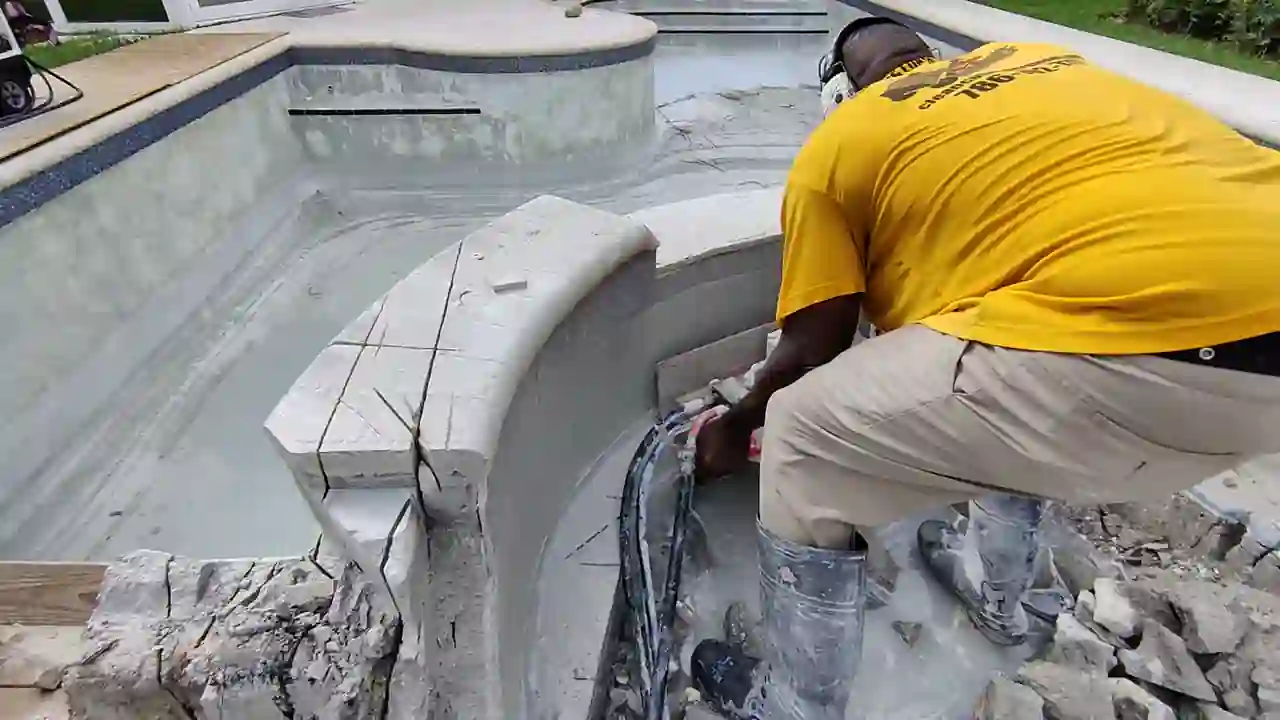
Wet sawing generates slurry — a mixture of water, fine concrete particulate, and diamond bond residue — at a rate of roughly 1 to 2 gallons per linear foot of cut in standard 6-inch slab work. In a below-grade confined space, that slurry has nowhere to go unless you plan for it. Portable slurry containment berms, wet/dry vacuum systems rated for slurry recovery, and designated discharge points must all be identified and staged before the first cut begins. Allowing slurry to migrate into floor drains connected to the municipal sewer system is an environmental violation in Miami-Dade County. Proper containment and licensed disposal are part of what a professional precision sawing service includes — not an optional add-on.
Track Saw Positioning on Irregular and Sloped Surfaces
Track-mounted wall saws and flat saws operate on the assumption of a reasonably flat, clean bonding surface for the track. In practice, Miami job sites — particularly renovation work on older concrete structures built before modern tolerance standards — present surfaces that are anything but flat. Post-tensioned slabs with cable blister pockets, aggregate-exposed surfaces from previous demolition, and slabs with significant drainage slope all require track positioning adjustments that affect cut depth consistency.
Experienced precision sawing crews use shimming plates and vacuum-mounted track anchors to compensate for surface irregularities. On sloped surfaces, the hydraulic feed rate on the saw head must be recalibrated to account for the changing blade-to-surface angle as the carriage travels along the track. Failing to make this adjustment produces a cut that is deeper on one end than the other — a problem that might seem minor until the structural engineer reviews the as-built dimensions and flags it as a deviation from the approved cut plan.
Anchor Point Engineering in Soft or Compromised Substrates
Wall saw track anchors rely on drilled-in fasteners rated to withstand the lateral forces generated by the saw carriage during a cut. In older Miami concrete — particularly pre-1980 construction with lower compressive strength mixes — anchor pullout capacity must be verified before the saw runs. This means conducting pull tests on sample anchors and comparing results against the saw manufacturer’s minimum anchor force specifications. On structures with known rebar congestion near the cut line, anchor placement becomes a puzzle that has to be solved with a rebar scanner and a pre-drill plan before the track goes up. These details are part of what makes slab sawing in Miami a technically demanding discipline rather than a commodity service.
Coordinating Precision Sawing Around Live Utilities and Occupied Spaces
In occupied buildings — hotels, hospitals, residential towers — precision sawing windows are often restricted to overnight hours or weekends. This changes the logistics equation significantly. Crew mobilization, equipment setup, and site preparation all have to happen within the allotted noise window. A four-hour overnight cutting window on a hotel renovation in Miami Beach means the crew must be fully staged and ready to cut the moment the clock starts, and fully demobilized before morning operations resume.
Utility scanning is a prerequisite on every precision sawing job, but in occupied structures, the stakes are higher. Cutting through an active electrical conduit in an occupied building is not just a safety hazard — it is a liability event. Ground-penetrating radar (GPR) scanning, cross-referenced with as-built drawings when available, is the standard pre-cut protocol. When drawings are unavailable or outdated — which is common in Miami’s older building stock — the GPR scan takes on even greater importance. Adhering to safe demolition practices in these environments is not optional; it is the foundation of every cut plan we develop.
What a Professionally Managed Precision Sawing Operation Actually Looks Like
A job that runs correctly looks almost boring from the outside. Equipment arrives staged and organized. The crew walks the access path before anything is moved. The site survey data drives equipment selection and power sourcing decisions. Ventilation is running before the first blade drops. Slurry containment is in place. The cut plan — depth, sequence, anchor placement, blade spec — has been reviewed against the structural drawings. The operator monitors blade tension and feed rate continuously, adjusting for substrate variation in real time.
What you don’t see is the planning that made all of that possible. The pre-job site survey, the utility scan, the anchor pull tests, the ventilation calculation, the slurry disposal coordination — these are the invisible infrastructure of a precision sawing service that actually earns the word “precision.” In Miami’s demanding construction environment, where site constraints are the rule rather than the exception, the difference between a crew that plans and a crew that improvises shows up in the final cut quality, the project schedule, and the safety record.

If your next project involves confined space access, tight site logistics, or occupied-building constraints, the conversation with your concrete cutting contractor needs to start with logistics — not just blade size. Concrete Cutting Miami, LLC specializes in exactly these conditions, bringing the planning depth and technical execution that complex Miami job sites demand.