What Slab Foundation Longevity Actually Looks Like Through a Diamond Blade
Most homeowners and even some contractors think about slab foundation lifespan in terms of cracks, settlement, or moisture intrusion. Those are visible symptoms. But if you want the real answer to how long slab foundations last, you need to look at what happens when a diamond blade engages the material. Blade wear rate, spindle resistance, segment glazing, and heat generation are diagnostic tools that reveal compressive strength, aggregate hardness, and curing quality in ways that no surface inspection can match. A properly poured, well-cured residential slab in Miami-Dade County can realistically last 80 to 100 years under normal conditions. Post-tension slabs with intact cables can push 120 years. But the operative word is “properly poured” — and your tooling will tell you immediately whether that standard was met.
Compressive Strength Ranges and Their Direct Impact on Blade Segment Selection
Residential slabs poured before 1980 in South Florida were commonly specified at 2,500 PSI to 3,000 PSI. Modern slabs — particularly those built post-2000 under updated Florida Building Code — routinely reach 4,000 PSI, with some engineered pours hitting 5,000 PSI or higher. This range matters enormously for diamond tooling selection. A soft-bond segment matrix is designed for harder, more abrasive concrete because the bond wears away quickly to continuously expose fresh diamond crystals. Hard-bond segments are engineered for softer, green, or low-PSI material where the bond must resist rapid wear.
When you’re cutting into a slab that’s 40 or 50 years old and the blade glazes within the first three linear feet, that’s a diagnostic signal. The concrete is denser than expected, the aggregate is likely a harder limestone variant, and you’re running the wrong bond hardness. Conversely, if segments wear down at double the expected rate, you’re dealing with a high-silica aggregate mix or a pour that never fully cured — both of which compress the effective service life of that slab significantly. Before any blade drops, understanding slab thickness and mix design is non-negotiable for Miami contractors.
Equipment Specifications That Separate Diagnostic Cutting from Destructive Guesswork
Walk-behind flat saws used for slab work should operate between 2,200 and 3,600 RPM depending on blade diameter. A 14-inch blade running at 2,800 RPM generates a peripheral speed of approximately 5,140 surface feet per minute — the sweet spot for most 3,000 to 4,500 PSI residential concrete. Drop below that peripheral speed on a hard aggregate slab and you’re dragging the blade through material rather than cutting it, which accelerates segment bond failure and produces micro-fractures in the surrounding concrete matrix.
Horsepower ratings matter just as much as RPM. A 13 HP gas-powered flat saw is adequate for 12-inch depth cuts in standard residential concrete. For anything over 14 inches deep — which you encounter on thickened edge slabs or older industrial pours — you need a minimum 20 HP unit with hydraulic blade drive to maintain consistent torque under load. Electric saws in the 30-amp, 240-volt configuration offer superior torque consistency and are preferred for interior cuts where carbon monoxide exposure is a concern. The industrial cutting category of work almost always demands electric or hydraulic drive systems over gas, particularly for precision depth control.
Blade Diameter, Arbor Compatibility, and Depth Capacity Charts
Blade diameter directly governs maximum cut depth at approximately 1/3 of the blade’s total diameter. A 14-inch blade cuts to roughly 4.5 inches. A 20-inch blade reaches approximately 6.5 inches. For full slab penetration on a standard 4-inch residential pour, a 14-inch blade is technically sufficient, but running a 16-inch blade gives you clearance to account for blade segment wear and arbor deflection under lateral load. Arbor bore sizes must match the saw’s spindle — 1-inch bore for most walk-behind saws, 20mm for European-spec equipment. Running an adaptor bushing is acceptable for occasional use but introduces runout that accelerates diamond segment stress fractures over extended cutting sessions.
How Aggregate Type in Miami-Dade Slabs Changes Everything About Tooling Choice
Miami’s local geology means that most concrete poured in this region uses Miami Oolite limestone aggregate — a relatively soft, highly porous carbonate rock. This aggregate type is significantly more abrasive than the siliceous gravel aggregates common in northern states. The porosity of oolitic limestone creates micro-voids at the aggregate-paste interface that accelerate blade segment wear by 15 to 25 percent compared to equivalent PSI mixes using harder aggregates. For this reason, Miami-specific blade selection should lean toward medium-hard bond segments with a higher diamond concentration — typically 30 to 40 concentration rating — rather than the standard 20 to 25 concentration segments appropriate for harder aggregate regions.
This aggregate characteristic also explains why older Miami slabs, even those with low compressive strength, can destroy blades faster than high-PSI pours in other markets. If you’re seeing unexpected segment wear on what appears to be a soft, aged slab, the oolitic aggregate is almost certainly the culprit. The Pinecrest concrete removal work we’ve documented illustrates exactly this phenomenon — visually soft slabs that eat through budget-grade blades at an alarming rate.
Post-Tension Slab Cutting Protocols and Specialized Blade Requirements
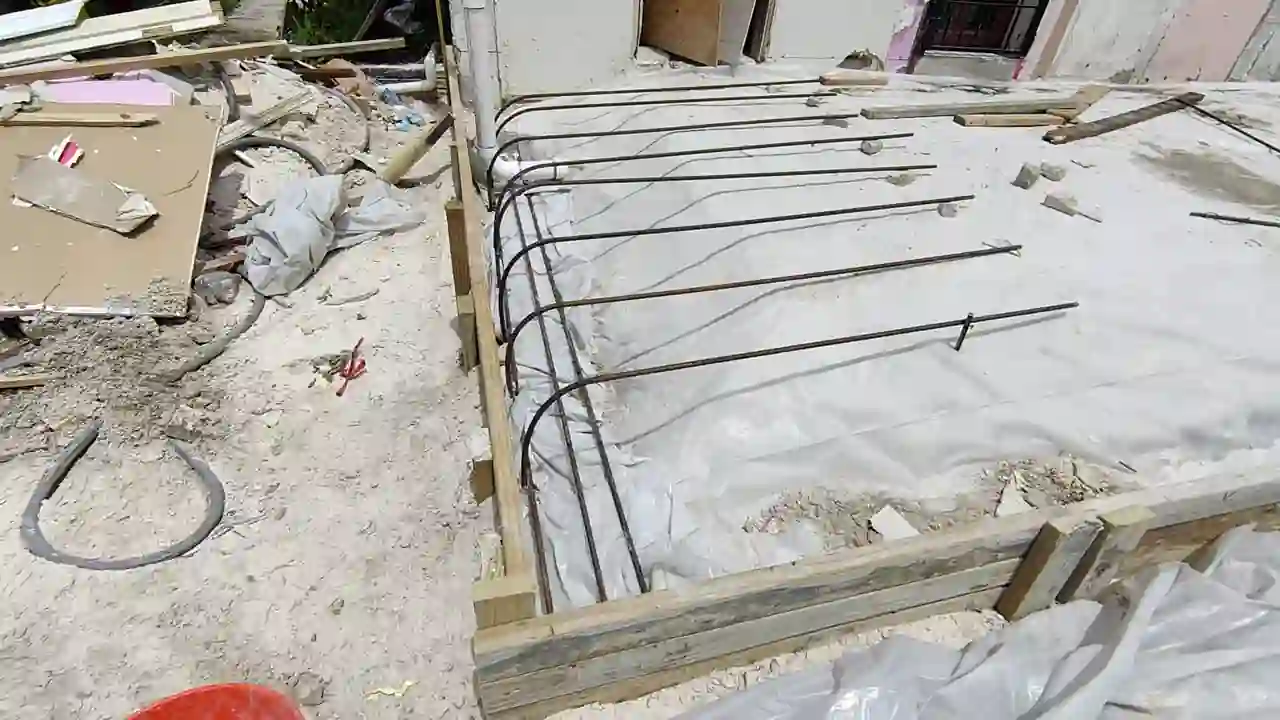
Post-tension slabs represent a distinct category of both longevity and cutting complexity. These systems, which became common in South Florida residential construction from the mid-1970s onward, use high-strength steel tendons tensioned to 26,000 to 33,000 PSI after the concrete cures. The concrete itself in PT slabs is typically specified at 4,000 PSI minimum, and the tendon spacing — usually 4 to 6 feet on center in each direction — creates a cutting hazard that demands GPR scanning before any blade engages the slab.
When cutting PT slabs, blade selection must account for the possibility of tendon contact. Standard segmented diamond blades will catastrophically fail if they contact a tensioned steel cable. Continuous rim blades with turbo segments handle incidental rebar contact better than segmented designs, but no blade is designed for tendon cutting. The protocol is strict — scan, mark, and cut between tendons exclusively. Blade depth must be controlled to remain above the tendon plane, which typically sits at 1 to 1.5 inches from the slab bottom. This is where depth-control collars and laser depth gauges on modern flat saws become essential safety equipment rather than optional accessories.
Wet Versus Dry Cutting Decisions and Their Effect on Slab Integrity Over Time
Water is a cooling agent, a slurry carrier, and a diagnostic tool simultaneously. A properly watered cut produces gray slurry with consistent viscosity. If that slurry turns brown or tan, you’ve hit a zone of deteriorated concrete — likely carbonation or aggregate breakdown — that indicates a section of slab approaching the end of its structural service life. If the slurry runs clear with visible aggregate chunks rather than fine paste, the cement matrix has degraded and the slab’s load-bearing capacity is compromised regardless of its surface appearance.
Dry cutting is acceptable for depths under 2 inches using turbo-rim blades rated for dry application, but sustained dry cutting generates blade temperatures exceeding 700°F at the segment-core weld. At those temperatures, the laser weld or sintered bond connecting segments to the steel core begins to fatigue. On aged slabs with variable hardness — common in 40-plus-year-old Miami residential construction — the thermal cycling from alternating hard and soft zones creates segment stress that leads to catastrophic segment throw. This is not a blade failure scenario you recover from on a job site. The per-square-foot cost of improper tool selection becomes very real very fast when you factor in blade replacement, rework, and downtime.
Reading Blade Wear Patterns as a Slab Age and Condition Assessment Tool
Experienced operators read worn blades the way a mechanic reads oil. Uniform segment wear across the full face indicates consistent concrete hardness — a sign of a well-batched, properly cured pour that has aged uniformly. This type of slab typically has decades of service life remaining. Uneven wear, where one side of the segment face wears faster than the other, indicates aggregate segregation during the original pour — a quality control failure that accelerates structural degradation over time.
Undercutting — where the steel core wears faster than the segments — means the concrete is highly abrasive and the bond is too hard for the material. This is common when cutting through older slabs that have surface carbonation layered over a harder interior. Core erosion of more than 1mm per 50 linear feet of cutting requires an immediate bond adjustment toward a softer matrix. Segment cracking without wear indicates thermal shock, almost always from dry cutting or insufficient water flow on a wet saw. Cracked segments on a blade that was otherwise performing correctly suggest the slab contains hard inclusions — embedded stone, old aggregate pockets, or deteriorated rebar that has expanded and fractured the surrounding concrete.
For specialty projects like pool fill-in work or pool removal logistics, these blade diagnostic principles apply directly to the deck and bond beam concrete, which ages differently than structural slabs due to constant moisture exposure and thermal cycling from water temperature changes.
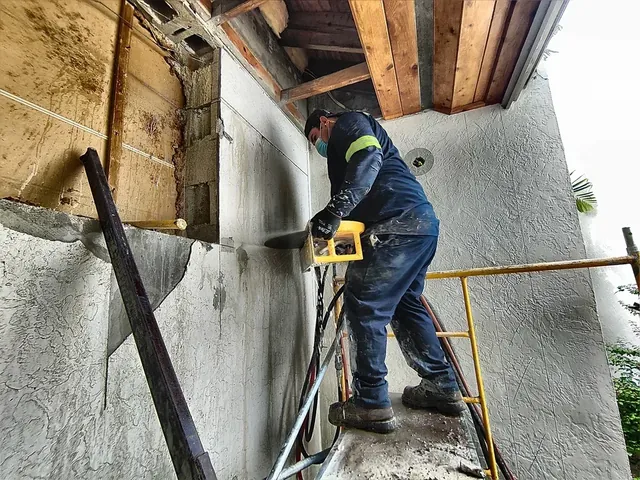
The Equipment-Driven Truth About Slab Foundation Service Life
The honest answer to how long slab foundations last is not a single number — it’s a range defined by original pour quality, aggregate type, reinforcement method, environmental exposure, and maintenance history. In Miami’s climate, where salt air, high water tables, and thermal expansion cycles stress concrete year-round, a well-engineered slab lasts 80 to 100 years. A poorly batched slab with inadequate cover over rebar may show structural compromise in 25 to 30 years. Your diamond tooling — blade bond hardness, segment wear rate, slurry color, thermal behavior — gives you a real-time materials report that no visual inspection can replicate. Choosing the right blade isn’t just about cutting efficiency. It’s about reading the material you’re cutting and making informed decisions about what that slab still has left to give.