Why House Slab Thickness Is a Safety Variable, Not Just a Spec Sheet Number
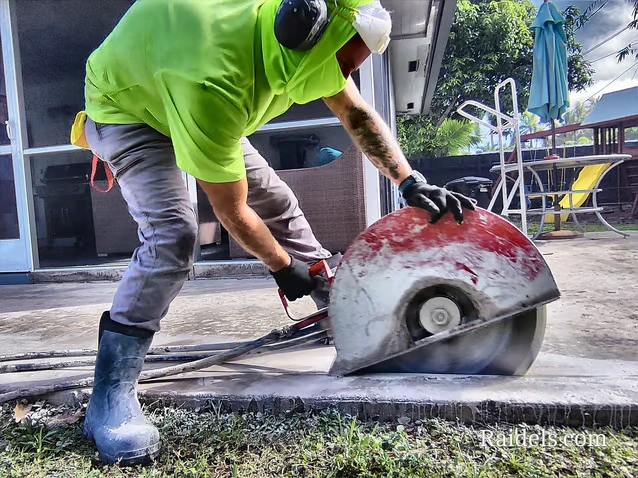
Most residential contractors treat slab thickness as a design detail — something the structural engineer noted on a drawing years ago and filed away. On an active cutting or removal job site, that mindset gets people hurt. House slab thickness in Miami-area residential construction typically ranges from 4 inches to 6 inches for standard post-tension and conventionally reinforced slabs, but older Art Deco-era construction, elevated grade beams, and thickened edge conditions can push that number well past 8 to 10 inches in localized zones. When a blade operator sets cutting depth based on an assumed 4-inch slab and hits a 7-inch thickened section over a footing, the consequences range from blade binding and kickback to catastrophic equipment failure. Every safety protocol on a residential concrete cutting job begins with verified thickness data, not assumptions.
OSHA 29 CFR 1926 Subpart Q and What It Actually Demands from Concrete Cutting Crews
OSHA’s Subpart Q governs concrete and masonry construction, and it is more operationally specific than many field supervisors realize. Under 29 CFR 1926.702, employers are required to ensure that all equipment used in concrete work — including saws, core drills, and wall saws — is operated within the manufacturer’s rated capacity. Blade depth settings must correspond to verified material thickness, not estimated thickness. This is a compliance point that OSHA inspectors have cited in Florida residential demolition and renovation projects, particularly in high-density urban corridors like North Miami where older housing stock presents unpredictable slab configurations.
The practical OSHA compliance checklist for any house slab cutting operation includes:
- Pre-cut thickness verification using ground-penetrating radar (GPR) or core sampling at minimum three locations per 500 square feet of slab area
- Documented hazard assessment identifying post-tension cables, embedded conduit, and rebar placement depth before any blade enters the concrete
- Blade guard integrity checks confirming guards are rated for the maximum slab depth encountered, not the average
- Silica dust exposure controls per the 2017 OSHA silica rule (29 CFR 1926.1153), including wet cutting or HEPA-filtered vacuum systems for interior residential work
- Operator PPE verification including cut-resistant gloves rated to EN 388 Level D, anti-vibration gloves for extended flat saw operation, and respiratory protection at minimum N95 or P100 classification
Ground-Penetrating Radar Protocols for Residential Slab Depth Mapping
GPR scanning is the industry standard for pre-cut hazard identification, and when applied specifically to house slab thickness verification, it delivers both depth data and embedded object location simultaneously. A 1.6 GHz antenna provides resolution suitable for detecting rebar at 1-inch increments within a 6-inch slab — more than adequate for most Miami residential applications. The critical operator error in GPR scanning is misinterpreting hyperbolic reflections from post-tension cables as the slab soffit. Post-tension residential slabs, which are extremely common in South Florida construction built after 1980, contain unbonded tendons running in a grid pattern typically 4 to 6 feet apart. These tendons appear as strong reflectors in GPR data and can mask the actual bottom-of-slab return if the operator is not trained to differentiate signal types.
For concrete removal in Miami residential projects, our protocol requires GPR scanning to be completed by a certified Level II technician with specific post-tension slab experience, with all scan data reviewed and marked on a physical layout grid before any cutting equipment is staged. This is not optional procedural overhead — it is the difference between a clean cut and a severed tendon that sends a 250-pound concrete panel airborne.
Thickened Slab Zones and the Hidden Hazards in Miami Residential Foundations
Standard residential slab-on-grade construction specifies a uniform thickness, but the reality on any poured slab is a series of intentional and unintentional thickness variations. Thickened edge beams in Florida residential construction typically run 12 to 18 inches deep, transitioning abruptly from the field slab at 4 to 5 inches. Drop beams integrated into post-tension slabs add additional depth at beam lines, often without visible surface indication. In older Art Deco residential construction in Miami Beach and surrounding neighborhoods, slabs were frequently poured over rubble fill or existing foundations, creating irregular bottom surfaces that make depth prediction unreliable.
The safety hazard in these thickened zones is not limited to blade overload. When a flat saw operator is cutting a control joint or expansion cut and transitions from a 4-inch field slab into a 14-inch edge beam without adjusting cutting depth, the blade segment loading changes dramatically. Diamond segments designed for 4-inch residential concrete at a specific bond hardness will glaze or shed segments when subjected to the sustained load of an unplanned deep cut. Segment shedding at 3,000 RPM is a projectile hazard with a documented injury history in the concrete cutting industry.
Rebar Depth, Cover Requirements, and Blade Selection Decisions Tied to Slab Thickness
ACI 318 specifies minimum concrete cover for reinforcing steel in slabs-on-grade at 3/4 inch for slabs not exposed to weather. In practice, Miami residential slabs often show rebar positioned at mid-depth in a 4-inch slab — meaning the top of the rebar mat sits at approximately 2 inches from the surface. Blade selection for residential slab cutting must account for this rebar position relative to verified slab thickness. A soft-bond diamond blade appropriate for hard aggregate Miami limestone concrete will wear rapidly when it contacts rebar, but more critically, it will transmit significantly increased vibration to the operator’s hands and arms, elevating the risk of hand-arm vibration syndrome (HAVS) on extended cuts.
Proper blade specification for a 4-inch reinforced residential slab in Miami requires a medium-bond segment with a steel-cutting matrix additive, laser-welded to prevent segment loss at depth. For slabs exceeding 6 inches — common in garage aprons, pool decks, and thickened commercial-residential transition zones — a segmented turbo rim blade with increased segment height provides the depth capacity and heat dissipation needed to complete the cut without thermal cracking of the diamond matrix. The rebar recycling value of cut steel is also worth noting for project sustainability accounting on larger residential demolition scopes.
Slurry Management During Interior Residential Slab Cutting Operations
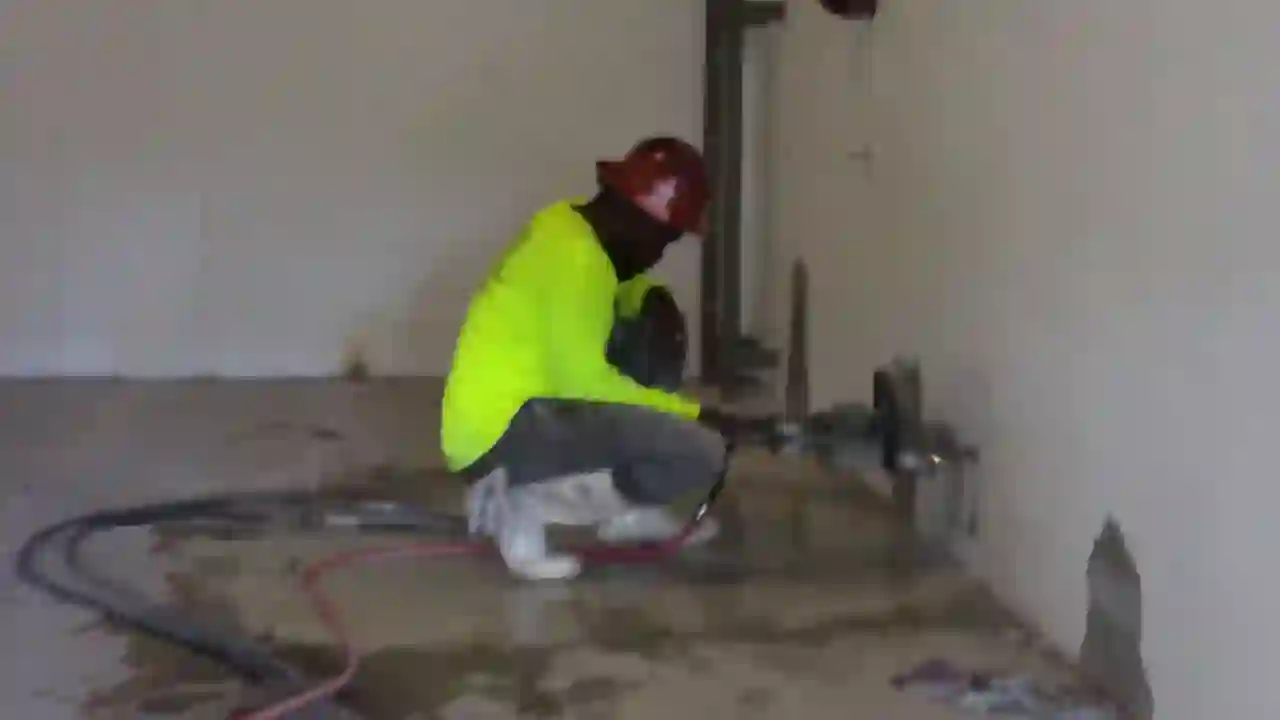
Wet cutting on interior residential slabs generates silica-laden slurry that creates its own category of job-site hazards. Slurry migrating across a floor slab creates slip hazards rated at a coefficient of friction below 0.4 — the OSHA threshold for slip hazard classification. On a job site where workers are operating heavy flat saws or managing vacuum extraction equipment, a slurry-coated floor is a serious fall hazard. Slurry containment berms constructed from closed-cell foam or rubber dam material must be staged before cutting begins, not after the first pass. For detailed slurry management protocols applicable to Miami residential and commercial projects, the technical breakdown in this guide on concrete window cutting and slurry management covers containment, neutralization, and disposal requirements under Miami-Dade environmental compliance standards.
Additionally, slurry from cutting post-tension slabs may contain wire strand fragments — microscopic steel particles that are invisible to the eye but create puncture hazards for workers kneeling or working at floor level without knee protection. Knee pads rated to EN 14404 Type 2 are required PPE for any crew member working at slab level during or after wet cutting operations.
Pre-Task Planning Documentation That Satisfies Both OSHA and Miami-Dade Building Department Requirements
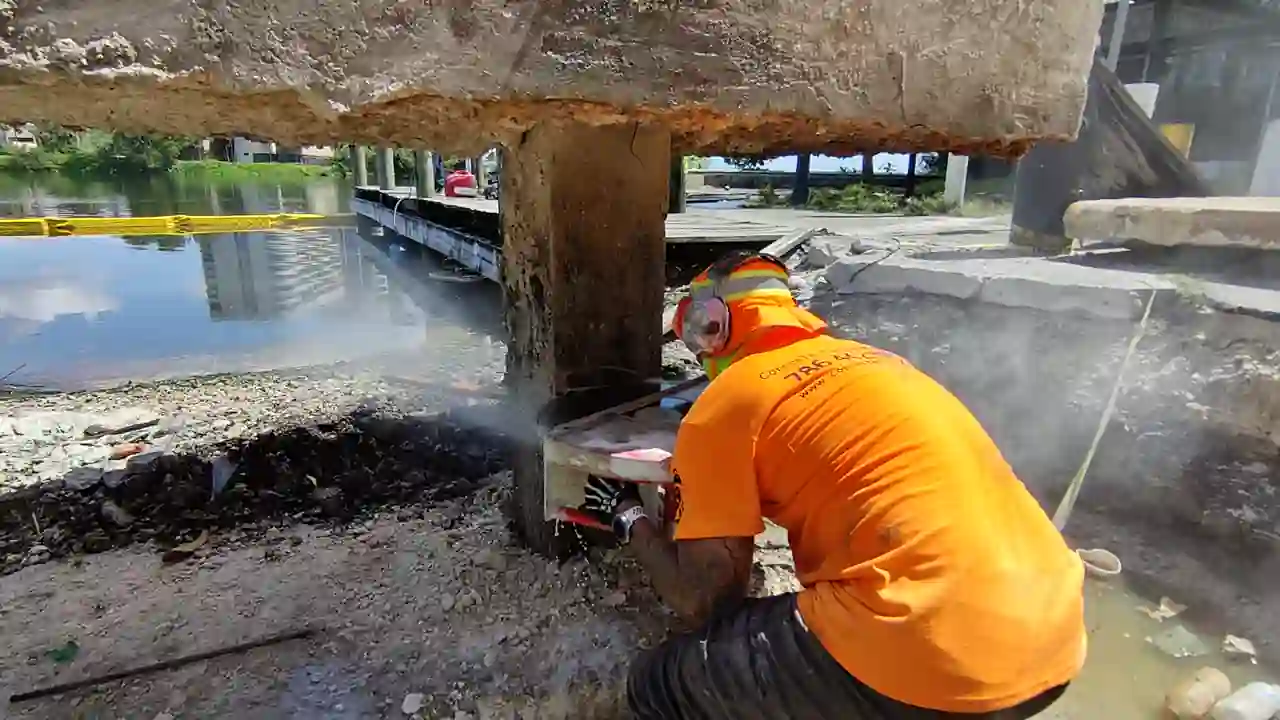
A compliant pre-task plan for residential slab cutting in Miami must address slab thickness verification, embedded hazard mapping, equipment rated capacity confirmation, dust and slurry controls, and emergency response procedures for post-tension cable strike. Miami-Dade Building Department requires a permit for structural concrete cutting in residential applications, and permit applications must include a cutting plan that identifies slab thickness, reinforcement type, and the method used to verify both. Projects in coastal zones — including seawall-adjacent residential properties — carry additional structural review requirements. Work near marine structures should reference seawall concrete cutting protocols specific to Miami to ensure the cutting plan accounts for saltwater-degraded concrete, which exhibits dramatically different blade wear characteristics and structural behavior than inland residential slabs.
The pre-task plan is not bureaucratic paperwork. It is the document that protects your crew, your license, and your liability exposure when something unexpected happens on site — and in residential concrete cutting, something unexpected almost always happens. Verified slab thickness data, documented before the first blade rotation, is the foundation that makes every other safety protocol on the job site meaningful.