Why Concrete Window Cutting Is One of the Most Environmentally Sensitive Cuts on Any Jobsite
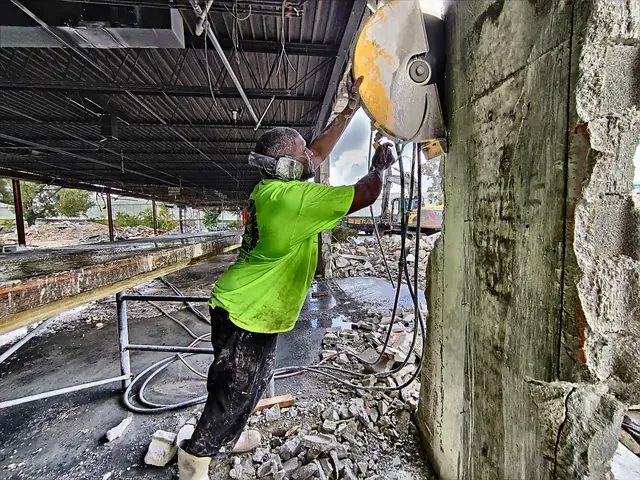
Concrete window cutting sounds straightforward on paper — you’re creating a rectangular or custom-shaped opening in an existing concrete wall to accommodate a new window frame, ventilation system, or architectural feature. But from an environmental compliance standpoint, this operation sits in a uniquely high-risk category. Unlike flatwork grinding or core drilling in open outdoor environments, window cutting on vertical concrete walls — especially in occupied buildings, coastal properties, or urban Miami structures — generates a highly mobile slurry that behaves unpredictably. That slurry, a mixture of diamond-blade-generated concrete fines and cooling water, carries a pH level typically ranging from 11 to 13. That makes it a caustic waste material, not just a nuisance. Under Florida Department of Environmental Protection (FDEP) guidelines and Miami-Dade stormwater ordinances, allowing that slurry to reach a storm drain, waterway, or porous ground surface is a violation — full stop.
The Chemistry Behind Concrete Slurry and Why It Cannot Be Ignored
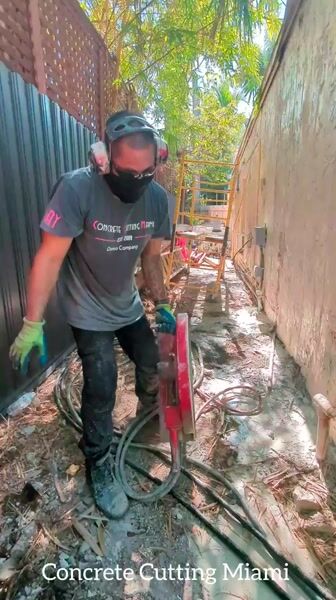
Every diamond blade cut through concrete — whether through standard 4,000 PSI residential walls or post-tensioned commercial panels — releases calcium hydroxide, calcium silicate hydrates, and trace heavy metals from embedded rebar corrosion byproducts. When water-cooled wall saws are used for window cutting, this chemistry becomes suspended in the cooling water and forms a dense, gray slurry with alkalinity that can kill aquatic life and damage soil permeability. In South Florida’s karst limestone geology, that slurry can migrate quickly into the Biscayne Aquifer — the primary drinking water source for Miami-Dade County. This is not a theoretical risk. It’s the reason municipal inspectors in Miami, Coral Gables, and Fort Lauderdale have become increasingly aggressive about requiring documented slurry management plans before issuing cutting permits for structural modifications.
Contractors who specialize in diamond blade cutting through rebar-reinforced walls understand that rebar intersections increase slurry iron content. This changes the disposal classification. Slurry with elevated iron or other leachable metals may require testing under TCLP (Toxicity Characteristic Leaching Procedure) protocols before it qualifies for standard solid waste disposal. On window cutting projects involving older Miami construction — pre-1980 structures with unknown admixtures or potential lead-based form coatings — this testing obligation becomes even more critical.
Vertical Wall Slurry Containment Systems for Window Opening Work
The engineering challenge with window cutting is gravity. On flatwork operations, slurry pools on the horizontal surface and can be vacuumed or bermed relatively easily. On a vertical wall cut, slurry runs immediately. It follows the wall surface, migrates into expansion joints, soaks into masonry block cavities, and hits the floor — or the exterior grade — within seconds of generation. A properly engineered containment setup for concrete window cutting must account for all three slurry migration vectors: downward flow on the wall face, lateral spread at the base, and mist atomization from blade contact at high RPM.
The standard protocol used by experienced Miami cutting crews involves a three-layer containment approach:
- Primary Capture — Blade Guard Vacuum Integration: Wall saws equipped with vacuum-shrouded blade guards pull slurry directly from the cut kerf using a wet-vac system rated for abrasive slurry. This captures an estimated 60–75% of generated slurry at the source before it contacts the wall surface.
- Secondary Capture — Wall-Mounted Drip Channels: Foam-backed aluminum drip channels are adhered below the cut line using construction adhesive rated for wet surfaces. These channels redirect residual slurry flow into collection buckets or a portable sump tank, preventing floor contact.
- Tertiary Containment — Floor Berms and Absorbent Barriers: High-density polyethylene (HDPE) sheeting is laid from the wall base outward a minimum of 8 feet, with foam berm dams at the perimeter. Absorbent pads rated for alkaline liquids are staged at drainage points and door thresholds.
Water Volume Calculations Before the First Blade Pass
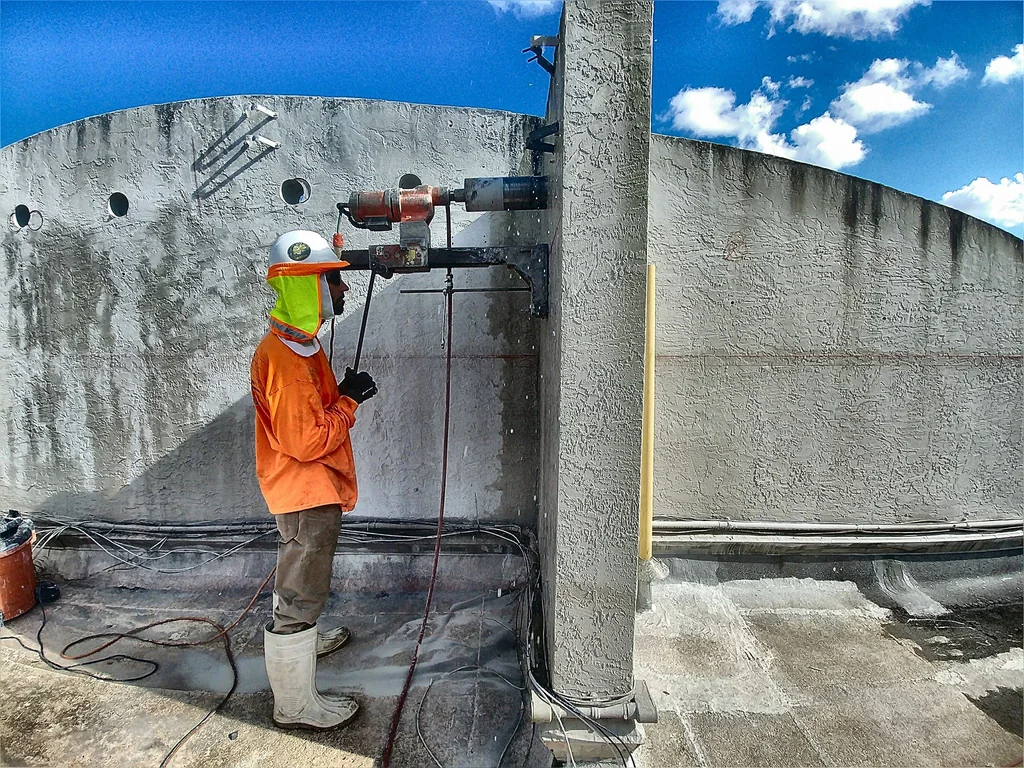
A critical pre-job calculation that many contractors overlook is total water volume generation. For a standard 36-inch by 48-inch window opening cut through an 8-inch reinforced concrete wall, a water-cooled wall saw will consume approximately 1.5 to 2.5 gallons of water per linear foot of cut. That opening requires roughly 14 linear feet of cutting. The result is 21 to 35 gallons of water introduced to the work zone — all of which becomes contaminated slurry requiring managed disposal. On larger commercial window openings — say, a 6-foot by 8-foot storefront cutout through a 12-inch tilt-up panel — that volume can exceed 80 gallons. Without a pre-calculated containment volume, contractors routinely undersize their collection systems and end up with overflow events mid-cut.
Dry-cutting with vacuum extraction is sometimes proposed as an alternative to reduce water volume, but this approach carries its own compliance burden. Dry cutting generates airborne respirable silica dust at concentrations that trigger OSHA’s Silica Standard (29 CFR 1926.1153), requiring Table 1 engineering controls or air monitoring. In occupied Miami residential buildings or commercial spaces — which represent the majority of window cutting projects — dry cutting is rarely a viable compliance path. Wet cutting with proper slurry management almost always represents the lower overall risk profile.
Slurry Dewatering, pH Neutralization, and Legal Disposal Pathways
Once slurry is collected, the job isn’t done. Collected slurry cannot legally be poured down a sanitary sewer without the permission of the local utility authority — and most Miami-Dade Water and Sewer permits do not cover construction slurry discharge without a pre-treatment agreement. The standard field protocol involves allowing collected slurry to settle in sealed containers for a minimum of 24 to 48 hours. The solid fines settle to the bottom as filter cake, and the clarified water on top — still alkaline — must be pH-adjusted to between 6.5 and 8.5 before any authorized discharge.
pH neutralization in the field is accomplished using food-grade CO2 injection systems or dry citric acid additions, both of which are cost-effective and produce no secondary hazardous byproducts. Once neutralized water is confirmed via pH test strip or digital meter, it can typically be discharged to sanitary sewer under a general construction dewatering authorization. The dried filter cake is classified as non-hazardous solid waste in most scenarios and can be containerized and taken to a licensed construction debris facility — provided TCLP testing has confirmed the absence of leachable metals.
Projects near Miami’s coastal properties or canal-adjacent structures — including many pool deck and pool wall modification projects — face additional scrutiny under the Clean Water Act Section 402 NPDES permit framework. Any site with a direct hydrological connection to navigable waters requires a site-specific stormwater pollution prevention plan (SWPPP) that explicitly addresses concrete cutting slurry as a potential pollutant source.
Indoor Window Cutting in Occupied Spaces Demands a Higher Containment Standard
Window opening cuts performed inside occupied or partially occupied structures — a common scenario in Miami condo renovations, hotel retrofits, and commercial tenant improvements — introduce additional containment requirements beyond environmental compliance. Slurry migration into flooring assemblies, wall cavities, and mechanical chases can cause long-term moisture damage, mold propagation, and damage to electrical conduit systems. Experienced crews performing interior concrete removal and wall modification work treat slurry containment as a building protection protocol as much as an environmental one.
In these settings, positive-pressure vacuum containment at the blade guard becomes non-negotiable. Crews should also use moisture-barrier taping at all wall penetrations, floor drains, and HVAC return vents within 20 feet of the cut zone. Post-cut inspection with a moisture meter across a 10-foot radius from the opening should be documented and provided to the building owner as part of project closeout.

Permitting, Documentation, and What Miami Inspectors Are Actually Looking For
Miami-Dade Building Department structural modification permits for window openings in concrete walls increasingly require a cutting methodology statement as part of the submittal package. This statement should address blade type and diameter, water cooling volume estimates, slurry containment method, disposal pathway, and the name of the licensed contractor performing the work. Inspectors conducting pre-pour or rough inspections on adjacent work have begun asking to see slurry disposal receipts as a condition of sign-off — particularly on projects near Biscayne Bay, the Miami River corridor, and Oleta River State Park buffers.
Contractors who proactively document their slurry management process — with photographs of containment setup, pH test records, and disposal manifests — build a compliance file that protects against stop-work orders and potential FDEP notices of violation. It also serves as a competitive differentiator. As environmental enforcement around construction activities tightens across South Florida, building owners and general contractors are increasingly selecting cutting subcontractors based on demonstrated compliance capability, not just price. Concrete window cutting done right means the opening gets cut cleanly, the rebar gets handled correctly with properly tensioned diamond blades rated for rebar-dense concrete, and every drop of slurry generated is accounted for, neutralized, and legally disposed of before the crew leaves the site.