Why Cutting Rebar Is One of the Most Underestimated Hazards in Concrete Work
Every experienced concrete contractor has a story. A grinder wheel catches a rebar end wrong, a hydraulic shear kicks back, or a torch-cut rod springs loose from tension and takes out a worker’s shin. The act of cutting rebar looks deceptively simple from the outside — grab a tool, cut the steel, move on. But on a real job site, especially in South Florida’s dense urban construction environment, the variables that turn a routine rebar cut into a recordable incident are everywhere. Tension, tool selection, PPE gaps, bystander proximity, and improper work positioning all stack on top of each other. This post is a field-level breakdown of what OSHA actually requires, what the hazards actually are, and how professional crews execute rebar cuts without sending someone to the ER.
OSHA Standards That Directly Govern Rebar Cutting Operations
Before a single blade touches steel, your crew needs to be operating within the correct regulatory framework. OSHA’s construction standards under 29 CFR 1926 cover rebar work from multiple angles, and the relevant subparts aren’t always obvious to foremen who think of rebar cutting as incidental to the main pour or demo scope.
- 29 CFR 1926.57 (Ventilation) — Applies when torch cutting or grinding rebar indoors or in confined spaces. Zinc-coated or epoxy-coated rebar generates toxic fumes. Mechanical ventilation or supplied-air respirators are not optional.
- 29 CFR 1926.102 (Eye and Face Protection) — Mandates impact-rated eye protection during all cutting operations. Flying steel fragments from angle grinder cuts travel at velocities that standard safety glasses cannot reliably stop. Side-shield rated goggles or full face shields are the baseline.
- 29 CFR 1926.302 (Power-Operated Hand Tools) — Governs angle grinder use, including guard requirements and disc rating compliance. Running a cut-off wheel rated for 10,000 RPM on a grinder capable of 12,000 RPM is an OSHA violation and a catastrophic failure waiting to happen.
- 29 CFR 1926.351 (Arc Welding and Cutting) — Applies to torch and plasma cutting of rebar, including fire watch requirements, lead-lined glove standards, and hot-work permit protocols.
- 29 CFR 1926.701(b) (Protruding Rebar) — This one trips up crews constantly. Any rebar that presents an impalement hazard must be guarded with rebar caps rated for impact protection, not just plastic mushroom caps, which OSHA has clarified are insufficient for fall protection purposes.
Non-compliance with these standards isn’t just a fine risk — it’s a pattern that shows up in litigation after injuries. Document your toolbox talks, your PPE issuance, and your site hazard assessments before work begins.
Tool Selection and the Mechanical Hazards Nobody Talks About
The tool you use to cut rebar determines the hazard profile of the entire operation. There is no universal “right tool” — there’s only the right tool for the specific diameter, coating, tension state, and site conditions in front of you.
Angle Grinders with Cut-Off Wheels
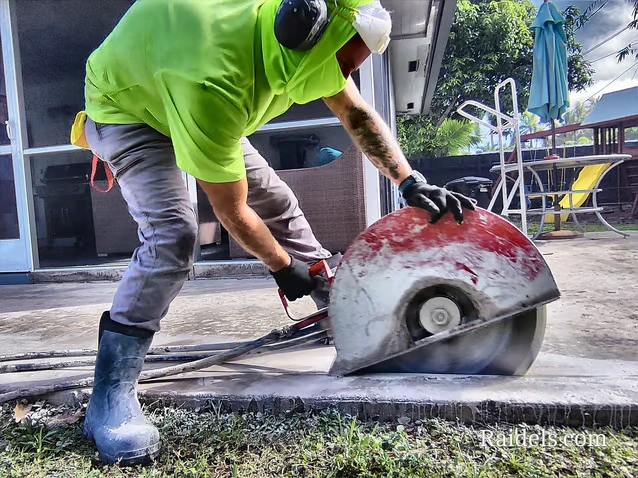
The most common field method. The hazard chain here is well-documented: disc failure, wheel binding, kickback, and fragment ejection. When cutting rebar with an angle grinder, the disc must be rated for metal cutting — not masonry, not general purpose. The guard must be in place and positioned to deflect fragments away from the operator’s body. Operators must use a two-handed grip at all times. Lateral pressure on the disc is the primary cause of catastrophic wheel failure. Cut-off wheels are designed for axial load only.
Hydraulic Rebar Cutters
These are significantly safer for high-volume rebar cutting because there’s no spinning disc, no sparks, and no fragment ejection. However, hydraulic cutters introduce their own hazards — pinch points, hydraulic line failures, and the spring-back of tensioned rebar when it’s severed. Always position the cut point so that the freed rebar end moves away from personnel. On post-tensioned slabs, this calculation becomes critical. Understanding the reinforcement density and tension state of the concrete you’re cutting is a prerequisite, not an afterthought.
Plasma Cutters and Oxy-Acetylene Torches
Fastest method for heavy-gauge rebar (#8 and above), but the hazard profile is the most complex. Fire, fume, UV radiation, and molten metal spatter all require simultaneous hazard controls. Hot-work permits, fire extinguisher staging, fire watch assignment (maintained for 30 minutes post-cut per OSHA), and respiratory protection are all mandatory. Epoxy-coated rebar releases carcinogenic fumes when torched — this is a documented health hazard that requires air monitoring on enclosed sites.
Pre-Cut Hazard Assessment — The Step Most Crews Skip
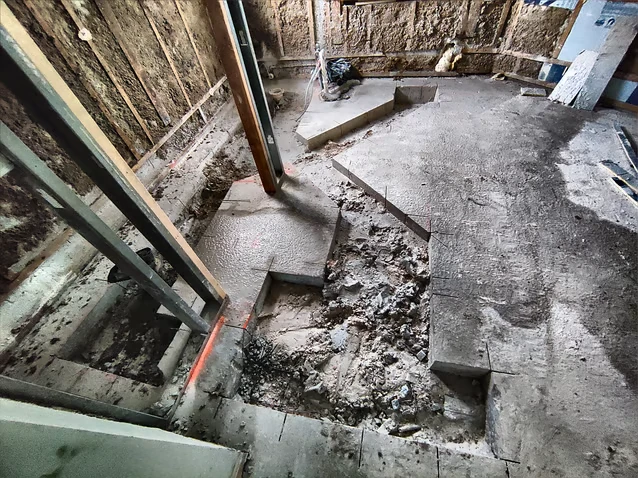
Before you cut rebar embedded in or adjacent to concrete, you need a documented hazard assessment. This is especially true on demolition projects where the structural state of the reinforcement is unknown. Cutting a rebar that’s carrying load in a partially demolished structure can trigger progressive collapse. It has happened. People have died.
Your pre-cut assessment should answer these questions:
- Is the rebar under tension? (Post-tensioned systems require specialized release protocols.)
- What is the rebar coating? (Galvanized, epoxy, or bare — each has different fume hazard profiles.)
- What is the diameter and grade? (Affects tool selection and cut time.)
- Are there embedded electrical conduits, gas lines, or water lines within the cut zone? (Ground-penetrating radar or utility marking is mandatory before any cutting operation.)
- What is the bystander exclusion zone? (Minimum 10 feet for grinder operations; plasma cutting requires 35-foot hot-work perimeter.)
For complex sites with difficult access or unusual structural configurations, the pre-cut assessment becomes even more involved. Site access constraints directly affect how you stage cutting equipment and establish safe work zones, and ignoring that relationship creates compounding hazards.
PPE Standards for Rebar Cutting That Actually Match the Risk Level
Generic PPE programs fail rebar cutting operations because they treat all cutting tasks as equivalent. They are not. Here’s the minimum PPE stack by method:
- Angle Grinder Cutting — Full face shield (ANSI Z87.1 rated) over safety glasses, leather gloves, hearing protection (grinders at close range exceed 95 dB), steel-toed boots, and long sleeves to protect against fragment burns.
- Hydraulic Cutter Operations — Safety glasses, cut-resistant gloves, steel-toed boots. No loose clothing near the cutter jaw mechanism.
- Torch and Plasma Cutting — Welding helmet with appropriate shade lens (minimum shade 5 for plasma, shade 3-4 for oxy-acetylene), leather welding gloves, leather apron or FR-rated clothing, leather boots. Half-face respirator with P100 and OV cartridges for fume control in non-ventilated spaces.
PPE is the last line of defense, not the first. Engineering controls — guards, barriers, ventilation — always take priority in the hierarchy of hazard controls.
Managing Rebar Cutting Hazards in Marine and Waterfront Environments
South Florida’s construction landscape includes a significant volume of marine and waterfront concrete work, where rebar cutting happens in conditions that amplify every standard hazard. Wet surfaces increase electrical risk from power tools. Tidal movement affects work platform stability. Salt air accelerates corrosion on cutting equipment, increasing the risk of disc failure or hydraulic line degradation. Marine construction cutting operations require a modified safety protocol that accounts for these site-specific variables — including GFCI protection on all power tools, non-sparking tool options near fuel storage, and tethered tool requirements over open water.
Site Logistics and the Hidden Safety Failures in Rebar Cutting Workflow
The physical act of cutting is only one part of the hazard picture. How cut rebar is handled, staged, and removed from the work zone creates secondary injury risks that are frequently overlooked. Freshly cut rebar ends are razor-sharp. Lengths of cut rebar left on the ground become trip hazards. Bundles stacked improperly become falling-object hazards. Proper site logistics planning means designating a rebar staging area, using leather gloves for all handling of cut pieces, capping or bending all protruding ends immediately after cutting, and scheduling debris removal before foot traffic resumes in the cut zone.
Crew Communication Protocols During Active Cutting
Noise from grinders and plasma cutters makes verbal communication unreliable. Establish hand signals for “stop cutting,” “clear the zone,” and “ready to cut” before operations begin. A designated safety observer — someone not operating a tool — should maintain visual oversight of the exclusion zone perimeter during all active cutting operations. This is not a luxury on large sites; it’s a documented best practice that reduces recordable incidents.
The Real Cost of Getting Rebar Cutting Wrong
OSHA penalties for serious violations related to rebar operations currently reach up to $16,131 per violation, with willful or repeat violations climbing to $161,323. But the financial exposure from a single worker injury — medical costs, lost productivity, litigation, insurance premium increases, and potential project shutdowns — dwarfs any fine. More importantly, the human cost is irreversible. Eye injuries from rebar fragment strikes are frequently permanent. Impalement injuries from unguarded protruding rebar have killed workers on active construction sites across the country.
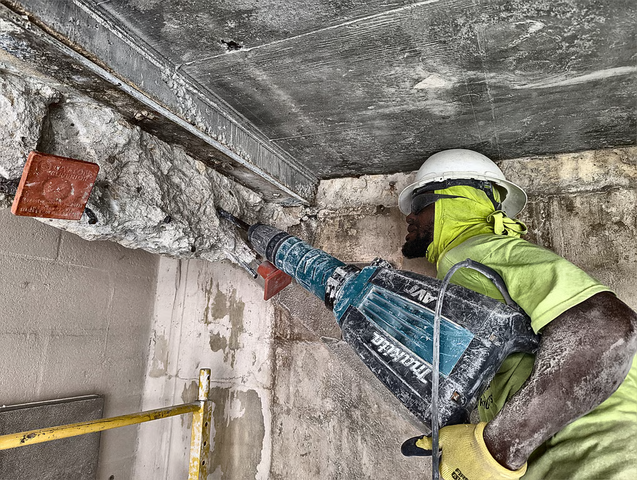
Professional concrete cutting crews treat rebar cutting as a precision safety operation, not a quick field task. The tool selection is deliberate. The PPE is complete. The exclusion zone is enforced. The pre-cut hazard assessment is documented. That level of discipline is what separates contractors who build long-term reputations from those who spend their afternoons on the phone with insurance adjusters.
If your crew is cutting rebar in South Florida — on a pour, a demolition, a marine structure, or a post-tension slab — and you have any uncertainty about the safest method for your specific conditions, that uncertainty itself is a hazard. Get the right expertise on site before the first cut.