What Chipping Concrete Actually Means in a Professional Demolition Context
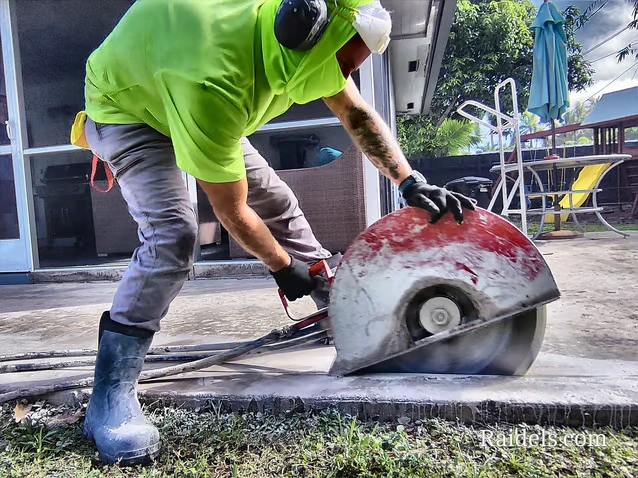
Chipping concrete is the controlled mechanical removal of hardened concrete material from a surface, structural member, or substrate using percussive or rotary-percussive tooling. Unlike saw cutting — which produces clean, geometry-defined kerf lines — chipping is a fracture-based process. The tool delivers high-frequency impact energy into the concrete matrix, propagating micro-fractures along aggregate boundaries and paste zones until chunks break free. In the field, this is executed with electric or pneumatic chipping hammers, rotary hammers, demolition hammers, or full-scale jackhammers, depending on the depth and volume of material being removed.
Common applications include removing deteriorated concrete from bridge decks, exposing rebar for structural repairs, breaking out footings, removing topping slabs, and preparing substrate surfaces for bonding new concrete overlays. In Miami’s coastal construction environment, chipping is also heavily used in seawall repair and concrete cutting projects where chloride-contaminated cover concrete must be removed without disturbing the underlying reinforcement. The process seems blunt by nature, but executed incorrectly it creates a cascade of serious, often catastrophic hazards that demand rigorous safety management.
The Real Hazard Profile of Concrete Chipping Operations
Most workers understand that chipping concrete is loud and physically demanding. Far fewer understand the full hazard inventory. A thorough job-site hazard assessment for any chipping operation must account for the following categories simultaneously:
- Projectile fragmentation: Concrete chips and aggregate particles are ejected at high velocity in unpredictable trajectories. Particle speeds exceeding 100 mph have been recorded in controlled testing environments. Eye injuries, lacerations, and blunt trauma to exposed skin are the most immediate risks.
- Respirable crystalline silica (RCS): Concrete contains silica dioxide. Chipping generates fine airborne dust particles below 10 microns — many in the respirable range of 0.5 to 5 microns — that penetrate deep lung tissue and cause silicosis, lung cancer, and COPD with cumulative exposure.
- Hand-arm vibration syndrome (HAVS): Prolonged exposure to tool vibration frequencies between 6 and 16 Hz causes vascular and neurological damage in the hands and arms. Symptoms include blanching, numbness, and permanent loss of grip strength.
- Structural destabilization: Chipping in proximity to load-bearing elements, post-tensioned tendons, or pre-stressed reinforcement can trigger partial or full structural collapse if the work sequence is not engineered in advance.
- Electrical and utility strikes: Embedded conduit, rebar with electrical continuity, and subsurface utilities represent electrocution hazards when chipping breaches them unexpectedly.
- Noise-induced hearing loss (NIHL): Chipping hammers and jackhammers operate at 95 to 115 dB(A) at the operator position. OSHA’s permissible exposure limit of 90 dB(A) over an 8-hour TWA is exceeded within the first hour of operation without hearing protection.
Understanding this hazard profile is not optional. It is the foundation of every pre-task plan, toolbox talk, and OSHA compliance checklist that a competent contractor must produce before the first chip falls.
OSHA Standards That Govern Concrete Chipping on Construction Sites
OSHA does not have a single “chipping concrete” standard. Instead, compliance is assembled from multiple overlapping regulations under 29 CFR 1926 (Construction) and 29 CFR 1910 (General Industry), depending on the work setting. The following standards are directly applicable to chipping operations:
29 CFR 1926.1153 — Respirable Crystalline Silica in Construction
This is the most operationally demanding standard for chipping crews. OSHA’s silica rule establishes a Permissible Exposure Limit (PEL) of 50 micrograms per cubic meter of air (µg/m³) as an 8-hour TWA, and an Action Level of 25 µg/m³. For chipping operations, OSHA provides Table 1 compliance options. Chipping with a hammer on mortar or concrete is listed as a Table 1 task requiring either wet methods or a HEPA vacuum shroud system attached to the tool, combined with a minimum assigned protection factor (APF) of 10 respirator — typically a half-face air-purifying respirator with P100 filters. When Table 1 controls are not feasible, full air monitoring, exposure assessment, and a written Exposure Control Plan become mandatory.
29 CFR 1926.302 — Power-Operated Hand Tools
This standard requires that pneumatic tools used for chipping be equipped with safety clips or retainers to prevent chisels and bits from being ejected. Operators must never point pneumatic tools at any person, and hose connections must be secured with wire or safety clips at every coupling. Compressed air must never be used to clean clothing or directed at personnel — a violation that remains common on poorly supervised sites.
29 CFR 1926.102 — Eye and Face Protection
Chipping operations require impact-rated eye protection at minimum. OSHA and ANSI Z87.1 standards require safety glasses with side shields or, preferably, indirect-vent chemical splash goggles for chipping work. A face shield rated to ANSI Z87.1 must be worn over primary eye protection when overhead chipping is performed or when the work zone creates high-density projectile environments. This is non-negotiable and a frequent citation item during OSHA inspections.
29 CFR 1926.52 — Occupational Noise Exposure
Hearing protection with a Noise Reduction Rating (NRR) of at least 25 dB is required for chipping operations. Double protection — earplugs under earmuffs — is required when ambient noise levels exceed 105 dB(A). Supervisors must enforce hearing protection use within the established noise hazard boundary, which should be delineated with barrier tape and signage on every chipping job.
Pre-Task Planning and Structural Clearance Before Any Chipping Begins
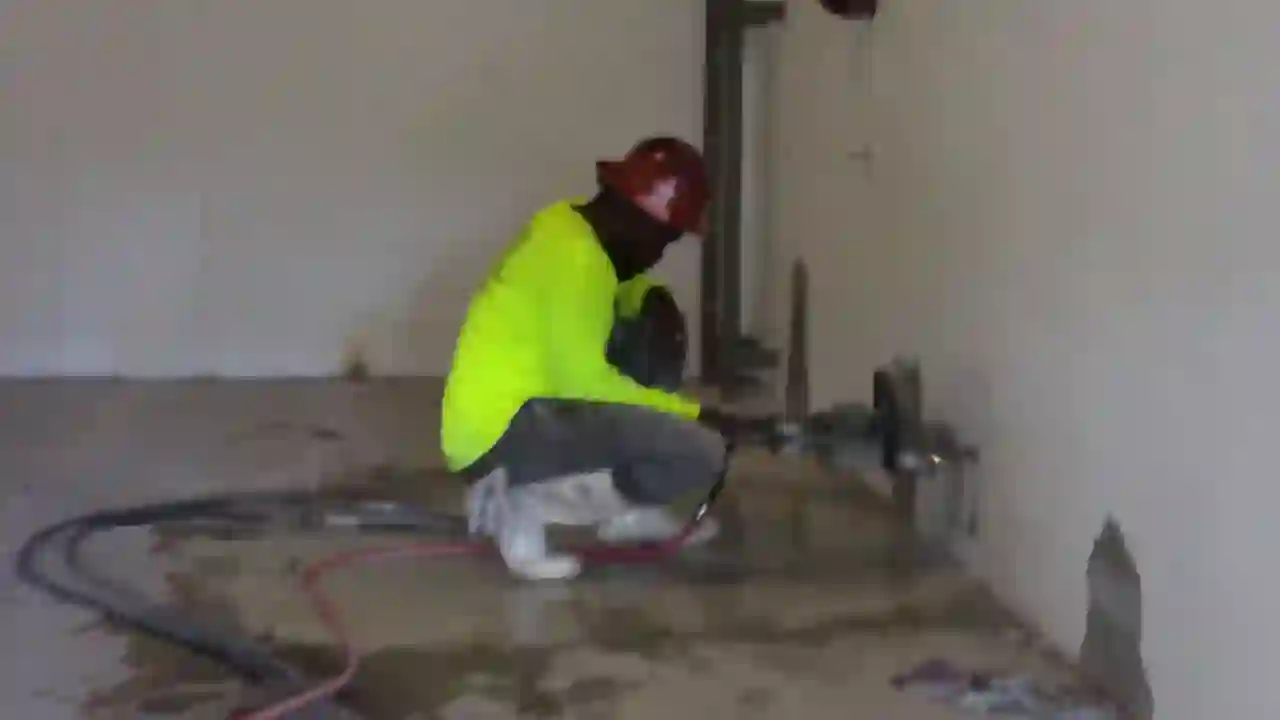
Before a single chisel touches a concrete surface, a competent person must complete a structural assessment. This is especially critical on projects involving advanced concrete removal in Miami’s structural demolition projects, where post-tensioned slabs and high-strength concrete systems are common. The pre-task plan must address:
- Tendon and rebar mapping: Ground-penetrating radar (GPR) scanning must be completed to identify post-tensioned tendons, embedded conduit, and rebar layout before chipping begins. Striking an active post-tensioned tendon can result in explosive release of stored energy — a life-safety event.
- Load path analysis: A structural engineer must confirm that the planned removal sequence will not compromise load distribution. Removing concrete from a column or beam without shoring is a collapse hazard.
- Shoring and temporary support: Any chipping that reduces the cross-section of a load-bearing member requires temporary shoring to be installed and verified before work proceeds.
- Utility isolation: All embedded electrical conduit must be de-energized and locked out per 29 CFR 1926.417 before chipping begins in that zone.
Crews that skip pre-task planning to save time are the same crews that generate OSHA citations, workers’ compensation claims, and wrongful death litigation. For project managers looking to maintain safety standards while controlling costs, reviewing cost management strategies for large-scale concrete cutting and demolition can help align budget and compliance without compromise.
PPE Selection Matrix for Chipping Hammer Operators and Bystanders
Personal protective equipment for chipping operations is not one-size-fits-all. The selection must be task-specific and hazard-matched:
- Operators: Hard hat (ANSI Z89.1 Type I or II), impact-rated safety glasses plus full face shield, double hearing protection, P100 half-face respirator (or supplied-air respirator in confined spaces), anti-vibration gloves rated to ISO 10819, steel-toed boots with metatarsal guards, and high-visibility vest where mobile equipment is present.
- Bystanders within 20 feet: Hard hat, safety glasses with side shields, hearing protection, and respirator if dust controls are not fully effective.
- Overhead chipping: Add a full face shield, neck gaiter, and long-sleeve cut-resistant shirt to the operator’s standard PPE package.
Anti-vibration gloves deserve special emphasis. HAVS is an irreversible condition. The ISO 10819 standard establishes transmission ratio thresholds for glove effectiveness, and only gloves tested to this standard should be accepted on site. Generic work gloves provide no meaningful vibration attenuation and should not be counted as HAVS mitigation.
Dust Control Engineering and Wet Method Application Protocols
Engineering controls always take precedence over PPE under the OSHA hierarchy of controls. For chipping operations, the two primary engineering controls are wet suppression and local exhaust ventilation (LEV) via HEPA vacuum systems.
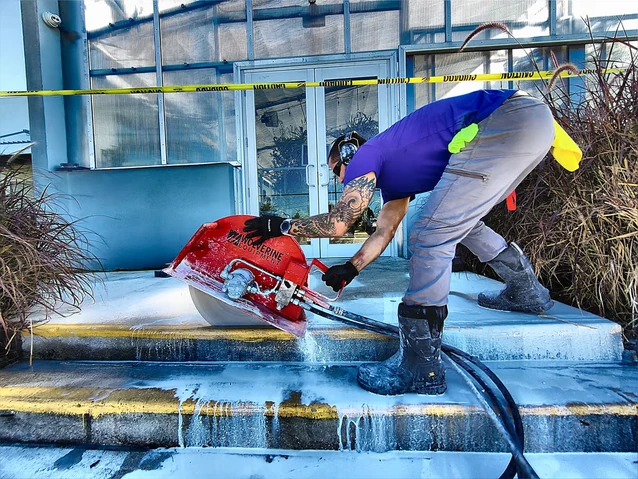
Wet suppression involves delivering water directly to the chipping point through a tool-mounted nozzle or a hand-held hose operated by a second worker. Water flow rates of 0.5 to 1.0 gallon per minute at the cutting point are generally sufficient to suppress respirable dust generation. In environments where water use is restricted — such as certain interior structural repairs or electrically sensitive zones — HEPA vacuum shrouds attached directly to the chisel housing are the required alternative. These systems must use vacuums rated at a minimum of 99.97% filtration efficiency at 0.3 microns. Standard shop vacuums are not compliant and must never be substituted.
For complex multi-trade job sites with overlapping exposure zones, reviewing concrete demolition logistics resources can provide additional operational frameworks for sequencing work to minimize simultaneous dust exposure across multiple crews.
Post-Chipping Site Protocols and Waste Handling Requirements
Once chipping is complete, the job is not done. Concrete debris and dust residue must be managed to prevent secondary silica exposure during cleanup. Dry sweeping of concrete dust is prohibited under OSHA’s silica standard — it re-suspends respirable particles into the breathing zone. Wet mopping, wet sweeping with a dust suppressant compound, or HEPA vacuum collection are the only compliant cleanup methods.
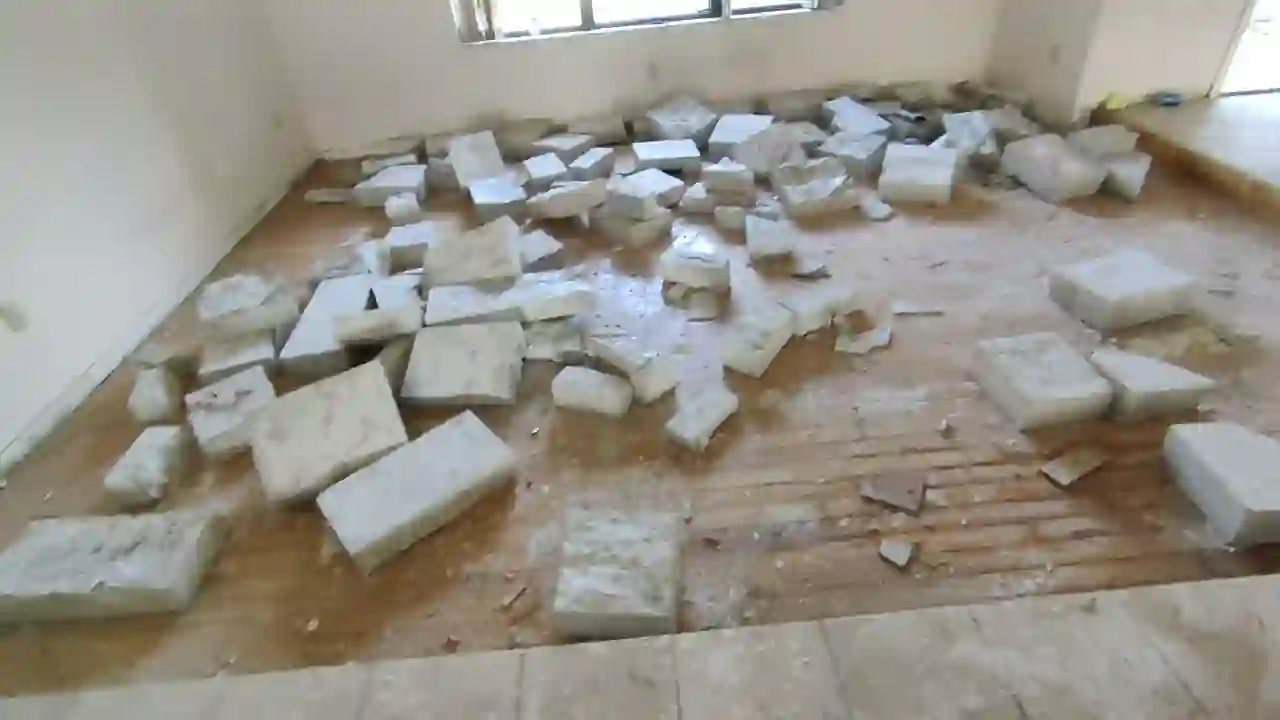
Chipped concrete debris must be collected, containerized, and disposed of in accordance with local municipal solid waste regulations. In Miami-Dade County, concrete rubble from demolition projects is classified as construction and demolition (C&D) debris and must be directed to permitted C&D recycling facilities. If the chipped concrete is suspected to contain lead-based paint, asbestos-containing materials, or other hazardous substances, a hazardous waste characterization must be completed before disposal — and the chipping work itself must have been conducted under a hazmat abatement protocol from the outset.
Chipping concrete is a fundamental trade skill, but it carries a hazard density that demands the same level of systematic safety management as any high-risk demolition activity. From OSHA silica compliance and structural pre-clearance to PPE selection and compliant waste disposal, every step in the process has a right way and a wrong way. On a professional job site, there is only one acceptable standard — and it starts before the first tool is ever picked up.