The Hazard Landscape Every Concrete Saw Cutting Contractor Is Operating In Right Now
Walk onto any active concrete cutting job site and you are immediately inside one of the most hazard-dense environments in the construction trades. Concrete saw cutting contractors deal with a convergence of risks that few other specialty contractors face simultaneously — respirable crystalline silica, high-torque blade mechanics, wet electrical environments, vibration-induced injury, and noise levels that can cause permanent hearing damage within minutes of unprotected exposure. OSHA has made it abundantly clear through its Silica Rule (29 CFR 1926.1153) and its broader construction safety standards that ignorance of these hazards is not a defense. Citations are increasing. Fines are escalating. And in the worst cases, crews are getting hurt. Understanding the full scope of these risks — and the specific protocols that mitigate them — is not optional for any contractor operating at a professional level in this trade.
OSHA 29 CFR 1926.1153 and the Silica Exposure Action Levels That Define Your Legal Obligations
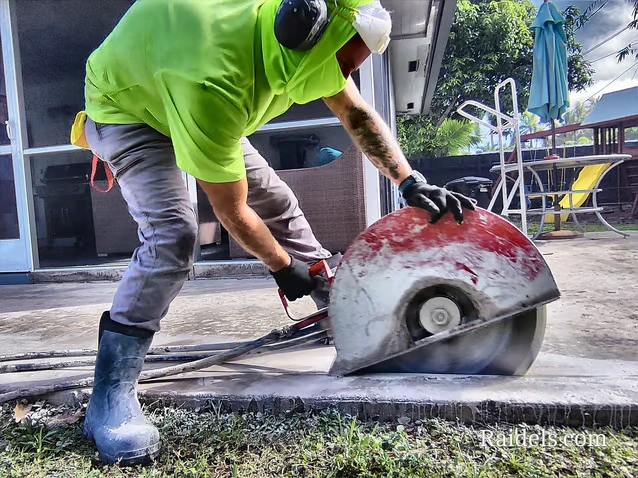
The single most consequential regulatory framework for concrete saw cutting contractors is OSHA’s Respirable Crystalline Silica Standard for Construction. This standard establishes a Permissible Exposure Limit (PEL) of 50 micrograms per cubic meter of air (50 µg/m³) as an 8-hour time-weighted average, and an Action Level (AL) of 25 µg/m³. When dry cutting operations are performed — even briefly — silica concentrations at the operator’s breathing zone can spike to levels hundreds of times above the PEL within seconds.
For concrete saw cutting contractors, compliance under Table 1 of the Silica Standard requires specific engineering controls tied to specific tasks. Walk-behind saws used for cutting concrete must be operated with a blade-mounted water delivery system that continuously delivers water to the blade, or alternatively, a vacuum dust collection system with a HEPA filter rated at 99 percent efficiency or better. There is no gray area here. The standard specifies the control method by task type, and contractors must implement those controls before work begins — not after air monitoring reveals a problem.
Operators must also be enrolled in a medical surveillance program if they are exposed at or above the Action Level for 30 or more days per year. This program includes a baseline chest X-ray, pulmonary function testing, and a symptom questionnaire administered by a PLHCP (Physician or Licensed Health Care Professional). Contractors who skip this step face significant citation exposure during OSHA inspections. For a deeper technical look at what happens to concrete at the material level during cutting operations, this breakdown of the science behind concrete cutting provides important context for understanding why dust generation is so aggressive in high-PSI mixes.
Blade Safety Mechanics — Kickback Prevention, Torque Management, and Pinch Hazard Protocols
Diamond blade failures and kickback events are among the most acute injury risks in concrete saw cutting. A blade operating at 4,000 to 6,000 RPM that contacts an unexpected aggregate void, a rebar cluster, or a pre-stressed tendon can kick back with enough force to cause fatal injury. Concrete saw cutting contractors must enforce a strict pre-cut inspection protocol that includes the following steps without exception:
- Blade inspection for segment loss, cracks, and core warping before every cut — not every day, before every cut
- Blade speed verification to confirm the blade’s rated RPM matches or exceeds the saw’s no-load speed at the spindle
- Arbor torque confirmation using a calibrated torque wrench — hand-tightening is never acceptable on production equipment
- Blade guard integrity check — guards must cover at least half the blade diameter and must be properly adjusted for cutting depth
- Pre-cut GPR (Ground Penetrating Radar) scan to identify embedded rebar, conduit, post-tension cables, and utility lines in the cut path
Pinch hazards are especially common during slab cutting on elevated decks where concrete sections can shift as cuts progress. Contractors must use wedges and shoring to stabilize cut sections before the final pass. Walk-behind saw operators should never stand directly behind the saw during a cut — the operator’s position should be offset to the side to avoid being in the blade’s kickback trajectory.

Wet Cutting Electrical Hazards and Ground Fault Protection Requirements
Water and electricity are both essential to professional concrete saw cutting operations, and their coexistence on a job site creates serious electrocution risk. OSHA 29 CFR 1926.404 mandates Ground Fault Circuit Interrupter (GFCI) protection for all 120-volt, single-phase, 15- and 20-ampere receptacle outlets used in construction. For concrete saw cutting contractors operating electric saws in wet environments — which describes virtually every professional wet-cutting operation — GFCI protection is non-negotiable.
Contractors should also verify that all extension cords are rated for outdoor wet-location use (marked W-A or W), that cord connections are elevated off standing water using cord hooks or cable bridges, and that generator grounding is properly established before any cutting begins. In Miami’s climate, where afternoon thunderstorms can flood a job site in minutes, these protocols are especially critical. Hot weather and humidity conditions in South Florida compound electrical hazard risks by accelerating equipment insulation degradation and increasing operator perspiration, which lowers skin resistance and increases electrocution severity.
For contractors working on Miami-area contracting projects, local code enforcement increasingly cross-references OSHA electrical standards during permit inspections. Having documented GFCI testing logs and equipment inspection records on-site is a best practice that protects contractors during both OSHA and municipal inspections.
Hand-Arm Vibration Syndrome Prevention in High-Volume Saw Operations
Hand-Arm Vibration Syndrome (HAVS) is a progressive, irreversible neurological and vascular disorder caused by prolonged exposure to vibrating hand tools and equipment. Concrete saw cutting contractors who operate handheld chainsaws, angle grinders, and demo saws for extended periods are at measurable risk. The European Union’s Physical Agents Directive established an exposure action value of 2.5 m/s² A(8) and an exposure limit value of 5 m/s² A(8) — standards that OSHA currently references as guidance even without a formal U.S. regulatory equivalent.
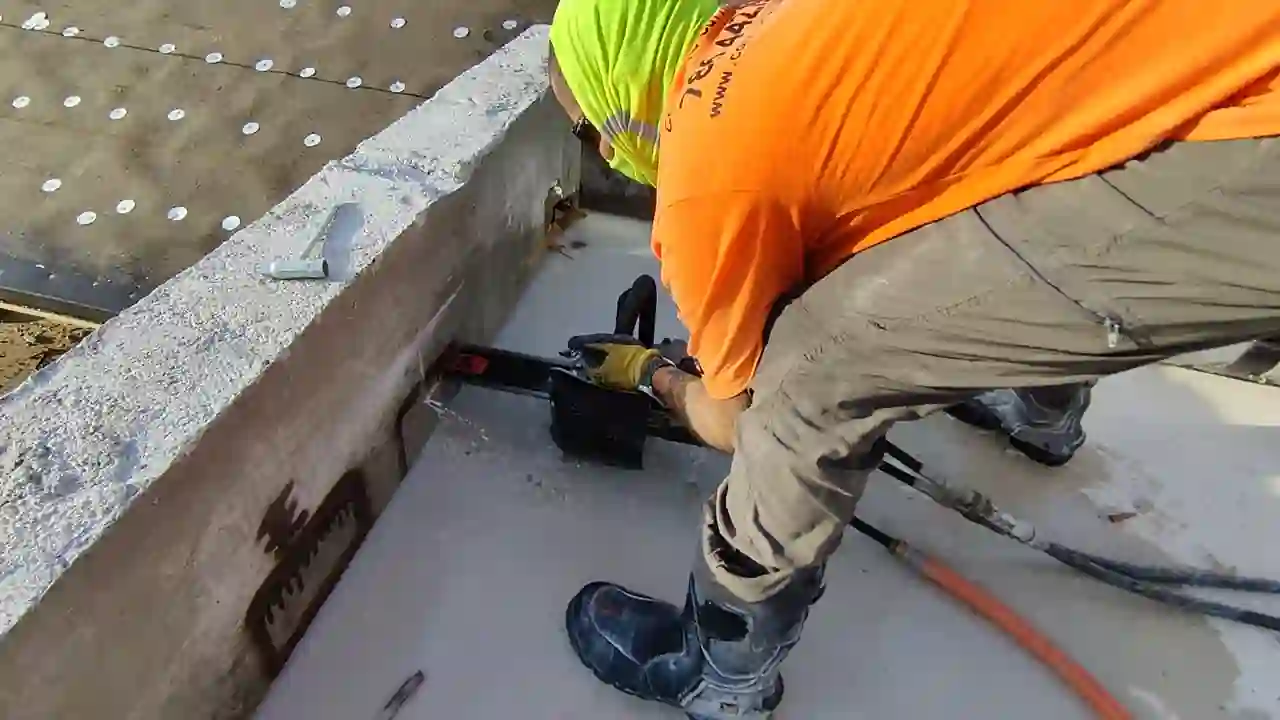
Contractors should implement vibration exposure tracking using manufacturer-published vibration emission data and actual daily tool usage logs. Anti-vibration gloves rated to ISO 10819 standards can reduce transmission values, but they are not a substitute for engineering controls. Tool rotation schedules — limiting any single operator to 30-minute continuous intervals on high-vibration equipment — are a practical and effective control measure. Chainsaw cutting operations in particular generate sustained vibration profiles that place operators at elevated HAVS risk without proper rotation protocols.
Noise Exposure Limits and Hearing Conservation Program Requirements
OSHA’s Noise Standard (29 CFR 1926.52) establishes a permissible noise exposure of 90 dBA for an 8-hour time-weighted average, with a 5 dB exchange rate. Walk-behind concrete saws routinely generate 100 to 110 dBA at the operator position. At 100 dBA, OSHA’s permissible exposure time drops to 2 hours. At 110 dBA, it drops to 30 minutes. This means that on a typical full-day cutting operation, operators are exceeding permissible noise doses before noon without adequate hearing protection.
Concrete saw cutting contractors must provide hearing protection with a Noise Reduction Rating (NRR) sufficient to bring effective exposure below the PEL. Foam earplugs with an NRR of 29 or higher, or earmuff-style protectors with equivalent ratings, are the standard solution. Contractors running crews on concrete demolition projects that involve both saw cutting and impact demolition simultaneously must account for the combined noise exposure from multiple sources when calculating dose.
Jobsite Hazard Communication and Pre-Task Safety Planning That Actually Works
A written Hazard Communication Plan (HazCom) under OSHA 29 CFR 1926.59 is required for any job site where hazardous chemicals — including concrete dust classified as a hazardous substance — are present. Concrete saw cutting contractors must maintain Safety Data Sheets (SDS) for all chemical products used on site, including blade coolants, curing compounds, and any chemical used in joint preparation.
Pre-task planning, often called a Job Hazard Analysis (JHA) or Activity Hazard Analysis (AHA), is the most effective operational tool for preventing incidents on cutting jobs. A properly structured JHA for a concrete saw cutting operation should identify every step in the task sequence, the specific hazard associated with each step, and the control measure that eliminates or reduces that hazard. It should be reviewed with the crew before work begins — not filed in a binder in the superintendent’s truck. Crews who understand why a control measure exists are far more likely to implement it consistently than crews who are simply told to follow a rule.
Documenting these pre-task meetings with a sign-in sheet creates a paper trail that is invaluable during OSHA inspections and in the event of a workers’ compensation claim. For concrete saw cutting contractors building a professional safety program from the ground up, this documentation discipline is what separates contractors who survive regulatory scrutiny from those who don’t.
Building a Safety Culture That Protects Crews and Competitive Positioning
Safety compliance in concrete saw cutting is not a cost center — it is a competitive differentiator. General contractors and project owners increasingly require documented safety programs, EMR (Experience Modification Rate) scores below 1.0, and proof of OSHA 10 or OSHA 30 certifications from specialty subcontractors before awarding work. Concrete saw cutting contractors who have invested in rigorous safety infrastructure consistently win bids that less-compliant competitors cannot access.
The protocols outlined here — silica controls, blade safety mechanics, GFCI protection, HAVS prevention, noise management, and pre-task planning — are not theoretical best practices. They are the operational baseline for any contractor serious about protecting crews, maintaining insurance coverage, and building a sustainable business in this trade. The hazards are real. The regulations are specific. And the contractors who treat safety as a core technical competency, not an administrative burden, are the ones building the strongest businesses in this market.