Why Indian Creek Village Demolition Sites Operate Under a Different Safety Standard
Indian Creek Village is one of the most exclusive and tightly regulated municipalities in Miami-Dade County. With a permanent population barely exceeding 80 residents and an assessed property value that routinely ranks among the highest per capita in the United States, any construction and demolition activity here is subject to extraordinary scrutiny — from local code enforcement, Miami-Dade permitting authorities, and federal OSHA compliance officers alike. If you’re a contractor, concrete cutter, or demolition crew chief preparing to work on this barrier island, you need to understand that the safety protocols governing your work are not suggestions. They are enforceable, inspectable, and capable of shutting down your project before noon on day one.
This post breaks down the specific hazard categories, OSHA compliance requirements, and field-level safety procedures that apply to concrete cutting and structural demolition work in Indian Creek Village. Whether you’re coring through a post-tension slab, saw-cutting a reinforced foundation wall, or managing a full structural teardown, the protocols covered here are non-negotiable.
Silica Dust Hazard Control Under OSHA 29 CFR 1926.1153
Respirable crystalline silica is the single most dangerous airborne hazard generated during concrete cutting and demolition. OSHA’s silica standard for construction — 29 CFR 1926.1153 — establishes a permissible exposure limit (PEL) of 50 micrograms per cubic meter of air, averaged over an 8-hour shift. On a dense urban island like Indian Creek Village, where demolition debris has nowhere to disperse and neighboring luxury estates sit within feet of your work zone, silica control is both a legal obligation and a liability issue of the highest order.
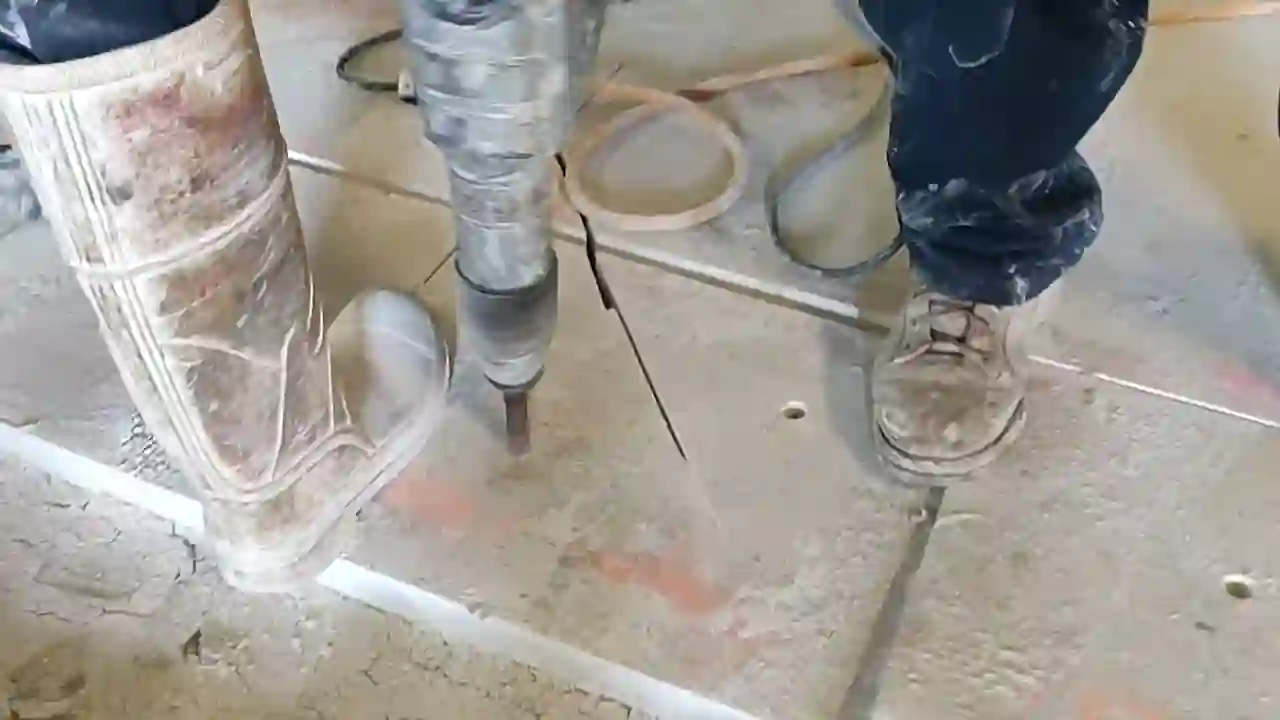
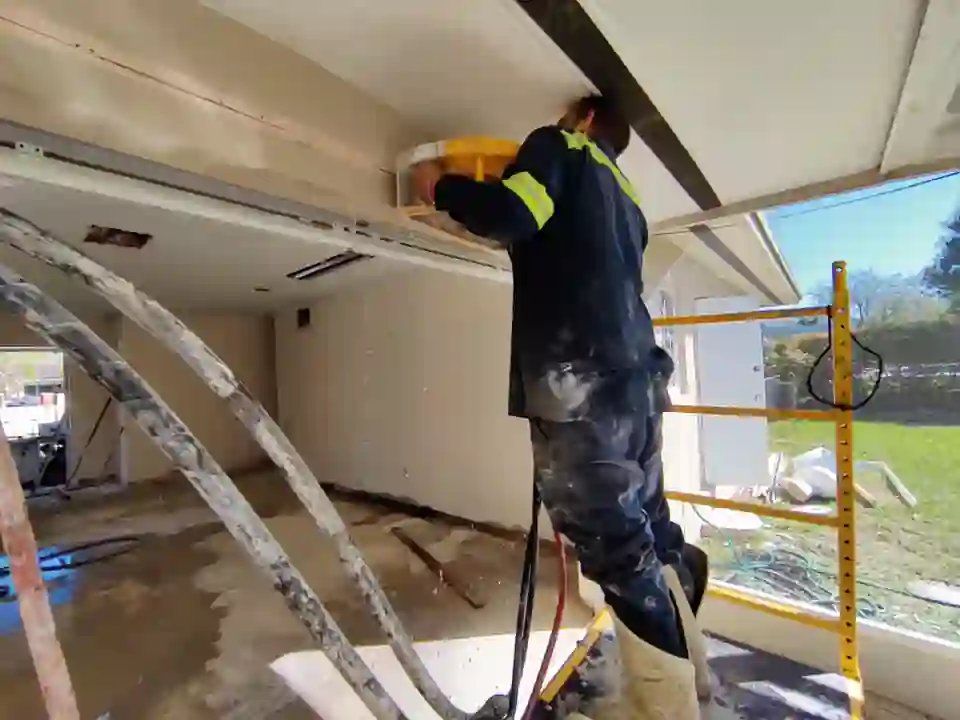
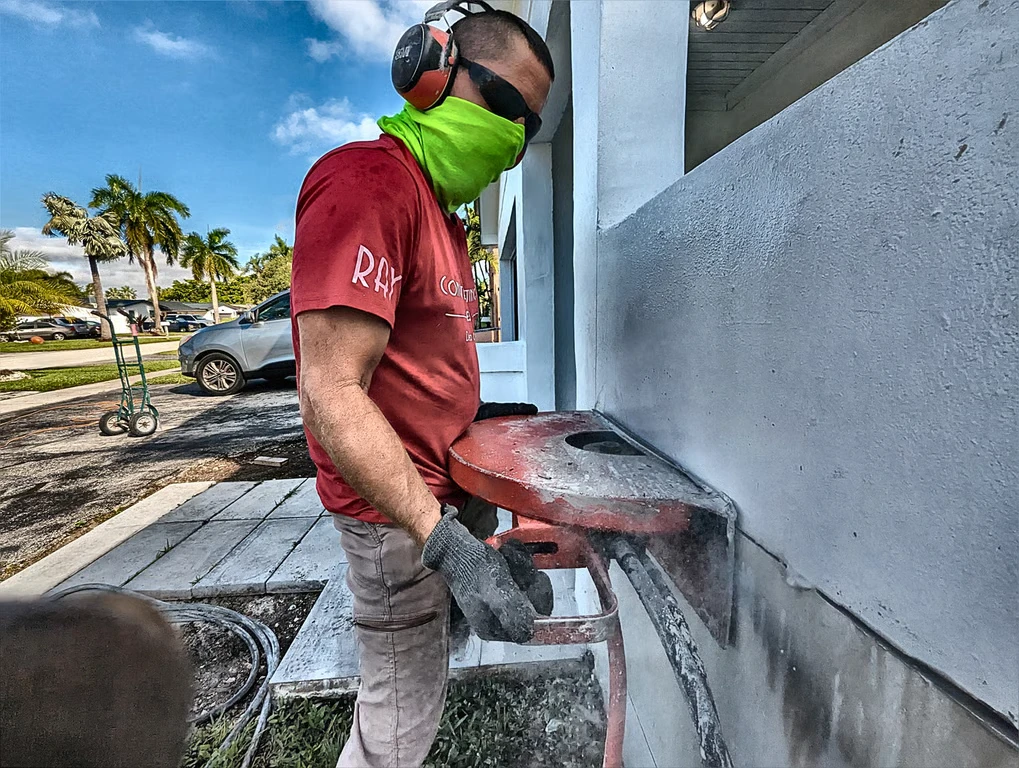
Compliant silica control on Indian Creek demolition sites requires a written Exposure Control Plan (ECP) that identifies each task generating silica, the engineering controls in use, and the designated competent person responsible for oversight. For concrete saw cutting — whether flat slab, wall, or curb — wet cutting with continuous water delivery directly at the blade is the baseline engineering control. Dry cutting with a HEPA-filtered vacuum system attached to the tool shroud is acceptable only when wet methods are infeasible and must be documented as such. Air monitoring is required whenever a task is not covered by Table 1 of the standard or when the competent person has reason to believe exposures may exceed the action level of 25 µg/m³.
- Wet cutting systems must deliver water at a flow rate sufficient to suppress visible dust at the blade contact point — typically 0.5 to 1.5 gallons per minute depending on blade diameter and cutting depth.
- HEPA vacuum shroud systems must achieve a minimum capture velocity of 100 feet per minute at the tool inlet and use filters rated at 99.97% efficiency at 0.3 microns.
- Respirator selection for tasks not fully controlled by engineering means requires at minimum a half-face air-purifying respirator with P100 filters; N95 is insufficient for crystalline silica.
- Housekeeping protocols must prohibit dry sweeping or compressed air blowdown of silica-laden surfaces — wet methods or HEPA vacuuming only.
Structural Hazard Assessment Before Any Concrete Demolition Cut
Before a single diamond blade contacts a load-bearing element on an Indian Creek Village demolition project, a licensed structural engineer must have reviewed and stamped a demolition plan that identifies all load paths, post-tension tendon locations, embedded utilities, and shoring requirements. This is not paperwork formality — it is the difference between a controlled cut and a catastrophic structural failure.
Post-tensioned slabs are extremely common in South Florida’s luxury residential construction stock, and Indian Creek Village properties are no exception. Cutting through a live PT tendon without prior identification and de-tensioning protocols in place releases stored energy equivalent to a high-velocity projectile. Ground-penetrating radar (GPR) scanning is the industry-standard method for locating embedded tendons, rebar, conduit, and voids before cutting begins. GPR scans should be performed by a certified technician using a minimum 1.6 GHz antenna for shallow concrete applications, and scan results must be marked directly on the slab surface with paint before any cutting crew is cleared to operate.
For contractors working on cutting reinforced concrete in Miami, the combination of high rebar density, PT tendons, and embedded conduit in older luxury construction makes pre-cut scanning not just best practice but an absolute operational requirement. Skipping this step on an Indian Creek site will expose your crew to physical harm and your company to OSHA General Duty Clause citations that carry penalties up to $15,625 per violation.
Perimeter Control, Exclusion Zones, and Fall Hazard Management
Indian Creek Village’s island geography creates unique site control challenges. Properties are often bounded by Biscayne Bay on one or more sides, meaning demolition debris, runoff, and equipment staging must be managed with environmental compliance in mind in addition to worker safety. Miami-Dade’s stormwater and environmental regulations prohibit concrete slurry, cutting water, and demolition debris from entering waterways — a violation that triggers both county enforcement and potential EPA involvement.
Exclusion zones around active concrete cutting and demolition operations must be established at a minimum radius of 1.5 times the height of the tallest element being demolished, per OSHA 29 CFR 1926.850. On multi-story teardowns, this can mean exclusion zones extending 30 to 50 feet from the active work face. Physical barriers — not just cones or tape — are required when the public or non-essential workers could enter the zone. On Indian Creek, where private security and residents may approach an active site, hard barricading with signage in English and Spanish is the minimum acceptable standard.
Fall protection requirements under 29 CFR 1926.502 apply to any worker at an unprotected edge or opening at 6 feet or more above a lower level. During concrete slab cutting operations near slab edges or floor openings, guardrail systems, personal fall arrest systems, or safety net systems must be in place before work begins. Saw operators working near slab perimeters must be tied off to an anchor point rated at 5,000 pounds minimum, and the anchor must be independent of any element being cut or demolished.
Tool-Specific Safety Requirements for Diamond Blade Concrete Cutting
Diamond blade selection and operational safety are areas where technical precision directly prevents injury. Blade segment loss, blade warping, and blade over-speed are the three primary mechanical failure modes that injure concrete cutting operators. OSHA 29 CFR 1926.303 governs abrasive wheel machinery and establishes maximum operating speed requirements — every diamond blade must be operated at or below the RPM rating stamped on the blade core, and blade guards must cover at least the upper half of the blade at all times during operation.
For deep cuts in reinforced concrete — common in Indian Creek Village foundation work and retaining wall demolition — segmented diamond blades rated for hard aggregate applications should be specified. Miami-Dade’s limestone-based concrete aggregate is moderately abrasive, and blade bond hardness must match the aggregate hardness to prevent glazing or premature segment loss. Operators should inspect blades before each use for segment cracks, core deformation, and keyhole wear at the arbor. A cracked segment on a 14-inch blade spinning at 5,000 RPM becomes a ballistic fragment — there is no acceptable tolerance for operating damaged blades.
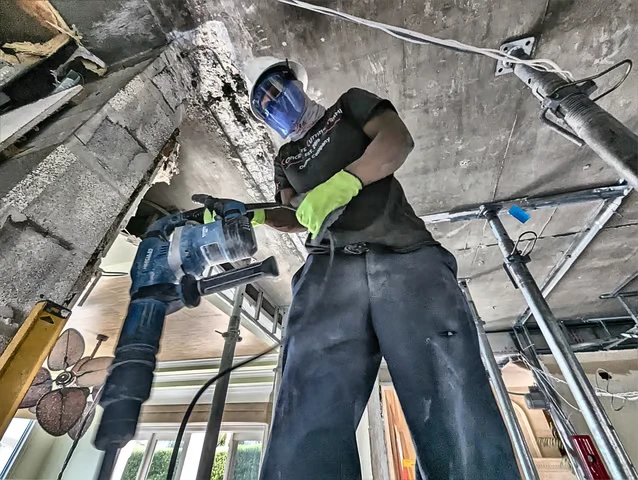
For those evaluating whether manual demolition methods are appropriate for smaller scope work, understanding whether you can remove concrete by hand and the physical hazard profile of each method is essential before committing to a tool selection. Handheld demolition hammers generate significant vibration exposure — operators must be monitored for Hand-Arm Vibration Syndrome (HAVS) risk under prolonged use scenarios, and tool rotation schedules should limit continuous jackhammer operation to no more than 2 hours per operator shift.
Noise Exposure Limits and Hearing Conservation on Demolition Sites
Concrete cutting and demolition generate sustained noise levels between 95 and 115 dB(A) depending on tool type, concrete thickness, and aggregate hardness. OSHA’s noise standard, 29 CFR 1926.52, establishes a permissible exposure limit of 90 dB(A) over an 8-hour TWA, with mandatory hearing conservation programs triggered at 85 dB(A). On Indian Creek Village sites — where project timelines are compressed and multiple trades operate simultaneously — cumulative noise exposure can reach hazardous levels rapidly.
Engineering controls for noise should be implemented before relying on PPE. Blade selection affects noise output — continuous rim blades are quieter than segmented blades on certain cuts, and hydraulic power systems are significantly quieter than gas-powered equipment. When engineering controls cannot reduce exposure below the PEL, dual hearing protection — foam earplugs under earmuff-style hearing protectors — is required for operators working in the highest-noise environments. Audiometric testing must be provided within 6 months of initial assignment to noisy work and annually thereafter.
Hazardous Materials Screening for Pre-1980 Construction Demolition
A significant portion of Indian Creek Village’s residential stock was constructed between the 1950s and 1980s, placing it squarely within the era of widespread asbestos-containing material (ACM) use in construction. Before any demolition work begins on structures built prior to 1981, a licensed asbestos inspector must conduct a thorough ACM survey per NESHAP regulations (40 CFR Part 61, Subpart M) and EPA guidance. Regulated ACM — including friable asbestos in pipe insulation, floor tiles, roofing materials, and joint compound — must be abated by a licensed contractor before any mechanical demolition proceeds.
Lead paint is equally prevalent in pre-1978 construction and triggers OSHA’s Lead in Construction standard, 29 CFR 1926.62, whenever demolition activities disturb painted surfaces. Blood lead level monitoring, biological exposure indices compliance, and medical surveillance are all required elements of a compliant lead program on affected Indian Creek Village demolition projects.
Contractors working across residential concrete cutting projects throughout South Florida should maintain standing relationships with certified industrial hygienists who can mobilize quickly for hazmat screening before demolition permits are pulled — delays caused by undiscovered ACM mid-project are far more costly than proactive screening.
Coordination with Indian Creek Village Municipal Requirements and Miami-Dade Permitting
Indian Creek Village operates its own police department and maintains tight control over contractor access, working hours, and site conditions. Demolition and construction permits must be pulled through Miami-Dade County’s Building Department, but the Village itself may impose additional conditions — including restricted working hours, mandatory noise barriers, and requirements for continuous site cleanup — that exceed county minimums. Contractors must confirm with the Village directly before assuming that a county permit alone authorizes work to begin.
For fence and perimeter wall demolition specifically — a common scope item in Indian Creek renovation projects — blade specifications and operational setups must account for both the concrete mix design and the proximity to adjacent property lines. Detailed guidance on blade specs and tool setups for concrete fence cutting in South Florida’s regulatory environment provides a useful technical baseline that applies directly to Indian Creek Village perimeter work.
The bottom line for any contractor approaching Indian Creek Village construction and demolition work is this — the technical, regulatory, and safety requirements here are among the most demanding in the region. Crews that arrive prepared with written safety programs, compliant equipment, pre-cut scanning results, and documented competent persons will work. Those who don’t will be stopped, cited, and removed from the island. Build your safety program before you build your schedule, and every other aspect of the project becomes manageable.