Why North Lauderdale Concrete Fence Jobs Punish Operators Who Guess on Blade Selection
Concrete fence panels throughout North Lauderdale are not a monolithic product. They span precast decorative panels, poured-in-place privacy walls, reinforced masonry fence systems, and hybrid block-and-cap assemblies — each with dramatically different aggregate compositions, rebar schedules, and compressive strengths. When a cutting crew arrives on-site without verified material data and a blade spec sheet matched to that data, they are setting themselves up for segment loss, blade warping, thermal cracking, or outright equipment failure. This is not hyperbole. It is the documented outcome of treating concrete fence cutting as a generic demolition task rather than a precision cutting operation. The equipment decisions made in the staging area determine everything that happens at the cut line.
Material Profiling Before Any Blade Touches a North Lauderdale Fence Panel
The first technical step on any North Lauderdale concrete fence project is material profiling. Broward County construction from the 1980s and 1990s — which covers a significant portion of existing fence infrastructure in North Lauderdale — commonly used Florida limerock aggregate. Limerock is a relatively soft aggregate with a Mohs hardness in the 3–4 range, which means it wears diamond segments at an accelerated rate compared to harder aggregates like granite or trap rock. If you’re running a hard-bond blade on limerock concrete, the diamond crystals won’t expose properly, and you’ll glaze the segment surface within the first few linear feet of cut.
Newer concrete fence installations in North Lauderdale, particularly HOA-driven perimeter walls built post-2005, frequently incorporate silica sand and crushed granite aggregate mixes brought in from Central Florida quarries. These materials sit in the Mohs 6–7 range and demand a soft-bond matrix so the diamonds can self-sharpen as the bond erodes at the correct rate. Misreading aggregate hardness is the single most common cause of premature blade failure on fence cutting jobs throughout South Florida. Our crews working across Miami-Dade and Broward County projects always pull aggregate data before finalizing the blade order.
Compressive Strength Ranges Typical in North Lauderdale Fence Construction
Precast concrete fence panels in this region typically test between 4,000 and 6,000 PSI. Poured-in-place privacy walls often land between 3,000 and 5,000 PSI depending on the mix design and age. Reinforced masonry fence systems using CMU block can vary wildly — the grout cores may test at 2,500 PSI while the face shells of the block hit 3,500 PSI. Understanding these ranges helps determine not just bond hardness but also the appropriate diamond concentration in the segment. Higher PSI concrete benefits from higher diamond concentration blades (40–50 concentration range), which distribute cutting load across more diamond crystals and reduce individual crystal stress.
Diamond Blade Specifications for Cutting Concrete Fence Panels in North Lauderdale
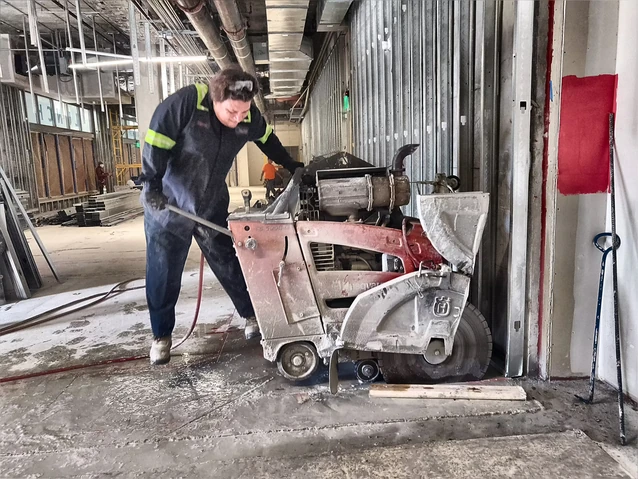
For the majority of North Lauderdale concrete fence cutting applications, the baseline specification starts with a segmented turbo or standard segmented blade in the 14-inch to 18-inch diameter range. The segment geometry matters significantly. A standard keyhole or straight segment profile works well on uniform precast panels with predictable aggregate. However, if the fence system includes decorative surface profiles, exposed aggregate finishes, or embedded stone veneer — all common in upscale North Lauderdale residential communities — a turbo segment with angled gullets improves chip clearance and reduces surface chipping along the cut edge.
Bond Hardness Matrix Matched to Broward County Aggregate Types
- Soft Bond (D or E grade): Use on hard granite or trap rock aggregate concrete with PSI above 5,000. Allows rapid diamond exposure through faster matrix wear. Ideal for post-2005 fence installations using Central Florida aggregate mixes.
- Medium Bond (F or G grade): The most versatile specification for mixed-aggregate fence systems in North Lauderdale. Suitable for 3,500–5,500 PSI concrete with limerock or blended aggregate. This is the default starting point for most fence panel cuts in the area.
- Hard Bond (H or I grade): Reserved for extremely soft, abrasive concrete with PSI below 3,000. Common in older decorative fence panels where high sand content creates rapid segment wear. Hard bond slows matrix erosion to match the slower diamond exposure rate needed in abrasive material.
Segment height is another variable that operators frequently overlook. Standard segment heights of 10mm are appropriate for general fence cutting. Increasing to 12mm or 15mm segment height extends blade life on longer linear cuts — particularly relevant when cutting full fence runs of 50 feet or more for HOA renovation projects. The added segment material gives you more diamond-bearing matrix before the blade reaches the core plate, which is the point of no return on any cutting blade.
Power Unit Specifications and RPM Matching for Fence Cutting Equipment
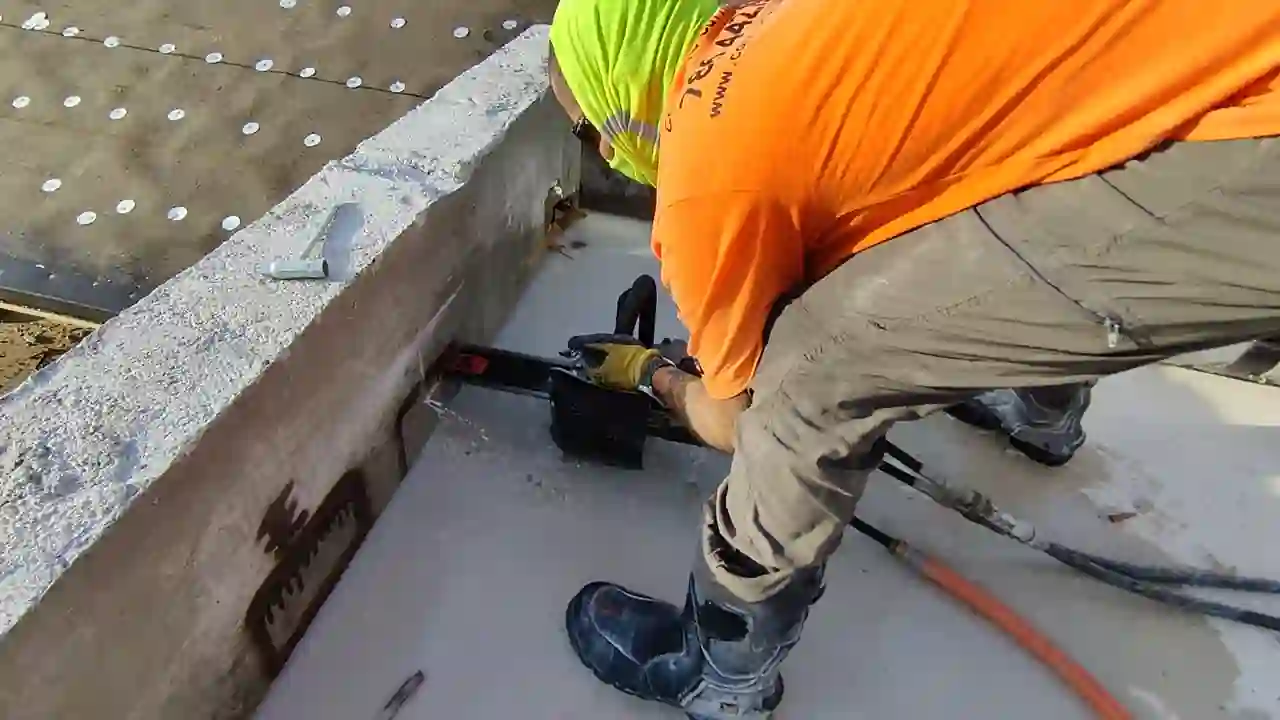
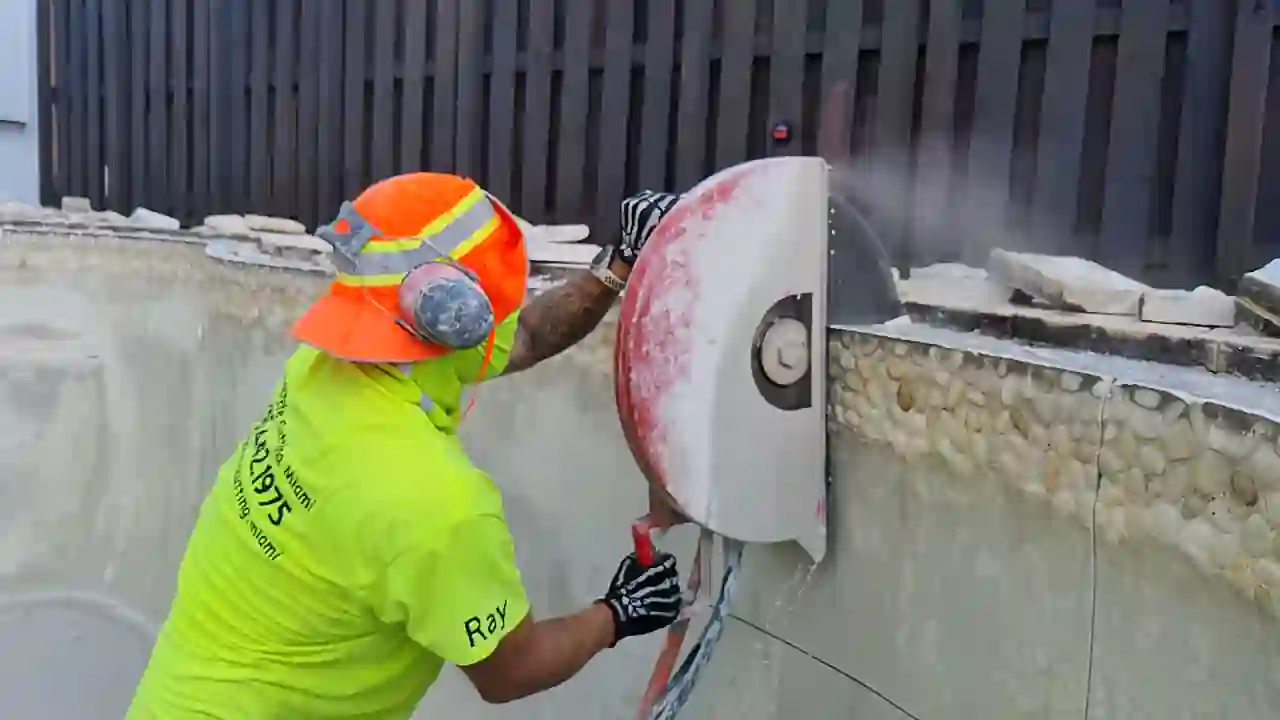
The power unit selection for North Lauderdale concrete fence cutting depends entirely on site access and cut orientation. For vertical cuts through fence panels — the most common scenario in fence removal or section replacement — a hydraulic hand saw or electric hand saw in the 20–35 horsepower equivalent range is the standard specification. Blade tip speed must be maintained between 16,000 and 18,000 surface feet per minute (SFPM) for optimal diamond cutting performance. Running below this range reduces cutting efficiency and increases segment wear. Running above it generates excess heat and risks segment disbonding.
For operators unfamiliar with the mechanical advantages hydraulic power units offer on confined fence cutting sites, the detailed breakdown of hydraulic hand saw performance in South Florida concrete applications covers the torque curve and flow rate specifications that matter on these jobs. Hydraulic systems maintain consistent blade speed under load better than electric alternatives, which is a meaningful advantage when cutting through rebar-reinforced fence panels where load spikes are frequent and unpredictable.
Water Flow Rates and Cooling Requirements During Fence Panel Cuts
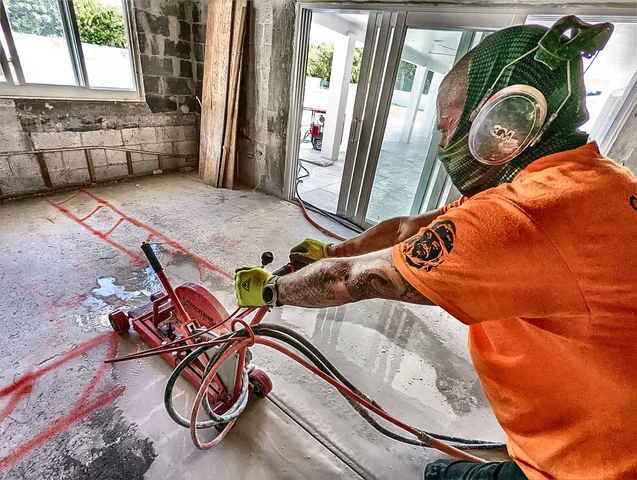
Wet cutting is non-negotiable on concrete fence work. The minimum water flow rate for a 14-inch blade operating at full depth is 0.5 gallons per minute (GPM). For 18-inch blades cutting through 8-inch thick reinforced fence panels, increase water flow to 1.0–1.5 GPM to maintain adequate slurry evacuation and blade cooling. Insufficient water flow is the primary cause of blade warping on fence cutting jobs — the steel core reaches temperatures that compromise its metallurgical integrity, and the blade loses its lateral stability. A warped blade in a fence panel cut produces a crooked cut line, increases the risk of blade binding, and creates a serious kickback hazard. All safety protocols for wet cutting operations are documented in our safety measures reference library.
Rebar Encounter Protocols and Blade Upgrade Thresholds
North Lauderdale concrete fence systems built to current Broward County wind load requirements — particularly those in HOA communities required to meet 140 MPH wind exposure categories — are heavily reinforced. Rebar schedules of #4 bar at 16 inches on center vertically, with horizontal #3 bar at 24 inches, are common in poured-in-place fence walls. When your blade will encounter rebar on more than 30% of the cut path, upgrade to a rebar-rated blade with a higher steel-cutting diamond concentration. These blades use a different diamond crystal shape — blocky, high-strength crystals rather than the elongated crystals optimized for pure concrete cutting — that maintains performance through repeated steel contact without accelerated segment erosion.
Operators working projects that span multiple fence types across a single site should carry two blade specifications: a standard medium-bond blade for unreinforced or lightly reinforced sections, and a dedicated rebar blade for the heavily reinforced posts and cap beam connections. Switching blades at the appropriate transition point is faster and more cost-effective than running a single compromised blade through the entire job. Our project teams serving Southwest Florida fence and wall cutting work apply the same dual-blade protocol on reinforced perimeter wall projects.
Depth of Cut Calculations for North Lauderdale Fence Panel Thicknesses
Standard precast concrete fence panels in North Lauderdale range from 4 inches to 6 inches in thickness. Poured-in-place privacy walls commonly run 6 to 10 inches thick. A 14-inch diameter blade on a hand saw provides approximately 4.5 inches of maximum cutting depth. This is sufficient for precast panels but falls short on thicker poured walls. For panels exceeding 5 inches in thickness, a 16-inch or 18-inch blade is required to achieve full-depth cuts in a single pass. Two-pass cutting — scoring from one face then completing the cut from the opposite face — is an acceptable alternative when blade diameter is limited by equipment availability, but it requires precise alignment on both faces to prevent step cuts and structural irregularities in the remaining fence sections.
Common Technical Questions on Fence Cutting Blade Selection
Operators and project managers frequently have detailed questions about blade life expectancy, segment bond selection for specific mix designs, and equipment compatibility. The concrete cutting technical FAQ resource addresses the most common specification questions across blade types, power units, and South Florida material conditions. Reviewing that resource before finalizing equipment specs for a North Lauderdale fence project will prevent the most common and most costly field errors.
Concrete fence cutting in North Lauderdale is a technically demanding application that rewards preparation and punishes improvisation. Aggregate profiling, bond hardness matching, blade diameter selection, RPM calibration, and water flow management are not optional refinements — they are the core technical framework that separates a clean, efficient cut from a damaged blade, a blown schedule, and a fence panel that requires rework. Get the specs right before the blade spins, and the job runs exactly as planned.