Why Concrete Driveway Demo Is One of the Most Hazard-Dense Jobs in Residential Construction
Walk up to any residential concrete driveway demo job in Miami-Dade and you’re looking at a convergence of hazards that would make an OSHA inspector reach for a citation pad before the first blade even spins. Rebar-reinforced slabs, embedded conduit, proximity to gas lines, silica particulate, heavy equipment in tight residential driveways — these aren’t edge cases. They’re the standard operating environment. What separates a compliant, injury-free removal from a catastrophic job-site incident is the depth of pre-demolition planning and the discipline of the crew executing it. At Concrete Cutting Miami, we’ve built our entire service model around the premise that precision and safety are not competing priorities — they are the same priority.
Pre-Demo Site Assessment Protocols That Prevent the Injuries Nobody Talks About
Before a single jackhammer makes contact with a driveway slab, a compliant crew conducts a structured site assessment. This isn’t a walkthrough — it’s a documented evaluation that feeds directly into the Job Hazard Analysis (JHA) required under OSHA 29 CFR 1926 Subpart T, the standard governing demolition operations in construction environments. In residential Miami settings, this assessment covers several non-negotiable categories.
- Utility marking and verification: Sunshine 811 call-before-you-dig is the legal floor, not the ceiling. Smart crews supplement utility marks with ground-penetrating radar (GPR) scanning to locate unmarked conduit, irrigation sleeves, and buried electrical feeds common in older Miami neighborhoods.
- Slab composition analysis: Is the driveway unreinforced, wire mesh, or rebar-reinforced? The answer changes the cutting strategy entirely. Cutting through rebar requires specific diamond blade specifications and feed-rate controls that a crew must plan before the saw starts.
- Thickness measurement: Residential driveways in South Florida typically range from 4 to 6 inches, but additions, patches, and overlays can push sections to 8 inches or more. Unexpected thickness mid-cut causes blade binding, kickback, and operator injury.
- Adjacent structure proximity: Driveways abutting garage foundations, footings, or block walls require controlled cut lines to prevent vibration-induced cracking in the adjacent structure.
- Surface water and drainage mapping: Miami’s flat topography and high water table mean standing water can pool under slabs. Exposing saturated sub-base material mid-demo creates slip hazards and equipment instability.
Every item above gets documented. OSHA’s General Duty Clause (Section 5(a)(1)) holds employers responsible for hazards that are recognized and correctable — which means undocumented site conditions aren’t a defense, they’re an aggravating factor.
Crystalline Silica Exposure Controls During Slab Cutting and Breaking
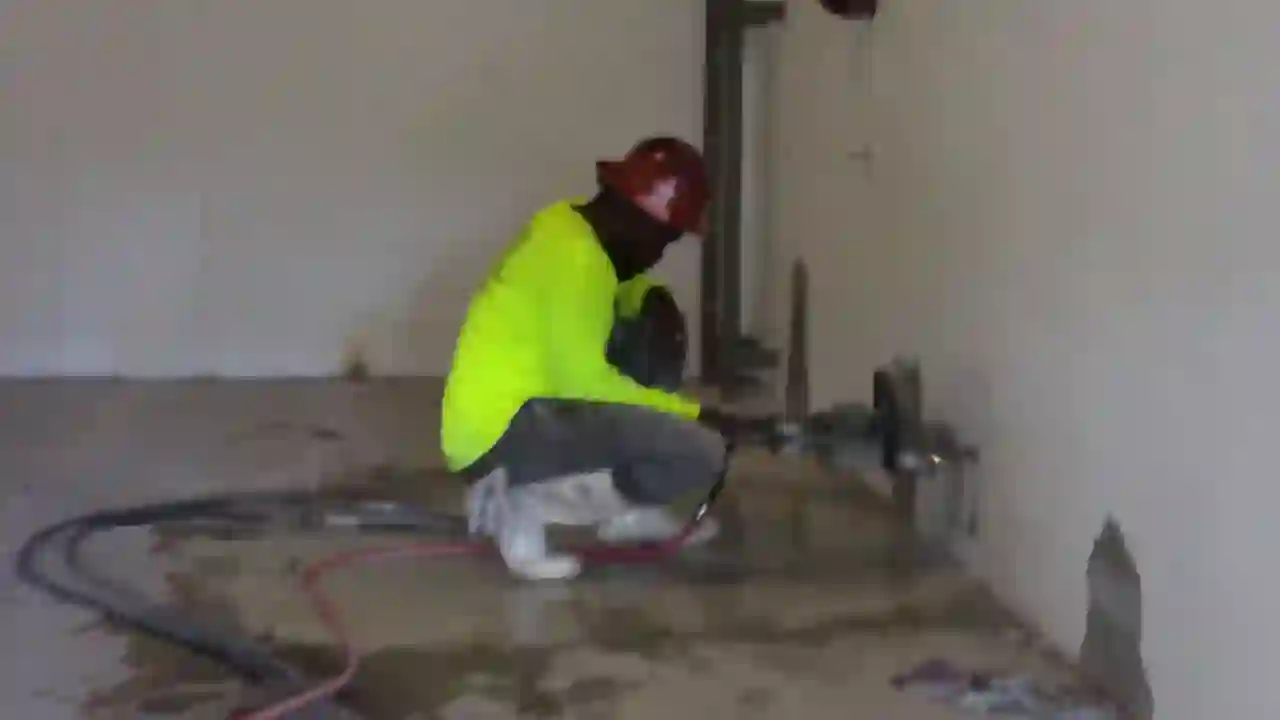
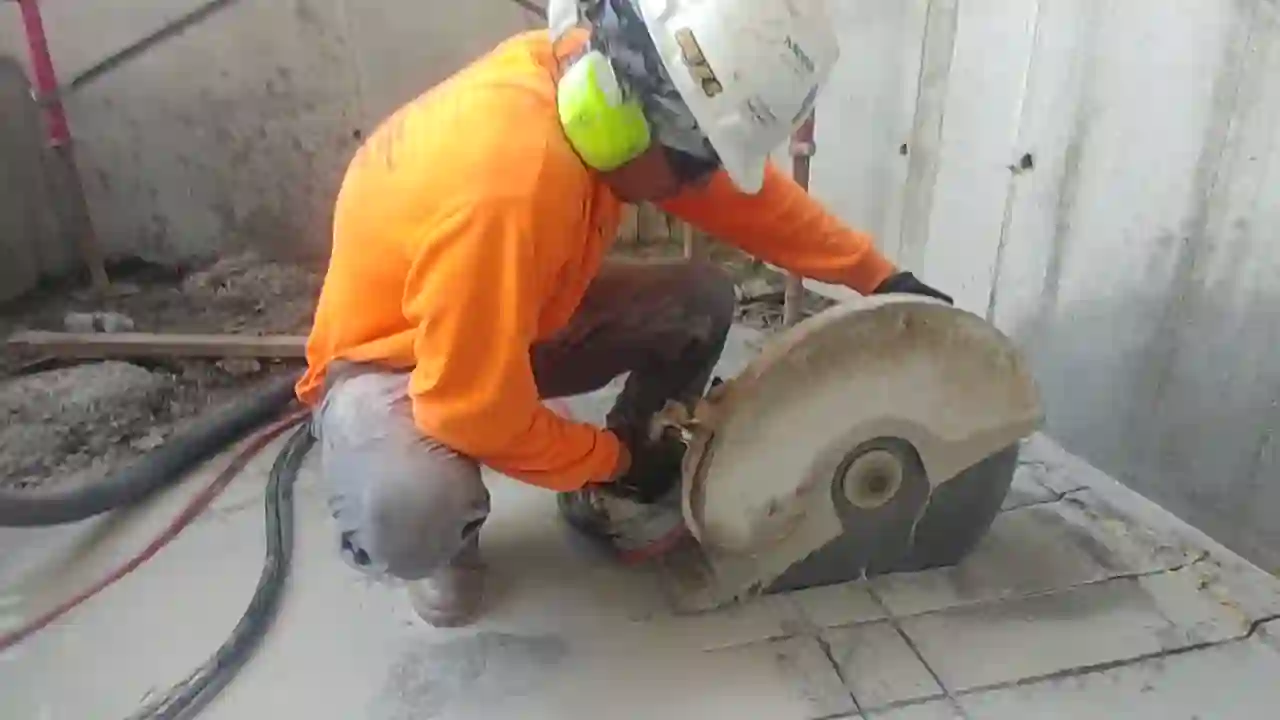
OSHA’s silica standard for construction (29 CFR 1926.1153) is the single most consequential regulatory development in concrete demolition over the past decade. Concrete driveway demo generates respirable crystalline silica at concentrations that can exceed the permissible exposure limit (PEL) of 50 micrograms per cubic meter of air (as an 8-hour TWA) within minutes of dry cutting or jackhammering without controls.
Compliant crews operating in Miami’s South Florida service area deploy a layered exposure control hierarchy:
- Engineering controls first: Wet cutting with integrated water delivery systems on walk-behind saws suppresses silica at the source. Water flow rates must be maintained at manufacturer-specified minimums — typically 0.5 to 1.5 gallons per minute depending on blade diameter — to be effective. Reducing water flow to save time is a compliance violation and a health hazard.
- Local exhaust ventilation (LEV) on handheld tools: Angle grinders, chipping hammers, and handheld saws used for detail work require HEPA-filtered vacuum shrouds. The vacuum must maintain negative pressure at the cutting point during operation.
- Respiratory protection as a supplemental layer: When engineering controls alone cannot maintain exposures below the action level (25 µg/m³), a written respiratory protection program under 29 CFR 1910.134 is required. Half-face respirators with P100 particulate filters are the minimum for slab cutting; powered air-purifying respirators (PAPRs) are recommended for extended breaking operations.
- Exposure monitoring and medical surveillance: Employers must conduct initial monitoring to determine exposure levels. Employees exposed at or above the action level for 30 or more days per year must be enrolled in a medical surveillance program including periodic chest X-rays and pulmonary function testing.
In Miami’s heat and humidity, compliance gets harder. Respirator wear in 90°F ambient temperatures with 80% relative humidity is physiologically demanding. Crews must implement heat stress management protocols — scheduled rest breaks in shaded or air-conditioned areas, hydration schedules, and buddy-system monitoring — concurrently with silica controls. These are not separate programs; they are integrated job-site safety requirements.
Saw Selection, Blade Specification, and Kickback Prevention for Driveway Slab Sectioning
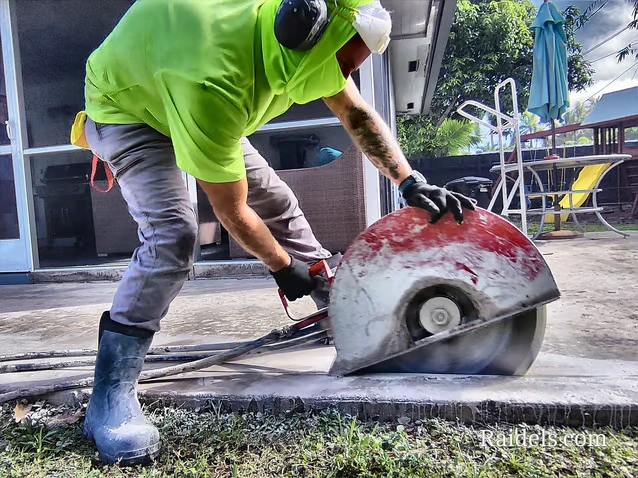
Driveway demo almost always begins with controlled sectioning — cutting the slab into manageable panels before mechanical breaking or removal. The saw and blade selection for this phase directly determines operator safety and cut quality.
For standard 4-to-6-inch residential slabs, a self-propelled walk-behind flat saw with a 14-to-18-inch diamond blade is the appropriate tool. Blade segment specification must match the aggregate hardness of the concrete. Miami’s local mix designs often incorporate limestone aggregate — a relatively soft aggregate that wears blades faster than granite-based mixes. Operators using blades specified for hard aggregate on limestone-heavy Miami concrete will experience glazing, which causes the blade to stop cutting and begin generating heat. A glazed blade in a binding cut is a kickback event waiting to happen.
- Blade tensioning checks: Diamond blades must be inspected for core tension before each use. A blade with a bent or warped core will deflect under load, creating lateral forces that the saw’s blade guard cannot contain.
- Maximum cutting depth discipline: Never cut deeper than the blade’s rated depth in a single pass. For rebar-reinforced slabs, multi-pass cutting with incremental depth increases is the safe protocol.
- Operator stance and body positioning: Walk-behind saw operators must never position themselves directly behind the blade in line with the cut. Kickback energy travels along the cut axis — standing offset to the machine’s centerline reduces exposure to blade ejection events.
- Guard integrity verification: Blade guards are not optional equipment. OSHA 29 CFR 1926.304 requires that all power-driven saws have guards that enclose the blade to the maximum extent practicable. Removed or modified guards are a willful violation.
Mechanical Demolition Phase Hazards and Equipment Stability Controls
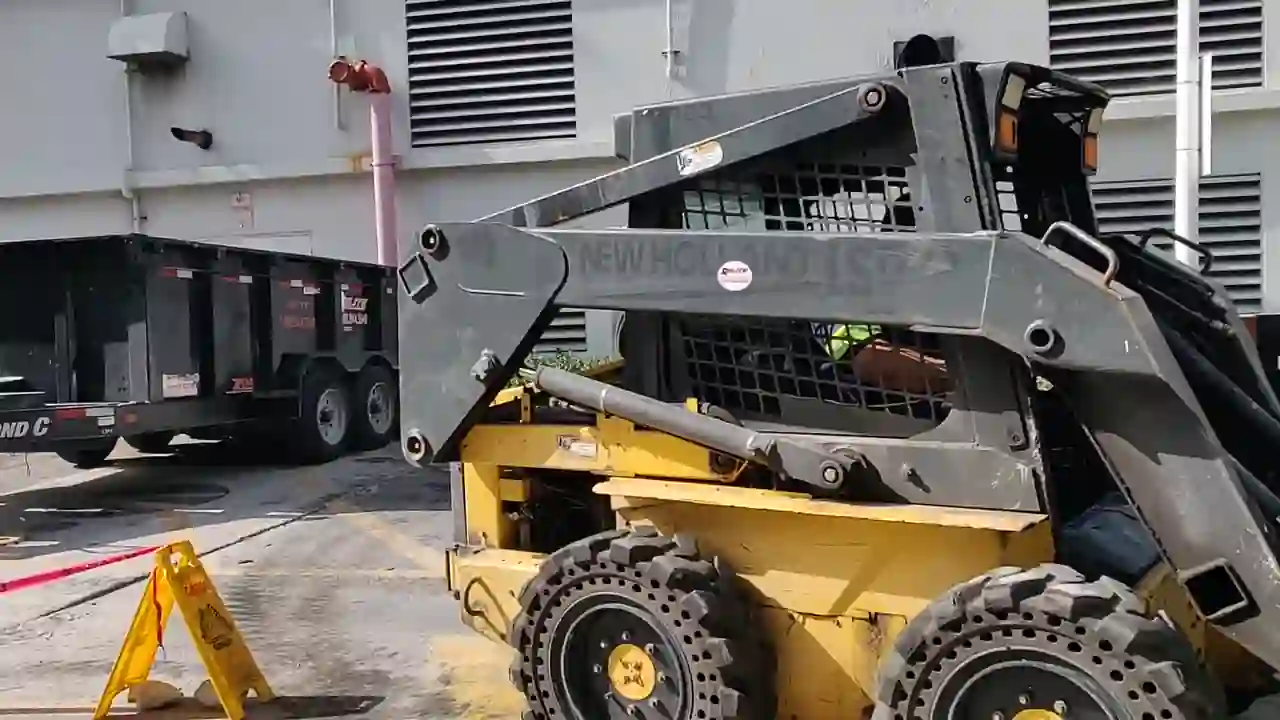
Once sectioned, driveway panels are typically broken and removed using a skid-steer with a hydraulic breaker attachment or a mini-excavator. In tight residential driveways — a common constraint in Miami’s older neighborhoods — equipment stability becomes a critical safety variable.
Ground bearing capacity must be evaluated before positioning heavy equipment. In areas with known limestone cavity formations or where previous excavation has occurred, probing or GPR verification of sub-base integrity is warranted. Equipment rollover on a residential driveway demo site is not a hypothetical — it is a documented incident type in OSHA fatality records.
- Exclusion zones during mechanical breaking: A minimum 10-foot exclusion radius around the breaker’s impact point must be maintained for all personnel not operating the equipment. Flying concrete fragments from hydraulic breaker impacts can travel 15 to 20 feet with lethal force.
- Overhead hazard clearance: Boom height during panel removal must be assessed against overhead utility lines. Miami residential properties frequently have low-hanging service drops. Equipment operators must know the maximum boom height of their machine and the height of all overhead obstructions before beginning lifts.
- Debris staging and haul-out sequencing: Concrete debris must be staged in designated areas that do not obstruct the equipment’s egress path or create trip hazards for ground personnel. Professional driveway removal crews plan debris staging as part of the pre-job layout, not as an afterthought during demolition.
Post-Demo Site Conditions and Environmental Compliance in Miami-Dade
Concrete driveway removal doesn’t end when the last panel is loaded. The exposed sub-base and adjacent landscaping create a new set of compliance obligations — particularly in Miami-Dade County, where stormwater management and environmental regulations are enforced with genuine rigor.
Exposed soil following driveway removal is a stormwater pollution source. Miami’s frequent rain events can mobilize sediment from an unprotected sub-base into storm drains within hours of demo completion. NPDES permit requirements and Miami-Dade’s local stormwater ordinances require immediate erosion and sediment control measures — silt fence installation, inlet protection, or temporary ground cover — when more than one acre of soil is disturbed. For smaller residential projects, best management practices (BMPs) are still expected and legally defensible.
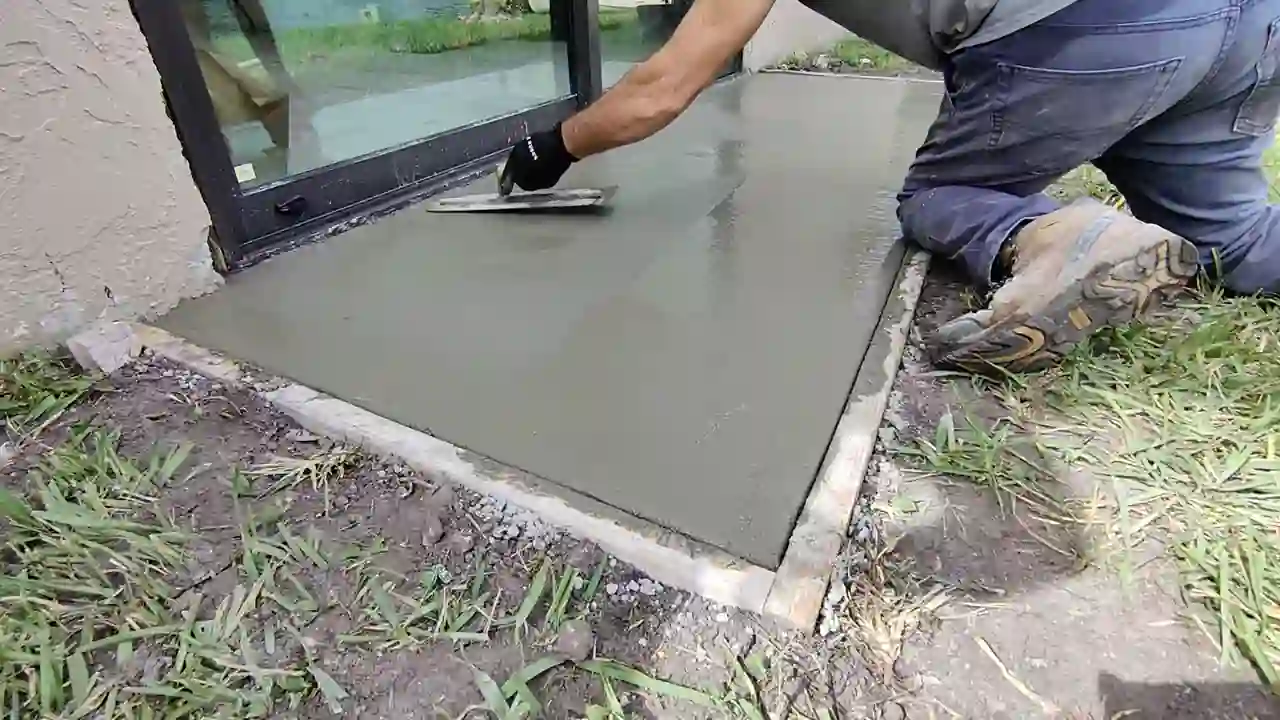
If the removed driveway served a landscaped property, post-demo is also an opportunity to evaluate sustainable surface replacement options. Xeriscaping and permeable paving alternatives are increasingly popular in Miami’s water-conscious residential market, and the sub-base conditions revealed during demo directly inform what replacement surface is structurally appropriate.
Concrete debris itself must be disposed of at licensed facilities or recycled through certified concrete crushing operations. Dumping concrete debris on unpermitted sites is a violation of Florida Statutes Chapter 403 and can result in significant fines for both the contractor and the property owner.
Building a Written Safety Program Specific to Driveway Demolition Operations
OSHA doesn’t require a generic safety program — it requires hazard-specific written programs that address the actual conditions workers encounter. For concrete driveway demo, a compliant written safety program includes a silica exposure control plan, a respiratory protection program, a tool and equipment inspection checklist, an emergency action plan with site-specific evacuation routes, and a competent person designation for each regulated activity on-site.
The competent person requirement is one that many small contractors underestimate. Under OSHA’s construction standards, a competent person must be capable of identifying existing and predictable hazards and must have the authority to take prompt corrective action. This is not a title — it is a demonstrated capability. Crew members designated as competent persons for demolition operations should have documented training in hazard recognition, OSHA standards applicable to demo work, and emergency response procedures.
Whether you’re a property owner evaluating contractors or a crew chief preparing a job package, the standard for concrete driveway demo safety in Miami is not what’s convenient — it’s what’s compliant, repeatable, and protective of every person on that job site. The technical complexity of this work is exactly why experienced, safety-focused crews make all the difference.