Why Equipment Matching Is the First Decision You Make Before Any Slab Cut
Walk onto any concrete cutting job in South Florida and the first thing an experienced operator does is assess the slab — not grab a saw. Aggregate type, compressive strength, rebar spacing, slab thickness, and curing age all dictate which machine and which diamond tooling will actually perform. Cutting a cement slab with mismatched equipment doesn’t just slow the job down — it destroys blades, overloads drive systems, and leaves you with a ragged, structurally compromised kerf. Before a single pass is made, equipment specifications and blade matrix selection have to be locked in. This post breaks down exactly how that decision tree works, from horsepower requirements to diamond concentration grades.
Flat Saw vs. Walk-Behind vs. Hand-Held Saw — Matching the Machine to the Slab Profile
The platform you choose determines blade diameter, RPM range, water flow capacity, and depth-of-cut ceiling. These aren’t interchangeable decisions. Each machine class operates within a specific performance envelope, and exceeding that envelope mid-cut is how motors burn and blades warp.
Hydraulic Flat Saws for High-Production Slab Cutting
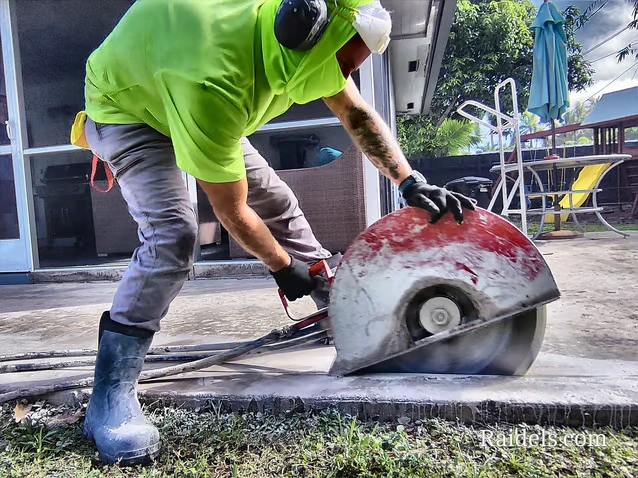
For full-depth cuts through slabs ranging from 4 inches to 18 inches thick, a hydraulic flat saw — also called a road saw or slab saw — is the industry standard. Units like the Husqvarna FS 7000 D or the Stihl BT 360 class machines run diesel or hydraulic drive systems producing between 35 and 65 horsepower at the spindle. Blade diameters on these platforms range from 14 inches up to 60 inches, with the most common production configurations running 18-inch, 24-inch, and 36-inch blades for residential and commercial slab work.
Spindle speed on hydraulic flat saws is typically variable between 900 and 2,200 RPM, which allows the operator to tune surface feet per minute (SFPM) to the blade diameter and aggregate hardness. The target SFPM window for most diamond blades in concrete is 3,500 to 5,500 SFPM. Running outside that window — either too fast or too slow — accelerates segment wear and can cause glazing on the diamond matrix.
Electric Walk-Behind Saws for Interior and Confined Slab Work
When cutting cement slabs inside occupied structures, parking decks, or areas without diesel exhaust clearance, electric walk-behind saws in the 20 to 30 horsepower range handle blades up to 20 inches in diameter. These machines produce less vibration and allow tighter depth-of-cut control, which matters when you’re cutting near post-tension cables or embedded conduit. Water delivery systems on electric walk-behinds typically flow between 1.5 and 3.5 gallons per minute — sufficient for blades up to 18 inches but marginal for larger diameters in hard aggregate.
Hand-Held Cut-Off Saws for Spot Cuts and Detail Work
Gas-powered cut-off saws — the Stihl TS 800, Husqvarna K 970, and similar units — run 14-inch blades at fixed high RPM, typically 4,900 to 5,200 RPM at no load. These are not production slab cutting tools. They’re used for control joint initiation, utility trenching in thin slabs, or detail cuts around penetrations. Maximum effective cutting depth with a 14-inch blade is approximately 4.7 inches, making them unsuitable for anything thicker than a standard 4-inch residential slab. For anything deeper, you’re moving to a walk-behind or flat saw platform.
Diamond Blade Segment Geometry and Bond Hardness Selection for Cement Slabs
The diamond blade is the most technically nuanced consumable in concrete cutting. Selecting the wrong bond hardness for the slab’s aggregate and compressive strength is the most common and most expensive mistake operators make. Understanding the relationship between bond matrix hardness, diamond grit size, and segment geometry is non-negotiable for anyone serious about cutting cement slabs efficiently.
Hard Bond vs. Soft Bond Matrix — Reading the Aggregate
Diamond blades use a metal powder bond to hold diamond crystals in the cutting segment. As the bond wears, new diamonds are exposed, maintaining cutting action. The critical principle is this: hard aggregate requires a soft bond matrix, and soft aggregate requires a hard bond matrix.
Cement slabs in Miami and South Florida frequently contain oolitic limestone aggregate — a relatively soft, abrasive material. This aggregate wears the bond quickly, which is exactly what you want with a hard bond blade. Use a soft bond blade in oolitic limestone and the matrix erodes faster than the diamonds can do useful work, collapsing segment life dramatically. Conversely, cutting hard granite aggregate or high-PSI decorative concrete with a hard bond blade causes glazing — the diamonds polish over without exposing fresh cutting points, and the blade effectively stops cutting while still spinning.
Bond hardness is rated on a scale from ultra-soft (for very hard aggregate) to ultra-hard (for very soft, green, or abrasive materials). Most professional blade manufacturers — Husqvarna, Diteq, Diamond Products, and Norton Clipper — publish aggregate hardness charts that map Mohs hardness values to recommended bond grades. Use them.
Diamond Grit Size and Concentration Grade
Grit size affects cutting speed and surface finish. Coarser grits (lower mesh numbers, typically 20/30 to 30/40 US mesh) cut faster and are used in production flat sawing where finish quality is secondary to throughput. Finer grits (40/50 to 60/70 mesh) cut slower but produce a cleaner kerf edge — important when cutting near structural edges or when the slab will be finished and visible after cutting.
Diamond concentration — the ratio of diamond to bond material by volume — is expressed as a concentration number, typically ranging from 25 to 100. Higher concentration (75–100) means more diamonds per segment, which increases blade life in abrasive materials but reduces aggressiveness. Lower concentration (25–50) is more aggressive and better suited for hard, non-abrasive concrete where you need the diamonds to bite rather than polish. For standard 3,000–5,000 PSI cement slabs with mixed aggregate, a mid-range concentration of 40–60 is the typical starting point.
Segment Height, Kerf Width, and Gullet Design
Segment height on production slab blades ranges from 10mm to 15mm for standard cutting and up to 20mm for deep-cut or long-run applications. Taller segments extend blade life but add cost. Kerf width — the width of the cut — is determined by the segment width, typically 0.125 to 0.160 inches for blades in the 14–36 inch range. Wider kerfs remove more material per pass and require more horsepower; narrower kerfs are more efficient but can pinch in slabs with significant internal stress.
Gullet design — the open spaces between segments — controls slurry evacuation. Turbo-style continuous rim blades with small gullets are for wet cutting of thin slabs and tile. Segmented blades with wide, deep gullets are for production flat sawing in thick cement slabs where slurry volume is high. Inadequate gullet clearance causes slurry to pack behind the blade, generating heat that destroys the bond and warps the steel core.
If you’re tackling a complex removal that goes beyond standard slab cuts — such as a concrete parapet wall removal in Miami — the blade and machine specs shift significantly based on wall thickness, reinforcement density, and access constraints. The same selection logic applies, but the variables multiply.
Water Flow Rates, Blade RPM Limits, and the Physics of Thermal Management
Heat is the primary enemy of diamond tooling. Every blade has a maximum operating RPM stamped on the core — this is not a guideline, it’s a structural safety limit based on core tensile strength at centrifugal load. Exceeding it risks segment ejection, which is a life-safety issue. Always verify that your saw’s spindle speed at operating load falls below the blade’s rated maximum RPM.
Water cooling is mandatory for blades above 14 inches in diameter on production cuts. Minimum flow rates for effective thermal management are approximately 1 gallon per minute per 10 inches of blade diameter. A 20-inch blade needs at least 2 GPM; a 36-inch blade needs 3.5 GPM minimum. Insufficient water causes thermal cracking in the steel core, accelerated bond loss, and diamond pull-out — all of which shorten blade life catastrophically and increase per-linear-foot cutting cost.
Water delivery should be directed at both sides of the blade at the entry point into the cut, not at the top of the blade. Side-entry water delivery maximizes slurry flushing and thermal transfer at the cutting interface. Top-delivery systems — common on cheaper equipment — are significantly less effective and should be modified or supplemented when running large-diameter blades in hard aggregate.
For operators exploring DIY concrete demolition approaches, understanding these thermal dynamics is critical before renting equipment. Rental saws are often returned with damaged spindles and improperly tracked water systems — always inspect and calibrate before cutting.
Depth-of-Cut Sequencing for Thick Slabs and Rebar-Heavy Concrete
Cutting a cement slab in a single pass is only appropriate for slabs up to approximately 5 inches thick with no rebar. For anything thicker or reinforced, depth-of-cut sequencing — making multiple passes at progressively deeper settings — is standard practice. A typical sequencing protocol for a 12-inch reinforced slab might run three passes: first pass at 4 inches, second at 8 inches, third at full depth. This reduces lateral blade load, minimizes core deflection, and extends blade life per linear foot.
Rebar encounters require specific blade selection. Standard concrete blades are not optimized for steel cutting. Blades rated for reinforced concrete use a softer bond matrix and a modified segment geometry that allows the diamond matrix to handle both aggregate and steel without catastrophic segment loss. Running a standard aggregate blade into heavy rebar causes rapid segment stripping and core notching. Always specify reinforced concrete blades when rebar spacing is tighter than 12 inches or when rebar diameter exceeds #5 bar.
For a full overview of cutting services and equipment capabilities available in South Florida, the Concrete Cutting Miami resource directory covers the full scope of project types and technical applications the team handles.
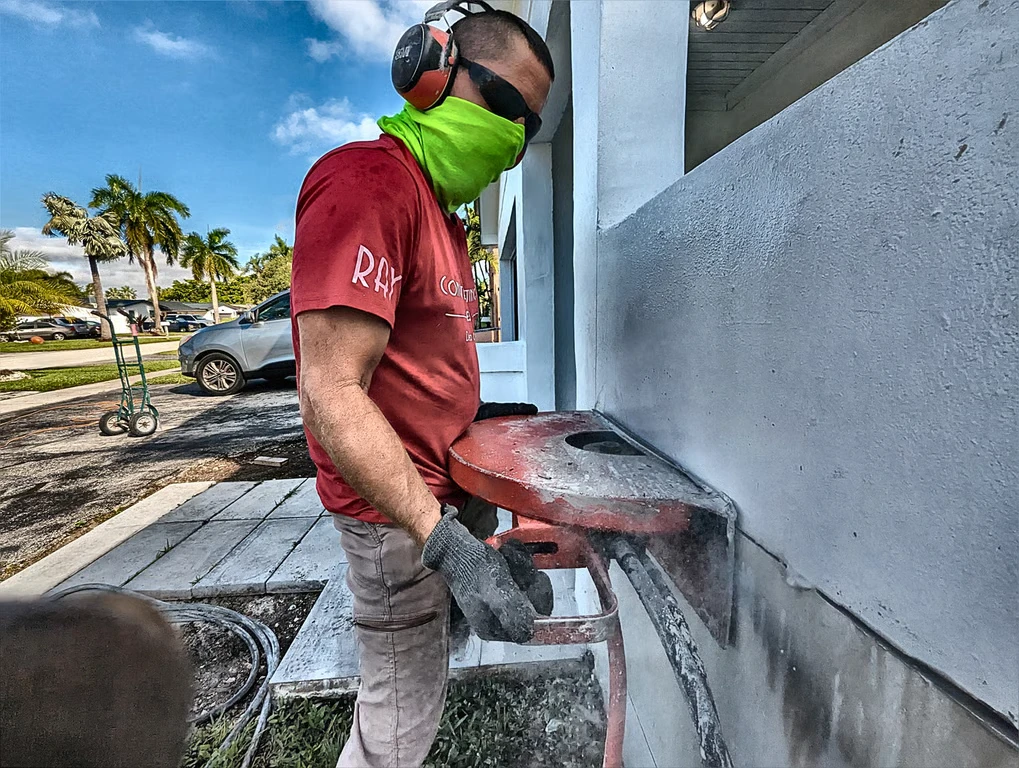
Pre-Cut Checklist Every Operator Should Run Before the First Pass
- Verify slab thickness and reinforcement layout using GPR scanning or as-built drawings before setting blade depth.
- Confirm blade RPM rating matches or exceeds the saw’s maximum spindle speed at load — never run a blade above its rated RPM.
- Check water flow rate at the blade entry point using a flow meter or timed bucket test — do not estimate.
- Inspect blade core for cracks, warping, or segment loss from previous use — never mount a damaged blade.
- Test drive belt tension and spindle bearing play on belt-drive saws — worn bearings cause blade wobble that destroys segment geometry within one pass.
- Mark cut lines with chalk line and confirm layout against utility scan results — cutting through active conduit or post-tension cables has catastrophic consequences.
- Set depth stops on the saw before starting — never adjust cutting depth while the blade is spinning in the kerf.
Proper slab cutting is a systems problem. The machine, the blade, the cooling system, the operator technique, and the slab characteristics all interact. Getting one element wrong degrades the entire system. Operators and project managers who understand the full equipment specification picture — from horsepower curves to diamond bond chemistry — consistently achieve lower cost per linear foot, longer blade life, and cleaner cuts with no secondary remediation required.
Whether you’re managing a large commercial demolition, a utility trench through a parking structure, or a residential addition requiring slab modification, the technical fundamentals covered here apply universally. For ongoing guidance on slab maintenance, cutting schedules, and preventive joint work, the concrete maintenance resource library provides additional depth on long-term slab management strategies.