What is chipping in construction — the simple question with a surprisingly detailed answer
If you ask what is chipping in construction, the short answer is: chipping is the process of removing small pieces of concrete from a larger mass using impact force from a chisel, chipping hammer, or breaker. But that definition, while technically correct, misses the point. Chipping is not just breaking concrete into smaller pieces. It is a controlled demolition technique used for surface preparation, concrete repair, structural modification, and utility access. What makes chipping different from breaking is intent: chipping removes specific amounts of concrete from specific locations for a specific purpose. Breaking just makes big pieces into small pieces.
On Miami construction sites, chipping happens every day for reasons that range from cosmetic to structural. A concrete finisher chips down a high spot before polishing. An electrician chips a channel for conduit before the slab pour. A GC chips out spalled concrete around a corroded rebar before patching. A demolition crew chips around a pipe sleeve before pulling the pipe. Each is chipping in construction, and each requires a different level of precision, a different tool, and a different understanding of what the concrete is supposed to look like when the chipping is done.
The construction applications of chipping — what chipping actually accomplishes
Surface preparation and leveling
Before concrete surfaces are overlaid with new material — epoxy coatings, self-leveling underlayment, thin-set for tile — the surface must be clean, sound, and level. Chipping removes surface contaminants, knocks down high spots, and creates a mechanical profile that the new material can bond to. This type of chipping is typically done with electric scaling chippers or small pneumatic chipping hammers with wide, flat chisel bits that remove material without gouging deep into the slab.
In Miami, surface preparation chipping is common before tile installation on concrete slabs. The slab surface must be flat and clean for thin-set to bond properly. High spots from the original concrete pour are chipped down, and loose material is chipped away to expose sound concrete beneath.
Concrete repair and spall removal
When concrete spalls — when the surface breaks away due to rebar corrosion, freeze-thaw damage (rare in Miami), or impact — the damaged concrete must be removed before the area can be repaired. Chipping removes the loose, delaminated, and cracked concrete around the spall, exposing sound concrete that the repair material can bond to. The chipping must extend into sound concrete around the entire perimeter of the repair area — typically to a depth where the rebar is completely exposed and the remaining concrete is structurally intact.
Utility access and channel creation
Before concrete is poured, electrical conduits, plumbing lines, and mechanical sleeves are placed within the slab area. When these utilities need to be modified or accessed in existing concrete, chipping is the tool for the job. An electrician chips a channel to bury new conduit in an existing slab. A plumber chips around a pipe penetration to replace a leaking sleeve. The chipping must be deep enough for the utility being installed but not so deep that it compromises the slab structurally.
Structural modification and demolition
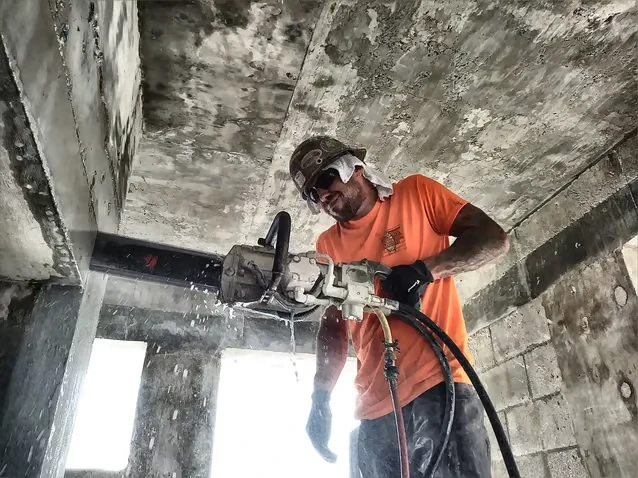
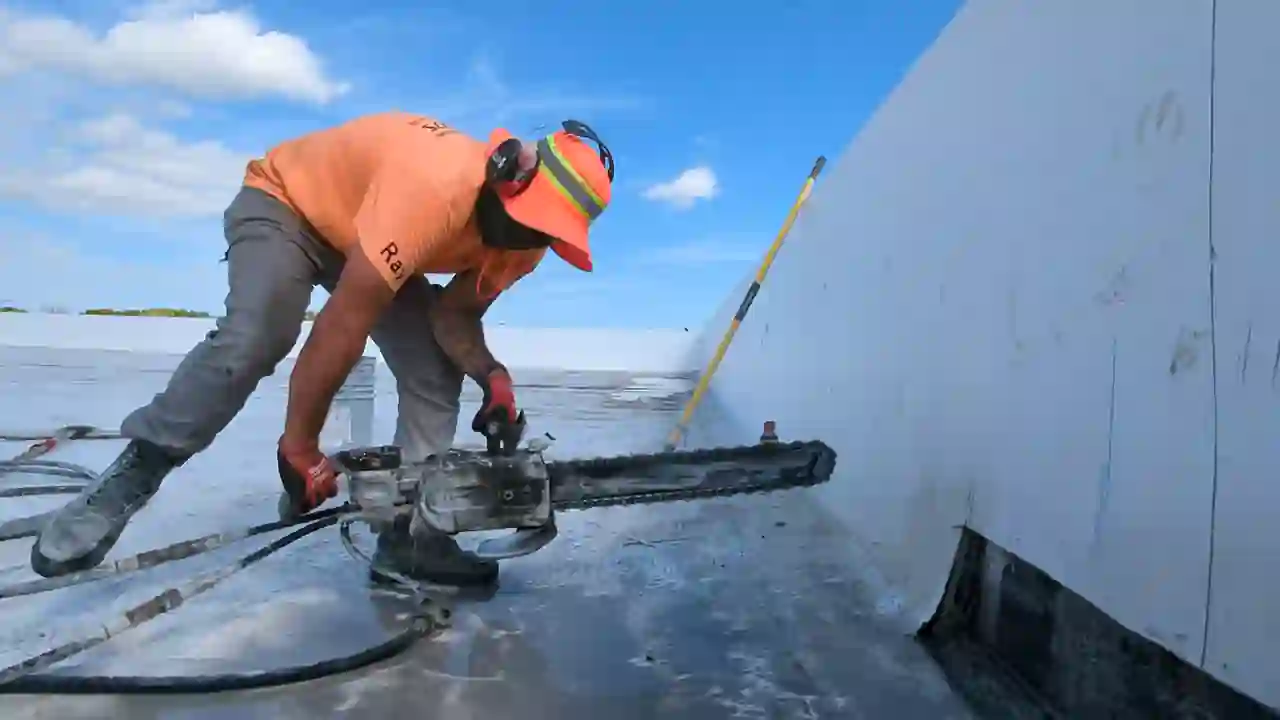
When a concrete element needs to be partially removed — the top of a wall for a new beam pocket, the edge of a slab for a new stair opening — chipping removes the concrete while preserving the surrounding material. This type of chipping is often combined with saw cutting: the perimeter is saw-cut for clean edges, and the interior is chipped out for speed. Concrete cutting and chipping services work together to produce clean, precise modifications.
Chipping tools and when each is appropriate
- Cold chisel and hand sledge: For very small, precise chipping jobs — removing a single high spot, squaring a corner, cleaning a saw-cut edge. Maximum control, minimum speed.
- Electric chipping hammer (10-15 lbs): For light to medium chipping — surface preparation, small channel cutting, spall removal. Good combination of control and speed for residential work.
- Pneumatic chipping hammer (20-30 lbs): For medium chipping — larger repair areas, deeper channel work, slab edge modification. Requires an air compressor.
- Pneumatic breaker (60-90 lbs): For heavy chipping — bulk concrete removal, thick slab modification, demolition chipping. Less precise, used primarily for bulk material removal.
- Scaling chippers: Specialized multi-head chipping tools for surface preparation over large areas. Used for floor prep before overlays and coatings.
The difference between chipping and breaking in construction
The terms are sometimes used interchangeably, but in professional construction, chipping and breaking are different operations:
- Chipping: Removing small pieces of concrete from a surface or edge using controlled impact. The concrete is being modified, not destroyed. The surrounding concrete must remain intact. Precision matters.
- Breaking: Fracturing concrete into pieces for removal. The concrete is being demolished. The surrounding concrete, if any, has been separated from the breaking area by saw cuts. Speed matters more than precision.
Chipping is finish work. Breaking is demolition work. The tools overlap, but the intent and the technique are different. Professional demolition services use breaking for bulk removal and chipping for finishing work near sensitive interfaces.
Chipping in Miami construction — local considerations
Miami construction presents specific chipping challenges and applications:
- Rebar-heavy concrete: Miami-Dade’s hurricane codes mean most concrete elements have more rebar than comparable structures in other markets. Chipping around rebar requires care to avoid damaging the steel that will remain in place.
- Post-tension slabs: Chipping in post-tension slabs requires GPR scanning to locate tendons. A chipping hammer that strikes a tendon does not cut through it like a saw would, but it can damage the tendon sheathing, compromise the corrosion protection, and create a future structural problem.
- Indoor chipping and dust: Much of Miami’s construction is indoor renovation of occupied buildings. Dry chipping produces silica dust that requires containment and respiratory protection. Wet chipping reduces dust but creates slurry that must be managed.
- Tile-on-slab: Most Miami homes have tile directly on the slab. Chipping to modify the slab requires tile removal first and creates vibration that can damage adjacent tile if the area is not first isolated with saw cuts.
What is chipping in construction? It is controlled concrete removal for surface preparation, repair, utility access, and structural modification. It is not the same as breaking, it is not unskilled labor, and the difference between professional chipping and amateur chipping is immediately visible in the result — clean, controlled, and ready for the next construction step.