Breaking concrete is the one demolition task where the first step determines whether the last step is cleanup or disaster
If you search breaking concrete online, you will find videos of people swinging sledgehammers at driveways and firing up jackhammers on patios. The videos make it look simple and satisfying — apply force, concrete cracks, pieces come out. What the videos do not show is what happens to the concrete that stays behind. The driveway section adjacent to the one being broken develops hairline cracks that spread over the next year. The patio slab that was supposed to survive intact has a spiderweb of micro-fractures radiating from the break line. The foundation wall six feet away now has a crack in the stucco that was not there before.
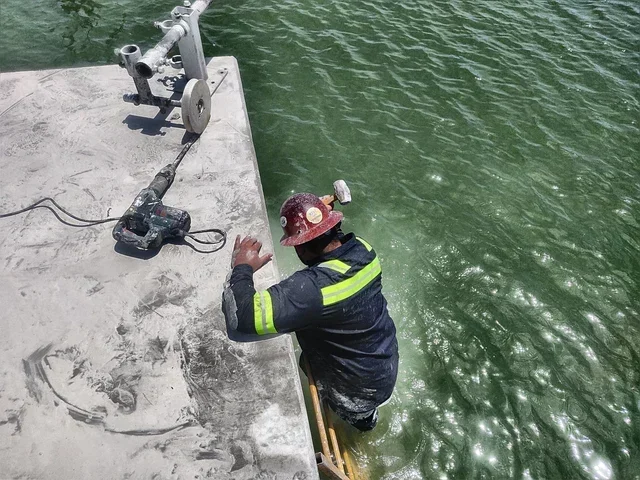
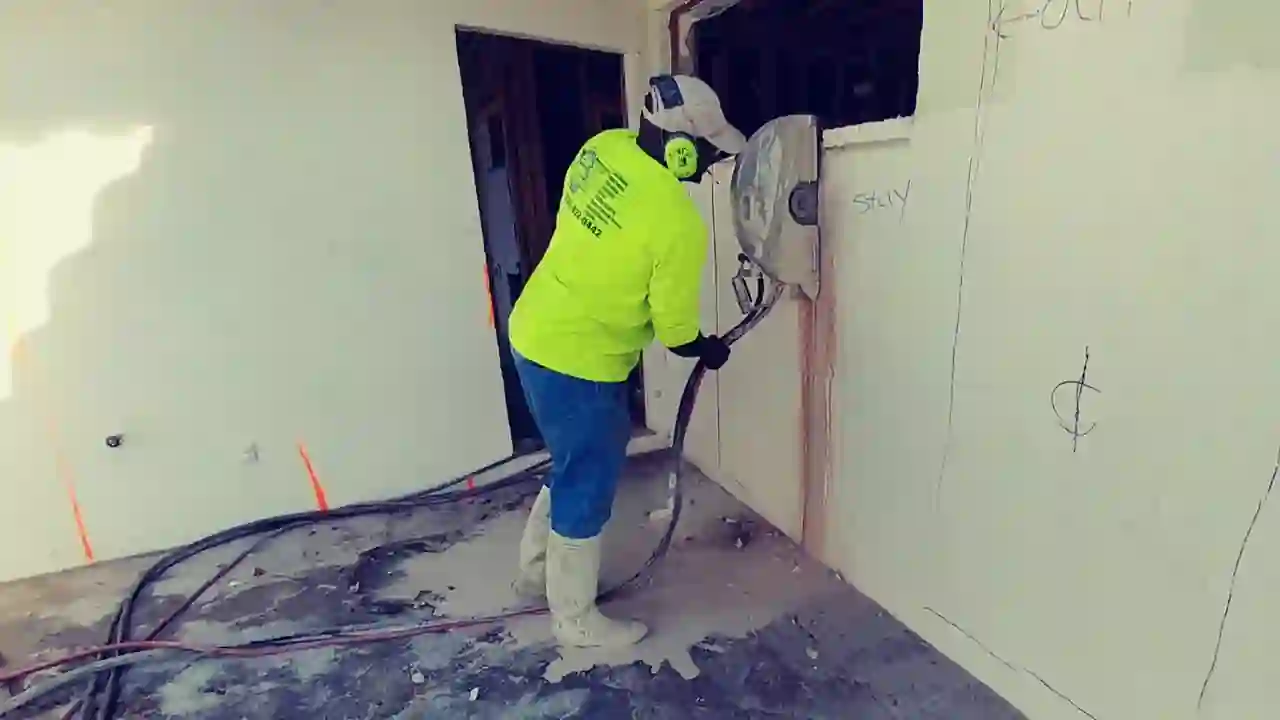
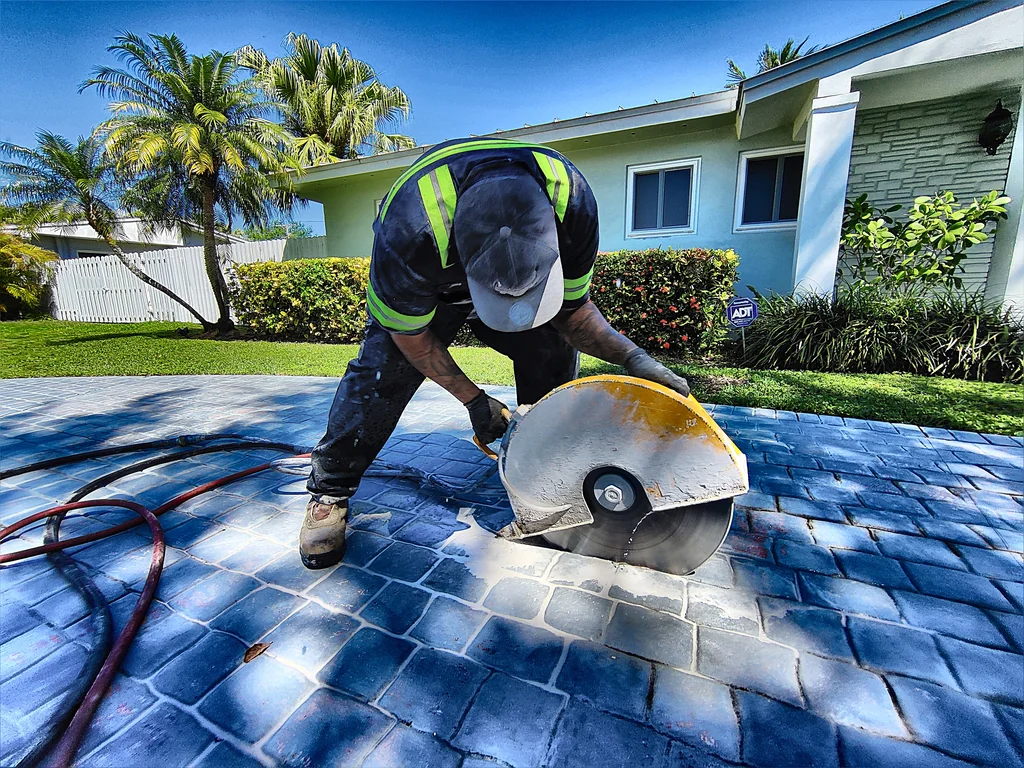
We handle concrete breaking across Miami-Dade County as part of demolition and removal projects. The first thing we do on every breaking job is not break anything. The first thing we do is saw-cut the separation lines between the concrete being removed and the concrete being preserved. That cut — a clean, straight, full-depth diamond saw cut — is what prevents the damage described above. The breaking force stops at the cut. The surrounding concrete is untouched. The difference between a job that ends with a clean edge and a job that ends with collateral damage is that cut.
The breaking sequence — cut first, break second
The professional concrete breaking sequence is not negotiable. It works the same way whether you are removing 10 square feet of patio or 1,000 square feet of warehouse floor.
Step 1: Scan for hazards
Before cutting or breaking, the concrete is scanned with GPR to identify post-tension cables, electrical conduits, plumbing lines, and rebar patterns. If PT cables are present, the cutting plan is adjusted to avoid them. Cutting a PT cable is not a mistake you can fix with patching — it requires engineered repair that costs more than the entire demolition job.
Step 2: Saw-cut the perimeter
The concrete to be removed is separated from the concrete to be preserved by a full-depth saw cut along the entire perimeter. On a 4-inch residential slab, this is typically a single pass with a walk-behind flat saw. On thicker slabs, multiple passes are required. The saw cut creates a physical gap — usually 1/8 inch to 1/4 inch wide — that the breaking force cannot cross. Slab sawing services provide the perimeter cutting that makes safe breaking possible.
Step 3: Section the removal area
For large areas, additional saw cuts divide the removal area into manageable sections — typically 2-foot by 2-foot or 3-foot by 3-foot squares. These section cuts make each piece small enough for safe handling and controlled removal. They also create additional separation lines within the removal area, which makes the breaking process faster because the concrete is already partially divided.
Step 4: Break the separated sections
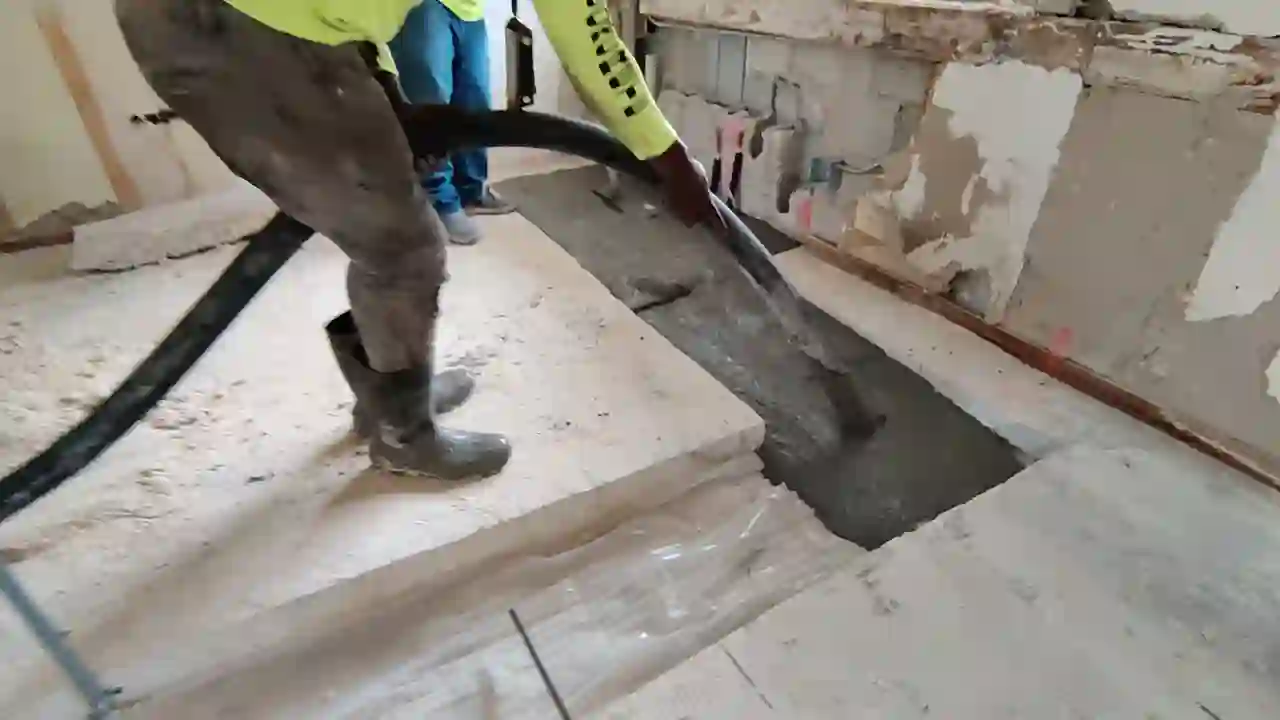
With the perimeter and section cuts complete, each section is broken using the appropriate tool for the concrete thickness and rebar content. A sledgehammer may be sufficient for thin, unreinforced sections. A pneumatic or electric breaker is used for thicker sections and sections with rebar. Because the sections are physically separated from the surrounding concrete, the breaking force is contained within each section.
Step 5: Cut rebar at the edges
After the concrete is broken out, exposed rebar at the saw-cut edges is cut flush with the concrete surface. This rebar cannot simply be bent over — bent rebar creates a tripping hazard and interferes with any new concrete or flooring that will be installed. The rebar is cut with a grinder or a rebar cutter and the cut ends are treated if they will remain exposed.
Choosing the right tool for breaking concrete
The tool that is right for breaking a 4-inch patio section is wrong for breaking a 12-inch commercial floor. Here is the tool selection hierarchy:
- Sledgehammer (10-16 lbs): For thin, unreinforced concrete sections under 4 inches thick. The concrete must already be separated from surrounding concrete by saw cuts.
- Electric breaker (15-30 lbs): For 4-6 inch residential slabs with light rebar. Requires access to adequate electrical power. Quieter than pneumatic tools, suitable for residential areas.
- Pneumatic breaker (30-60 lbs): For 6-8 inch slabs with moderate rebar. Requires an air compressor. More powerful than electric breakers in the same weight class.
- Hydraulic breaker (mounted on excavator or skid steer): For slabs over 8 inches thick, heavily reinforced concrete, and large-scale demolition. Professional demolition services use hydraulic breakers for heavy concrete removal.
- Expansive grout: For applications where vibration from mechanical breaking is unacceptable — adjacent to sensitive equipment, in occupied buildings, near historic structures. Zero vibration, zero noise beyond the initial drilling.
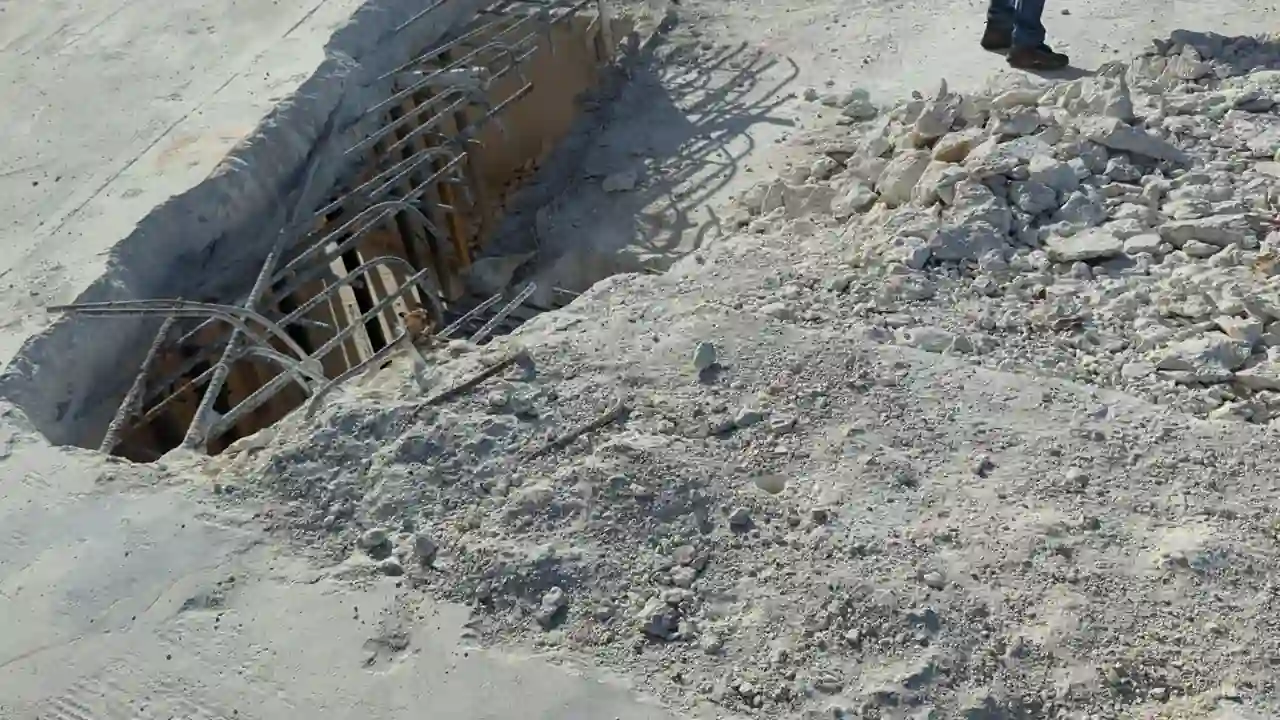
Vibration damage — the hidden cost of breaking concrete without cutting first
When a sledgehammer or breaker strikes concrete that is still connected to surrounding concrete, the impact energy travels through the material as stress waves. These waves can crack tile, pop drywall seams, break window seals, and create micro-fractures in concrete slabs that become visible cracks months or years later. The damage is not limited to the immediate area — stress waves travel through connected concrete elements and can affect rooms or structures far from the breaking location.
In Miami, where homes are often slab-on-grade with tile flooring throughout, the vibration from breaking a patio slab without first saw-cutting the separation line can crack tiles in the living room, kitchen, and hallway — rooms connected to the patio only by the continuous concrete slab beneath them. The cost of replacing cracked tile in multiple rooms dwarfs the cost of the perimeter saw cut that would have prevented the damage.
Breaking concrete in Miami — special considerations
- Post-tension slabs: Many Miami residential slabs built since the 1970s contain post-tension cables. Breaking these slabs requires GPR scanning before any work and careful sectioning to avoid tendon damage. Miami concrete specialists understand the prevalence of PT construction and scan accordingly.
- Tile-on-slab construction: Most Miami homes have tile directly on the concrete slab. Vibration from breaking transfers directly from slab to tile. Perimeter saw cutting is especially critical in these homes.
- High water table: Breaking concrete below grade in Miami often encounters groundwater. The hole or trench created by breaking may need dewatering before the replacement concrete can be placed.
- Hurricane code reinforcement: Miami-Dade’s strict building codes mean more rebar in slabs and walls than in most other markets. More rebar means slower breaking and more blade or bit consumption.
Breaking concrete is the step that comes after cutting — and if you skip the cutting step, the breaking will cost you more in collateral damage than the cutting would have cost in the first place. Saw-cut first, break second. The order is not a suggestion. It is the difference between a demolition project that ends when the concrete is gone and one that continues with crack repairs for months afterward.