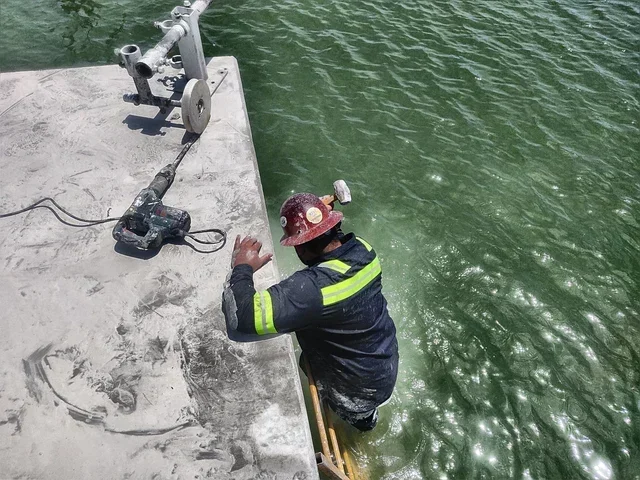
Concrete cutters are tradespeople, not laborers — the distinction matters to your project
Most people think concrete cutters are simply the people holding the saw. That is like saying a surgeon is simply the person holding the scalpel. The saw is the tool. The person operating it is making decisions about blade selection, bond hardness, feed rate, RPM, depth of cut, water flow, slurry management, and structural safety — all while a spinning diamond blade is buried in a wall or slab. When those decisions are made by someone who has made them thousands of times before, you get a clean, square opening on schedule. When they are made by someone learning on your property, you get a hole where you wanted a doorway.
In Miami, professional concrete cutters are defined by what they know before the saw starts. They know that most Miami slabs built since the 1970s have post-tension cables. They know that limestone aggregate requires a harder bond blade than granite aggregate. They know that Miami-Dade environmental regulations require slurry containment. They know that a wall opening in a shear wall needs an engineer’s review. They know these things because they have learned them — through training, through experience, and through the kind of costly lessons that happen when you assume a cut is routine and the concrete proves you wrong.
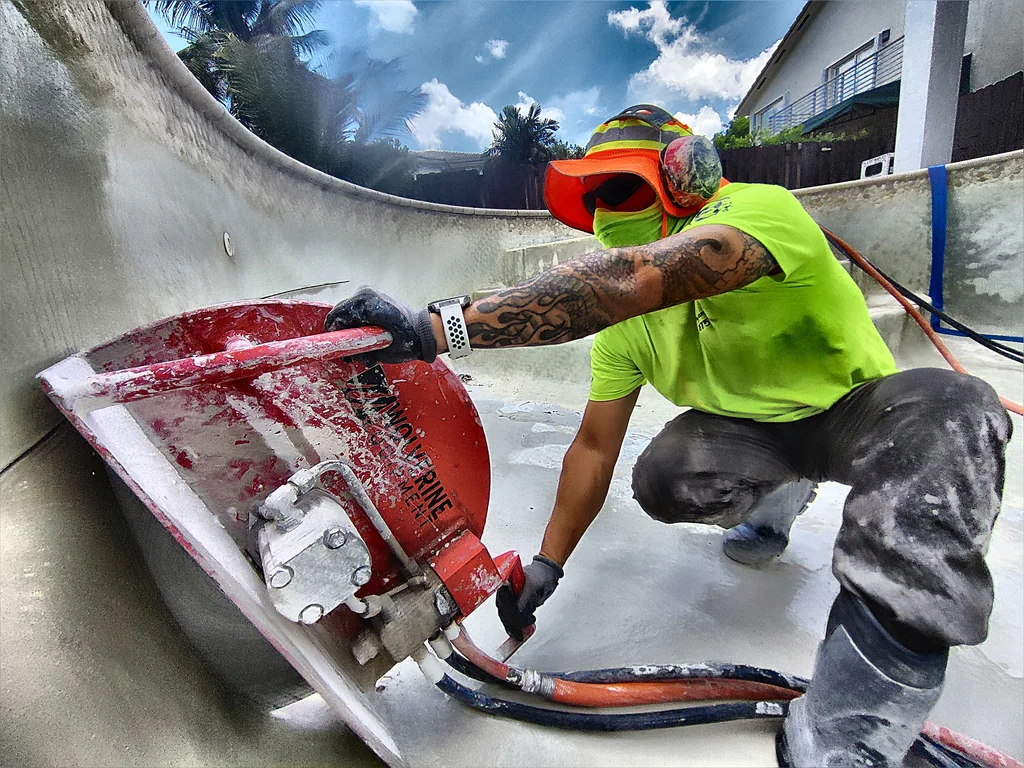
What concrete cutters know — the knowledge behind the cut
Blade selection is a materials science decision
A professional concrete cutter does not grab whatever diamond blade is on the truck. They select the blade based on the concrete they are about to cut — its aggregate type, its age, its hardness, and its reinforcement. The blade’s bond hardness must be matched to the material. The diamond concentration must be appropriate for the cutting speed required. The segment geometry must suit the cut type — straight cuts, deep cuts, or reinforced cuts. A wrong blade selection burns time and money. A right selection makes the cut look easy. It is not. The ease comes from the decision made before the blade touched concrete.
GPR scanning is not optional — it is the prerequisite
Professional concrete cutters scan before cutting. Ground-penetrating radar identifies what is inside the concrete — rebar location, post-tension cables, electrical conduits, plumbing, voids, and slab thickness variations. The scan produces a map. The map tells the cutter where to cut and where not to cut. A cutter who does not scan is cutting blind, and cutting blind in Miami — where post-tension cables are common and hitting one costs more than the entire cutting job — is not a risk a professional takes. Professional concrete cutters bring GPR units or subcontract scanning as a standard pre-cut step.
Feed rate and RPM are controlled, not guessed
A diamond blade has an optimal RPM range and an optimal feed rate for the material being cut. Too fast an RPM overheats the blade. Too slow an RPM reduces cutting efficiency. Too aggressive a feed rate glazes the diamonds. Too conservative a feed rate wastes time. The professional cutter adjusts both parameters during the cut based on feedback from the saw — the sound of the motor, the color of the slurry, the feel of the feed mechanism. This is not something you learn from a manual. It is something you learn from cutting thousands of feet of concrete.
Water management is part of the job, not an afterthought
Wet cutting requires water — and that water becomes slurry that must be contained. Professional concrete cutters arrive with the equipment to manage slurry: berms to contain it, vacuums to collect it, pumps to remove it, and floor protection to prevent damage. They know that Miami-Dade regulations prohibit washing slurry into storm drains. They know that interior slurry can damage flooring, drywall, and finishes if not immediately contained. Slurry management is not an add-on service. It is a standard part of every cutting job.

The different types of concrete cutters
Not all concrete cutters do the same work. The trade splits into specialties based on the type of cutting and the equipment involved.
Wall saw operators
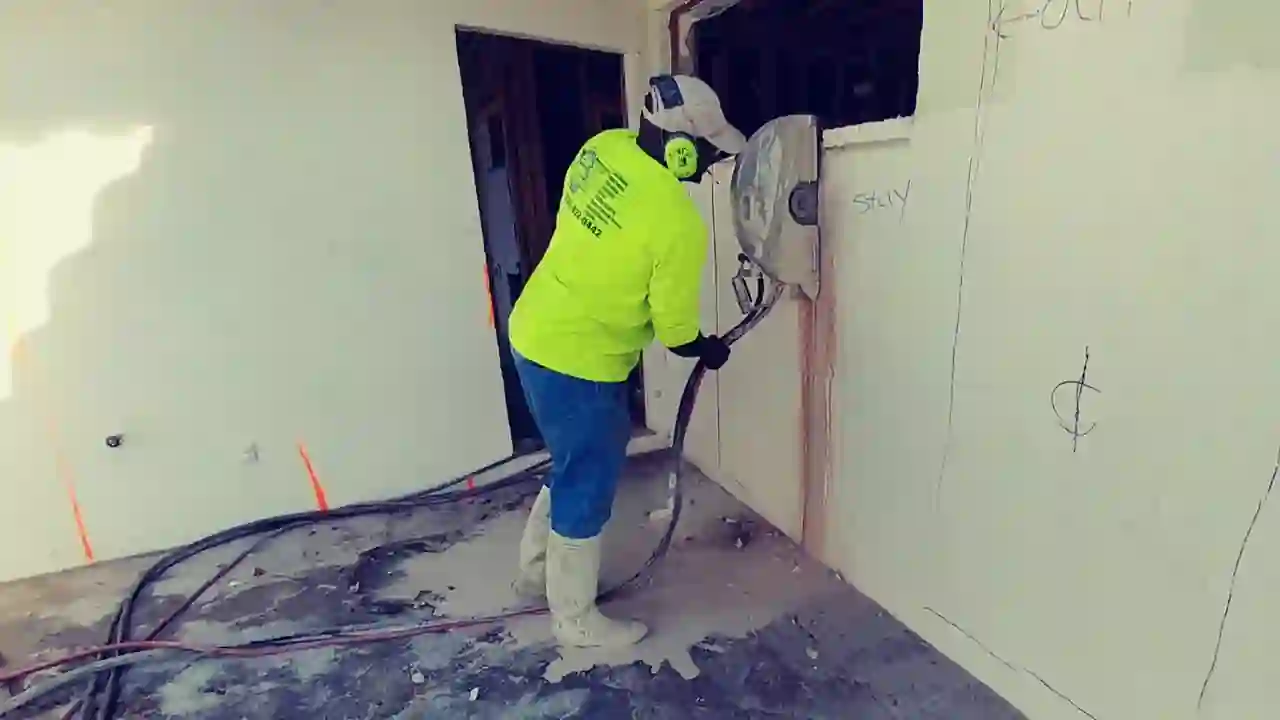
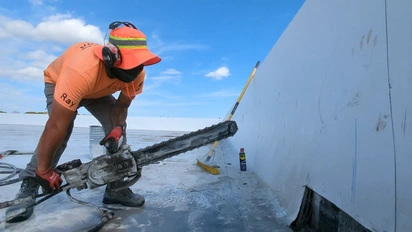
Wall saw operators handle vertical and overhead cutting using hydraulic track-mounted saws. They set up track systems, mount saws on walls and ceilings, and make precise cuts for door openings, window openings, and mechanical penetrations. Wall sawing is the most technically demanding cutting discipline — the setup is complex, the cuts are vertical, and the operator works with a heavy saw that must be precisely controlled against gravity. Hydraulic saws and chain saws extend the wall saw operator’s capability into thicker walls and tighter spaces.
Flat saw operators
Flat saw operators run walk-behind or ride-on saws for horizontal cutting — slab trenching, driveway cutting, expansion joint cutting, and large-scale demolition sectioning. Flat sawing looks simpler than wall sawing, but the cut quality depends on the operator’s ability to maintain a straight line, control cut depth, and manage the water and slurry production across sometimes hundreds of linear feet.
Core drill operators
Core drill operators specialize in drilling precise round holes through concrete for utility penetrations and structural testing. They set up drill stands, select core bit sizes, and drill through concrete while managing water and slurry. Core drilling requires accuracy — a hole that is an inch off location creates a piping offset that cascades through the entire system.
Wire saw operators
Wire saw operators handle the most demanding cutting applications — massive concrete structures that cannot be cut with circular blades. A wire saw uses a diamond-impregnated cable threaded through the concrete and driven by a hydraulic power unit. Wire sawing is used for bridge demolition, thick foundation removal, and large structural modifications where circular blades cannot reach.
How to identify professional concrete cutters vs general laborers
When evaluating a concrete cutting company, here is what separates professional cutters from general laborers:
- They ask about the concrete, not just the dimensions. A professional wants to know the aggregate type, the approximate age of the concrete, the rebar schedule if available, and whether there are post-tension cables.
- They bring their own scanning equipment. GPR scanning is standard practice, and the company either owns the scanner or has a regular subcontractor who scans every job.
- They can explain their blade selection. A professional can tell you what blade they are using and why, including bond hardness, diamond concentration, and how it matches your concrete.
- They have a slurry plan. Before the cut starts, they can describe exactly how the slurry will be contained, collected, and disposed of.
- They know Miami-Dade permit requirements. They can tell you whether your cut needs a permit and handle the process if it does.
- They carry appropriate insurance. Their insurance covers structural modification, not just general construction, and they can provide a certificate naming your property as additionally insured.
Concrete cutters earn their rates because the knowledge in their heads is worth more than the saw in their hands. Anyone can rent a concrete saw. Knowing where to put the blade, how fast to advance it, what is inside the concrete, and what to do when conditions change — that is the value of a professional concrete cutter. When you hire one, you are paying for the thousands of cuts they made before yours. Your project is the beneficiary of every one of them.