Hydraulic concrete saws are the difference between cutting through rebar and stopping at it
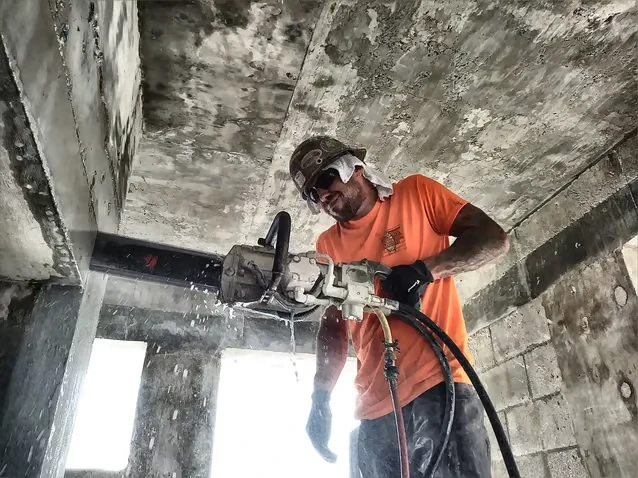
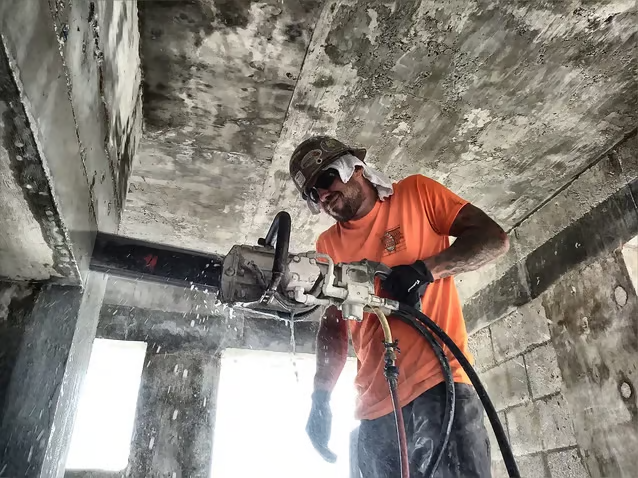
If you watch a hydraulic concrete saw cutting through a reinforced concrete wall, the most striking thing is how uneventful it looks. The blade spins, the saw head advances along the track, water flows, slurry runs down the wall, and a clean cut line appears behind the blade. There is no drama — no bogging down, no stalling, no operator pushing harder to force the blade through. That lack of drama is the point. A hydraulic saw delivers consistent torque regardless of whether the blade is passing through concrete, rebar, or both. The power unit compensates for load variation automatically, maintaining blade RPM within the optimal range regardless of what is inside the wall.
In Miami, where structural concrete walls are heavily reinforced and rebar is present in almost every cut, hydraulic power is the standard for professional wall sawing. Electric saws exist and have their place — primarily for indoor work where engine exhaust is unacceptable — but for sustained cutting through reinforced concrete, hydraulic concrete saws are the tool professional contractors reach for. The hydraulic power unit sits on the floor or outside the building, connected to the saw head by hydraulic hoses. The separation of power source and cutting tool is what allows wall sawing in spaces where no engine could operate.
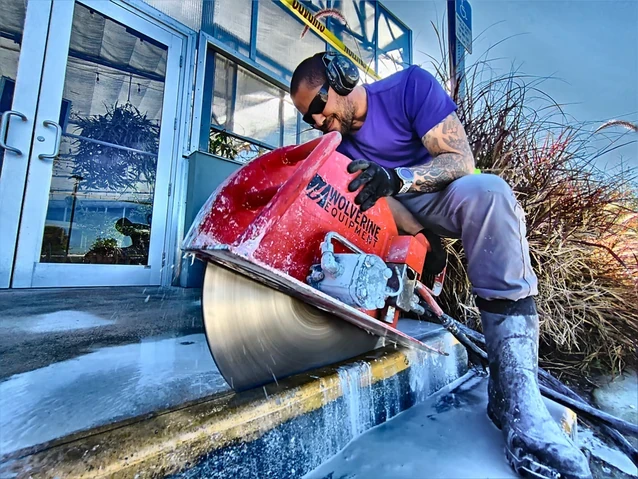
How a hydraulic concrete saw system works
The power unit — the heart of the system
A hydraulic power unit is a self-contained unit with a diesel or electric motor driving a hydraulic pump. The pump pressurizes hydraulic fluid and sends it through hoses to the saw head. When the operator advances the saw into the wall, the hydraulic motor in the saw head converts the fluid pressure back into rotational force at the blade arbor. The power unit adjusts pump output to maintain consistent pressure and flow regardless of how much resistance the blade encounters.
For outdoor work in Miami, diesel-powered hydraulic units are common because they are self-contained — no external power source needed. For indoor work or work where exhaust is a concern, electric hydraulic units plug into building power or a generator. The hydraulic system is the same; only the prime mover changes.
The saw head — where hydraulic energy meets concrete
The saw head contains a hydraulic motor, the blade arbor, and the feed mechanism that advances the blade into the cut. The motor receives pressurized hydraulic fluid from the power unit and converts it to rotational force at the blade. The feed mechanism — typically a rack-and-pinion system — allows the operator to advance the blade into the concrete in precise increments, typically 1 to 2 inches per pass.
Because the hydraulic motor is compact and the power unit is remote, the saw head itself can be relatively lightweight — typically 50 to 80 pounds — which is critical for wall sawing where the saw head must be mounted to a track on a vertical surface. The weight of the power unit is irrelevant because it never leaves the ground.
The track system — precision guidance
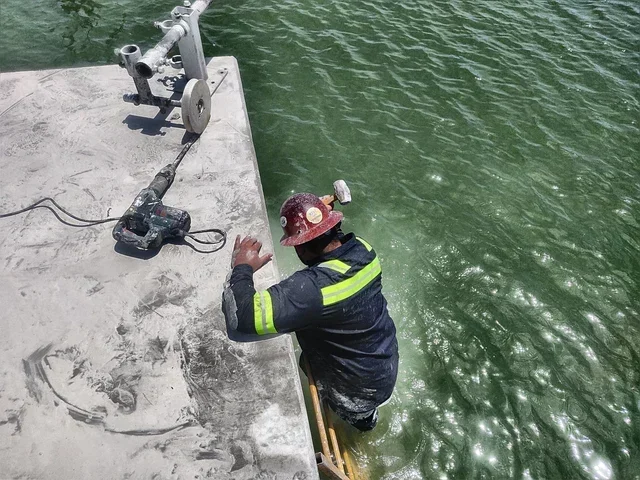
The saw head rides on a rigid aluminum or steel track that is bolted or vacuum-anchored to the wall surface. The track guides the saw along the cut line with precision measured in fractions of an inch over the length of the cut. Hydraulic chain saws use a different cutting mechanism — a diamond-segment chain — but the hydraulic power and track guidance principles are similar.
When a hydraulic concrete saw is the only practical choice
Not every concrete cutting job requires hydraulic power. Here is when hydraulic is essential:
- Wall sawing: Any vertical or overhead cutting in reinforced concrete requires the consistent torque that only hydraulic systems provide. Electric wall saws exist but struggle with sustained rebar cutting.
- Heavily reinforced concrete: When the rebar schedule is dense — #5 bars at 6-inch centers in double mats — the saw encounters steel almost continuously. Hydraulic power maintains RPM through these sections.
- Thick walls (10+ inches): Cutting through a 12-inch structural wall requires multiple passes, each pass taking several minutes. An electric motor under that sustained load can overheat. A hydraulic system dissipates heat through the hydraulic fluid circuit.
- Large-diameter blades (24+ inches): Large blades require more torque to maintain RPM under load. Hydraulic motors provide that torque in a compact package that can be mounted on a wall track.
- Confined spaces: The power unit can be outside the building or on a different floor, with only the saw head and hoses in the work area. This is essential for cutting in mechanical rooms, elevator shafts, and other tight spaces.
Hydraulic vs electric vs gas — the power source comparison
- Hydraulic: Best for sustained heavy cutting, wall sawing, and applications requiring consistent torque. Higher equipment cost but lower operating cost per foot for heavy work. Remote power unit allows cutting in confined spaces.
- Electric: Best for indoor work where exhaust and noise are concerns. Adequate for light to moderate cutting in unreinforced or lightly reinforced concrete. Limited torque for sustained rebar cutting.
- Gas (engine-driven): Best for outdoor slab sawing where self-contained operation and mobility are priorities. Adequate power for most slab cutting applications. Cannot be used indoors without ventilation.
Hydraulic saw maintenance — why these tools last
Hydraulic concrete saws are expensive — a complete wall saw system with power unit costs more than many new vehicles. They last because the hydraulic system is inherently robust and because professional contractors maintain them meticulously. Hydraulic fluid is changed on schedule, filters are replaced, hoses are inspected for wear, and the saw head bearings and seals are serviced regularly. A well-maintained hydraulic saw system can operate for a decade or more with component rebuilds as needed.
The investment in hydraulic equipment is one of the clearest signals that a concrete cutting company is a specialist. The cost of a hydraulic wall saw system is too high for a general contractor who cuts concrete occasionally. It only makes financial sense if concrete cutting is the primary business. Concrete cutting specialists invest in hydraulic equipment because they use it every week, and that investment shows up in cut quality, job speed, and the ability to handle any concrete condition that Miami construction presents.
Hydraulic concrete saws are the professional’s choice because they deliver consistent power through every inch of every cut, in every material, in every orientation. When the blade hits rebar, the saw does not slow down, the operator does not change tools, and the cut continues without interruption. That is the value of hydraulic power — it makes cutting reinforced concrete look routine. It is not. The hydraulic system makes it look that way.