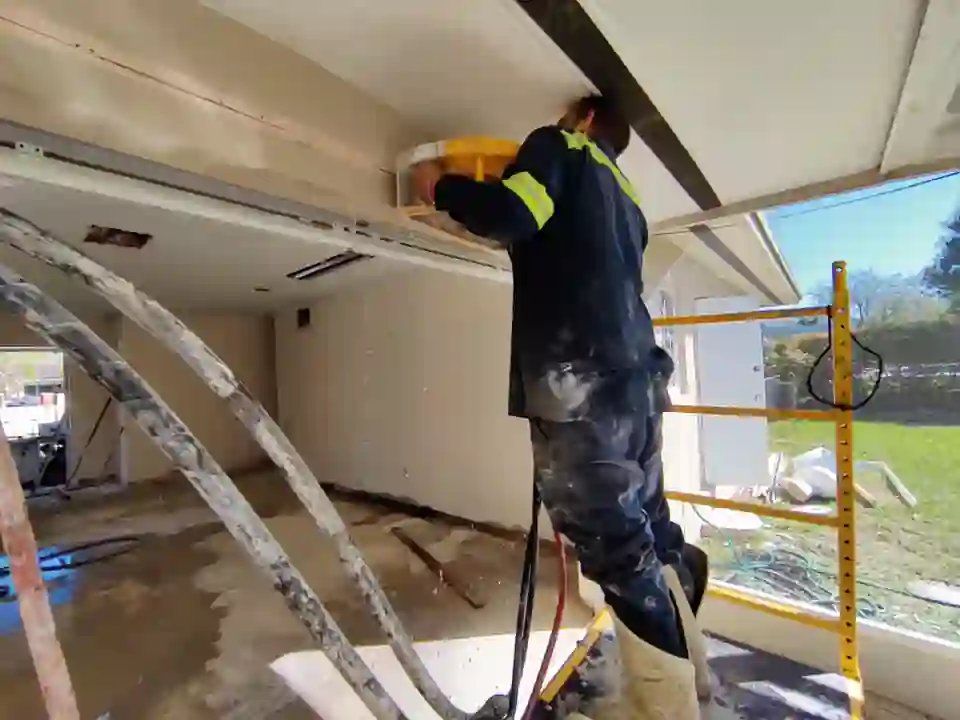
Why Equipment Selection Is the Whole Game When Cutting Concrete Walls for Door Openings
Walk onto any renovation site in Miami where a crew is cutting a concrete wall for a new door opening, and the first thing a seasoned consultant looks at isn’t the chalk lines on the wall — it’s the saw on the floor and the blade mounted to it. That single decision, the pairing of machine to diamond tooling, determines whether the job runs clean in a single shift or turns into a three-day ordeal involving cracked lintels, blown segments, and a very unhappy general contractor. Cutting a concrete wall for a door is not a task you approach with a general-purpose abrasive wheel and a prayer. It demands a precise understanding of wall saw systems, blade geometry, bond hardness, and segment configuration relative to the specific concrete you’re attacking.
Wall Saw vs. Track Saw vs. Handheld — Matching the Machine to the Opening
The machine category is the first fork in the road. For a standard door opening in a reinforced concrete wall ranging from 6 to 12 inches thick, you’re typically looking at three viable equipment classes: track-mounted wall saws, ring saws, and high-frequency handheld saws. Each has a defined operational envelope, and confusing them is how crews get hurt or produce substandard cuts.
Track-Mounted Wall Saws for Thick Reinforced Walls
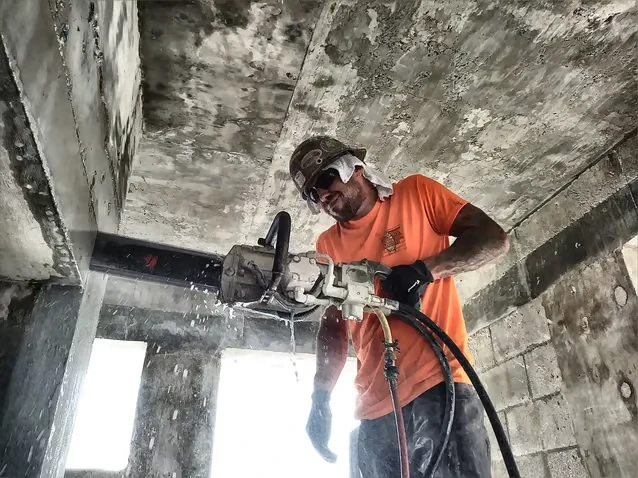
A track-mounted wall saw — think the Husqvarna WS 482 HF or the Tyrolit HydroSaw series — is the gold standard for walls above 8 inches thick, particularly when rebar is present at #5 bar or larger. These units clamp a rail directly to the wall surface and drive the blade head along a precisely controlled path. Motor outputs typically run between 18 and 30 horsepower in hydraulic configurations, with electric variants in the 15–25 kW range. The hydraulic models offer superior torque consistency under load, which matters enormously when the blade encounters a rebar cluster mid-cut. Blade diameter on these systems for door openings generally runs 16 to 24 inches, allowing cut depths of 7 to 11 inches per pass. For walls exceeding that depth, a second opposing cut from the reverse face is required — a standard two-pass door opening protocol.
Ring Saws for Confined Access and Thinner Partitions
When the wall is a post-tensioned slab or a thinner CMU-reinforced partition in the 4–6 inch range, and when access constraints make track mounting impractical, a ring saw like the Husqvarna K 6500 Ring enters the conversation. These tools use an annular blade driven by an outer ring gear rather than a central arbor, allowing cut depths of up to 11 inches from a single face without the wall saw’s rail system. The trade-off is operator fatigue and reduced precision over long cuts — ring saws are not the right tool for a 7-foot tall door opening in a 10-inch thick structural wall. For precision sawing in confined spaces, ring saws fill a genuine niche, but their application to door openings is situational.
High-Frequency Handheld Saws for Shallow Cuts and Scoring
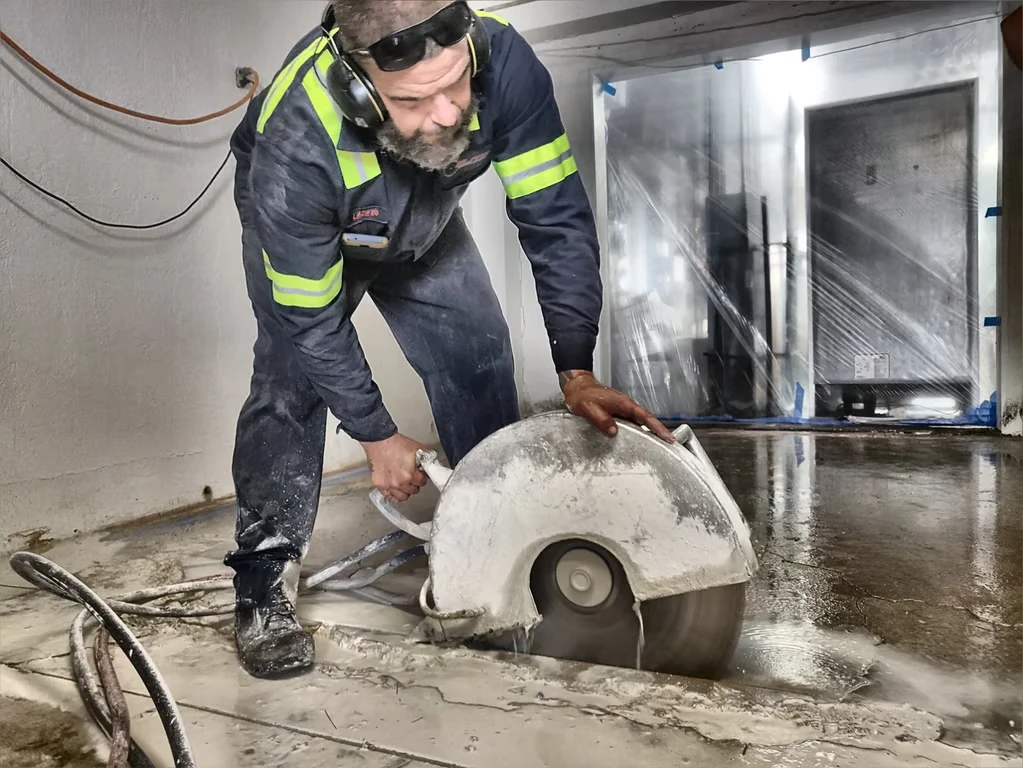
High-frequency electric handheld saws — the Hilti DSH 700-X or equivalent — are appropriate for scoring, for cutting thin non-structural walls, or for completing corner relief cuts that a wall saw blade radius cannot reach. They are not primary cutting tools for structural door openings. Their role in a door opening workflow is supplementary: clean the corners, score the perimeter, or cut through a thin veneer layer before the wall saw takes over.
Diamond Blade Specifications That Actually Matter for Concrete Wall Cutting
Once the machine is selected, the diamond blade specification is where technical precision either pays off or costs you. This is not a commodity purchase. The wrong blade on the right saw is still the wrong setup. For cutting concrete walls for door openings, the relevant variables are segment geometry, diamond grit size, bond matrix hardness, and blade core design.
Segment Height, Width, and Kerf Geometry
Segment height for wall sawing applications typically runs 15 to 20mm. Taller segments mean more diamond exposure over the blade’s service life, which matters on long door opening cuts where you may be running 20 to 40 linear feet of total cut per blade. Segment width (which determines kerf width) generally falls between 3.5mm and 4.5mm for blades in the 16–24 inch diameter range used on wall saws. Narrower kerfs reduce material removal and lower power demand, but they also reduce cooling channel capacity — a relevant concern in Miami’s ambient heat conditions where slurry temperature management is already a challenge.
Bond Matrix Hardness Matched to Concrete Aggregate
This is the specification that separates crews who know their trade from those who guess. Bond hardness — typically rated on a soft-to-hard scale by manufacturers — must be inversely matched to the abrasiveness of the concrete aggregate. Miami-area concrete frequently uses limestone aggregate, which is relatively soft and abrasive. Cutting soft, abrasive aggregate with a hard-bond blade causes the matrix to glaze over before the diamonds wear away, resulting in a blade that looks intact but cuts nothing. The correct specification for limestone-aggregate Miami concrete in a wall saw application is a soft to medium-soft bond with a diamond concentration in the 25–35 range. This allows the matrix to wear at a rate that continuously exposes fresh diamond crystals.
Conversely, if you’re cutting hard aggregate concrete — trap rock, granite, or high-PSI mix designs above 6,000 PSI — you need a harder bond matrix to prevent premature segment wear. Mismatching here in the opposite direction leads to rapid segment loss and potential blade failure under load. For a deeper look at how blade science connects to the full range of cutting equipment, this equipment deep-dive covers the broader mechanical ecosystem.
Laser-Welded vs. Sintered Segments for Wall Saw Blades
For wet-cutting wall saw applications — which is the only acceptable method for structural door opening cuts in occupied or partially occupied buildings — laser-welded segments are mandatory. Sintered (cold-pressed) segments rely on mechanical bonding that degrades rapidly under the thermal and mechanical stress of continuous wall saw operation. Laser-welded segments maintain segment integrity at blade tip speeds typically running 25–35 meters per second on wall saw systems. Any blade spec sheet that doesn’t clearly indicate laser-welded segment attachment should be disqualified from consideration for this application.
Wet Cutting Systems, Water Flow Rates, and Dust Control Requirements
Wet cutting for a door opening in a concrete wall is non-negotiable from both a blade longevity and a regulatory standpoint. The water flow rate to the blade must be sufficient to cool the segment interface and flush the kerf — typically 2 to 4 gallons per minute for a 16–20 inch wall saw blade operating at full depth. Insufficient water flow is the leading cause of segment delamination and core warping on wall saw blades. On-site, slurry management becomes a secondary concern immediately: proper waste management protocols for concrete slurry are required under EPA and local Miami-Dade regulations, and crews need vacuum slurry systems or containment berms in place before the first cut begins.
Dust suppression, even in wet-cut operations, requires attention at the cut perimeter. Mist suppression systems positioned at the entry and exit points of the blade path reduce airborne silica at the work face. Demolition dust suppression planning for interior wall cuts in occupied structures is a compliance requirement, not an optional add-on.
Rebar Detection and Blade Response Protocols Before the First Cut
No blade specification discussion for cutting a concrete wall for a door opening is complete without addressing rebar detection. Cutting into an unmarked rebar cluster at full blade speed with a standard concrete blade is a blade-destroying, potentially dangerous event. Ground-penetrating radar (GPR) scanning of the cut perimeter is the professional standard. Once rebar locations are mapped, the crew has two options: adjust the opening dimensions to avoid high-density rebar concentrations, or switch to a combination blade with a higher diamond concentration and a reinforced segment designed for steel cutting. Dedicated rebar-rated wall saw blades use a coarser diamond grit (typically 30/40 US mesh) with a harder bond matrix to handle the thermal shock of steel contact without segment fracture.
Hydraulic wall saws offer a particular advantage here: their torque delivery is continuous and pressure-regulated, meaning the saw will slow under load rather than stall or kick. Hydraulic saw safety and OSHA compliance protocols are essential reading for any crew chief running these systems on door opening cuts in Miami.
Blade RPM, Peripheral Speed, and Power Matching for Door Opening Cuts
Every diamond blade carries a maximum RPM rating stamped on the core. Running a blade above its rated RPM — even briefly — risks catastrophic core failure. For a 20-inch wall saw blade, maximum RPM is typically in the 1,500–1,800 RPM range, producing peripheral speeds at the segment tip of approximately 28–32 meters per second. The wall saw’s drive system must be capable of maintaining this peripheral speed under load without dropping below 80% of rated speed — blade efficiency collapses below that threshold. This is why undersized hydraulic power packs are a persistent problem on job sites: a pack rated for 15 GPM at 2,500 PSI will not sustain a 25 HP wall saw at full cut depth in 8,000 PSI concrete. Power matching between the hydraulic supply unit and the wall saw head is a pre-job calculation, not a field adjustment.
Miami’s construction environment adds another layer: heat-related hydraulic fluid viscosity changes affect power delivery. Crews operating during peak summer heat should verify hydraulic fluid viscosity ratings are appropriate for ambient temperatures above 90°F, and monitor fluid temperature throughout the cut sequence. For a broader look at how Miami’s climate affects cutting operations, this post on seasonal operational challenges addresses the environmental variables that affect equipment performance year-round.
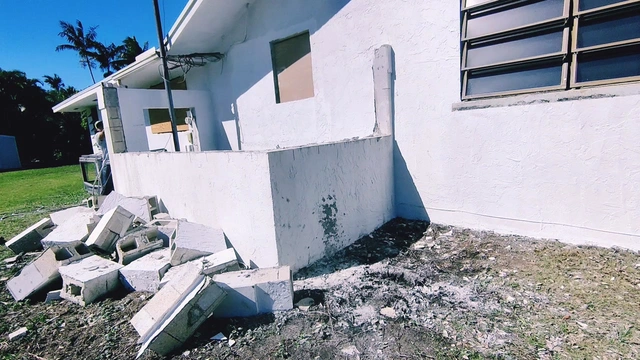
The Pre-Cut Checklist Every Crew Should Run Before Opening a Concrete Wall
- Structural clearance confirmed — engineer-approved opening dimensions and temporary shoring plan in place before cutting begins
- GPR scan completed — rebar and post-tension cable locations marked on wall surface
- Blade specification verified — bond hardness, segment type, and diameter matched to concrete PSI, aggregate type, and wall thickness
- Water supply confirmed — minimum 2 GPM flow rate verified at blade guard port before first pass
- Slurry containment staged — vacuum recovery or berm containment in place per site waste management plan
- Hydraulic power pack output matched — GPM and PSI output verified against wall saw manufacturer’s minimum requirements
- Maximum RPM check — blade RPM rating confirmed against saw head speed at operating pressure
- Personal protective equipment staged — wet-cut rated face shield, hearing protection, cut-resistant gloves, and silica-rated respiratory protection for any dry-cut supplementary work
Cutting a concrete wall for a door opening is a high-stakes precision task that rewards preparation and punishes improvisation. The equipment and tooling decisions made before the blade ever touches the wall surface are what separate a clean, on-schedule opening from a structural incident. Get the machine class right, match the diamond blade specification to the concrete, manage your water and power systems, and the cut will run exactly as planned.