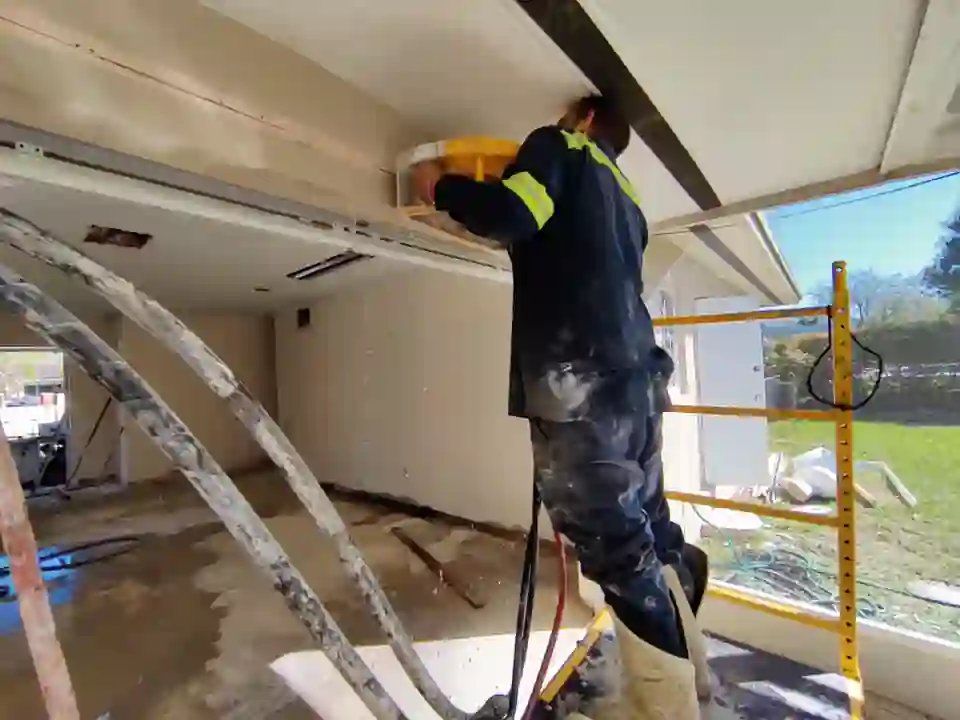
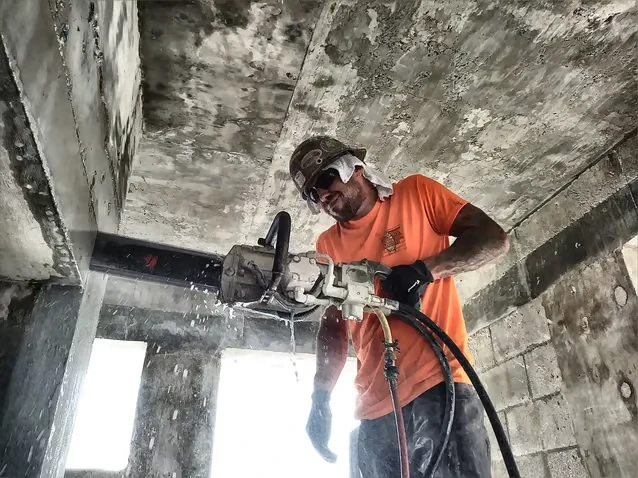
Why Slurry Management Is the Defining Skill of Professional Concrete Cutters in 2024
Ask any experienced site superintendent in South Florida what separates a professional concrete cutting crew from a liability risk, and the answer almost never starts with blade speed or horsepower. It starts with water. Specifically, it starts with how a cutting crew handles the slurry — that gray, silica-saturated wastewater that every wet-cutting operation generates by the gallon. In Miami-Dade and Broward Counties, where stormwater drainage connects directly to Biscayne Bay and the broader Everglades watershed, the regulatory stakes around concrete cutting wastewater are not theoretical. They are active, enforced, and expensive to ignore. Local regulations governing concrete cutting operations have tightened considerably over the past decade, and the crews who understand environmental compliance at a technical level are the ones worth hiring.
The Chemistry of Concrete Cutting Slurry and Why It Cannot Enter Stormwater Systems
Concrete cutting slurry is not simply dirty water. It is an alkaline suspension with a pH typically ranging from 11 to 13, loaded with calcium hydroxide, calcium carbonate particulates, crystalline silica fines, and — depending on the substrate — heavy metals from embedded rebar coatings or aggregate materials. When this slurry enters a storm drain, it does not dilute harmlessly. It raises the pH of receiving water bodies, smothers benthic organisms, and deposits fine particulate matter that disrupts aquatic ecosystems. The EPA classifies concrete washout and cutting slurry as a regulated pollutant under the Clean Water Act’s National Pollutant Discharge Elimination System (NPDES). Any site generating more than one acre of disturbance is required to have a Stormwater Pollution Prevention Plan (SWPPP) that explicitly addresses concrete cutting operations.
Beyond the federal framework, Florida’s Department of Environmental Protection (FDEP) enforces Chapter 62-621 of the Florida Administrative Code, which governs construction site stormwater discharges. Violations carry fines starting at $10,000 per day per violation. For a multi-week project timeline where cutting operations occur daily, non-compliance is not a minor paperwork issue — it is a project-ending financial exposure.
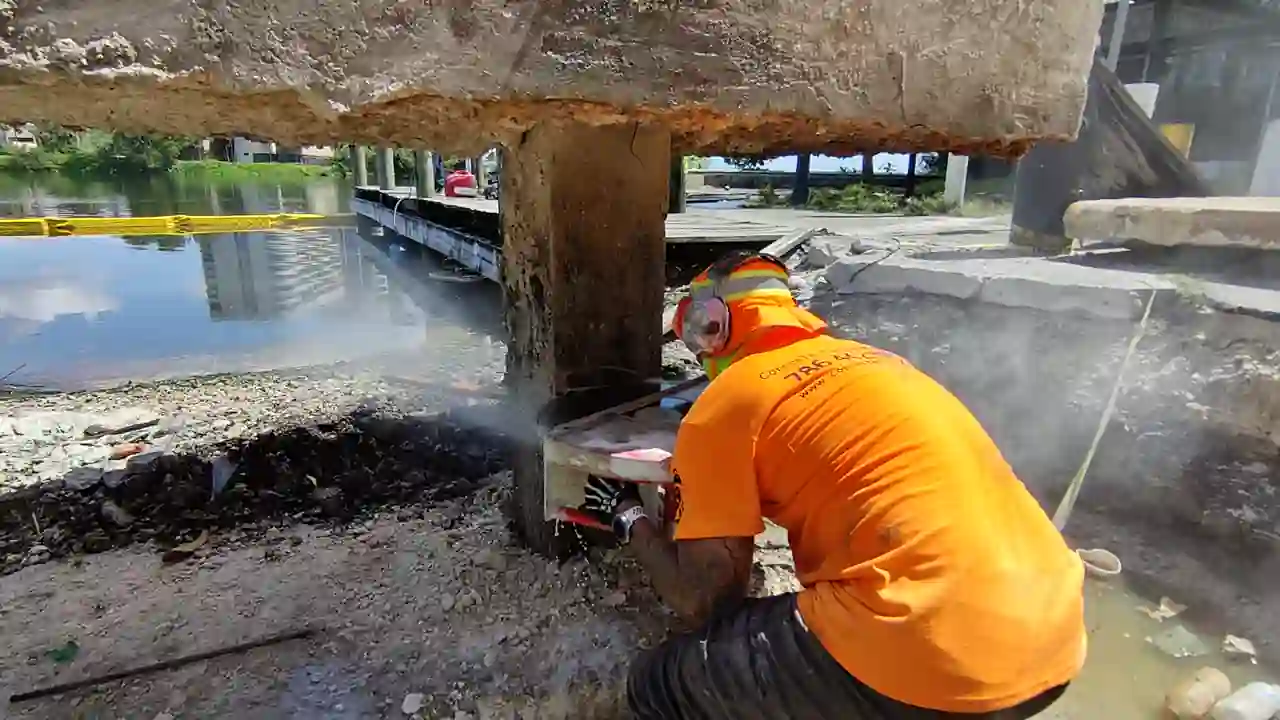
Wet Cutting Versus Dry Cutting and the Environmental Tradeoffs Each Method Creates
Professional concrete cutters must choose between wet and dry cutting methods based on substrate, blade type, cut depth, and — critically — the environmental controls available on the job site. Each method creates a distinct compliance challenge.
Wet Cutting Water Volume and Containment Engineering
Wet cutting is the industry standard for diamond blade operations because water cooling extends blade life, suppresses airborne silica dust, and allows for cleaner, more precise cuts. A standard slab saw running a 14-inch to 36-inch diamond blade will consume between 1.5 and 4 gallons of water per minute during active cutting. On a full production day involving multiple cuts across a large concrete slab, a single crew can generate 500 to 1,200 gallons of slurry. Without containment infrastructure, that volume will migrate across the slab surface, into expansion joints, and directly into any proximate drainage infrastructure.
Professional-grade containment for wet cutting operations involves a layered system. The first layer is physical berming — foam berm systems or sandbag configurations that isolate the cutting zone and prevent lateral slurry migration. The second layer is vacuum recovery, using industrial wet-vacs or slurry vacuums integrated directly into the saw’s water delivery system to capture slurry at the point of generation. The third layer is a settling tank or filtration system where recovered slurry is pH-adjusted using carbon dioxide injection or dilute sulfuric acid before any water fraction is discharged or reused.
Dry Cutting Dust Suppression and HEPA Filtration Requirements
Dry cutting, used in situations where water introduction is impractical — electrical rooms, interior slabs above occupied spaces, or applications requiring hydraulic chainsaw precision in confined environments — eliminates liquid slurry but creates a different environmental hazard: respirable crystalline silica dust. OSHA’s Silica Standard (29 CFR 1926.1153) mandates engineering controls for all construction activities that generate silica dust above the action level of 25 micrograms per cubic meter as an 8-hour time-weighted average. For dry concrete cutting, this means HEPA-filtered vacuum systems with a minimum filtration efficiency of 99.97% at 0.3 microns, integrated at the blade guard. Relying on respiratory PPE alone does not satisfy the engineering control hierarchy and will not pass a compliance inspection.
Slurry Disposal Protocols That Professional Concrete Cutters Follow on Regulated Job Sites
Collecting slurry is only half the compliance equation. Disposing of it correctly is where many otherwise capable crews fall short. The recovered slurry from a concrete cutting operation has three permissible disposal pathways under Florida environmental regulations.
- Onsite solidification and landfill disposal: Slurry is mixed with an absorbent agent (Portland cement, fly ash, or commercial solidification media) until it passes the paint filter test, then disposed of as solid waste in a licensed construction and demolition debris facility.
- Licensed liquid waste hauler: Liquid slurry is transported by a FDEP-permitted liquid waste hauler to an approved treatment facility. This requires a manifest trail and is the preferred method for high-volume operations such as pool removal and concrete cutting projects where slurry volumes exceed onsite solidification capacity.
- Onsite treatment and discharge: Only permissible if the treated effluent meets FDEP discharge standards for pH (6.0–8.5), total suspended solids, and turbidity. This requires pH monitoring equipment, treatment documentation, and in many cases a site-specific authorization from the local Water Management District.
Professional concrete cutters operating in Miami maintain slurry disposal logs as standard practice, documenting volume generated, treatment method, pH readings before and after treatment, and disposal destination. This documentation is not bureaucratic overhead — it is the evidentiary record that protects the contractor and the project owner in the event of a regulatory inspection or third-party complaint.
Equipment Specifications That Signal a Compliant Professional Cutting Operation
When evaluating a concrete cutting contractor for environmental compliance capability, the equipment inventory tells the story before a single cut is made. Compliant professional concrete cutters will arrive on site with specific tools that non-compliant crews simply do not carry.
- Integrated slurry vacuum systems: Mounted directly to the saw, these units maintain continuous negative pressure at the blade guard, capturing slurry before it migrates beyond the cut line.
- Portable pH meters and buffer solutions: Field-calibrated meters allow crews to verify slurry pH before any water fraction is released, providing real-time compliance verification.
- Foam berm containment kits: Modular, reusable foam berms that can be configured around any cut geometry in under ten minutes.
- Settling tank systems: Two-stage or three-stage settling tanks with flocculent injection ports that accelerate particulate dropout and reduce treatment time.
- HEPA vacuum units rated for silica duty: Class H HEPA vacuums specifically rated for crystalline silica applications, not general construction vacuums repurposed for cutting duty.
Operations involving concrete demolition with rebar add another layer of complexity, as torch-cut or saw-cut rebar can introduce iron oxide particulates into the slurry stream, potentially triggering heavy metals screening requirements under certain FDEP discharge authorizations.
How Miami’s Unique Hydrology Raises the Stakes for Every Cutting Crew on the Job
Miami sits atop the Biscayne Aquifer, one of the most productive and most vulnerable freshwater aquifers in the United States. The water table in many parts of Miami-Dade County sits less than five feet below grade. This geological reality means that alkaline slurry allowed to pond on a construction site does not simply evaporate — it infiltrates, and it reaches groundwater with minimal buffering from soil chemistry. The same karst limestone that makes concrete cutting in Miami a technically demanding discipline also makes slurry containment a genuine environmental protection imperative, not a regulatory formality.
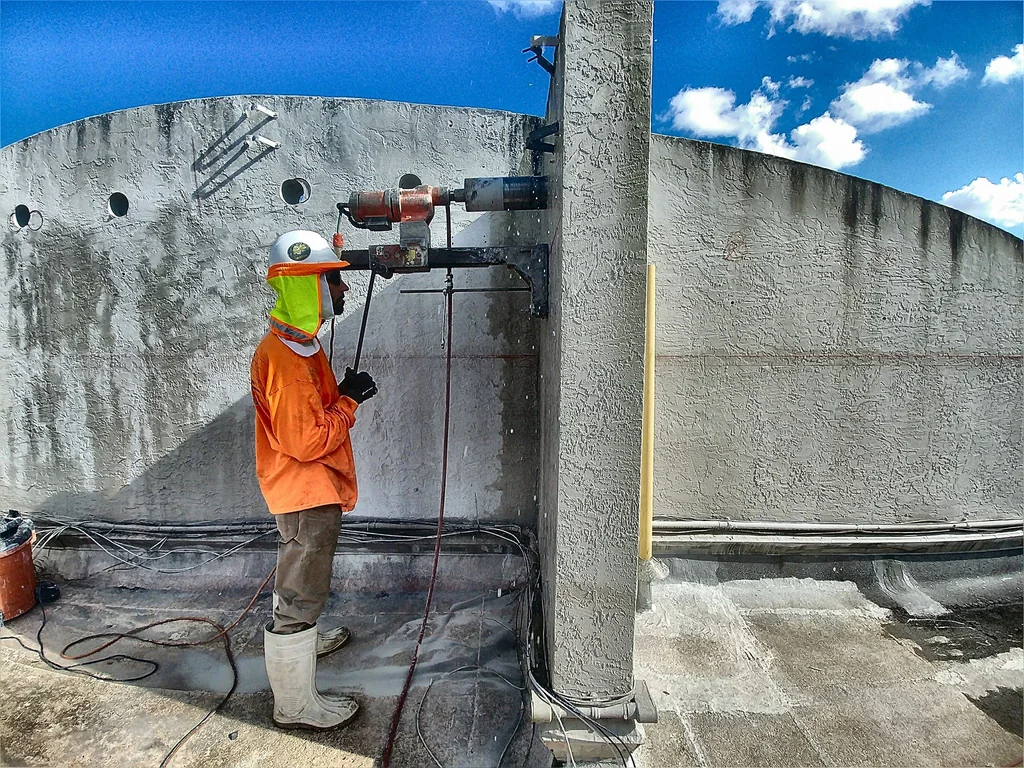
Professional concrete cutters who work regularly in South Florida understand this hydrology and factor it into their containment planning on every job, regardless of project scale. Whether the operation is a single control joint repair or a full-scale slab demolition, the environmental protocols are non-negotiable — because in Miami, the ground itself demands it.
Verifying Compliance Before You Sign a Cutting Contract
Project owners and general contractors bear secondary liability for environmental violations occurring on their sites. Before executing a subcontract with any concrete cutting firm, request documentation of their SWPPP integration procedures, slurry disposal manifests from recent comparable projects, OSHA silica exposure monitoring records, and proof of liability insurance with pollution coverage endorsements. A professional concrete cutting operation will produce this documentation without hesitation. A crew that cannot provide it is a crew that will transfer its regulatory exposure directly onto your project.
Environmental compliance in concrete cutting is not a specialty service — it is the baseline standard for any professional operation working in a regulated environment. The technical capability to cut accurately means nothing if the crew leaves behind a slurry trail that costs the project owner more in fines than the cutting contract was worth.